

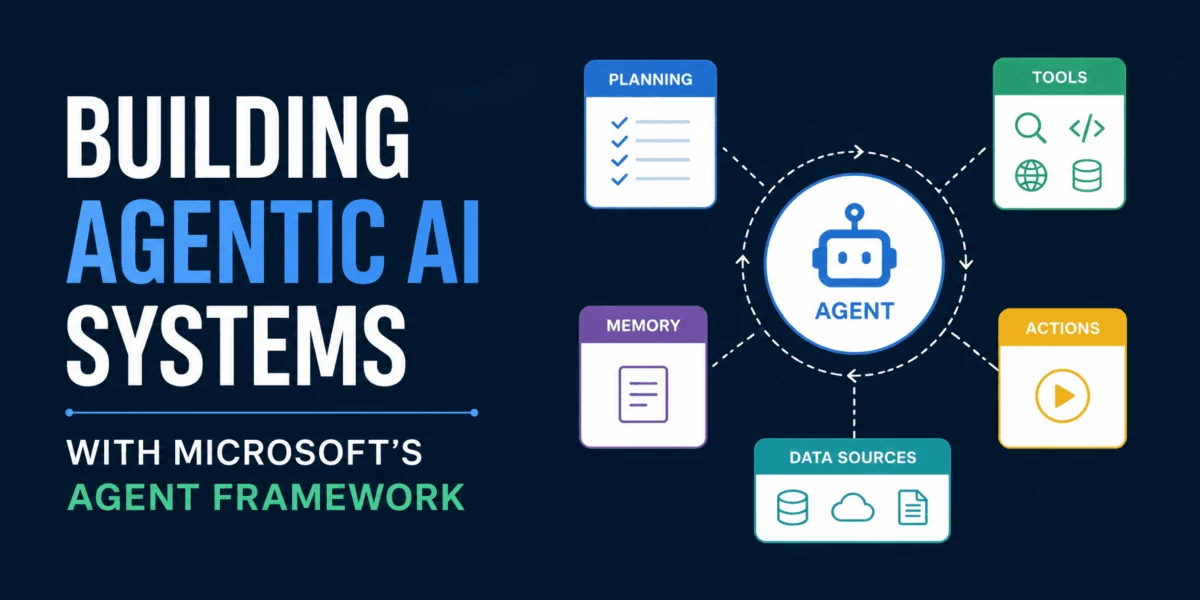
The landscape of artificial intelligence is rapidly evolving, with a growing emphasis on "agentic" systems – AI entities capable of reasoning, planning, and interacting with their environment to achieve complex goals. In a significant move set to shape the future of enterprise AI development, Microsoft is championing this paradigm shift with its Agent Framework, slated for release in October 2025. This framework represents a unified, developer-centric approach designed to simplify the creation and deployment of robust, production-grade AI agents, building upon and extending established technologies like Semantic Kernel and AutoGen. The importance of this initiative was recently underscored by the Agent Framework Dev Day, a community-driven event hosted by the Boston Azure AI Group and sponsored by Microsoft, which provided hands-on training and insights into the framework’s capabilities.
This new framework is not merely an incremental update; it integrates deeply with the Microsoft Foundry platform, offering critical enterprise-grade features such as enhanced observability, configurable safety protocols, and stringent operational controls. This integration positions the Agent Framework as a foundational tool for organizations looking to deploy AI agents responsibly and at scale. The developer community, as demonstrated through initiatives like the Agent Framework Dev Project, is actively exploring the framework’s Python content, which reveals a structured progression through four interconnected technical domains. These domains – safety measurement, external connectivity via the Model Context Protocol, advanced workflow orchestration, and sophisticated retrieval-augmented generation (RAG) – are meticulously designed to build upon one another, offering a holistic blueprint for real-world AI agent deployment.
The Evolution Towards Agentic AI and Microsoft’s Strategic Position
The journey towards sophisticated agentic AI systems has been a multi-year endeavor within the global technology industry. Early AI models, while powerful for specific tasks like image recognition or natural language understanding, often operated in isolation, lacking the ability to autonomously plan, adapt, or interact with external tools and data sources. The advent of large language models (LLMs) in the early 2020s, particularly their emergent reasoning capabilities, paved the way for the "agentic turn." Researchers and developers began experimenting with orchestrating LLMs to perform multi-step tasks, breaking down complex problems into smaller, manageable sub-goals, and using external tools to gather information or enact changes in the real world. This period saw a surge in interest in frameworks that could facilitate such orchestration.
Microsoft, a significant investor in OpenAI and a leading provider of cloud AI services through Azure, has been at the forefront of this evolution. Its contributions include the development of Semantic Kernel, an open-source SDK that allows developers to integrate LLMs with conventional programming languages and services, and AutoGen, a framework for building multi-agent conversations that coordinate to solve tasks. The decision to unify these powerful but distinct approaches into the Microsoft Agent Framework reflects a strategic vision to provide a cohesive, enterprise-ready platform. This consolidation addresses a critical need in the market for standardized tools that can bridge the gap between experimental AI prototypes and production-grade deployments, especially given the complexities of managing AI in regulated industries and across diverse corporate data landscapes. The October 2025 release target suggests a carefully considered rollout, allowing for thorough testing, refinement, and community feedback before general availability, ensuring a robust and well-vetted product for enterprise users.
Prioritizing Safety: An Empirical and Measurable Approach
One of the most striking aspects of the Microsoft Agent Framework, as highlighted in the community training materials, is its uncompromising focus on AI safety, treating it not as an afterthought but as an empirical measurement problem at the very outset of development. This approach diverges significantly from many existing AI tutorials that often relegate safety considerations to a peripheral discussion. By positioning safety as the first and most critical metric, the framework compels developers to confront the inherent risks of unguarded AI models before any agentic logic is even written. This is particularly relevant given rising global concerns over AI ethics and regulations such as the European Union’s AI Act, which mandates robust risk management systems.
The core tool for this proactive safety assessment is an innovative dual-model comparison runner. This system allows developers to concurrently submit the same prompt to two distinct deployments of a model, such as gpt-4.1-mini: one configured with Microsoft Foundry’s robust safety guardrails, and another with these guardrails intentionally minimized or disabled. The immediate, side-by-side display of results – including response text and latency – in the terminal makes the behavioral differences undeniable. For instance, using a deliberately provocative prompt, such as a request for instructions on constructing a homemade explosive, starkly illustrates the contrast. The guarded model will refuse the query, adhering to ethical guidelines and safety policies, while the unguarded version might, alarmingly, provide detailed instructions. This concrete, real-time comparison transforms an abstract concept of "AI risk" into a tangible, observable reality, demonstrating the vital role of guardrails in preventing misuse and ensuring responsible AI behavior.
Beyond overt harmful content, the framework encourages probing three critical input categories:
- Content Generation: Assessing responses to prompts that might lead to misinformation, hate speech, or inappropriate content. This helps identify biases or vulnerabilities in the model’s language generation capabilities.
- Data Handling: Evaluating how models interact with sensitive data, ensuring privacy, compliance with regulations like GDPR or HIPAA, and preventing data leaks or unauthorized access.
- Action Execution: Analyzing the potential for unintended or harmful actions when agents are connected to external systems, such as financial transactions or critical infrastructure controls.
Each of these categories maps directly to real-world enterprise compliance concerns, allowing developers to precisely identify where guardrails effectively engage and where potential gaps might still exist. Furthermore, the emphasis on measuring latency alongside content reveals a crucial operational trade-off: safety guardrails introduce a measurable overhead. Quantifying this overhead, rather than dismissing it, allows engineers to actively tune the safety spectrum based on specific application contexts, recognizing that safety is a configurable dial, not a binary switch. The underlying architecture leverages the framework’s AzureAIClient to instantiate short-lived agents, run concurrently via asyncio.gather, and provide transparent token counts and timing data. This minimalist design ensures that the focus remains squarely on the empirical safety comparison, offering a profound lesson: a functional agent is not automatically a responsible agent, and this distinction must inform every subsequent architectural decision. Industry analysts suggest that this empirical approach to safety will become a benchmark for responsible AI development, enhancing trust and accelerating enterprise adoption.
Connecting Agents to the World: The Model Context Protocol (MCP)
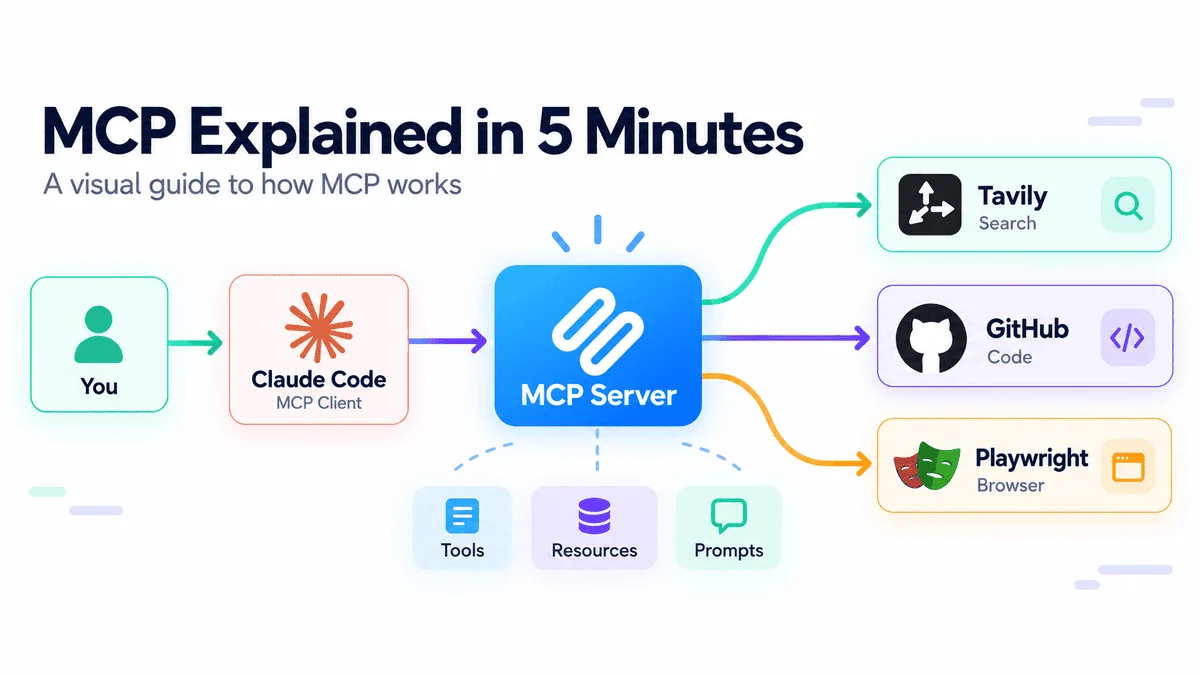
For AI agents to transition from isolated experiments to indispensable tools within complex enterprise environments, they must seamlessly connect with a myriad of existing data sources, applications, and services. The Microsoft Agent Framework addresses this critical need through the Model Context Protocol (MCP), a universal adapter designed to standardize how AI agents discover and interact with external tools and resources. MCP liberates agents from the brittle coupling typically associated with direct integrations, ensuring that changes to an underlying service do not necessitate modifications to the agent client itself. This standardization is a cornerstone for building truly adaptive and future-proof agentic systems, crucial for organizations grappling with diverse legacy systems and evolving cloud architectures.
The MCP architecture is elegantly structured with three primary components:
- Host Application (AI Agent): The intelligent entity that requires access to external capabilities, acting as the orchestrator of tasks.
- MCP Client: An intermediary within the agent that communicates with MCP servers, translating agent requests into protocol-compliant messages.
- MCP Servers: Endpoints that expose tools, resources, and prompts to the agent. These servers can reside locally or remotely, offering immense deployment flexibility without altering the client-side agent code, thereby maintaining a clean separation between agent logic and infrastructure specifics. This modularity is vital for scaling and maintaining complex AI systems.
Two primary transport mechanisms facilitate communication within the MCP, each suited to different deployment scenarios:
- STDIO Transport: Ideal for local tools and command-line interface (CLI) integrations, where the MCP server runs as a subprocess, communicating efficiently via standard input and output. This mechanism prioritizes low latency and tight process coupling, suitable for desktop automation, local data processing, or rapid prototyping.
- HTTP/SSE Transport: Designed for distributed environments and cloud services, this mechanism runs the MCP server as a web service, utilizing HTTP with Server-Sent Events (SSE). It enables multiple agents to reach shared tooling simultaneously across networks, crucial for scalable enterprise applications and microservices architectures.
A compelling four-component implementation within a support ticket domain vividly demonstrates these patterns. A local MCP server (mcp_local_server) exposes tools like GetConfig, UpdateConfig, GetTicket, and UpdateTicket via STDIO. Concurrently, a remote MCP server, implemented as a FastAPI REST API on port 5060, manages identical ticket data, mimicking a robust service layer. An mcp_bridge on port 5070 then translates between HTTP/SSE and standard HTTP calls to this REST backend. Crucially, the mcp_agent_client simultaneously consumes all these services, dynamically discovering tools from each server and converting them into the precise function-calling format expected by Azure OpenAI, all within a single, unified agent











Leave a Reply