

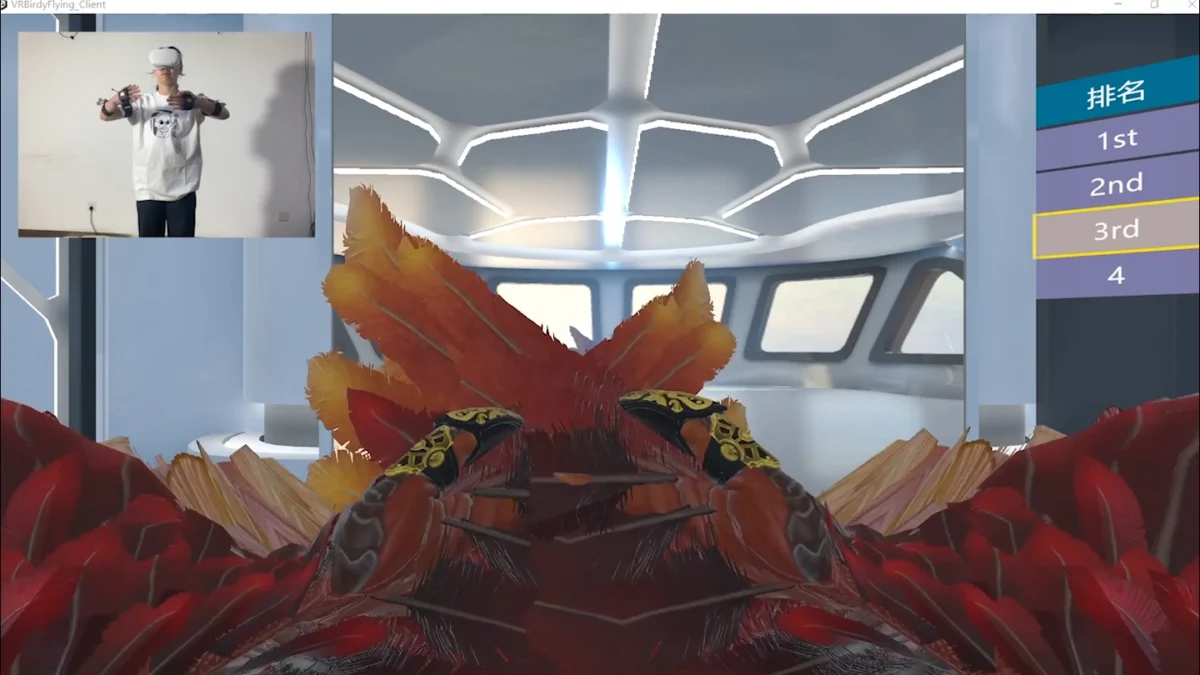
The remarkable plasticity of the human brain has once again been demonstrated through a groundbreaking study where participants, after undergoing virtual reality flight training, exhibited neural patterns suggesting their simulated wings were being integrated into their body schema, akin to their own biological limbs. This research, conducted by a collaborative team of neuroscientists and psychologists, offers profound insights into how the brain adapts to new sensory and motor experiences, particularly in the context of embodied virtual reality. The findings have significant implications for understanding human-computer interaction, rehabilitation therapies, and even the fundamental nature of self-perception.
The Virtual Ascent: A New Frontier in Embodied Cognition
The study, published in a leading neuroscience journal, involved a cohort of adult volunteers who were immersed in a sophisticated virtual reality environment. For a defined period, participants were tasked with operating a pair of virtual wings, mimicking avian flight. This was not a passive observation; rather, it required intricate control and coordination, translating the user’s physical movements into the simulated flapping and gliding of the wings. The researchers employed advanced neuroimaging techniques, including functional magnetic resonance imaging (fMRI) and electroencephalography (EEG), to monitor brain activity during and after the training sessions.
Initially, the brain’s response to controlling the virtual wings was characterized by activity in areas typically associated with tool use or external object manipulation. However, as the training progressed over several days, a significant shift occurred. Neuroimaging data revealed a gradual remapping of neural resources. The brain regions that normally process proprioception and motor control for the arms and hands began to exhibit increased activation when the participants were engaged in flight simulation. This phenomenon, known as neural plasticity, suggests that the brain was actively reorganizing itself to incorporate the virtual wings into its internal model of the body.
Decoding the Neural Shift: From Tool to Limb
Dr. Yiyang Cai, a neuroscientist at Peking University and a coauthor of the study, elaborated on the observed changes. "What we witnessed was a fascinating transition," she explained in a virtual press conference. "Initially, the brain treated the wings as external appendages, much like one might use a joystick or a remote control. But with sustained, embodied interaction, the neural circuits started to behave as if these virtual wings were an extension of the body itself. We saw increased connectivity between motor cortex areas and the parietal lobe, which is crucial for spatial awareness and body representation."
The study meticulously tracked participants’ subjective experiences as well. Post-training questionnaires and interviews indicated that many participants reported a growing sense of "ownership" over the virtual wings. Some described feeling a phantom sensation of the wings, or a heightened awareness of their virtual counterparts even when not actively flying. This subjective experience strongly correlated with the objective neuroimaging data, providing a compelling link between neural adaptation and perceived embodiment.
A Chronology of Adaptation: From Novelty to Integration
The research team established a clear timeline for this neural transformation. The initial training sessions, typically lasting one to two hours per day, were characterized by a steep learning curve and a sense of novelty. During this phase, brain activity was diffuse, reflecting the cognitive effort required to master the complex motor commands.
By the third day of training, distinct patterns of neural recruitment began to emerge. The brain areas dedicated to processing sensory feedback from the limbs, such as the somatosensory cortex, started showing increased responsiveness to the virtual wing movements. This suggested that the brain was beginning to interpret the sensory input from the virtual wings as if it were originating from biological limbs.
By the end of the two-week training period, the neural signatures were strikingly similar to those observed when individuals are engaged in controlling their own arms and legs. This included the activation of the supplementary motor area and the premotor cortex, which are involved in planning and executing complex movements, as well as the cerebellum, crucial for motor coordination and learning. The brain’s ability to adapt and reconfigure itself so profoundly within this timeframe underscores its remarkable flexibility.
Supporting Data: Quantifying the Embodied Experience
To quantify the degree of embodiment, the researchers employed several analytical methods. They analyzed the functional connectivity between different brain regions, observing a significant increase in coherence between motor and sensory areas associated with limb control after the VR training. Furthermore, they used multivariate pattern analysis (MVPA) to decode brain activity patterns and found that the brain could more accurately predict the intended wing movements based on neural signals after training, a hallmark of internalized motor control.
The study also reported on the impact of the training on the participants’ proprioceptive sense. After the intervention, participants demonstrated improved accuracy in a virtual limb position judgment task, indicating that their internal sense of limb position had been recalibrated to include the virtual wings. This objective measure of proprioceptive recalibration further solidified the findings of neural integration.
Expert Reactions: Implications for Science and Society
The findings have generated considerable excitement within the scientific community. Dr. Evelyn Reed, a leading cognitive neuroscientist not involved in the study, commented, "This research pushes the boundaries of our understanding of embodied cognition. It provides compelling evidence that the brain is not rigidly wired but is highly adaptable, capable of integrating novel sensory-motor experiences into its fundamental body schema. This has profound implications for fields ranging from prosthetics and rehabilitation to human-robot interaction."
The potential applications are vast. In the realm of rehabilitation, this research could inform the development of more effective virtual reality-based therapies for individuals with limb loss or neurological impairments. By facilitating the neural integration of prosthetic limbs or assisting in the recovery of motor function, VR could offer a powerful tool to accelerate healing and improve quality of life.
Furthermore, the study sheds light on the fundamental mechanisms of self-perception. If the brain can so readily incorporate virtual appendages into its body map, it raises questions about the plasticity of our sense of self and how it is constructed. This could have implications for understanding and treating conditions involving altered body perception, such as body dysmorphia or phantom limb pain.
Broader Impact: The Future of Human-Computer Interaction
The research also offers a glimpse into the future of human-computer interaction. As virtual and augmented reality technologies become more sophisticated and ubiquitous, the ability of the brain to seamlessly integrate with these digital environments will be crucial. This study suggests that with appropriate design and training, users could develop a deep sense of embodiment within virtual worlds, leading to more intuitive and immersive experiences.
Imagine surgeons performing complex procedures with haptic feedback from virtual instruments, or architects walking through their designs as if they were physically present. The neural adaptations observed in this study lay the groundwork for such advanced applications, where the line between the physical and virtual begins to blur.
However, the researchers also acknowledge the need for further investigation. Questions remain about the long-term stability of these neural changes, the extent to which they generalize to other virtual experiences, and the potential ethical considerations of deep neural integration with artificial systems. Nevertheless, this pioneering study marks a significant step forward in our understanding of the brain’s incredible capacity for adaptation and integration, offering exciting possibilities for both scientific discovery and technological innovation. The virtual wings, once a mere digital construct, have seemingly taken flight within the intricate landscape of the human brain.














Leave a Reply