The vast expanses of the universe, once thought to be desolate stretches of nothingness, are increasingly being recognized by the scientific community as the primary drivers of cosmic evolution. These regions, known as cosmic voids, represent the largest structures in the cosmos, yet they are defined primarily by what they lack: matter. However, recent advancements in quantum field theory and observational cosmology have revealed that these "empty" spaces are far from inert. Instead, they are filled with the vacuum of spacetime, a fundamental medium characterized by quantum fluctuations and an inherent energy density that dictates the fate of the entire universe.
The Quantum Architecture of Empty Space
To understand the nature of cosmic voids, one must first look toward the subatomic level, where the traditional concept of "nothing" is replaced by the framework of Quantum Field Theory (QFT). In this model, the universe is not a container filled with independent particles; rather, it is a complex layering of various quantum fields that permeate every coordinate of space and time.
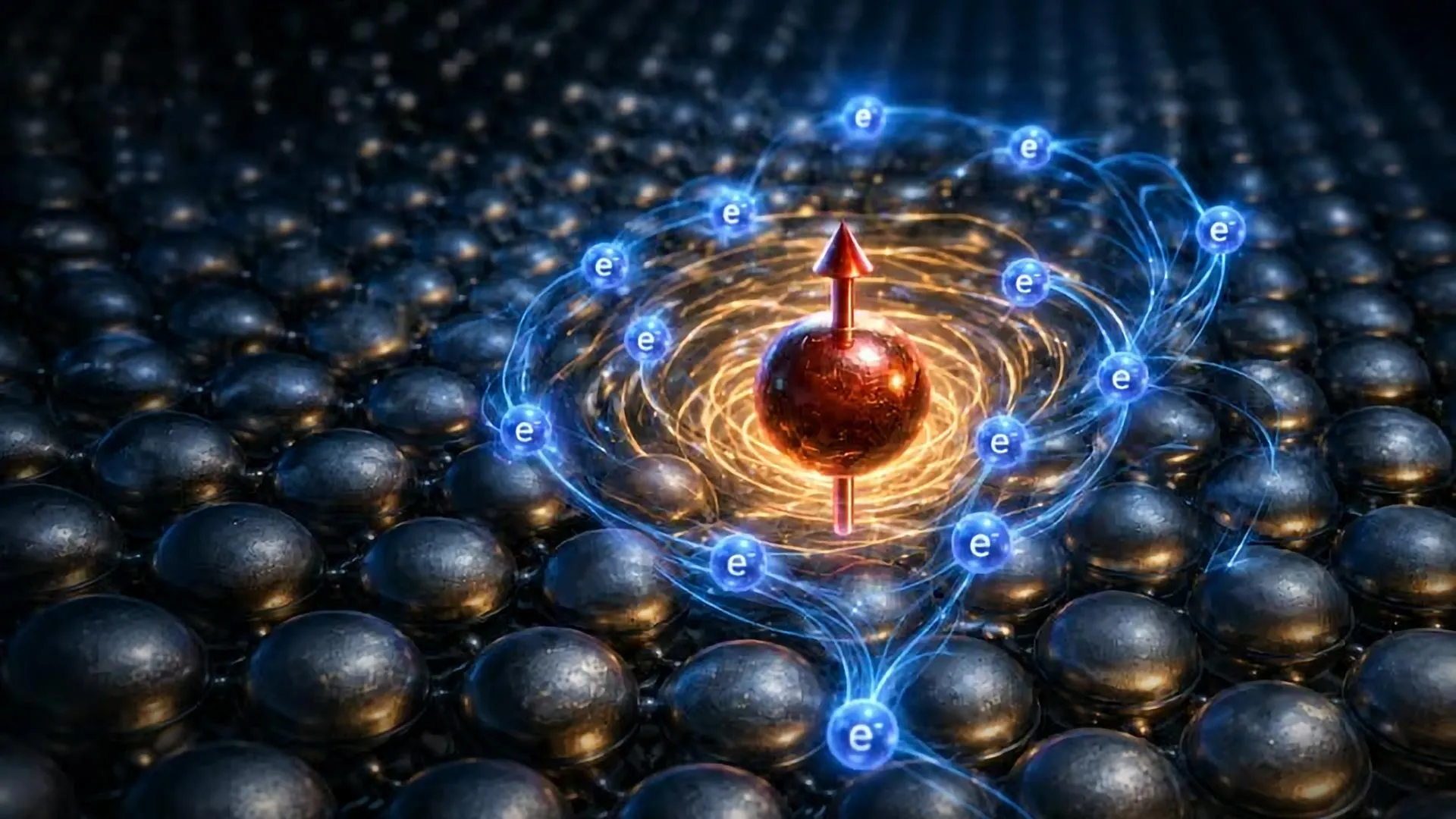
Physicists identify these fields as the most fundamental components of reality. Every known particle—whether it be the electron that powers modern electronics, the top quark found in high-energy collisions, or the elusive neutrino—is merely a localized excitation or "ripple" within its respective field. For instance, an electron is a visible manifestation of the electron field. Even in a region where no particles are present, the field itself remains.
This underlying structure ensures that space is never truly empty. Even if an experimenter were to remove every atom, photon, and dark matter particle from a cubic centimeter of space, the quantum fields would persist. These fields exist in a state of constant activity, governed by the Heisenberg Uncertainty Principle, which dictates that energy levels can never be exactly zero. This leads to the phenomenon of vacuum fluctuations, where virtual particles momentarily pop in and out of existence, contributing to a non-zero baseline energy known as vacuum energy.
The Magnitude of Vacuum Energy and the Dark Energy Paradox
The presence of energy within the vacuum has profound implications for the macro-scale behavior of the universe. In contemporary cosmology, this vacuum energy is widely identified as the most likely candidate for "dark energy," the mysterious force responsible for the accelerated expansion of the universe.
The relationship between vacuum energy and dark energy is one of the most significant challenges in modern physics, often referred to as the "Vacuum Catastrophe." When physicists apply the standard model of particle physics to calculate the expected energy density of the vacuum, the resulting figure is approximately 120 orders of magnitude larger than what is actually observed through astronomical measurements. Despite this massive theoretical discrepancy, the measurable effect remains: a small but persistent outward pressure that acts against the inward pull of gravity.
Current data from missions such as the European Space Agency’s Planck satellite suggest that dark energy accounts for approximately 68% to 70% of the total energy density of the universe. While this energy is present everywhere, its influence is not uniform across all environments. In regions of high density, such as within the Earth’s atmosphere or inside a galaxy, the gravitational attraction of matter is billions of times stronger than the repulsive force of vacuum energy. Consequently, the expansion of space is unnoticeable on local scales. Calculations indicate that if dark energy were to suddenly vanish, the physical laws governing human life—from the orbit of the Moon to the chemical reactions in a microwave—would remain entirely unaffected.
The Structural Hierarchy of the Cosmic Web
The universe is organized into a massive, interconnected network known as the cosmic web. This structure is composed of four primary components:
- Nodes: Massive clusters of hundreds or thousands of galaxies.
- Filaments: Long, thin threads of gas and dark matter that connect the nodes.
- Walls: Broad, sheet-like structures formed by multiple filaments.
- Voids: Enormous, roughly spherical regions that sit between the filaments and walls.
While galaxies and filaments attract the most attention due to their luminosity and complexity, they occupy a relatively small volume of the universe. Cosmic voids, by contrast, make up roughly 80% of the total volume of the cosmos. These voids are defined by a density of matter that is significantly lower than the cosmic average. Because they are largely devoid of the gravitational "ballast" provided by matter and dark matter, they serve as the primary laboratories for observing the effects of vacuum energy.
A Chronology of Universal Expansion and Void Evolution
The dominance of cosmic voids is a relatively recent development in the 13.8-billion-year history of the universe. The timeline of this evolution can be broken down into several key phases:
- The Primordial Era (0 to 380,000 years post-Big Bang): The universe was a hot, dense plasma. Matter and radiation were tightly coupled, and structural differences were merely tiny fluctuations in density. Voids did not yet exist.
- The Era of Recombination (380,000 years): As the universe cooled, atoms formed, and light began to travel freely. The small density fluctuations from the early universe began to grow under the influence of gravity.
- Structure Formation (100 million to 5 billion years): Matter began to clump together to form the first stars and galaxies. As gravity pulled matter into filaments and clusters, it simultaneously evacuated the space between them. This process marked the birth of cosmic voids.
- The Transition to Dark Energy Dominance (approx. 5 to 7 billion years ago): For the first several billion years, the expansion of the universe was slowing down due to the gravitational pull of all the matter within it. However, as the universe expanded and matter became more diluted, the constant energy density of the vacuum (dark energy) eventually overtook the thinning matter density. At this point, the expansion of the universe began to accelerate.
- The Present Era (13.8 billion years): Today, the universe is in a phase of runaway expansion. Cosmic voids are expanding at an increasing rate, pushing the walls and filaments of the cosmic web further apart.
Scientific Analysis of Void Expansion Dynamics
Astronomers and cosmologists utilize the expansion of voids to measure the Hubble constant—the rate at which the universe is expanding. Unlike measurements taken within galaxy clusters, where the "peculiar velocities" (local movements caused by gravity) can skew data, the interiors of voids provide a cleaner signal of the background expansion caused by dark energy.
Research published by various international collaborations, including the Sloan Digital Sky Survey (SDSS), has shown that voids are not merely passive gaps. They act as "cosmic balloons" that exert pressure on their surroundings. As the dark energy within a void pushes space outward, the boundaries of the void—the filaments and walls—are stretched. This creates a feedback loop: as voids grow, the matter density within them drops even further, allowing dark energy to dominate even more effectively.
Inferred reactions from the scientific community suggest a growing consensus that studying voids is essential for resolving the "Hubble Tension," a current crisis in cosmology where different methods of measuring the expansion of the universe yield conflicting results. By analyzing the shapes and growth rates of voids, researchers hope to determine if dark energy is a true cosmological constant (unchanging over time) or a dynamic field that might evolve.
Long-term Implications for the Cosmic Web
The continued expansion of cosmic voids has dire implications for the long-term structure of the universe. If the current rate of acceleration remains constant, the cosmic web will eventually undergo a process of total dissolution.
Over the next 10 to 20 billion years, the filaments that connect galaxies will be stretched to the breaking point. Galaxies that are not gravitationally bound into the same local cluster will be pushed away from one another at speeds exceeding the speed of light. From the perspective of a future observer in the Milky Way, the night sky will gradually become emptier. Eventually, every galaxy outside our local group will vanish beyond the "cosmic horizon," leaving our local neighborhood as a lonely island in an infinite, dark sea of expanding vacuum.
This projected future, often referred to as the "Heat Death" or the "Big Freeze," is a direct result of the energy contained within cosmic voids. The vacuum energy, which currently drives the growth of these voids, will eventually become the only relevant force in the universe, having successfully pushed all matter into total isolation.
Conclusion: The Paradox of the Void
The scientific investigation into cosmic voids challenges the traditional philosophical notion of nothingness. In the context of modern astrophysics, a void is not a lack of existence, but rather a region where the fundamental properties of spacetime are most visible. By removing the "clutter" of stars, planets, and gas, the universe reveals its true engine: the quantum fields and the vacuum energy that resides within them.
While matter-rich regions like Earth are the sites of biological life and chemical complexity, the cosmic voids are the sites of the universe’s most influential physical work. They are the reservoirs of dark energy and the architects of the universe’s large-scale geometry. The discovery that "nothing" is actually "something" remains one of the most profound shifts in human understanding, ensuring that even in the deepest, darkest reaches of the cosmic interior, the universe is alive with the subtle, persistent energy of the quantum vacuum.