In a landmark achievement for condensed matter physics, a research team at the Indian Institute of Science (IISc) has identified a rare and elusive state of matter within graphene, characterized by electrons that flow collectively like a frictionless, "perfect" fluid. The study, published in the prestigious journal Nature Physics, marks a significant departure from established physical principles, specifically the Wiedemann-Franz law, which has governed the understanding of metallic conduction for over 170 years. By achieving unprecedented levels of material purity and precision in measurement, the researchers—working in collaboration with the National Institute for Materials Science (NIMS) in Japan—have demonstrated that under specific conditions, electrons in graphene stop behaving as individual particles and instead move as a synchronized, hydrodynamic medium known as a Dirac fluid.
The Quest for Hydrodynamic Electrons in Solid-State Systems
For decades, theoretical physicists have speculated whether electrons in a solid could ever mimic the behavior of classical fluids. In standard conductors like copper or aluminum, electrons act more like a gas of individual particles. As they move through the crystal lattice of a metal, they frequently collide with atomic defects, impurities, and vibrations (phonons). These collisions scatter the electrons, creating resistance and masking any potential collective fluid behavior.
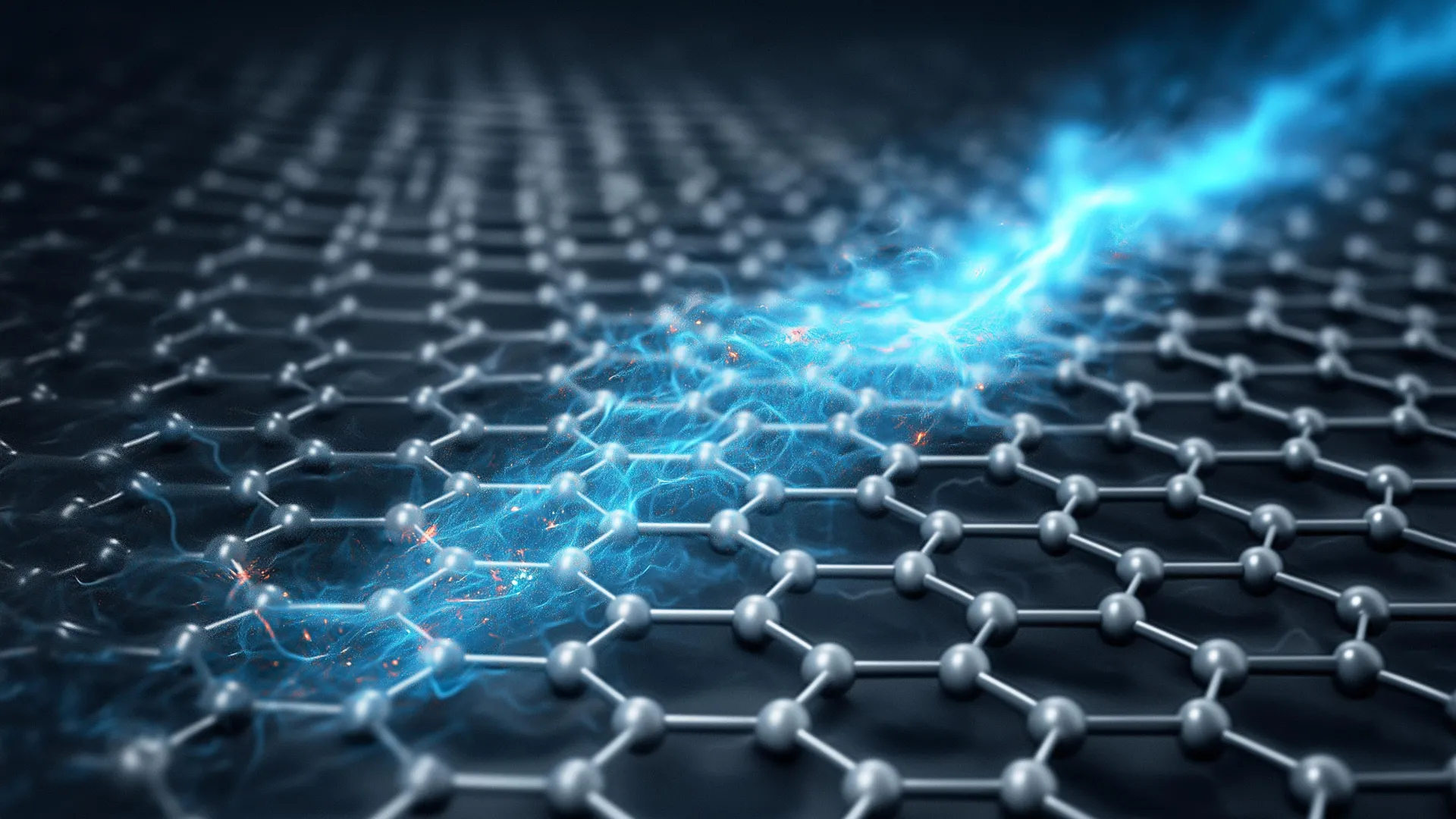
The search for "electron hydrodynamics" required a material of extraordinary cleanliness and a unique electronic structure. Graphene, a two-dimensional honeycomb lattice of carbon atoms discovered in 2004, emerged as the primary candidate. However, even in graphene, the presence of substrate-induced disorders and thermal fluctuations usually disrupts the delicate quantum interactions necessary for fluid-like flow. The IISc team, led by Professor Arindam Ghosh and PhD scholar Aniket Majumdar, overcame these hurdles by isolating graphene layers and shielding them within ultra-pure environments, allowing the intrinsic quantum properties of the carbon sheet to take center stage.
Breaking the Wiedemann-Franz Law
The most striking revelation of the IISc study is the massive violation of the Wiedemann-Franz law. Formulated in 1853 by Rudolf Wiedemann and Rudolph Franz, this law is a cornerstone of solid-state physics. It dictates that in any metal, the ratio of thermal conductivity ($kappa$) to electrical conductivity ($sigma$) is proportional to the temperature ($T$). This relationship exists because, in a typical metal, the same particles—electrons—are responsible for transporting both heat and electrical charge.
The researchers at IISc observed that at the "Dirac point"—a state where graphene’s electronic bands meet and the material transitions between a metal and an insulator—this law breaks down spectacularly. Instead of the two properties moving in tandem, they moved in opposite directions. As electrical conductivity increased, thermal conductivity plummeted, and vice versa. At low temperatures, the deviation from the Wiedemann-Franz law was measured to be more than 200 times the expected value.
This divergence indicates a profound separation between charge transport and heat transport. In a Dirac fluid, the collective motion of electrons and "holes" (the absence of electrons) allows for the flow of charge without the corresponding flow of heat, or the flow of heat without the flow of charge. This phenomenon is a hallmark of a strongly interacting quantum system where individual particle identities are lost to the collective whole.
The Role of the Dirac Point and Quantum Neutrality
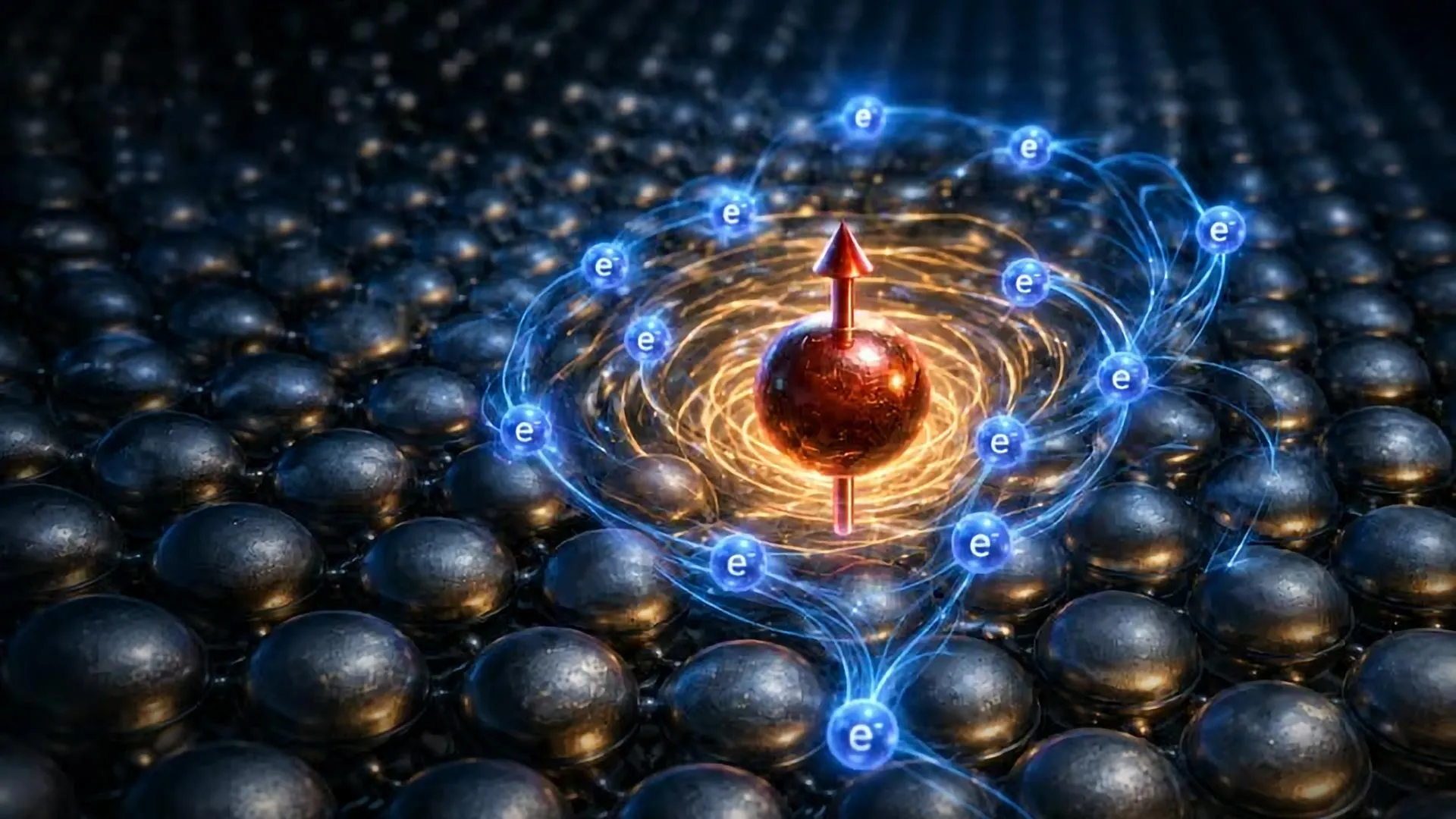
The "Dirac point" is central to this discovery. In graphene, electrons behave as if they have no mass, mimicking the behavior of relativistic particles described by the Dirac equation. When the material is tuned to the Dirac point, it reaches a state of "charge neutrality." At this precise juncture, the number of electrons and holes is perfectly balanced.
In this neutral state, the particles become highly sensitive to one another’s presence. Rather than scattering off impurities, they scatter off each other with extreme frequency. This intense internal interaction is what gives rise to the fluid behavior. "Since this water-like behavior is found near the Dirac point, it is called a Dirac fluid," explained Aniket Majumdar, the study’s first author. "It is an exotic state of matter which mimics the quark-gluon plasma, the high-energy soup of subatomic particles that existed just microseconds after the Big Bang and is currently studied in particle accelerators like those at CERN."
Measuring the "Perfect Fluid" and Low Viscosity
A key characteristic of any fluid is its viscosity, or its resistance to flow. Honey has high viscosity, while water has low viscosity. A "perfect fluid" is a theoretical construct with the minimum possible viscosity allowed by the laws of quantum mechanics.
The IISc team’s measurements revealed that the Dirac fluid in graphene possesses extremely low viscosity, placing it among the most "perfect" fluids ever observed in nature. This low-viscosity flow suggests that the electrons move with almost zero internal friction. By quantifying the ratio of shear viscosity to entropy density—a fundamental metric used in string theory and high-energy physics—the researchers found that graphene provides a laboratory-scale analog to the extreme environments found in the cores of neutron stars or during the earliest moments of the universe.
A Chronology of Discovery: From Scotch Tape to Quantum Fluids
The path to this discovery has been two decades in the making, following a clear timeline of advancement in material science:
- 2004: Andre Geim and Konstantin Novoselov at the University of Manchester isolate graphene using the "Scotch tape method," winning the Nobel Prize in 2010.
- 2010–2015: Researchers worldwide begin to theorize that graphene could support hydrodynamic electron flow, but experimental evidence remains clouded by material impurities.
- 2016–2020: Advancements in "van der Waals heterostructures"—stacking graphene between layers of hexagonal boron nitride—allow for much cleaner samples. Preliminary signs of electron viscosity are detected at higher temperatures.
- 2023–2024: The IISc team refines the measurement of thermal vs. electrical conductivity at cryogenic temperatures. By achieving a level of sample purity that minimizes extrinsic scattering, they confirm the massive violation of the Wiedemann-Franz law and the existence of the Dirac fluid.
"It is amazing that there is so much to do on just a single layer of graphene even after 20 years of discovery," noted Professor Arindam Ghosh. His reflection underscores the material’s enduring status as a "wonder material" that continues to challenge fundamental physics.
Global Collaboration and Experimental Precision
The success of the experiment relied heavily on the quality of the graphene samples. The IISc researchers collaborated with the National Institute for Materials Science (NIMS) in Japan, which provided the high-quality crystals of hexagonal boron nitride (hBN) used to encapsulate the graphene. This encapsulation is crucial because it protects the graphene from atmospheric contaminants and smooths out the electrical landscape, allowing the electrons to interact with each other rather than their environment.
The measurement of thermal conductivity at the micro-scale is an engineering feat in itself. Because graphene is only one atom thick, measuring how much heat it carries requires incredibly sensitive thermometry. The team utilized specialized techniques to decouple the heat carried by the carbon lattice (phonons) from the heat carried by the electrons, ensuring that the reported data reflected the true nature of the Dirac fluid.
Implications for High-Energy Physics and Cosmology
The ability to study a Dirac fluid in a solid-state laboratory has profound implications for other fields of science. Traditionally, studying "perfect fluids" or strongly interacting quantum systems required multi-billion-dollar particle accelerators or observations of distant astrophysical phenomena.
Graphene now serves as a "tabletop" universe where scientists can test theories of:
- Black Hole Thermodynamics: Theories suggest that the physics of black hole event horizons can be mathematically mapped to the hydrodynamic flow of quantum fluids.
- Entanglement Entropy: The way quantum information is shared across a system can be studied by observing how heat and charge separate in the Dirac fluid.
- Quark-Gluon Plasma: Graphene provides a low-energy analog to the conditions of the early universe, allowing researchers to observe how collective particle behavior emerges from fundamental interactions.
Future Applications in Quantum Technology
Beyond the theoretical breakthroughs, the discovery of the Dirac fluid in graphene paves the way for practical technological innovations. The sensitivity of the Dirac point to external influences makes it an ideal candidate for next-generation quantum sensors.
Enhanced Sensing Capabilities:
Because the Dirac fluid is highly responsive to even minute changes in its environment, it could be used to develop sensors capable of detecting incredibly faint magnetic fields or single photons of light. Such sensors would be vital in fields ranging from medical imaging to deep-space communication.
Thermal Management in Nano-electronics:
As transistors become smaller, managing the heat they generate becomes a critical challenge. Understanding how graphene can decouple heat and charge flow could lead to new ways of designing electronic components that remain cool even at high processing speeds.
Quantum Signal Amplification:
The collective motion of electrons in a fluid state allows for the amplification of weak electrical signals with minimal noise. This could lead to the development of ultra-low-noise amplifiers for quantum computers, where maintaining signal integrity is paramount.
Conclusion
The identification of the Dirac fluid at the Indian Institute of Science represents a milestone in the study of two-dimensional materials. By proving that electrons can be coaxed into a state of collective, low-viscosity flow that defies centuries-old laws of physics, the researchers have opened a new window into the quantum world. This work not only reaffirms graphene’s position at the forefront of material science but also bridges the gap between the physics of the very small and the physics of the very large, offering a terrestrial laboratory to explore the most extreme mysteries of the cosmos. As the scientific community continues to digest these findings, the focus will likely shift toward harnessing this "perfect fluid" for the next generation of quantum technologies.