In a development that promises to reshape the landscape of optical engineering and semiconductor manufacturing, a collaborative research team from the XPANCEO Emerging Technologies Research Center and Nobel Laureate Professor Konstantin Novoselov has announced a breakthrough discovery regarding the optical behavior of arsenic trisulfide (As2S3). The study, which focuses on the crystalline form of this van der Waals (vdW) semiconductor, reveals that the material possesses an unprecedented level of sensitivity to light, allowing for permanent, high-precision structural and optical alterations using low-cost equipment. This discovery challenges the long-standing reliance on expensive cleanroom facilities and complex laser systems for the fabrication of nanoscale optical devices, signaling a potential shift toward more accessible and efficient photonics production.
The collaboration brings together the industrial innovation of XPANCEO with the academic expertise of Prof. Novoselov, renowned for his Nobel-winning work on graphene at the University of Manchester and his current roles at the National University of Singapore. By identifying the unique photorefractive and photo-expansive qualities of crystalline As2S3, the researchers have opened a new pathway for the creation of "smart" materials that can be shaped and programmed by light itself.
The Mechanics of Photorefractivity and the As2S3 Advantage
At the heart of this discovery is the concept of the refractive index—a fundamental physical property that dictates how light propagates through a medium. In the world of photonics, the refractive index is the primary tool used to confine, guide, and manipulate light. Materials with high refractive indices are particularly prized because they allow for the miniaturization of optical components, enabling light to be steered within tighter spaces without significant loss.
Photorefractivity refers to the ability of a material to change its refractive index in response to light exposure. While this effect has been documented in various materials over the decades, the magnitude of the change observed in crystalline As2S3 is what has caught the scientific community’s attention. The study reports a refractive index shift (Δn) of approximately 0.3. To put this figure in perspective, it significantly outperforms traditional photorefractive workhorses like Barium Titanate (BaTiO3) and Lithium Niobate (LiNbO3), which have long been the industry standards for holographic storage and optical modulators.
The significance of a Δn ≈ 0.3 change cannot be overstated. In the context of integrated photonics, such a massive shift allows for the creation of highly efficient waveguides and phase shifters with a much smaller footprint than previously possible. Furthermore, because this change in As2S3 is permanent and occurs under relatively low-intensity ultraviolet (UV) light, it allows for the "writing" of optical circuits directly into the crystal lattice.
A New Paradigm in Nanofabrication: Beyond the Cleanroom
One of the most transformative aspects of this research is the method by which these materials are manipulated. Traditionally, creating nanoscale patterns in semiconductors requires lithography—a multi-stage process involving photoresists, chemical etching, and vacuum-sealed cleanroom environments. Alternatively, high-end femtosecond laser systems are used to induce non-linear changes in materials through ultra-short, high-energy pulses. Both methods are prohibitively expensive and logistically demanding.
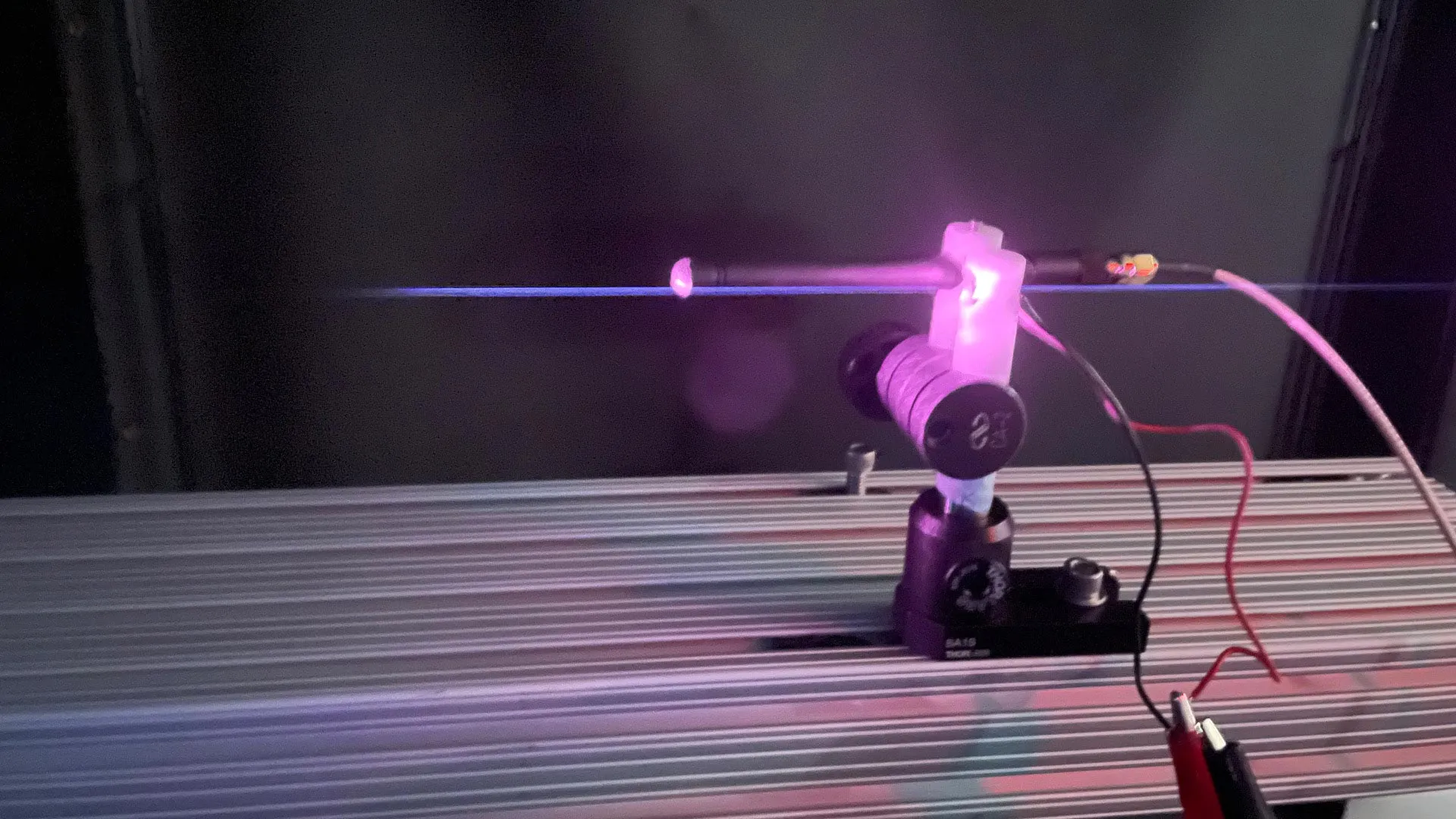
The XPANCEO and Novoselov study demonstrates that crystalline As2S3 can be patterned using simple continuous-wave (CW) light. This approach bypasses the need for high-energy pulses or chemical processing. By using a standard laser, the researchers were able to induce localized changes in the material’s properties with extreme precision. This "direct-write" capability simplifies the manufacturing pipeline for optical sensors, telecommunications components, and security features, potentially lowering the barrier to entry for startups and research institutions in the photonics space.
Nanoscale Precision: The "Einstein" Demonstration
To test the limits of this light-driven patterning, the research team performed a series of high-resolution experiments. They successfully created a microscopic monochrome portrait of Albert Einstein on a thin flake of crystalline As2S3. The portrait was constructed with points spaced just 700 nanometers apart.
Subsequent tests pushed the resolution even further, achieving a density of approximately 50,000 dots per inch (DPI), which translates to a spacing of roughly 500 nanometers between individual features. The resulting patterns exhibited high optical contrast, a direct result of the large refractive index change. These "optical fingerprints" are nearly impossible to replicate without the specific parameters used during the writing process, making them an ideal candidate for high-level anti-counterfeiting measures and the traceability of luxury goods or sensitive electronic components.
Physical Morphing: Light-Induced Structural Expansion
The research revealed that the material’s response to light is not limited to its internal optical properties; it also undergoes a physical transformation. When exposed to light, the crystalline As2S3 lattice expands by up to 5%. While a 5% change might seem modest in a macro-scale context, at the micro and nanoscale, it is a massive structural shift.
This photo-expansion allows researchers to literally "grow" optical structures on the surface of the material. By controlling the light exposure, they can create microlenses, diffraction gratings, and other surface-relief structures without removing any material. This additive-style process is highly stable and allows for the creation of complex optical geometries that would be difficult to achieve through traditional etching.
Strategic Implications for Augmented Reality and Smart Wearables
The ability to create high-index waveguides and microlenses directly on a thin, flexible substrate has immediate implications for the burgeoning market of Augmented Reality (AR) and smart wearables. A primary challenge in AR technology—such as smart glasses and contact lenses—is the "field-of-view" problem. To provide a truly immersive experience, light must be coupled into a waveguide and directed into the eye at wide angles. This requires materials with high refractive indices and the ability to form precise diffraction gratings.
As2S3, as a van der Waals crystal, is inherently thin and can be integrated with other 2D materials or flexible substrates. Valentyn Volkov, Founder and CTO of XPANCEO, emphasized that the material’s sensitivity is the "essential building block" for their vision of the future. XPANCEO is currently focused on developing the world’s first truly "smart" contact lens, which would integrate displays, sensors, and communication arrays into a transparent, wearable format. The discovery of a material that can be shaped into complex optical components via simple light exposure provides a feasible path toward mass-producing such sophisticated devices.
Industry Reaction and Scientific Context
The broader scientific community has viewed the results with cautious optimism, noting that while chalcogenide glasses (the amorphous cousins of As2S3) have been studied for years, the focus on the crystalline phase is a significant pivot. Industry analysts suggest that the stability of the crystalline phase, combined with the reported Δn of 0.3, positions As2S3 as a formidable competitor to silicon-based photonics in specific niche applications.
"The ability to achieve such high-resolution patterning without the overhead of a cleanroom is a game-changer for rapid prototyping in photonics," says one independent researcher in the field of 2D materials. "If the long-term stability of these light-induced changes holds up under various environmental conditions, we could see As2S3 becoming a standard material for customized optical sensors and secure ID tags."
Chronology of the Discovery and Research Path
The path to this discovery was rooted in the exploration of van der Waals materials—substances characterized by strong internal bonding but weak interlaminar forces, allowing them to be exfoliated into thin layers.
- Phase I: Material Characterization: The team initially focused on the basic optical properties of crystalline As2S3, seeking to understand how its lattice structure differed from the more commonly studied amorphous version.
- Phase II: Identifying the Photorefractive Threshold: Researchers discovered that even low-intensity UV light triggered a permanent change in the refractive index, a surprise given the material’s typical stability.
- Phase III: Optimization of Patterning: The team moved from broad exposure to localized laser writing, refining the resolution until they achieved the 500nm benchmark.
- Phase IV: Structural Analysis: Simultaneous with optical testing, the team measured the physical expansion of the material, confirming the 5% growth and its utility in lens fabrication.
- Phase V: Application Proof-of-Concept: The creation of the "Einstein" portrait and diffraction gratings served as the final validation of the material’s potential for both security and optical device manufacturing.
Conclusion: A Future Driven by Light
The findings published by XPANCEO and Prof. Novoselov represent more than just a new material property; they represent a move toward "light-driven" technology. By reducing the complexity of nanofabrication and providing a material that responds dynamically to light, the researchers have laid the groundwork for a new generation of devices.
As the field of photonics continues to grow—driven by the need for faster data transmission, more sensitive sensors, and more immersive displays—the role of functional materials like arsenic trisulfide will become increasingly central. The transition from electricity-based systems to those governed by light depends on the discovery of crystals that can handle the workload of modern technology. With its massive photorefractive shift and physical versatility, crystalline As2S3 appears ready to take on that role, potentially moving out of the lab and into the consumer electronics of the near future.