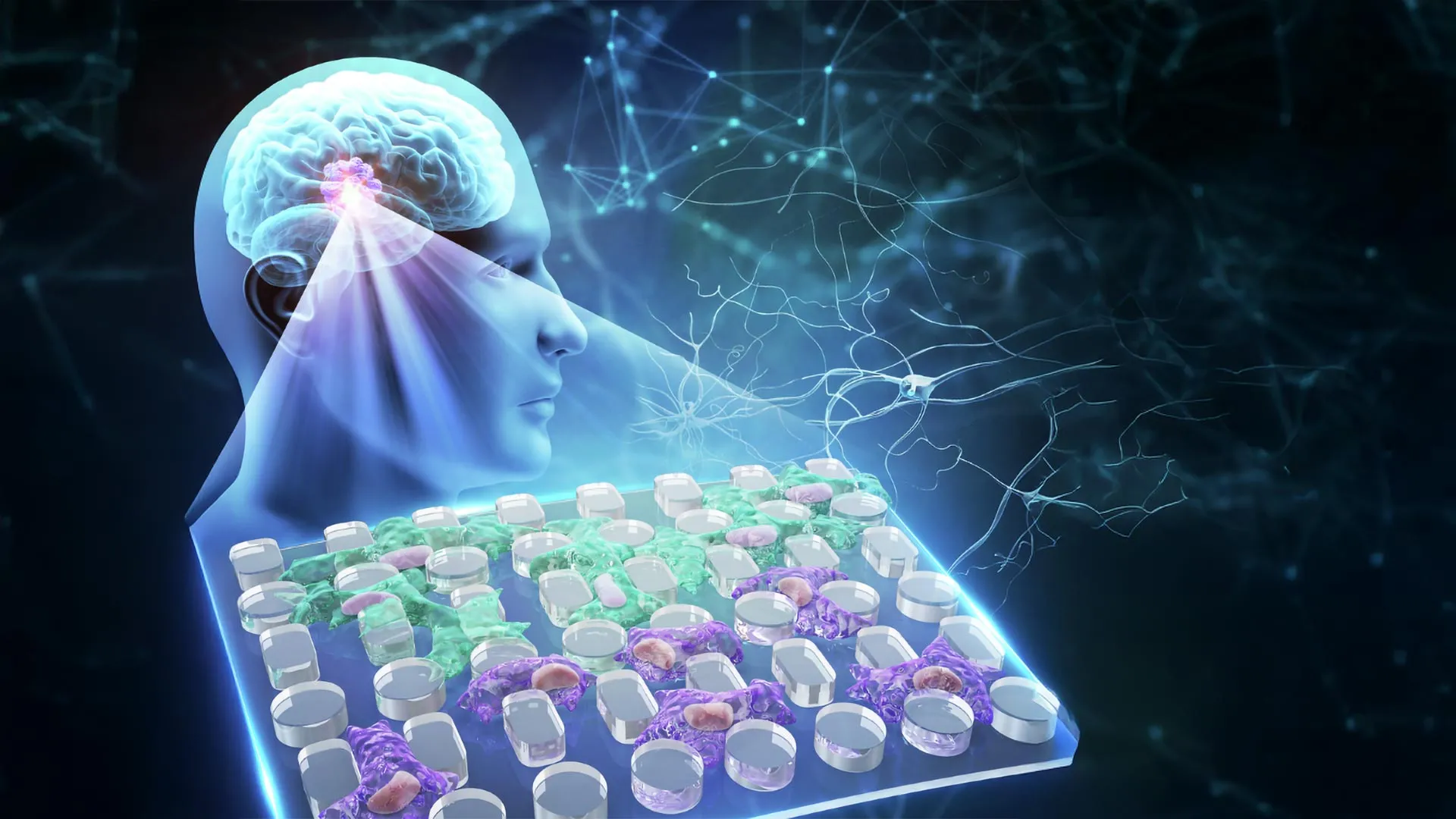
The traditional understanding of the human brain as a network dominated exclusively by neurons is undergoing a fundamental shift following the publication of a landmark study in the Proceedings of the National Academy of Sciences on April 6, 2026. For decades, the scientific consensus regarding appetite regulation focused almost entirely on the firing of neurons within the hypothalamus. However, new research spearheaded by the University of Concepción in Chile and the University of Maryland (UMD) has identified a sophisticated signaling pathway involving astrocytes—cells long relegated to the status of mere "support staff" for neurons. This discovery reveals that these star-shaped glial cells are, in fact, active participants in the metabolic conversations that dictate when a living being feels hungry or full.
The study, titled "Tanycyte-derived lactate activates astrocytic HCAR1 to modulate glutamatergic signaling and POMC neuron excitability," provides a granular look at the communication circuits of the hypothalamus. By uncovering the role of the HCAR1 receptor in astrocytes, the research team has opened a potential new frontier for the treatment of metabolic disorders, including obesity and Type 2 diabetes. As global obesity rates continue to climb, affecting over one billion people worldwide according to World Health Organization estimates, the identification of a non-neuronal target for appetite suppression represents a significant milestone in endocrinology and neuroscience.
Redefining the Role of Glial Cells in the Brain
Historically, the brain’s architecture was viewed through a neuron-centric lens. Neurons were seen as the primary conductors of electrical and chemical signals, while glial cells, including astrocytes, were thought to provide only structural support, nutrient delivery, and waste removal. The word "glia" itself is derived from the Greek word for "glue," reflecting this early limited perspective.
"People tend to immediately think of neurons when they think about how the brain works," said Ricardo Araneda, a professor in UMD’s Department of Biology and a corresponding author of the study. "But we’re finding that astrocytes, what we used to think of as just secondary support cells, are also participating in how our brains regulate how much we eat. This research changes how we think about these communication circuits."
In recent years, the scientific community has begun to recognize the "tripartite synapse," a concept where astrocytes actively participate in the exchange of information between neurons. The April 2026 study takes this a step further, positioning astrocytes as essential gatekeepers in the metabolic sensing process. Rather than just facilitating neuronal health, these cells act as primary detectors and transmitters of nutritional status.
The Chain Reaction: From Glucose to Satiety
The appetite regulation process identified by the research team is a complex, multi-stage relay involving three distinct cell types. This "chain reaction" begins in the third ventricle of the brain, a cavity filled with cerebrospinal fluid that serves as a conduit for various nutrients and hormones.
- Detection by Tanycytes: The process is initiated by tanycytes, specialized cells that line the walls of the third ventricle. These cells are uniquely positioned to monitor glucose levels in the cerebrospinal fluid. When an individual consumes a meal, blood glucose rises, and this increase is reflected in the brain’s fluid.
- The Metabolic Byproduct: Upon detecting elevated glucose, tanycytes begin to metabolize the sugar, producing lactate as a byproduct. This lactate is then released into the surrounding hypothalamic tissue.
- The Astrocytic Middleman: Previously, it was assumed that this lactate acted directly on appetite-suppressing neurons. However, the study revealed that the lactate first "speaks" to astrocytes.
- The HCAR1 Receptor and Glutamate Release: The researchers discovered that astrocytes possess a specific receptor known as HCAR1 (Hydroxycarboxylic Acid Receptor 1). When lactate binds to this receptor, it triggers the astrocyte to release glutamate, a powerful excitatory neurotransmitter.
- Neuronal Activation: Finally, this glutamate stimulates POMC (pro-opiomelanocortin) neurons. These specific neurons are responsible for signaling satiety to the rest of the body, effectively telling the individual to stop eating.
"Researchers used to think that lactate produced from tanycytes ‘spoke’ directly to neurons involved in appetite control," Araneda explained. "But we found that there was an unexpected middleman in that conversation: astrocytes. What surprised us was the complexity of it. To put it simply, we found that tanycytes ‘talk’ to astrocytes, and then astrocytes ‘talk’ to neurons."
Experimental Evidence and Localized Signaling
To validate this pathway, the research team employed sophisticated imaging and optogenetic techniques. In one pivotal experiment, scientists introduced glucose into a single tanycyte while monitoring the activity of the surrounding cellular network. The results were striking: the stimulation of a single cell triggered a wave of activity across multiple neighboring astrocytes. This demonstrated that the signal is not just a linear point-to-point transmission but a robust network response that can amplify the message of satiety across the hypothalamus.
Furthermore, the study addressed the "dual effect" of hunger regulation. The hypothalamus houses two primary, opposing populations of neurons: the POMC neurons, which suppress appetite, and the AgRP (agouti-related peptide) neurons, which stimulate hunger. The research suggests that while lactate activates the "fullness" circuit via astrocytes, it may simultaneously inhibit the "hunger" circuit through a more direct inhibitory route. This two-pronged approach ensures a decisive shift in behavioral state from seeking food to resting and digesting.
A Decade of International Collaboration
The publication of these findings marks the culmination of nearly ten years of rigorous scientific inquiry. The project was a collaborative effort between the University of Maryland and the University of Concepción, bridging the expertise of North and South American laboratories.
The collaboration was led by María de los Ángeles García-Robles at the University of Concepción, the project’s principal investigator, and Ricardo Araneda at UMD. The study’s lead author, Sergio López, played a crucial role in the experimental phase. As a doctoral student co-mentored by both institutions, López spent eight months at the University of Maryland conducting the high-resolution imaging and electrophysiological experiments necessary to map the HCAR1 pathway.
This decade-long timeline reflects the difficulty of studying deep-brain structures like the hypothalamus. Accessing these regions requires precision, and observing real-time chemical signaling between different types of non-neuronal cells requires technology that has only recently become sufficiently advanced.
Clinical Implications: A New Target for Obesity Treatment
The discovery of the HCAR1 pathway in astrocytes arrives at a time when the pharmaceutical industry is heavily invested in metabolic health. Currently, the most prominent treatments for obesity are GLP-1 (glucagon-like peptide-1) receptor agonists, such as semaglutide (marketed as Ozempic and Wegovy). While highly effective, these drugs primarily target the gut-brain axis and can have significant gastrointestinal side effects.
The identification of the HCAR1 receptor on astrocytes offers a different, potentially complementary approach. By targeting a receptor specifically involved in the brain’s internal glucose-sensing mechanism, future medications could potentially "tune" the brain’s sensitivity to satiety signals without affecting the digestive system directly.
"We now have a different mechanism where we might be able to target astrocytes or specifically this HCAR1 receptor," Araneda noted. "It would be a novel target that may complement existing therapies like Ozempic, for example, and improve the lives of many who suffer from obesity and other appetite-related conditions."
Medical analysts suggest that a drug targeting HCAR1 could be particularly beneficial for patients who have developed resistance to traditional weight-loss medications or those who suffer from specific eating disorders where the "fullness" signal is biologically dampened.
Future Research and Global Health Context
While the results are promising, the research team emphasizes that the study was conducted using animal models. However, because the fundamental biology of tanycytes and astrocytes is conserved across all mammals, there is high confidence that the same mechanism exists in humans. The next phase of research will involve testing whether pharmacological manipulation of the HCAR1 receptor can reliably alter eating behavior and body weight over extended periods.
The funding for this research underscores the global importance of the work. Support was provided by Chile’s National Fund for Scientific and Technological Development (FONDECYT), the Millennium Institute of Neuroscience in Valparaíso, and the U.S. National Institutes of Health (NIH).
As the scientific community digests these findings, the focus will likely shift toward "glial pharmacology." If astrocytes are indeed the primary regulators of metabolic homeostasis, they may also hold the key to understanding other conditions, such as metabolic syndrome and the cognitive decline often associated with high-sugar diets.
The study serves as a reminder that even in the most well-mapped regions of the human body, such as the brain, there are still fundamental "conversations" happening that science is only beginning to overhear. By moving beyond the neuron, researchers are finding that the "glue" of the brain may actually be the master regulator of our most basic survival instincts.