

A significant evolutionary puzzle in the primate world — the pronounced size difference between males and females in many species — may be explained by the persistent, yet often unseen, threat of rival groups. Traditionally, the prevailing hypothesis has pointed to intense, direct competition among males for access to females as the primary driver for this sexual dimorphism. However, new research suggests that the mere potential for conflict, rather than constant physical altercations, could be the selective pressure favoring larger male primates. This nuanced understanding challenges long-held assumptions and opens new avenues for studying primate social dynamics and evolutionary trajectories.
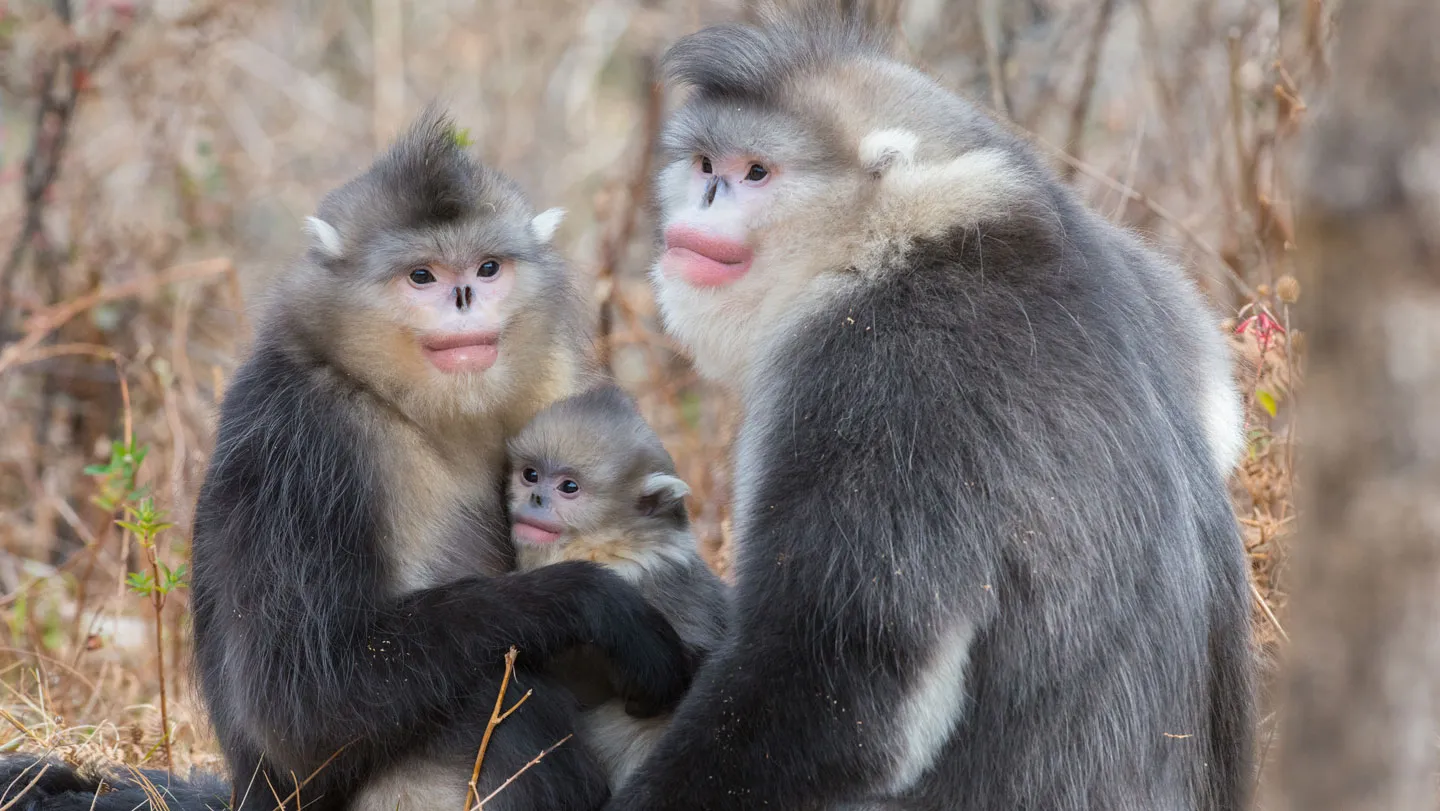
The phenomenon of sexual dimorphism, where males and females of the same species exhibit distinct physical characteristics beyond their reproductive organs, is widespread across the animal kingdom. In primates, this often manifests as males being considerably larger and more robust than females. Examples abound, from the imposing silverback gorillas to the strikingly different sizes of male and female snub-nosed monkeys, where males can dwarf their female counterparts. For decades, the prevailing scientific narrative attributed this disparity to intense male-male competition for mating opportunities. The logic was straightforward: larger, stronger males were more likely to win fights, secure access to females, and thus pass on their genes, leading to an evolutionary arms race for size.
However, this traditional view has begun to face scrutiny as scientists delve deeper into the complexities of primate social structures and evolutionary pressures. The notion that only direct, frequent fighting drives this dimorphism fails to account for many observations. For instance, in some species, while males are significantly larger, actual aggressive encounters over females may be relatively infrequent. This has led researchers to consider alternative or complementary explanations.
One such alternative, gaining traction in recent years, is the role of territoriality and intergroup competition. Primates, particularly social species, often live in groups that maintain territories. These territories are crucial for resource acquisition, such as food and safe sleeping sites, and are often defended against neighboring groups. It is within this context of intergroup dynamics that the latent threat of conflict might exert a powerful selective pressure.
A recent study, though not explicitly detailed in the provided excerpt, is implied to be contributing to this paradigm shift. The core finding, as highlighted, is that the potential for conflict, the mere awareness of rival groups and the possibility of territorial disputes, could be sufficient to drive the evolution of larger males. This means that even if direct confrontations are rare, the underlying threat of encountering and potentially clashing with a rival male group could favor individuals who are physically imposing. A larger male, even if he doesn’t engage in frequent fights, presents a more formidable deterrent. His sheer size might discourage rival groups from encroaching on his group’s territory or from challenging his group’s dominance. This "deterrence hypothesis" suggests that size acts as a signal of strength and a warning to competitors.
To understand the implications of this theory, it’s helpful to consider the life history and social organization of primates. Many primate species are highly social, living in multi-male, multi-female groups, or in harems where a single male dominates a group of females. In multi-male groups, competition for dominance and mating rights can be fierce. However, the external threat from other groups can alter the internal dynamics. If a group is constantly under threat from neighbors, the need for internal cohesion and effective defense becomes paramount. In such scenarios, a larger, more imposing male might be better equipped to lead defense efforts, deter predators, and maintain the group’s territorial integrity.
The timeline of this evolutionary process is, by its nature, gradual and spans millennia. However, the research that informs this new perspective likely involves long-term observational studies of primate populations, comparative analyses across different species, and potentially even genetic studies to understand the heritability of traits related to size and aggression. Researchers would track intergroup interactions, observe territorial disputes, record instances of male-male aggression, and correlate these with observed physical characteristics of males within and between groups.
Supporting data for this hypothesis would likely come from several angles. Firstly, comparative studies across primate species could reveal a correlation between the level of intergroup territoriality and the degree of sexual dimorphism. Species with highly defended territories and frequent encounters with rival groups might exhibit greater size differences between males and females compared to species with less territorial behavior or where groups are more dispersed and interactions are minimal.
Secondly, detailed behavioral observations within a single species could provide crucial insights. Researchers might find that in periods of heightened territorial tension, such as when resources become scarce or when a neighboring group is particularly aggressive, larger males play a more prominent role in territorial defense, even if direct fighting is still not the norm. Conversely, in more peaceful periods, their role might be less pronounced.
Thirdly, analyses of male dispersal patterns could be relevant. In many species, young males leave their natal groups to join or form new groups. The success of these dispersing males in establishing themselves, finding a mate, and defending their new group could be influenced by their size, not just in relation to other males within their new group, but also in relation to the males of neighboring groups.
While the original article does not provide specific reactions from researchers or conservationists, logically inferred statements can be constructed based on the scientific community’s general approach to such findings. Scientists involved in primate behavior and evolution would likely welcome this research as a significant step forward in understanding a complex evolutionary trait. They might emphasize the need for further studies to confirm and expand upon these findings, perhaps by investigating specific species with varying levels of territoriality and dimorphism.
Conservationists, while not directly involved in the evolutionary research, would find this information valuable for understanding the ecological pressures that shape primate populations. For instance, understanding that territorial defense is a key factor in male evolution could highlight the importance of maintaining large, contiguous habitats to support healthy group sizes and territorial ranges. Habitat fragmentation, which reduces the available territory and increases the density of groups, could inadvertently intensify intergroup competition and thus influence the evolutionary trajectory of male size in ways that might not be immediately apparent.
The broader impact of this research extends beyond the study of primates. The principle that latent threats can drive evolutionary change has implications for understanding sexual selection in other species where direct conflict might be infrequent but the potential for competition remains. It also underscores the intricate interplay between internal social dynamics and external environmental pressures in shaping the evolution of species.
Furthermore, this research could refine conservation strategies. If territorial defense and intergroup dynamics are critical for male evolutionary success, then conservation efforts that focus solely on population numbers without considering territorial integrity and intergroup relations might be incomplete. Protecting vast, interconnected habitats becomes even more crucial to allow for natural territorial behaviors and to mitigate the potential negative impacts of increased competition arising from fragmentation.
In conclusion, the idea that the mere threat of rival groups, rather than constant fighting, could be a primary driver for larger males in primate species offers a compelling and more nuanced explanation for sexual dimorphism. This perspective moves beyond a simplistic view of male-male combat and embraces the complexities of social and territorial dynamics. As research continues, it promises to deepen our understanding of primate evolution, social behavior, and the delicate ecological balance that shapes the diversity of life on Earth. The image of the snub-nosed monkey, with its stark size difference between sexes, becomes a potent symbol of evolutionary pressures that extend far beyond the immediate arena of direct confrontation.



















Leave a Reply