

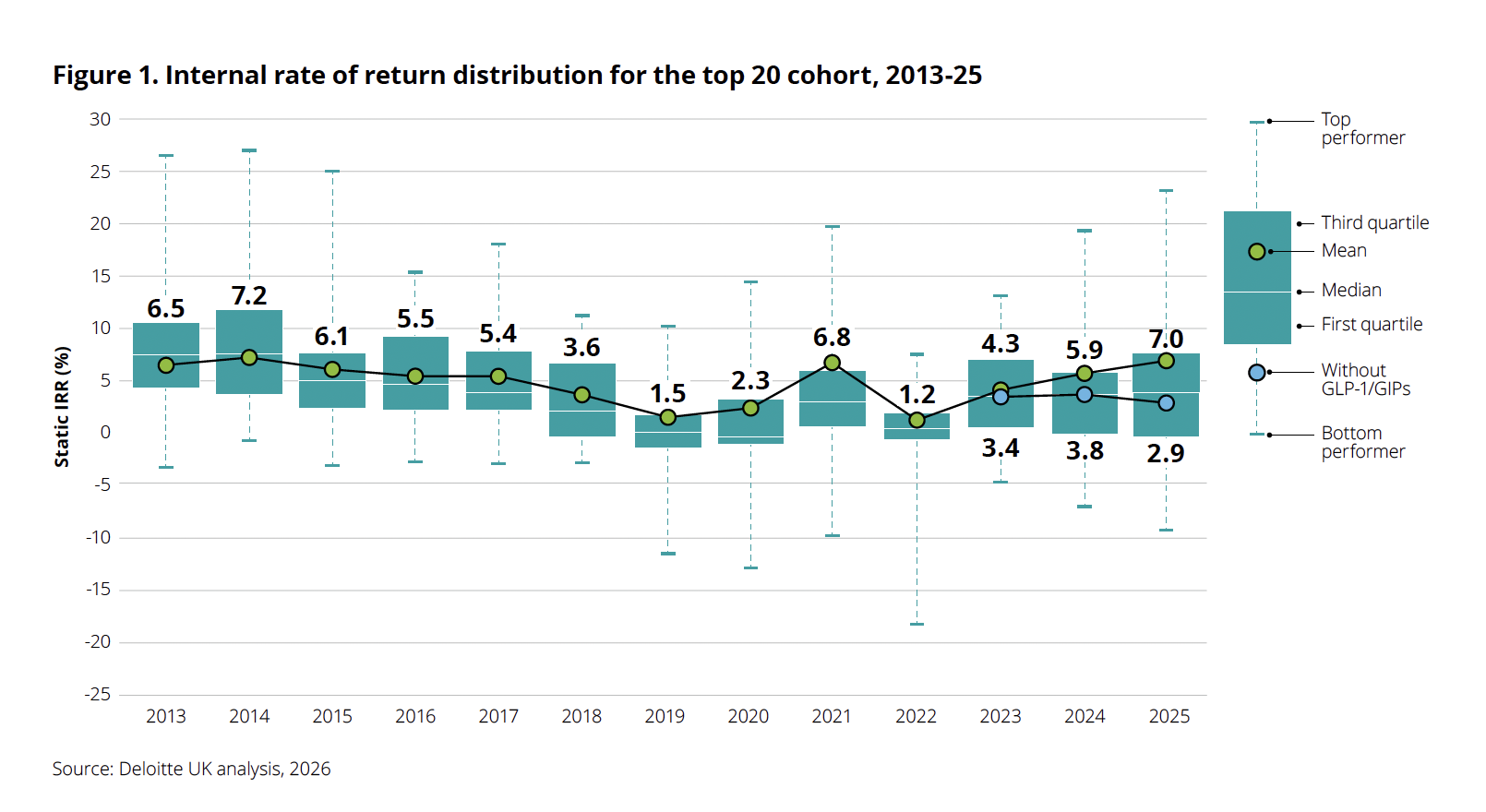
The pharmaceutical industry, emerging from a period characterized by uneven growth and significant challenges in research and development (R&D) productivity, is witnessing a notable resurgence in its financial returns. According to the 16th edition of Deloitte’s influential annual "Measuring the Return from Pharmaceutical Innovation" report, tellingly titled "Navigating the GLP-1 boom," the projected internal rate of return (IRR) on late-stage pipeline assets has climbed for the third consecutive year, reaching 7.0% in 2025. This marks a substantial increase from 5.9% recorded the previous year, signaling a potential shift in the sector’s fortunes.
Kevin Dondarski, a principal for life sciences strategy at Deloitte Consulting, highlighted the unprecedented nature of this upward trend. "We went through a period of so many years where the returns kept declining, excluding the COVID impact in the middle," Dondarski observed. "But the increase over the last few years is analytically unprecedented." This surge in projected returns, however, comes with a significant caveat: much of this optimistic outlook is overwhelmingly driven by a single class of therapies – Glucagon-Like Peptide-1 (GLP-1) and Glucose-dependent insulinotropic polypeptide (GIP) receptor agonists, primarily targeting obesity and related metabolic conditions.
The GLP-1 Phenomenon: A Double-Edged Sword
GLP-1/GIP drugs are estimated to account for a staggering 38% of all projected commercial inflows from the 2025 late-stage pipeline. The profound impact of these therapies on the overall industry’s financial health becomes starkly apparent when they are excluded from the analysis. Without the contribution of GLP-1/GIP drugs, the headline IRR plummets from 7.0% in 2025 to a mere 2.9%. This figure represents an even sharper decline compared to the 2024 IRR of 5.9%, which, when stripped of GLP-1/GIP contributions, stood at 3.8%.
Dondarski emphasized the dual message embedded in these findings. "One, it’s certainly attractive, because the market is valuing the potential impact that those therapies can have on the public, which is great," he stated. "But at the same time, it raises the question of sustainability. As those programs progress, is there going to continue to be that opportunity through the next generation and the next? It will create a responsibility for these companies to find the right assets to replace in the pipeline."
This unprecedented concentration of value around a single drug class is a historical first for Deloitte’s 16-year report. While certain therapeutic areas have always contributed significantly to pipeline value, the current dominance of GLP-1/GIPs is unparalleled. "There tends to be a certain set of classes that account for a lot of value; if you take them out, the IRR goes down," Dondarski explained. "But this is the largest impact that I think we’ve seen in the history of our work."
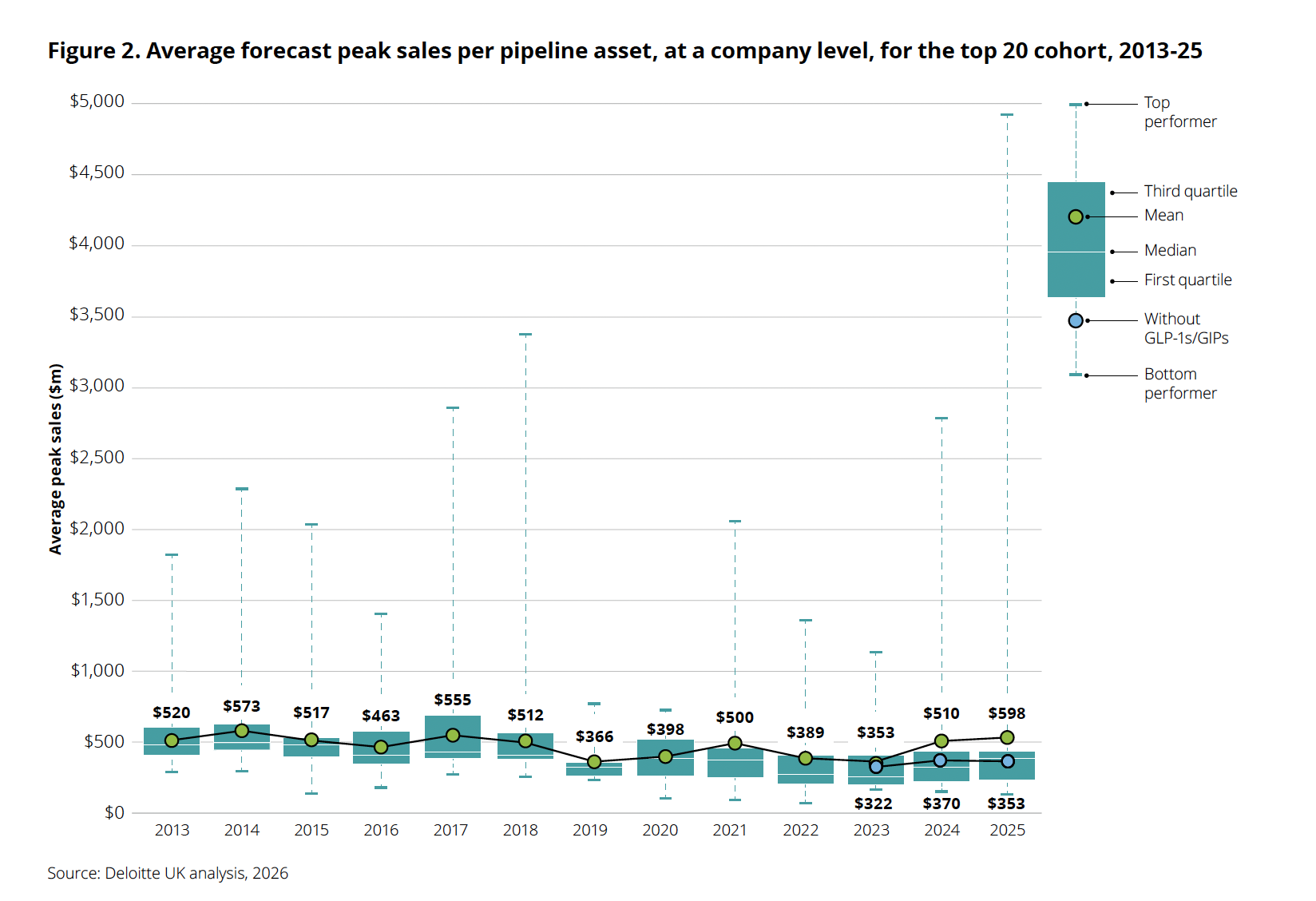
The report further illustrates this imbalance by examining average forecast peak sales per pipeline asset. While the overall average jumped to $598 million in 2025, the underlying disparity is striking. The top-performing assets, largely GLP-1/GIPs, now approach $5 billion in projected peak sales. In stark contrast, when GLP-1/GIPs are removed, the average forecast peak sales per asset shrink to $353 million – a figure actually lower than the previous year. This indicates that beneath the surface of GLP-1-fueled growth, the broader pharmaceutical pipeline’s productivity is, in fact, experiencing a decline.
Market Dynamics and Corporate Performance: A Turbulent Landscape
Despite the seemingly robust financial projections, the market has been sending mixed signals regarding the long-term durability of the GLP-1/GIP boom. Eli Lilly, the developer of tirzepatide (marketed as Zepbound for weight loss and Mounjaro for diabetes) and the recently launched oral GLP-1 Foundayo (orforglipron) in April 2026, experienced a 10-13% dip in its stock year-to-date. This occurred even as the company raised its full-year revenue guidance to an impressive $82-$85 billion, primarily on the back of strong Mounjaro and Zepbound volume growth.
Meanwhile, Novo Nordisk, another dominant player in the GLP-1 market, underwent significant organizational changes. In 2025, the company announced the replacement of its long-serving CEO Lars Fruergaard Jorgensen with Maziar Mike Doustdar, amid concerns over slowing momentum and share-price pressure. This leadership transition was accompanied by a significant restructuring, including the departure of seven board members at an extraordinary general meeting in November 2025, and plans to cut approximately 9,000 roles from its global workforce of 78,400 by late 2026. Novo Nordisk’s Q1 2026 release indicated a workforce of about 67,900 employees, implying a reduction of around 10,500 personnel since the restructuring was announced.
Adding to Novo Nordisk’s pressures, its promising next-generation obesity drug, CagriSema – a combination of the amylin analogue cagrilintide and semaglutide – failed to meet expectations. In February 2026, the drug did not demonstrate non-inferiority against Lilly’s Zepbound in the REDEFINE 4 Phase 3 head-to-head trial. CagriSema achieved 23.0% weight loss compared to Zepbound’s 25.5%, triggering another wave of investor disappointment and raising questions about the company’s future growth drivers beyond its existing GLP-1 portfolio.
GLP-1s: The Golden Goose or a Fleeting Fortune?
Despite these corporate turbulences and investor anxieties, the demand for GLP-1s remains extraordinarily strong. Eli Lilly delivered a strong Q1 performance, reporting revenue of $19.8 billion (surpassing expectations of $17.6 billion), a 56% year-over-year increase. This growth was largely propelled by Mounjaro, which generated $8.7 billion (+125%), and Zepbound, contributing $4.1 billion (+79%). This performance led Lilly to raise its full-year revenue guidance by $2 billion.
Novo Nordisk’s Q1 results, while strong, presented a more nuanced picture. The company reported Q1 sales of DKK 96.8 billion ($15.2 billion). Its oral Wegovy pill, launched on January 5, demonstrated exceptional uptake, generating DKK 2.26 billion in its inaugural quarter, nearly doubling analysts’ expectations of DKK 1.16 billion. However, underlying tensions persist. Lilly’s 56% revenue growth, for instance, was driven by a 65% volume increase, partially offset by a 13% decline in realized prices. Similarly, Novo Nordisk’s adjusted sales actually fell by 4% at constant exchange rates once a one-time $4.2 billion 340B provision reversal was excluded, highlighting potential pricing pressures and the complex financial landscape these blockbusters navigate.
Further intensifying the pressure on profitability, both Eli Lilly and Novo Nordisk have agreed to lower U.S. prices for GLP-1s through government programs like Medicare, Medicaid, and the TrumpRx initiative. A November deal was expected to expand Medicare and Medicaid coverage for weight-loss indications for the first time, with eligible beneficiaries facing monthly co-pays as low as $50. The TrumpRx site, for example, now lists the Wegovy pill at $149 per month, the Wegovy pen at $199, Ozempic at $199, and Zepbound at $299. These pricing adjustments, while expanding access, will inevitably impact the companies’ revenue per unit, necessitating higher sales volumes to maintain growth.
The Spiraling Cost of R&D and Shifting Therapeutic Focus
Beyond the GLP-1 narrative, the Deloitte report also shed light on the escalating costs of pharmaceutical R&D. The average cost to develop a drug from discovery to launch continued its upward trajectory, reaching $2.67 billion in 2025, a significant increase from $2.23 billion the year before. Dondarski noted that this was not an anomaly caused by a single outlier, as 17 out of the 20 companies studied experienced cost increases, indicating a pervasive industry trend.
Three primary factors converged to drive this spike: R&D costs persistently rising above general inflation, large-scale mergers and acquisitions (M&A) inflating the R&D cost base through integration challenges and write-downs, and a 4-5% reduction in the overall number of late-stage programs due to attrition. This environment of rising costs and diminishing pipeline breadth exacerbates the industry’s reliance on high-value assets like GLP-1s.
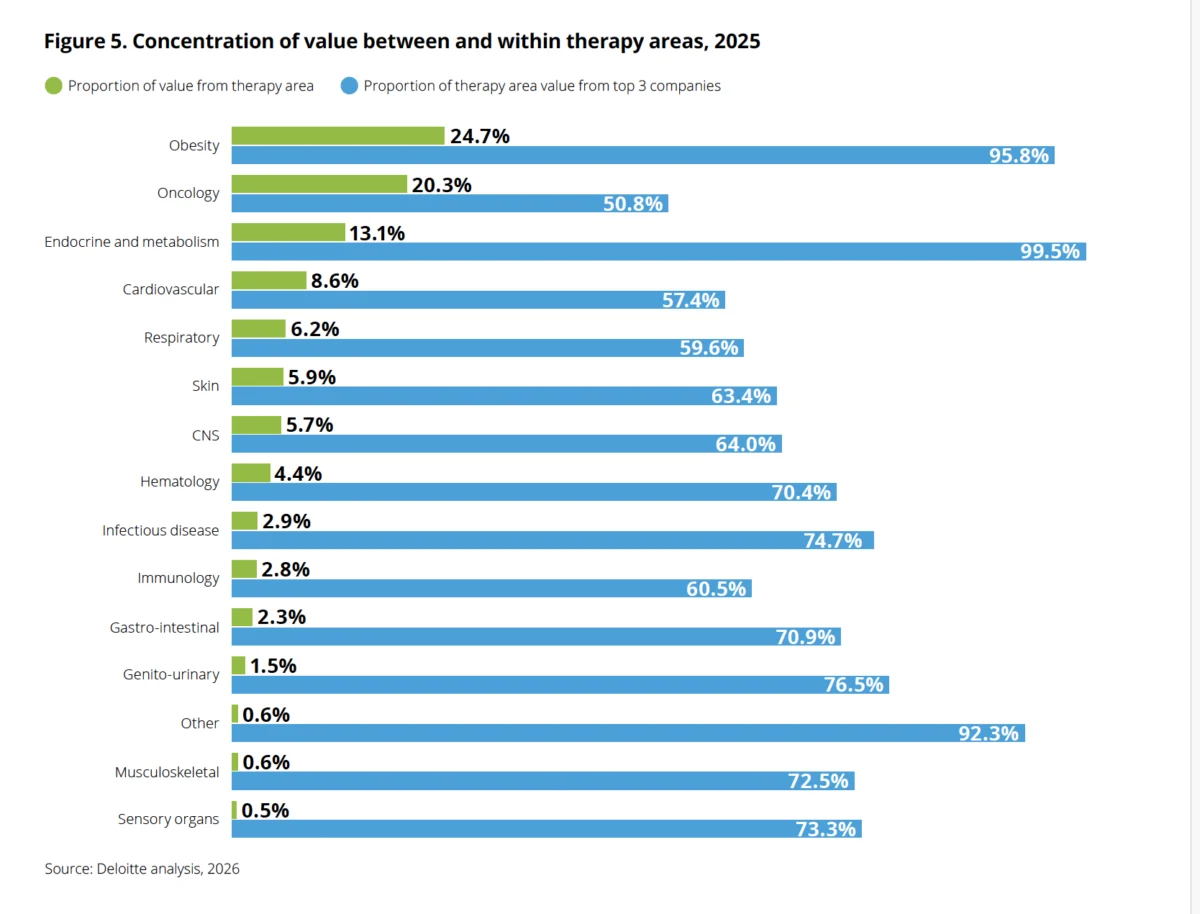
The ascendance of GLP-1s has also fundamentally reshaped the therapeutic landscape within late-stage pipelines. For the first time in the report’s 16-year history, obesity now commands the largest share of late-stage pipeline value, at 24.7%, displacing oncology, which now stands at 20.3%. This shift underscores the immense market potential identified in metabolic health. However, the report highlights an even more striking concentration within the obesity segment itself: nearly 96% of that value is held by just three companies – predominantly Eli Lilly and Novo Nordisk. This intense consolidation within a booming therapeutic area raises competitive stakes and underscores the challenges for other pharmaceutical players to penetrate this lucrative market.
AI: Still Awaiting Widespread Impact
Last year’s Deloitte report, titled "Be brave, be bold," urged pharmaceutical companies to aggressively adopt AI-powered drug development platforms, automation, and advanced analytics as crucial tools to reverse decades of declining R&D productivity. Despite this call to action and significant industry investment, the 2025 data reveals that R&D costs have continued to climb to a record $2.67 billion per asset, while clinical cycle times have remained stubbornly long.
The report now concedes that AI’s much-heralded promise to significantly reduce development time and costs "has not yet been realized at scale, largely due to a pilot-driven, function-by-function approach." This suggests that while individual departments or projects may see benefits, the holistic integration and transformational impact across the entire R&D value chain are still elusive.
Dondarski affirmed that AI remains a high-priority area for the industry. "Everybody’s actively focusing on AI, and everybody’s had some degree of success," he acknowledged. However, he added, "But from our vantage point, there’s a good amount of variability in the velocity at which organizations are scaling those efforts to maximize value creation." This indicates that while the foundational work for AI adoption is underway, the industry is grappling with the complexities of scaling these technologies effectively to achieve enterprise-wide efficiencies and unlock their full potential.
Broader Implications and the Path Forward
The findings of Deloitte’s 16th annual report present a complex picture for the pharmaceutical industry. While the surge in projected R&D returns is a welcome development after years of decline, its heavy reliance on GLP-1/GIP therapies highlights a fundamental imbalance and raises significant questions about long-term sustainability. The industry finds itself at a critical juncture, where the extraordinary success of a single drug class is masking underlying challenges in broader pipeline productivity and escalating R&D costs.
For companies heavily invested in the GLP-1 space, the imperative is to manage competition, navigate evolving pricing landscapes, and continue innovating to maintain their lead. For the wider pharmaceutical sector, the report serves as a stark reminder of the urgent need for diversification beyond a single "golden goose." Developing robust pipelines in other therapeutic areas, fostering genuine R&D productivity improvements, and strategically scaling advanced technologies like AI will be crucial for sustainable growth and ensuring that the current "spring" for pharma does not give way to another "winter" once the GLP-1 boom matures. The future health of the industry will depend on its ability to leverage the current enthusiasm to rebuild a diversified and resilient innovation ecosystem.










Leave a Reply