

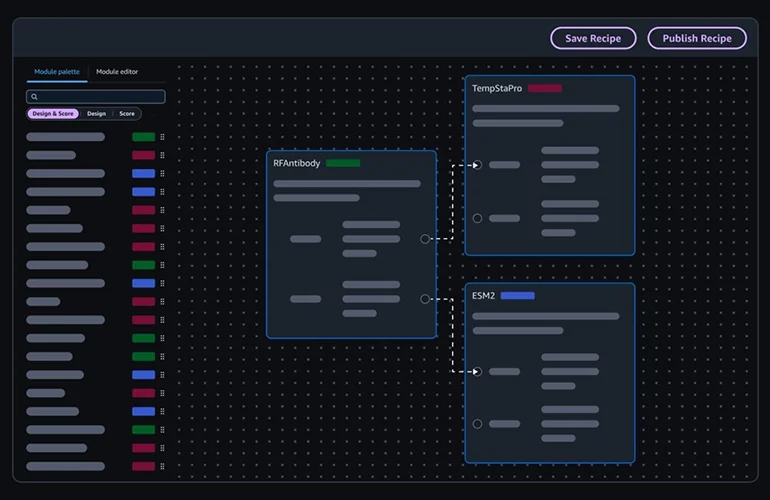
Amazon Web Services (AWS) today unveiled Amazon Bio Discovery, a groundbreaking application designed to drastically accelerate the drug discovery process by integrating advanced artificial intelligence (AI) with real-world laboratory capabilities. This innovative platform streamlines the development of AI-designed antibody candidates, routing them directly to leading DNA synthesis and techbio firms, Twist Bioscience and Ginkgo Bioworks, for rapid synthesis and testing. Crucially, the results of these physical experiments flow back into the same integrated interface that generated the initial designs, creating a powerful closed-loop system for iterative optimization. This launch signifies a major step forward in leveraging cloud computing and AI to revolutionize the traditionally arduous and time-consuming journey of bringing new therapeutics to patients.
A New Paradigm in Drug Discovery: Bridging AI and Wet Lab
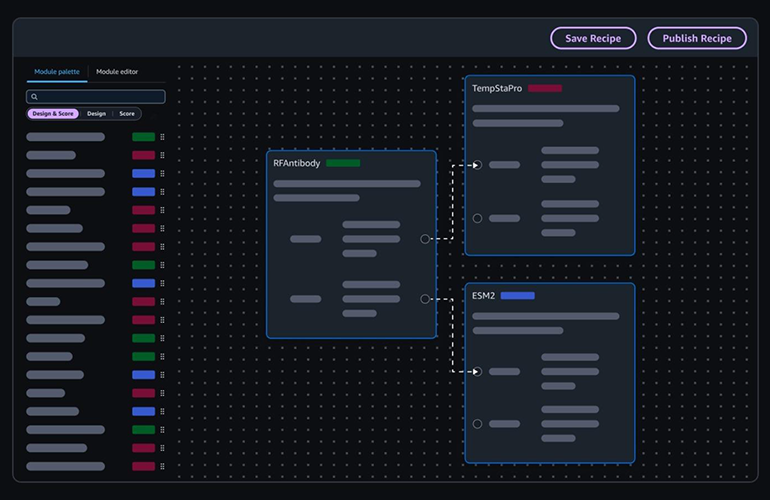
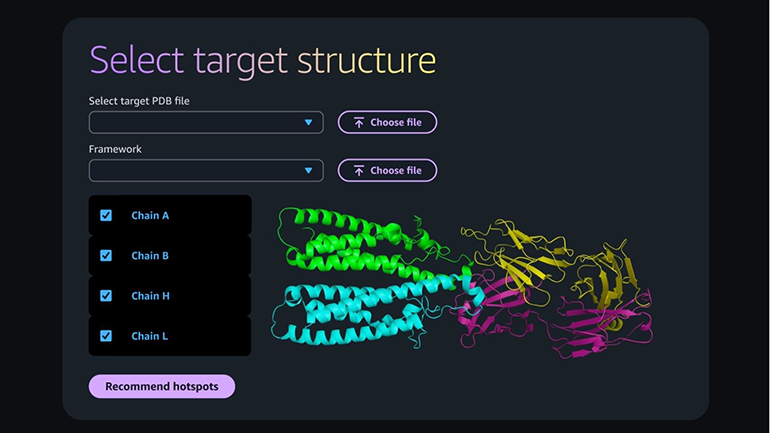
The introduction of Amazon Bio Discovery marks a pivotal moment in the convergence of computational biology and experimental science. The application is built upon a sophisticated architecture that pairs an integrated wet-lab handoff with an extensive catalog of biological foundation models (bioFMs). These bioFMs are large AI models, meticulously trained on vast biological datasets, enabling them to generate and evaluate potential drug molecules with unprecedented speed and accuracy. Complementing this, a natural-language agent facilitates experiment design and allows for fine-tuning on proprietary laboratory data, making the platform accessible and adaptable for diverse research needs. This holistic approach aims to break down the traditional silos between computational prediction and physical validation, fostering a more agile and efficient research environment.
The challenges in drug discovery are well-documented. The average timeline for bringing a new drug to market spans 10 to 15 years, often costing billions of dollars, with success rates notoriously low. A significant portion of this time and expense is consumed by the iterative process of designing, synthesizing, and testing molecular candidates. Antibody design, in particular, involves navigating an immense molecular search space, making manual or traditional computational methods incredibly slow and resource-intensive. Amazon Bio Discovery directly addresses this bottleneck by automating and accelerating the initial design and screening phases, promising to condense processes that once took years into mere weeks.
Early Adopters and Transformative Case Studies
AWS launched Amazon Bio Discovery with a formidable roster of early adopters, including global pharmaceutical giant Bayer, the renowned Broad Institute, the Memorial Sloan Kettering Cancer Center (MSK), and the innovative gene therapy company Voyager Therapeutics. These collaborations underscore the platform’s broad applicability across different stages and therapeutic areas of drug development, from basic research to translational science and clinical applications.
One of the most compelling early projects highlighted the platform’s transformative potential in antibody design at Memorial Sloan Kettering. Researchers, working under the guidance of Dr. Nai-Kong Cheung, M.D., Ph.D., the esteemed Enid A. Haupt Chair in Pediatric Oncology at MSK, utilized Amazon Bio Discovery to orchestrate multiple advanced AI models. This orchestration led to the rapid generation of nearly 300,000 novel antibody molecules. From this expansive pool, the team then selected the top 100,000 candidates and seamlessly dispatched them to Twist Bioscience for high-throughput testing. AWS reported that this accelerated workflow compressed a process that typically takes up to a year into a mere matter of weeks.
Dr. Cheung’s poignant statement, "Patients come here with a clock. We need results sooner," encapsulates the urgent imperative driving such innovations in medical research. For patients battling life-threatening diseases like cancer, every week saved in the drug discovery pipeline can translate directly into more time and better treatment options. This specific antibody design project at MSK was an outgrowth of a broader strategic collaboration between AWS and Memorial Sloan Kettering, initially announced in February 2025, aimed at accelerating AI-driven cancer innovation. This earlier partnership laid the groundwork for the successful implementation of Amazon Bio Discovery in a critical area of pediatric oncology, demonstrating the long-term vision behind these technological integrations.
The Role of Key Partners in the Ecosystem
The success of Amazon Bio Discovery hinges on the robust ecosystem of partners that AWS has assembled. Twist Bioscience, a leader in synthetic DNA, plays a crucial role in rapidly synthesizing the AI-designed antibody candidates. Their advanced silicon-based DNA synthesis platform allows for the creation of vast libraries of oligonucleotides, genes, and antibody fragments, essential for high-throughput screening. Ginkgo Bioworks, a prominent techbio company specializing in cell programming and biosecurity, provides the capabilities for advanced biological testing and evaluation of these candidates. Their expertise in organism engineering and high-throughput biology ensures that the promising molecules identified computationally can be efficiently validated in a laboratory setting. This seamless integration between computational design, DNA synthesis, and biological testing forms the backbone of the accelerated discovery cycle.
Broader AWS Initiatives: AI for Real-World Data and Clinical Trials
Beyond Amazon Bio Discovery, AWS also outlined several other significant AI-powered initiatives in the life sciences sector, demonstrating a comprehensive strategy to embed AI across the drug development continuum. These initiatives, shared in symposium materials with media, highlight AWS’s commitment to transforming various stages, from preclinical research to clinical development and patient care.
One major announcement detailed a collaboration with Labcorp and data-linkage firm Datavant to develop an AI-powered real-world data (RWD) platform specifically for Alzheimer’s disease research. Alzheimer’s disease represents a persistent and devastating challenge, with drug development often hampered by difficulties in patient identification and recruitment for clinical trials. The Labcorp platform leverages the company’s extensive portfolio of blood-based biomarker testing data, which Labcorp asserts is the broadest such collection for Alzheimer’s and dementia.
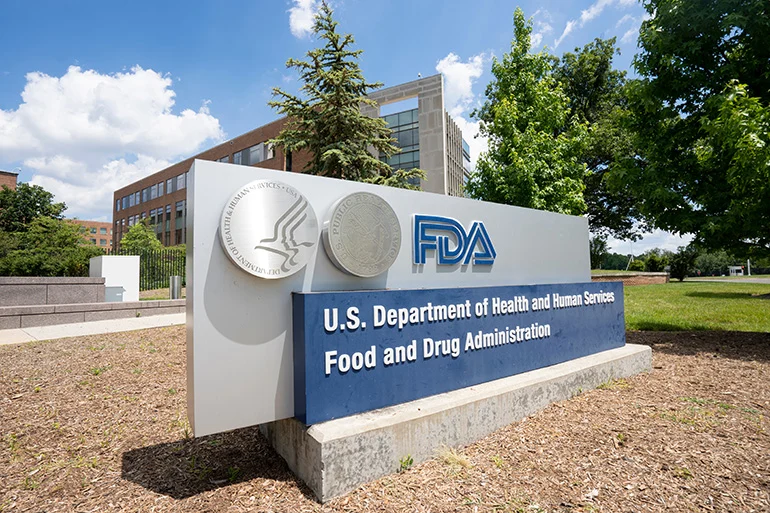
In this partnership, Labcorp’s proprietary longitudinal diagnostic record and vast biomarker data serve as the crucial differentiator. AWS contributes its powerful Bedrock agents and SageMaker analytics capabilities, providing the computational infrastructure and AI tools necessary to process and derive insights from complex datasets. Datavant, specializing in privacy-preserving data linkage, ensures that these lab results can be securely and ethically tied to medical claims data, creating a holistic view of patient journeys. Early use cases for this platform are centered on identifying precise patient cohorts for clinical trial recruitment – a notorious bottleneck in Alzheimer’s drug development, where finding the right patients at the right stage of the disease is critical. The Alzheimer’s version of this platform is expected to complete its initial validation this spring, with ambitious plans for expansion in 2026 into other critical therapeutic areas, including inflammatory diseases, cardiometabolic conditions, and women’s health, in addition to oncology. Labcorp’s claim of supporting over 85% of FDA drug approvals in 2025 underscores its foundational role in the pharmaceutical ecosystem, making its AI-driven data initiatives particularly impactful.
Further illustrating its diverse engagements, AWS also highlighted work with Merck and BCG (Boston Consulting Group) on AI-enabled clinical trial site selection. Optimizing clinical trial site selection is crucial for efficiency, cost-effectiveness, and timely completion of trials. AI can analyze vast amounts of data, including patient demographics, physician expertise, historical trial performance, and logistical factors, to identify the most suitable sites, thereby reducing trial timelines and improving recruitment rates. Additionally, AWS announced a collaboration with Verily, Google’s life sciences organization, to make Verily Workbench generally available for AWS users. Verily Workbench is a secure, cloud-based platform designed to facilitate collaborative biomedical research, providing tools for data analysis, machine learning, and secure data sharing. Making it accessible on AWS further broadens its reach and utility for researchers worldwide.
The Ascendancy of AI Agents in Drug Discovery
The strategic move by AWS into integrated AI-driven drug discovery with Amazon Bio Discovery is not an isolated event but rather indicative of a broader industry trend: the increasing adoption of "agents" as the preferred architectural framework for AI in drug discovery. AI agents are autonomous or semi-autonomous programs designed to perceive their environment, make decisions, and take actions to achieve specific goals, often interacting with other systems or humans. In the context of drug discovery, these agents can automate complex workflows, integrate data from disparate sources, and guide experimental design.
Several prominent players are already making significant strides in this domain. Isomorphic Labs, the Google DeepMind spinout, has garnered substantial attention for its AI-powered drug design capabilities. In 2024, Isomorphic Labs signed high-value drug-design partnerships with pharmaceutical giants Eli Lilly, Novartis, and Johnson & Johnson, with potential deal values exceeding $3 billion. These collaborations highlight the industry’s confidence in AI’s ability to revolutionize the early stages of drug development.
Similarly, Insilico Medicine, another pioneer in AI drug discovery, has demonstrated tangible success with its Pharma.AI platform. Rentosertib, a drug candidate developed using this platform, reached the preclinical candidate stage in an impressive 18 months, a fraction of the traditional timeline. The drug subsequently completed a Phase IIa trial for idiopathic pulmonary fibrosis, with promising results published in the prestigious journal Nature Medicine in 2025. Such concrete achievements validate the agent-based approach to accelerate discovery and development.
NVIDIA’s healthcare division is also actively pitching a similar "co-scientist" architecture through its BioNeMo platform. BioNeMo aims to provide a generative AI platform for drug discovery, allowing researchers to train, customize, and deploy AI models for tasks like protein structure prediction, molecular generation, and simulation, effectively acting as an intelligent assistant to human scientists. The intense competition and strategic importance of this field were further underscored in early April when Anthropic, a leading AI safety and research company, reportedly acquired Coefficient Bio for $400 million in stock. Coefficient Bio was a relatively young drug design startup, only eight months old, but staffed by highly experienced computational biologists from prominent firms like Evozyne, Genentech, and Prescient Design, signaling a deeper push by general AI companies into the specialized realm of drug discovery.
Implications and Future Outlook
The launch of Amazon Bio Discovery and the broader trend of AI agent adoption carry profound implications for the pharmaceutical industry, healthcare systems, and ultimately, patients.
Accelerated Development Timelines: The most immediate impact is the potential to drastically reduce the time it takes to identify and optimize promising drug candidates. Shaving months or even years off the discovery phase means therapies can reach clinical trials and, eventually, patients much faster, particularly critical for diseases with high unmet medical needs.
Increased Efficiency and Reduced Costs: By automating repetitive tasks, exploring vast chemical spaces more efficiently, and minimizing the number of costly wet-lab experiments through better computational prediction, AI can significantly lower the overall cost of drug development. This could free up resources for further research and development or potentially lead to more affordable medications.
Higher Success Rates: Traditional drug discovery suffers from high attrition rates. AI’s ability to better predict molecular properties, potential toxicities, and efficacy in silico could lead to a higher quality of candidates entering preclinical and clinical development, thereby improving overall success rates.
Democratization of Advanced Tools: Cloud-based platforms like Amazon Bio Discovery make sophisticated AI and computational biology tools accessible to a wider range of researchers and institutions, including smaller biotech firms and academic labs, without requiring massive upfront investments in computing infrastructure.
Personalized Medicine: The ability to rapidly design and test novel molecules, combined with real-world data platforms for patient cohort identification, paves the way for more personalized and targeted therapies. AI can help identify specific patient populations that would most benefit from particular treatments.
Ethical Considerations and Data Privacy: As AI becomes more deeply embedded in healthcare, ethical considerations around data privacy, algorithmic bias, and the responsible use of powerful predictive models become paramount. AWS’s emphasis on privacy-preserving data linkage with partners like Datavant is a crucial component in building trust and ensuring ethical deployment.
Competitive Landscape: The intense activity from tech giants like Amazon, Google (Isomorphic Labs, Verily), and NVIDIA, alongside specialized biotech AI companies, signals a rapidly evolving competitive landscape. This competition will likely drive further innovation, pushing the boundaries of what AI can achieve in life sciences.
In conclusion, Amazon Bio Discovery represents a significant leap forward in the application of artificial intelligence to the complex challenges of drug discovery. By seamlessly integrating computational design with experimental validation and leveraging powerful biological foundation models and AI agents, AWS is poised to dramatically accelerate the pace at which new medicines are discovered and developed. The collaborations with leading institutions and companies across the healthcare ecosystem, from cancer research to Alzheimer’s, underscore the platform’s potential to address critical unmet medical needs. As AI agents increasingly act as co-scientists, the future of drug discovery promises to be faster, more efficient, and ultimately, more beneficial for patients worldwide.











Leave a Reply