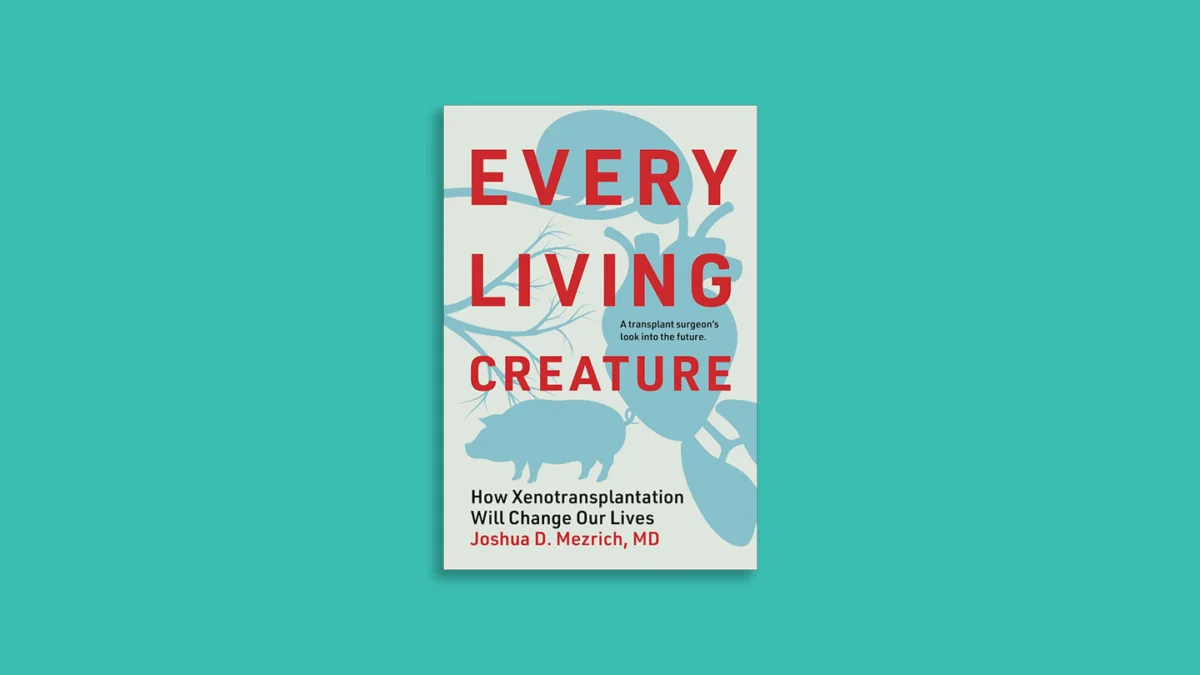
The urgent need for organ transplants, a persistent crisis in modern medicine, is pushing the boundaries of scientific innovation. With over 100,000 individuals in the United States currently awaiting life-saving organs like kidneys, livers, hearts, and lungs, the stark reality is that nearly 5,000 of these patients die each year without receiving the transplant they desperately need. This critical shortage underscores the profound potential of xenotransplantation, the practice of transplanting organs or tissues from one species to another. In his compelling new book, Every Living Creature, transplant surgeon Joshua Mezrich offers a deeply hopeful, yet scientifically grounded, perspective on the future of this complex field, suggesting a world where organ scarcity may become a relic of the past.
Mezrich’s narrative delves into the historical evolution of xenotransplantation, tracing its roots from early, often unsuccessful, attempts to the sophisticated genetic engineering that characterizes contemporary research. The book meticulously chronicles the scientific breakthroughs, the ethical considerations, and the human stories that have shaped this nascent field. It presents a vision where genetically modified pig organs, potentially superior to their human counterparts by being resistant to cancer and infection and capable of withstanding extreme environmental conditions, could become readily available. This optimistic outlook paints a future where organ availability is no longer a limiting factor in saving lives, with advanced logistics like drone delivery of custom-designed organs becoming a reality.
The Enduring Organ Shortage: A Public Health Crisis
The statistics surrounding organ transplantation paint a grim picture of unmet demand. For decades, the disparity between the number of available donor organs and the number of patients requiring them has remained a significant challenge. According to the Health Resources and Services Administration (HRSA), the average wait time for a kidney transplant can range from three to five years, while heart and lung wait times can be even longer, depending on factors like blood type, tissue compatibility, and the urgency of the patient’s condition. This prolonged waiting period often leads to a decline in patients’ health, requiring intensive medical interventions such as dialysis, which significantly impacts their quality of life and survival rates. The emotional and financial toll on patients and their families is immense, as they navigate the uncertainty of waiting for a life-saving gift.
Xenotransplantation: A Beacon of Hope
Every Living Creature meticulously details the scientific journey toward making xenotransplantation a viable clinical practice. Mezrich explains the intricate immunological hurdles that must be overcome when transplanting an organ from one species to another. The human immune system, exquisitely designed to defend against foreign invaders, typically mounts a powerful and often destructive response to non-human tissues, a phenomenon known as hyperacute rejection. However, advancements in genetic engineering have allowed scientists to modify pig organs, removing or altering genes that trigger these immune responses and introducing human genes to promote better compatibility.
The book highlights key milestones in this evolving field. Early experiments, often fraught with failure, laid the groundwork for understanding the complexities of interspecies transplantation. More recent breakthroughs have involved the use of genetically modified pigs, whose organs have been engineered to minimize the risk of rejection. These modifications are crucial, as they aim to create organs that are not only accepted by the human body but also function effectively and sustainably. Mezrich’s accessible explanations of complex genetic processes and immunological responses demystify the science for a broader audience, making the potential of xenotransplantation tangible.
Pioneering Trials and the Human Element
Mezrich’s work is deeply enriched by the inclusion of courageous individuals who have volunteered for experimental xenotransplantation procedures. These patients, often facing dire prognoses, have become pioneers, contributing invaluable data and insights that are propelling the field forward.
A Timeline of Landmark Xenotransplantation Cases:
- September 2021: The first genetically modified pig kidney transplant into a brain-dead human recipient was performed by surgeons at NYU Langone Health. The kidney, attached to the recipient’s external iliac artery and vein, functioned for 54 hours, producing urine, demonstrating the potential for immediate organ function. This trial, while limited, provided critical data on the compatibility and immediate function of genetically modified pig organs in a human circulatory system.
- January 2022: David Bennett Sr., a 57-year-old Maryland man suffering from end-stage heart failure, received a genetically modified pig heart in a groundbreaking surgery at the University of Maryland Medical Center. This marked the first time a pig heart was transplanted into a living human. Bennett survived for two months following the procedure, demonstrating remarkable resilience and providing unprecedented insights into the long-term performance and potential rejection mechanisms of xenotransplanted organs. His case, though ultimately ending in his death, offered invaluable lessons for future research.
- September 2023: Lawrence Faucette, a 58-year-old Maryland man with terminal heart disease, became the second recipient of a genetically modified pig heart. Similar to Bennett, Faucette was aware of the experimental nature of the procedure and the potential risks. He survived for nearly six weeks, allowing researchers to gather further data on the efficacy and challenges of pig-to-human cardiac transplantation.
- 2025 (as referenced in the article): Tim Andrews, a 66-year-old man, received a genetically modified pig kidney. His case is particularly significant as the pig organ functioned as a bridge to a human kidney transplant, which he eventually received after nearly nine months. This highlights a crucial emerging application of xenotransplantation: serving as a temporary solution to keep patients alive and healthier while they await a suitable human organ.
These patients, by choosing to participate in these experimental surgeries, understood the high stakes and the inherent uncertainties. Their altruism is a testament to their hope for a future where organ scarcity is no longer a death sentence for thousands. Mezrich emphasizes that these individuals, along with their families and the medical teams, represent the human face of this scientific endeavor, grounding the ambitious scientific aspirations in tangible human experience.
Addressing the Challenges and Charting the Future
Despite the significant progress, Mezrich candidly acknowledges the hurdles that remain. The field is indeed prone to hype, and the promise of readily available, perfectly compatible organs has been "just around the corner" for decades. Key challenges include:
- Immunological Compatibility: While genetic modifications have reduced rejection rates, ensuring long-term acceptance and preventing chronic rejection remains a primary focus of research. The development of more sophisticated immunosuppression protocols tailored to xenotransplantation is crucial.
- Organ Function and Longevity: Ensuring that transplanted pig organs not only survive but also thrive and function optimally for extended periods within the human body is paramount. This includes understanding and mitigating any potential long-term functional deficits.
- Disease Transmission: A critical concern in xenotransplantation is the potential transmission of porcine endogenous retroviruses (PERVs) from the donor pig to the human recipient. Rigorous screening and genetic modification of donor pigs are employed to minimize this risk, but ongoing vigilance and research are essential.
- Ethical Considerations and Public Perception: The use of animals for organ harvesting raises significant ethical questions regarding animal welfare and the moral implications of interspecies organ transplantation. Public perception and acceptance are also vital for the successful integration of xenotransplantation into mainstream medicine.
- Scalability and Regulation: Establishing large-scale, genetically controlled pig herds for organ production requires significant investment and infrastructure. Furthermore, robust regulatory frameworks need to be developed to oversee the safety and efficacy of xenotransplantation procedures.
Mezrich, identifying himself as a "xeno-optimist," believes that these challenges are surmountable. He points to the rapid advancements in gene editing technologies like CRISPR-Cas9, which have accelerated the pace of genetic modification in pigs. The increasing success of xenotransplantation as a bridge to human transplantation, as exemplified by Tim Andrews’ case, offers a tangible and immediately beneficial application of this technology.
Broader Implications and a New Era of Medicine
The widespread adoption of xenotransplantation could revolutionize healthcare in several profound ways:
- Elimination of Organ Waiting Lists: The most immediate and impactful implication would be the potential eradication of organ waiting lists, saving countless lives annually.
- Personalized Organ Medicine: Genetically engineered pig organs could potentially be tailored to individual patient needs, offering organs with enhanced resistance to specific diseases or better compatibility with a patient’s unique physiology.
- Reduced Healthcare Costs: While initial development costs are high, the long-term reduction in healthcare expenditures associated with chronic organ failure and prolonged dialysis could be substantial.
- Advancements in Medical Research: The study of xenotransplantation drives innovation in immunology, genetics, and surgical techniques, benefiting other areas of medical science.
Mezrich concludes Every Living Creature with an optimistic assertion: "Welcome to the future." This future, he suggests, is not an impossibly distant dream but a rapidly approaching reality. As scientific understanding deepens and technological capabilities expand, the prospect of a world where organ transplantation is a routine, accessible, and life-saving procedure for all who need it, regardless of donor availability, moves closer to realization. The journey is complex and fraught with challenges, but the potential to alleviate immense human suffering makes the pursuit of xenotransplantation a critical and hopeful endeavor in the ongoing quest to improve human health and longevity.