A groundbreaking study conducted by researchers at the University of British Columbia (UBC) has unveiled compelling evidence that raccoons, often perceived solely as opportunistic scavengers, are driven by an innate curiosity and a desire to seek information, even in the absence of immediate food rewards. Published in the esteemed journal Animal Behaviour in March 2026, the research challenges conventional understanding of raccoon motivation, suggesting that their famed ingenuity stems not just from hunger, but from a deeper cognitive drive akin to intrinsic motivation. This revelation provides crucial insights into the remarkable adaptability of these ubiquitous urban dwellers and could reshape strategies for wildlife management in human-dominated landscapes.
Unpacking the Raccoon Mind: Beyond the Scavenger Stereotype
For decades, raccoons (Procyon lotor) have captivated human imagination, often featuring in folklore as cunning tricksters and resourceful survivors. Their ability to navigate complex urban environments, outsmarting latches on garbage bins, and exploiting human infrastructure, is legendary. However, much of this perception has been anecdotal or based on observational studies linking their actions directly to caloric gain. The UBC study, spearheaded by lead researcher Hannah Griebling and senior author Sarah Benson-Amram, offers a robust scientific framework to understand the underlying cognitive processes driving these behaviors.
The research delves into the concept of "information foraging," a behavior where animals actively seek out new information or solutions, even when immediate material rewards are not evident. This contrasts with purely "extrinsic motivation," where an action is performed solely for an external reward, such as food. The finding that raccoons continued to engage with puzzles long after securing the only available food item is a significant indicator of this intrinsic drive, positioning them as sophisticated problem-solvers who derive satisfaction from the act of discovery itself.
Methodology: A Multi-Access Puzzle Box and Marshmallow Motivation
To investigate raccoon motivation, the researchers designed a custom-built, multi-access puzzle box. This innovative apparatus featured nine distinct entry points, each requiring a different mechanism to open, ranging in difficulty from easy to medium to hard. These mechanisms included various types of latches, sliding doors, and knobs, mimicking the kinds of challenges raccoons might encounter in urban settings. The deliberate design allowed for a nuanced assessment of problem-solving strategies and persistence.
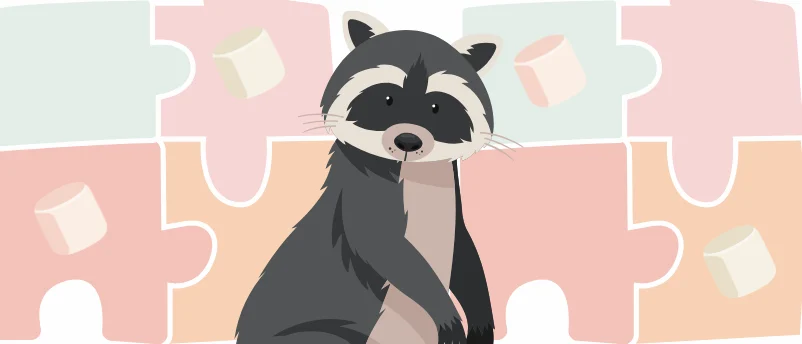
During each 20-minute trial, a single marshmallow – a highly desirable treat for raccoons – was placed inside the puzzle box. The expectation, based on purely extrinsic motivation, would be for the raccoons to retrieve the marshmallow and then cease their efforts. However, the observations defied this expectation. "We weren’t expecting them to open all three solutions in a single trial," exclaimed Griebling, highlighting the researchers’ initial surprise. "They kept problem solving even when there was no marshmallow at the end." This persistent engagement, well beyond the point of immediate reward, became the cornerstone of the study’s findings, strongly supporting the hypothesis of intrinsic motivation and information-seeking behavior. The raccoons were not merely seeking food; they were seeking solutions, driven by an inherent curiosity about how the mechanisms worked.
This methodological approach, involving carefully constructed puzzle environments, builds upon a rich history of animal cognition research. Studies with primates, birds, and even some insects have previously explored intrinsic motivation, but its detailed demonstration in a species like the raccoon, known for its adaptability to human environments, adds a critical dimension to our understanding of mammalian intelligence. The controlled environment of a research facility in Colorado allowed for meticulous observation and data collection, though the researchers prudently caution that behaviors observed in captivity may not be identical to those in the wild, suggesting avenues for future field research.
Cognitive Flexibility and Risk Assessment: A Balancing Act

Beyond simply demonstrating intrinsic motivation, the study also shed light on the raccoons’ remarkable cognitive flexibility and their capacity for risk assessment. The researchers observed a discernible pattern in their problem-solving strategies:
- Broad Exploration in Low-Risk Scenarios: When the puzzle solutions were categorized as "easy," raccoons displayed a tendency to explore broadly. They would try multiple openings, varying their order of approach, suggesting a willingness to gather more information and diversify their problem-solving repertoire when the effort cost was low.
- Strategic Conservation in High-Risk Scenarios: As the task difficulty increased, the raccoons adjusted their strategy, favoring more dependable solutions. However, even at the hardest level, they continued to explore multiple solutions, albeit with less randomness than in the easy trials. This demonstrates a sophisticated trade-off between the drive for curiosity and the perceived effort or potential risk involved.
Griebling drew a compelling parallel to human decision-making, likening it to choosing a meal at a restaurant. "It’s a pattern familiar to anyone ordering at a restaurant," she explained. "Do you order your favorite dish or try something new? If the risk is high – an expensive meal you might not like – you choose the safe option. Raccoons explore when the cost is low and quickly decide to play it safe when the stakes are higher." This analogy underscores the universality of such decision-making frameworks across species, reflecting an evolutionary advantage in navigating uncertain environments. The ability to dynamically assess risk and adjust behavior based on perceived costs is a hallmark of advanced cognition and is undoubtedly a key factor in the raccoon’s ecological success.
The Urban Advantage: How Curiosity Fuels Survival
The findings hold significant implications for understanding why raccoons have become such incredibly successful inhabitants of urban centers worldwide, particularly in places like Vancouver, British Columbia, where they thrive amidst human activity. Their success, the study suggests, is not merely a matter of opportunistic scavenging, but a synergistic blend of specific cognitive and physical traits perfectly suited to the complexities of urban life.
- Dexterous Forepaws: Raccoons possess highly sensitive forepaws, rich with sensory nerves, which are primarily used for foraging in aquatic environments. These same paws are remarkably adept at manipulating objects, including latches, handles, and containers – often the very same kinds of mechanisms designed by humans. This physical adaptation, combined with their cognitive drive, creates a formidable problem-solving toolkit.
- Cognitive Adaptability: The intrinsic motivation to solve problems and seek information, even without immediate reward, provides raccoons with a significant advantage in dynamic and unpredictable urban environments. This drive enables them to discover new food sources (like securing access to a previously sealed garbage bin), learn new routes, and adapt to changing human infrastructure. Their persistent curiosity allows them to continuously update their "mental maps" of their surroundings and exploit novel opportunities.
- Habitat Suitability: Cities like Vancouver offer a unique combination of resources: abundant food waste, diverse greenspaces, and interconnected waterways. Coupled with a generally tolerant public (though often frustrated by their antics), these factors create a near-ideal habitat for a species equipped with such advanced problem-solving capabilities.
Understanding these cognitive underpinnings can guide more effective wildlife management strategies. If raccoons are primarily driven by curiosity, simply removing food sources might not be enough; management might also need to consider ways to make human environments less "interesting" or less accessible for exploration. As Griebling noted, "Understanding the cognitive traits that help raccoons thrive can guide management of species that struggle, and inform strategies for other species, like bears, that use problem-solving to access human-made resources." This insight is particularly relevant for mitigating human-wildlife conflicts, where animals are often punished for behaviors rooted in their natural cognitive drives.
Broader Scientific Context and Future Directions
The UBC study significantly contributes to the burgeoning field of comparative cognition, which seeks to understand the mental processes of non-human animals. While raccoon intelligence has long been celebrated in popular culture and folklore, robust scientific research into their cognitive abilities has been comparatively limited. "Raccoon intelligence has long featured in folklore, yet scientific research on their cognition remains limited. Studies like this provide empirical evidence to support that reputation," concluded Benson-Amram. This research fills a crucial gap, providing empirical validation for the anecdotal evidence of raccoon cleverness.
The findings resonate with studies on other highly intelligent species, such as corvids (crows, ravens), parrots, and certain primates, which also demonstrate complex problem-solving, tool use, and forms of intrinsic motivation. For instance, some studies have shown that corvids will solve multi-step puzzles for no apparent reward other than the act of solving itself. This suggests that intrinsic motivation for information acquisition might be a more widespread evolutionary trait among intelligent species than previously acknowledged, particularly those living in complex or rapidly changing environments.
Future research could build upon this foundation by exploring several avenues:
- Field Studies: Conducting similar puzzle-box experiments in wild raccoon populations to observe if the same patterns of intrinsic motivation hold true outside of a captive environment.
- Neurocognitive Studies: Investigating the neural mechanisms underlying raccoon curiosity and information-seeking using advanced imaging techniques.
- Comparative Analysis: Expanding the study to other urban wildlife species to understand how different cognitive profiles contribute to their success or struggle in anthropogenic landscapes.
- Developmental Studies: Examining how curiosity and problem-solving abilities develop in young raccoons and how environmental factors might influence these traits.
Ultimately, this UBC study provides a more nuanced and respectful understanding of raccoons. They are not merely pests to be managed or marvels of opportunistic adaptation; they are complex cognitive beings, driven by a profound curiosity that shapes their interaction with the world. As human populations continue to expand and encroach upon natural habitats, understanding the cognitive drivers of urban wildlife becomes increasingly vital for fostering coexistence and developing ethical, effective conservation and management strategies for all species. The raccoon, it turns out, is not just surviving in our cities – it’s thriving because it’s genuinely interested in figuring them out.