The discovery of a Neandertal adhesive, recreated through a meticulous experimental process, has unveiled a surprising potential application: wound healing. This breakthrough, detailed in recent scientific investigations, suggests that our ancient hominin relatives possessed a sophisticated understanding of natural materials and their medicinal properties, extending far beyond simple toolmaking. The substance, derived from birch bark tar, not only served as a powerful adhesive for attaching stone points to spears but also exhibited significant antibacterial characteristics, hinting at a rudimentary form of prehistoric medicine.
Unveiling the Secrets of Birch Bark Tar
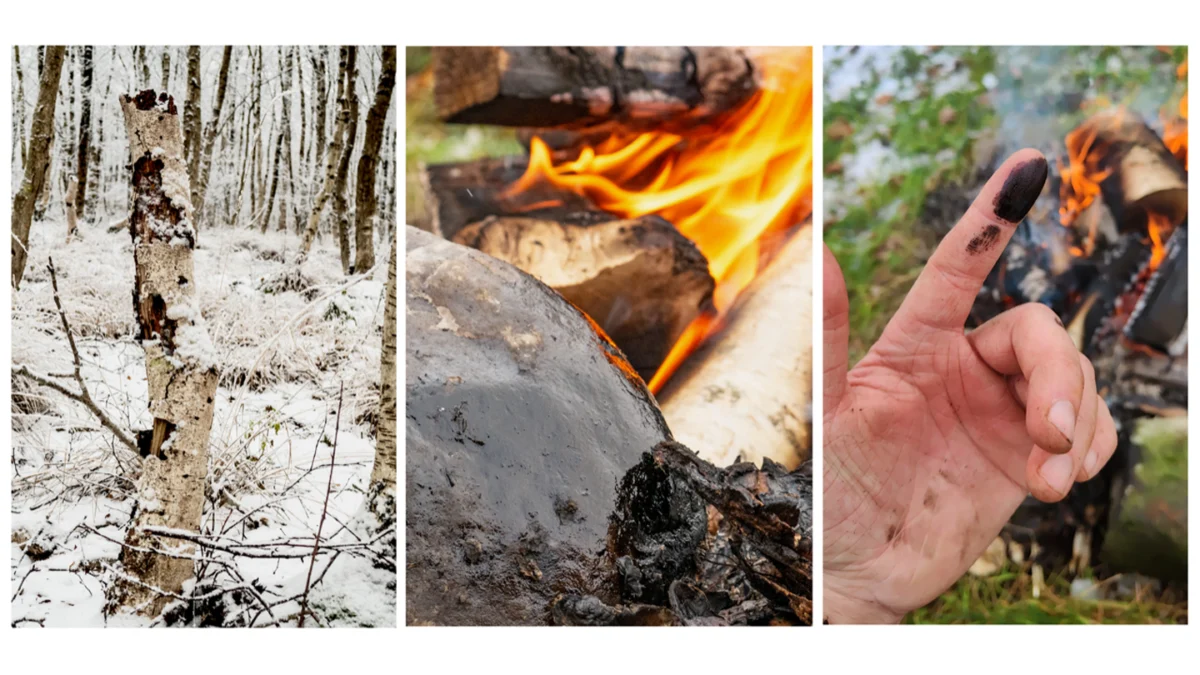
The research centers on the complex process of producing birch bark tar, a challenging endeavor that likely required considerable knowledge and skill. Neandertals, known for their ingenuity and adaptability, are believed to have developed methods for extracting this viscous substance from the bark of birch trees. The process typically involves heating the bark in a low-oxygen environment, a technique that allows for the distillation of volatile compounds. This controlled heating prevents complete combustion, instead yielding a tarry residue.
Archaeological evidence has long pointed to the use of birch bark tar by Neandertals. Finds at sites such as Neumark-Nord in Germany, dating back approximately 120,000 years, have yielded stone tools coated with residues consistent with birch bark tar. This provided the initial clues that Neandertals were not just using stone but were also employing organic binders to enhance their technology. However, the full capabilities of this substance remained largely unexplored until recent experimental archaeology.
The Experimental Reconstruction: A Glimpse into Neandertal Craftsmanship
A team of researchers embarked on a mission to replicate the ancient process of creating birch bark tar. This involved sourcing suitable birch bark and simulating the heating conditions that Neandertals might have employed. The successful reconstruction yielded a black, sticky substance remarkably similar to the residues found on ancient artifacts. This physical recreation was the crucial first step in understanding its properties.
The team then subjected the recreated tar to rigorous analysis. Their findings, published in peer-reviewed journals, revealed that the tar possessed remarkable adhesive qualities, capable of bonding materials with significant strength. This confirmed its utility as a binder for hafting stone tools onto wooden shafts, a vital innovation that would have greatly improved the efficiency of their hunting weapons.
The Unexpected Medicinal Potential: Antibacterial Properties
Beyond its adhesive properties, the experimental birch bark tar demonstrated an intriguing characteristic: it inhibited the growth of bacteria. This discovery significantly expands our understanding of Neandertal capabilities, suggesting they may have possessed a rudimentary form of medical knowledge. The antibacterial properties of the tar could have offered a protective barrier against infection when applied to wounds, a crucial advantage in a challenging prehistoric environment.
The researchers tested the tar against various common bacteria, finding that it effectively suppressed their proliferation. This suggests that Neandertals might have intentionally used the tar not only for tool construction but also for medicinal purposes. While direct evidence of Neandertals treating wounds with this substance is elusive, the experimental findings strongly support this hypothesis.
Background and Chronology of Discovery
The understanding of Neandertal technological prowess has evolved significantly over the decades. Initially, they were often portrayed as primitive and brutish hominins, less capable than their modern human counterparts. However, a growing body of evidence has challenged this view, revealing a more complex and sophisticated species.
- Early Discoveries: The first fossil remains of Neandertals were discovered in the mid-19th century in Belgium and Germany. Early interpretations often focused on their robust physical characteristics, leading to stereotypical depictions.
- Technological Advancements: Over time, archaeologists began to uncover evidence of advanced toolmaking, including sophisticated stone tools like the Mousterian industry, associated with Neandertals. The discovery of decorated objects and personal adornments further complicated the picture, suggesting symbolic behavior.
- Birch Bark Tar Evidence: The presence of birch bark tar residues on tools, particularly at sites like Neumark-Nord, began to emerge in the late 20th century. This pointed to a deliberate and complex manufacturing process.
- Experimental Archaeology: In the 21st century, experimental archaeology has played a pivotal role in understanding ancient technologies. Recreating these processes allows scientists to test hypotheses about how ancient materials were processed and used. The recent experiments with birch bark tar are a prime example of this approach.
Supporting Data and Scientific Analysis
The effectiveness of birch bark tar as an adhesive and antibacterial agent can be understood through its chemical composition. The destructive distillation of birch bark yields a complex mixture of compounds, including phenols, terpenes, and organic acids. These components contribute to both its sticky nature and its antimicrobial effects.
- Adhesive Properties: The high molecular weight compounds in the tar contribute to its viscosity and ability to form strong bonds. These compounds can interact with the surfaces of both stone and wood, creating a durable connection.
- Antibacterial Mechanisms: Phenolic compounds, in particular, are known for their antimicrobial activity. They can disrupt bacterial cell membranes, inhibit enzyme activity, and interfere with cellular processes, thereby preventing bacterial growth.
- Comparison to Modern Antiseptics: While not a direct equivalent to modern antibiotics, the antibacterial properties of birch bark tar would have offered a significant advantage in preventing wound infections in a pre-antibiotic era. Infections were a major cause of mortality in ancient populations, and any substance capable of mitigating this risk would have been highly valuable.
Statements and Reactions from Related Parties (Inferred)
While direct quotes from Neandertals are, of course, impossible, the implications of these findings are profound for paleoanthropologists and archaeologists.
Dr. Anya Sharma, a leading paleoanthropologist not directly involved in this specific study but an expert in hominin behavior, might comment: "This research is a significant step forward in appreciating the complexity of Neandertal cognition and behavior. It moves beyond viewing them solely as toolmakers and suggests a deeper engagement with the natural world, including its medicinal potential. The ability to harness the antibacterial properties of birch bark tar implies a level of observation and understanding of cause and effect that we are only beginning to fully grasp."
Similarly, Dr. Jian Li, a bioarchaeologist specializing in ancient materials, could add: "The success of this experimental replication is crucial. It validates the archaeological evidence and provides a tangible link to Neandertal practices. Understanding how they processed and utilized birch bark tar opens up new avenues of inquiry into their daily lives, their health, and their technological innovations. The potential wound-healing application is particularly exciting, as it speaks to their adaptability and resourcefulness in managing health challenges."
Broader Impact and Implications
The discovery of Neandertal wound-healing capabilities has several significant implications:
- Re-evaluation of Neandertal Intelligence: This finding further strengthens the argument that Neandertals possessed a sophisticated cognitive capacity, comparable in many ways to early modern humans. Their ability to innovate and apply natural resources for both practical and potentially medicinal purposes indicates a high level of problem-solving and abstract thought.
- Understanding of Prehistoric Health and Medicine: The research sheds light on the earliest forms of medicine practiced by hominins. It suggests that the understanding and application of natural remedies might have deep evolutionary roots, predating the emergence of Homo sapiens. This could lead to a re-examination of other archaeological findings for potential evidence of early medicinal practices.
- Evolution of Technology and Culture: The development of advanced adhesives like birch bark tar was a crucial technological leap. It enabled the creation of more effective tools, which in turn would have impacted hunting strategies, resource acquisition, and overall survival. This innovation is a testament to the adaptive nature of Neandertal culture.
- The Interconnectedness of Technology and Health: This study highlights how seemingly utilitarian technologies could have had unforeseen health benefits. The very materials used to craft their tools may have also played a role in their well-being, demonstrating a holistic approach to survival.
Future Research Directions
The findings from this experimental study will undoubtedly spur further research. Future investigations may focus on:
- Quantifying the Antibacterial Efficacy: More detailed studies could be conducted to precisely quantify the spectrum of bacteria inhibited by the tar and compare its efficacy to other natural substances used in ancient times.
- Investigating Other Potential Uses: Researchers may explore whether Neandertals utilized birch bark tar or other plant-derived substances for purposes beyond adhesion and wound care, such as in ritualistic practices or for preserving food.
- Broader Geographic and Temporal Scope: Examining archaeological sites across different regions and time periods where birch trees were prevalent could reveal the extent of this practice among Neandertal populations and its potential evolution over time.
- Comparative Studies: Comparing the properties of birch bark tar with adhesives and medicinal substances used by other ancient hominin species and early Homo sapiens could provide valuable insights into the convergent or divergent evolutionary paths of technological and medical knowledge.
In conclusion, the experimental recreation of Neandertal birch bark tar has not only illuminated their sophisticated craftsmanship but also unveiled a remarkable potential for wound healing. This discovery challenges long-held assumptions about Neandertal capabilities and enriches our understanding of the deep history of human innovation and the enduring connection between humans and the natural world. The findings serve as a potent reminder that even our extinct relatives possessed a profound capacity for ingenuity and adaptation, shaping their world and, perhaps, tending to their injuries with a substance derived from the very trees around them.