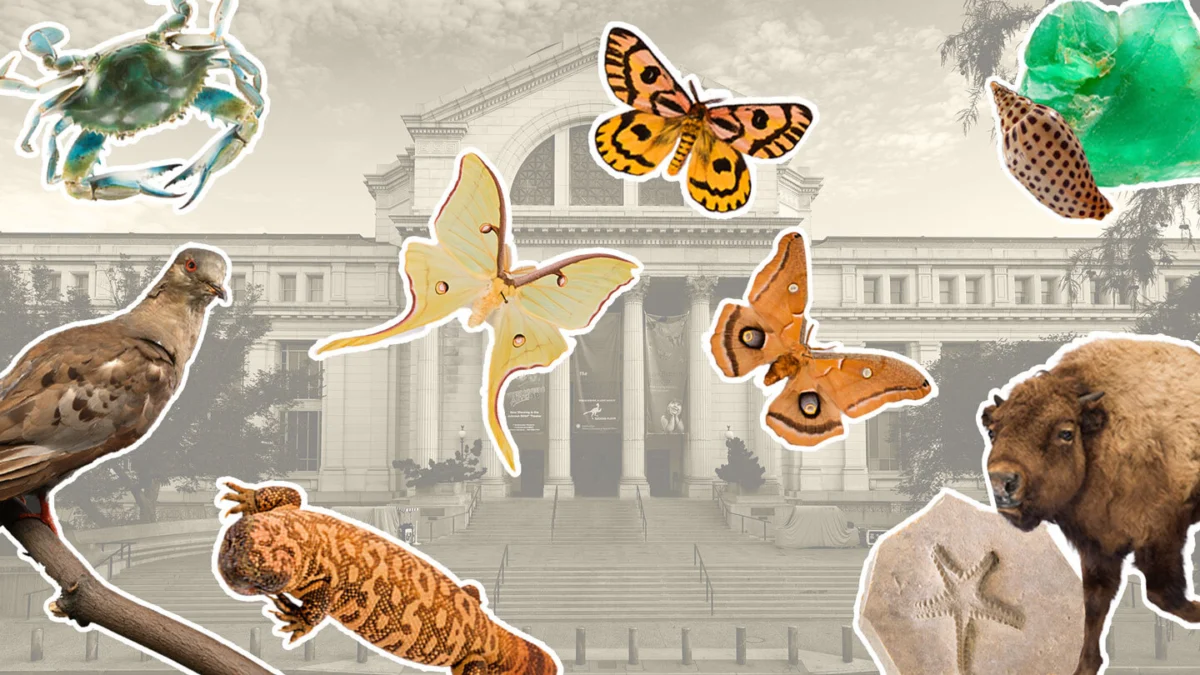
A groundbreaking new exhibition at the Smithsonian National Museum of Natural History in Washington, D.C., invites visitors on an expansive journey across the United States, delving into its profound natural diversity and rich cultural heritage. Titled "From These Lands," the exhibition, which opened to the public following an early press preview, is a cornerstone of the Smithsonian Institution’s "Our Shared Future: 250" initiative, commemorating the nation’s 250th birthday. This ambitious undertaking moves beyond traditional state-by-state or chronological organization, instead weaving a narrative through compelling themes that connect the land, its myriad life forms, and the stories of the people who have shaped and been shaped by them.
The exhibition’s core objective, as articulated by Kirk Johnson, Sant Director of the National Museum of Natural History, is to foster a sense of personal connection for every visitor. "Our real goal is for everyone who comes to this museum to see themselves and their place in this exhibit," Johnson stated. "Every object has a host of stories, and this exhibit intends to bring all those stories together around individual objects." This philosophy underpins the presentation of over 600 specimens and cultural objects, meticulously curated to represent the vastness of the United States, encompassing all 50 states, the District of Columbia, and its five U.S. territories.
A Thematic Tapestry of American Identity
"From These Lands" deliberately eschews a geographically rigid structure in favor of thematic exploration. This approach allows for the unveiling of interconnected narratives that transcend political boundaries, highlighting the shared natural resources and cultural experiences that define the American landscape. Assistant Editor at Science News Explores, Aaron Tremper, who attended the press preview, observed that the exhibition embraces the concept of America "containing multitudes," a perspective that is central to understanding the nation’s complex identity.
The exhibition showcases the extraordinary biological richness of the United States, a testament to its diverse ecosystems. One striking display features a vibrant collection of insects from various states and Washington, D.C. These preserved specimens offer a glimpse into the estimated 91,000 insect species currently identified within the U.S., underscoring the immense, and often unheralded, biodiversity that thrives across the nation. This section serves as a powerful reminder of the biological wealth that forms an integral part of America’s heritage, a wealth that has been both a source of inspiration and a subject of scientific inquiry for centuries.
Conservation Stories: From Extinction’s Brink to Resilience
A significant thread woven through "From These Lands" is the narrative of conservation and the delicate balance of ecosystems. The exhibition thoughtfully juxtaposes stories of species on the verge of extinction with those that have been brought back from the precipice, offering a nuanced perspective on humanity’s impact on the natural world.
A compelling example is the poignant display featuring Martha, the last known passenger pigeon. This iconic object, a symbol of a species lost forever, is strategically placed alongside exhibits detailing the successful recovery of the Guam rail. The passenger pigeon, once numbering in the billions, became extinct in the early 20th century due to overhunting and habitat destruction, a stark historical lesson in ecological fragility.
In contrast, the story of the Guam rail highlights the potential for human intervention to avert extinction. Torben Rick, Curator of North American Archaeology, explained the critical situation on Guam. "What happened in Guam is towards the end of World War II, brown snakes were accidentally introduced," Rick noted. "So, you’ve got an invasive species that comes in – several bird species who had never encountered a predator like that went extinct. The Guam rail was pushed to the brink, to the edge." However, a concerted effort in the 1980s by Smithsonian scientists, including those from the Conservation Biology Institute and the National Zoo, initiated a breeding program. This intervention has led to the successful reintroduction of over 200 Guam rails into the wild on the island, demonstrating the power of dedicated conservation efforts.
Another powerful conservation narrative emerges from the exploration of kelp forests along the Pacific coast. These underwater ecosystems are teeming with biodiversity, supporting a complex food web that includes urchins and sea otters. Rick elaborated on the ecological interdependence: "Kelp forests are these just incredible, high biodiverse forests in the ocean that flank the entire Pacific coast of the U.S. Urchins, for instance, eat kelp, sea otters eat urchins. In a healthy system they all kind of keep each other in balance." The historical fur and oil trade, however, decimated sea otter populations, pushing them to the brink and disrupting this delicate balance. The exhibition chronicles the ongoing efforts to restore these populations, showcasing the vital role of sea otters in maintaining the health of these crucial marine habitats.
Echoes from Deep Time: Ancient Amphibian Graveyard
"From These Lands" also transports visitors millions of years into the past, offering a breathtaking glimpse into prehistoric America. A particularly arresting display features an array of fossils unearthed in New Mexico, depicting a graveyard of gigantic, salamander-like amphibians. These ancient creatures, some reaching up to nine feet in length, roamed the Earth approximately 240 million years ago.
Stewart Edie, Research Geologist and Curator of Fossil Mollusca, shared insights into the formation of this remarkable paleontological site. "It’s a lot of amphibian all at once, and it makes you wonder how in the world did this happen?" Edie mused. Initial interpretations suggested a pond that dried up, leading to the aggregation and demise of these creatures. However, closer examination revealed a more dynamic scenario. "When you look more closely, what you see is that it’s not just articulated skeletons. They’re not just there. They’re jumbled. They’re all mixed up. So there was some movement involved," Edie explained. Further analysis of the bones indicated a lack of significant weathering, suggesting rapid burial. "There was likely an event like a flood that moved bodies, and they accumulated and the bones got all jumbled and they were rapidly buried," he concluded. This discovery offers a unique window into ancient geological events and the evolution of life on Earth.
The Cumulative Power of Collections and Contributions
The exhibition underscores the Smithsonian’s century-long dedication to building its collections, which serve as an invaluable archive of the nation’s natural and cultural history. Aaron Tremper highlighted the significance of the museum’s bird collection, which has been meticulously assembled over decades. These specimens not only document the geographical distribution and migratory patterns of species but, with the advancement of new technologies, are increasingly providing insights into evolutionary processes through their DNA.
Beyond the scientific endeavors, "From These Lands" emphasizes the diverse individuals who have contributed to these national collections. Stewart Edie pointed to the historical involvement of figures like Teddy Roosevelt, an avid birder who donated early specimens collected in his youth. "It’s not just the museum scientists – these specimens are coming from all parts of our country and helping to grow the national collections and helping us create this cumulative knowledge of biodiversity through time," Edie stated. This collaborative spirit, spanning amateur naturalists to professional researchers, has been instrumental in building a comprehensive understanding of America’s natural heritage.
Catalyzing Curiosity and Exploration
Ultimately, "From These Lands" aims to do more than simply present artifacts and information; it seeks to inspire action and foster a deeper connection with the nation’s diverse landscapes. Kirk Johnson articulated this ambition, stating, "I wanted to trigger people to visit the rest of the nation. Go see a place you’re not familiar with. Go think of a place you’ve only heard the name before and go to that place and experience what it is." He emphasized the inherent wonder and interest present in every region of the country, encouraging visitors to approach places with a renewed sense of curiosity and a desire for firsthand experience.
The exhibition’s placement within the "Our Shared Future: 250" initiative is particularly significant. As the United States approaches its 250th anniversary, "From These Lands" offers a reflective and forward-looking perspective. It acknowledges the nation’s past, celebrates its present diversity, and implicitly calls for a commitment to preserving its natural and cultural heritage for future generations. The exhibition serves as a powerful reminder that the story of America is intrinsically linked to the land it occupies and the myriad life forms that share it.
The Smithsonian National Museum of Natural History, through "From These Lands," provides a compelling and multifaceted exploration of American identity. By weaving together scientific discovery, historical context, and cultural narratives, the exhibition offers a unique opportunity for visitors to engage with the vastness and richness of their nation, encouraging a deeper appreciation for its natural wonders and the collective stories that define it. The exhibition’s thematic approach, its emphasis on conservation, and its call to exploration collectively position it as a significant cultural event in the nation’s ongoing commemoration.