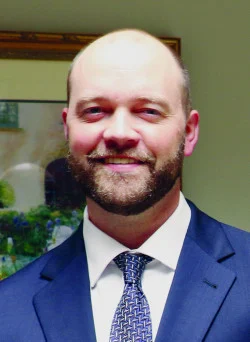
The pronouncement from the head of New York City’s vast public health system signals a potentially transformative shift in how diagnostic medicine is practiced and regulated, sparking intense debate across the healthcare industry. Dr. Mitchell H. Katz, President and CEO of NYC Health + Hospitals, recently articulated his system’s readiness to integrate artificial intelligence (AI) into core radiology functions, anticipating significant cost reductions and improved access to care. This bold vision, shared during a panel discussion hosted by Crain’s New York Business, posits AI as a capable interpreter of imaging studies such as mammograms and X-rays, capable of alleviating the escalating pressures of labor costs and surging demand for diagnostic services.
The Economic Imperative: Addressing Healthcare’s Cost Crisis and Staffing Shortages
Dr. Katz’s comments arrive amidst a backdrop of unprecedented financial strain and persistent workforce shortages plaguing the U.S. healthcare system. Public hospital networks, in particular, often serve diverse populations with varying access to care, making cost-efficiency and expanded service delivery paramount. The demand for diagnostic imaging has grown consistently over the past two decades, driven by an aging population, increased prevalence of chronic diseases, and advancements in medical technology. This surge in demand has not been matched by a proportional increase in the supply of highly specialized professionals like radiologists.
According to data from the Association of American Medical Colleges (AAMC), the U.S. faces a projected shortage of up to 48,000 primary care physicians and up to 77,100 non-primary care specialists by 2034, with radiology being one of the specialties experiencing significant burnout and recruitment challenges. The average salary for a radiologist is among the highest in medicine, contributing substantially to healthcare operational expenses. Dr. Katz’s assertion that "We could replace a great deal of radiologists with AI at this moment, if we are ready to do the regulatory challenge," underscores a strategic pivot towards technological solutions to mitigate these profound economic and logistical hurdles. The potential for "major savings" is a powerful motivator for large health systems managing extensive patient loads and complex logistical networks.
AI’s Clinical Performance: Promises and Current Applications
The notion of AI interpreting medical images is not entirely novel. Over the past decade, advancements in machine learning, particularly deep learning neural networks, have enabled AI algorithms to achieve remarkable proficiency in pattern recognition, a core component of diagnostic imaging. These systems are trained on vast datasets of medical images, allowing them to identify subtle anomalies that might be missed by the human eye, or to process images with greater speed and consistency.
One compelling example cited by Dr. Katz and echoed by other hospital leaders is AI’s performance in mammography interpretation. Dr. David Lubarsky, MD, MBA, CEO of Westchester Medical Center Health Network, reported impressive results from AI-assisted mammography. He stated that for women not considered high-risk, if an AI-interpreted test returns negative, "it’s wrong only about 3 times out of 10,000," suggesting the technology is "actually better than human beings" in certain contexts. This level of accuracy, if consistently replicable and independently validated across diverse patient populations and imaging modalities, presents a strong case for AI’s expanded role.
The proposed model, where AI performs the initial interpretation and flags abnormal findings for secondary review by a human radiologist, represents a paradigm shift. It transforms the radiologist’s role from primary interpreter to a validator and consultant, focusing human expertise on complex or ambiguous cases. This "AI-first, specialist-second" model aims to optimize workflow, reduce turnaround times, and potentially expand screening access by making the initial interpretation phase less labor-intensive and more scalable.
Regulatory Crossroads: Paving the Way for Autonomous AI
Despite the promising clinical performance and economic incentives, the regulatory framework remains a significant barrier to widespread autonomous AI adoption in clinical practice. Current regulations, particularly those from the U.S. Food and Drug Administration (FDA), are primarily designed for medical devices and software as a medical device (SaMD). While the FDA has cleared numerous AI-powered tools for assisting radiologists, these approvals generally position AI as a diagnostic aid, requiring human oversight. Autonomous interpretation by AI, without direct human validation, ventures into uncharted regulatory territory.
The challenge lies in establishing robust pathways for validating AI performance, ensuring patient safety, and addressing liability in cases of misdiagnosis. Questions arise regarding the transparency of AI algorithms ("black box problem"), their ability to generalize across different patient demographics and imaging equipment, and their resilience to adversarial attacks or data biases. Dr. Katz’s query about whether regulations should evolve to permit AI to interpret imaging independently highlights a critical inflection point for policymakers and medical bodies. The precedents set in radiology could profoundly influence how regulators approach AI integration across other medical specialties, including laboratory medicine.

Parallel Tracks: Implications for Clinical Laboratories
The discussions unfolding in radiology hold profound implications for clinical laboratories, which face similar pressures regarding cost containment, workforce shortages, and the demand for faster, more accurate turnaround times. Just as imaging departments grapple with increasing scan volumes, labs contend with an ever-growing array of tests, complex methodologies, and the need for highly skilled medical laboratory scientists and pathologists.
- Digital Pathology: The move towards digital pathology, where glass slides are scanned into high-resolution digital images, mirrors the digital transformation seen in radiology. AI algorithms are increasingly being developed and validated to assist pathologists in identifying cancer cells, grading tumors, and quantifying biomarkers. An "AI-first, pathologist-second" model could emerge here, similar to radiology, where AI performs initial screening and flags areas of interest for expert review.
- Automated Test Interpretation: In areas like hematology, microbiology, and molecular diagnostics, AI is already making inroads. Automated analyzers coupled with AI can interpret cell counts, identify microbial species, and even analyze complex genomic data. This can accelerate diagnosis, reduce manual review for routine cases, and free up laboratory professionals to focus on more complex or unusual findings.
- Workforce Optimization: The potential for AI to automate routine tasks could alleviate the strain of the clinical laboratory workforce shortage. According to the American Society for Clinical Pathology (ASCP), the U.S. faces a significant shortage of medical laboratory professionals, with vacancy rates consistently high across various roles. AI could enable existing staff to manage higher volumes and focus on critical thinking and quality assurance, rather than repetitive analytical tasks.
- Regulatory Echoes: If regulators establish a framework for AI to operate with reduced physician oversight in imaging, it is highly probable that similar expectations will extend to laboratory medicine. This could accelerate the adoption of AI-driven decision support systems, automated result interpretation, and potentially even reduced hands-on review in certain testing workflows, especially for low-risk, high-volume tests.
The Counterpoint: Voices of Caution and Concern
Despite the enthusiasm from some administrators, the prospect of autonomous AI in diagnostics has met with significant pushback from many clinical professionals, particularly those directly involved in patient care. Dr. Mohammed Suhail of North Coast Imaging articulated a strong dissent, stating, "Undeniable proof that confidently uninformed hospital administrators are a danger to patients: easily duped by AI companies that are nowhere near capable of providing patient care." He warned that "Any attempt to implement AI-only reads would immediately result in patient harm and death, and only someone with zero understanding of radiology would say something so naive."
These concerns are multifaceted:
- Diagnostic Nuance: Radiologists emphasize that interpreting images involves more than just pattern recognition. It requires clinical correlation, understanding patient history, considering differential diagnoses, and recognizing subtle findings that might not fit neatly into pre-defined AI categories. AI’s current limitations in handling ambiguity, rare conditions, or unexpected findings remain a significant worry.
- Patient Safety and Liability: The ultimate responsibility for diagnostic accuracy and patient outcomes currently rests with the physician. Shifting this responsibility, even partially, to an AI system introduces complex ethical and legal questions regarding accountability in the event of misdiagnosis or harm.
- Bias and Equity: AI algorithms are only as good as the data they are trained on. If training datasets are not diverse and representative of the general population (e.g., lacking images from certain ethnic groups, socio-economic backgrounds, or rare conditions), the AI could perpetuate or even amplify existing health disparities, leading to inaccurate diagnoses for underrepresented groups.
- The "Human Element": Beyond technical interpretation, physicians provide empathy, context, and a holistic understanding of the patient’s condition that AI cannot replicate. Critics argue that removing the human element entirely from diagnostic processes could lead to a depersonalized healthcare experience and potentially compromise the quality of care.
- Validation and Oversight: While AI might perform well in controlled studies, its performance in real-world, dynamic clinical environments, with varied equipment, protocols, and patient presentations, requires continuous, rigorous validation and oversight.
Professional organizations like the American College of Radiology (ACR) have largely supported AI as an assistive tool to augment radiologists’ capabilities, rather than replace them. Their stance typically emphasizes the importance of human oversight, robust validation, and ethical deployment to ensure patient safety and quality of care.
Broader Societal and Ethical Considerations
The debate over AI in diagnostics extends beyond immediate clinical and economic concerns, touching upon broader societal and ethical questions about the future of work, medical expertise, and the very nature of human-machine collaboration in critical fields.
- Workforce Transformation: The potential for AI to automate significant portions of diagnostic work raises questions about the future training and roles of medical professionals. Will radiologists and lab scientists need to become more proficient in AI oversight and data science? How will medical education adapt?
- Access and Equity: While AI promises to expand access by lowering costs and increasing throughput, there’s also a risk that advanced AI tools could exacerbate disparities if only well-resourced institutions can afford the initial investment and maintenance, or if AI systems are not designed to serve diverse populations equitably.
- Data Privacy and Security: The vast amounts of patient data required to train and operate sophisticated AI systems necessitate robust privacy and security protocols to prevent breaches and misuse.
- Ethical AI Development: Ensuring AI systems are developed and deployed ethically, without inherent biases and with transparency in their decision-making processes, is paramount to building trust among patients and practitioners.
The Path Forward: Collaboration, Oversight, and Evolution
The dialogue initiated by leaders like Dr. Katz is a crucial step in navigating the complex landscape of AI integration in healthcare. It forces a necessary confrontation with the opportunities and challenges presented by advanced technology. The path forward will likely involve a collaborative effort among healthcare administrators seeking efficiencies, technology developers pushing innovation, regulatory bodies ensuring safety, and clinical professionals safeguarding patient care.
As health systems continue to test and refine AI-driven models in radiology, clinical laboratories must pay close attention. The experiences, successes, and failures in imaging will inevitably inform the strategies and regulatory approaches applied to laboratory medicine. The challenge for the broader diagnostics industry will be to leverage AI’s transformative potential for cost savings and improved access, while rigorously defending and ensuring the continued role of expert human oversight in guaranteeing diagnostic quality, patient safety, and ethical practice. The future of diagnostics will undoubtedly be shaped by this ongoing negotiation between technological capability and human responsibility.