In a significant leap for bioengineering and regenerative medicine, a collaborative team from the University of Pennsylvania School of Engineering and Applied Science, the Perelman School of Medicine, and the Children’s Hospital of Philadelphia has successfully engineered a sophisticated "bone marrow-on-a-chip." This platform represents a breakthrough in the ability to replicate the complex, life-sustaining environment of human bone marrow within a controlled, synthetic setting. By mimicking the marrow’s native architecture and biological signaling, the device offers a new window into how the human body produces blood cells and responds to external stressors, ranging from aggressive chemotherapy to the harsh conditions of deep space.
Bone marrow is the body’s primary factory for hematopoiesis, the process by which billions of new blood cells are produced every day. This includes oxygen-carrying erythrocytes (red blood cells), platelets for clotting, and a diverse array of leukocytes (white blood cells) that form the backbone of the human immune system. However, this vital organ is also one of the most sensitive to medical interventions. Cancer treatments, particularly high-dose radiation and chemotherapy, often inadvertently destroy healthy marrow cells, leading to profound neutropenia—a dangerously low white blood cell count that leaves patients highly susceptible to life-threatening infections.
The Challenge of Modeling Human Hematopoiesis
For decades, the scientific community has struggled to find an accurate surrogate for human bone marrow. While animal models, particularly mice, have provided foundational insights, they frequently fail to replicate the nuances of human physiology. Differences in cell signaling, marrow density, and the specific "crosstalk" between human cells often lead to clinical trial failures when drugs that appeared safe in animals prove toxic to human bone marrow.
The difficulty in modeling the marrow lies in its "anatomical inaccessibility," according to Dr. Dan Huh, Professor in Bioengineering at Penn Engineering and a senior author of the study. The marrow is encased in hard bone and features a highly complex microenvironment where various cell types—stem cells, endothelial cells, and mesenchymal cells—interact in a delicate balance. Recreating this three-dimensional "niche" in a laboratory setting has long been considered one of the most daunting tasks in tissue engineering.
A Design Inspired by Embryonic Development
The research team’s breakthrough, detailed in the journal Cell Stem Cell, diverged from traditional "top-down" engineering approaches. Instead of trying to force cells into a pre-defined structure, the researchers utilized a "bottom-up" philosophy, borrowing nature’s own recipe for development. They focused on how human embryos naturally form bone marrow in utero.
The device itself is a small, transparent plastic chip containing engineered microchannels. These chambers are filled with a specialized hydrogel that acts as a scaffold. Within this gel, the team placed human hematopoietic stem cells (HSCs) along with the support cells they require to thrive: endothelial cells, which form the lining of blood vessels, and mesenchymal cells, which provide the structural connective tissue.
"The design principle we demonstrate is unique," said Andrei Georgescu, former doctoral student in Huh’s lab and current CEO of Vivodyne. "It relies on the ability of stem and progenitor cells to self-organize and self-assemble into complex tissues."
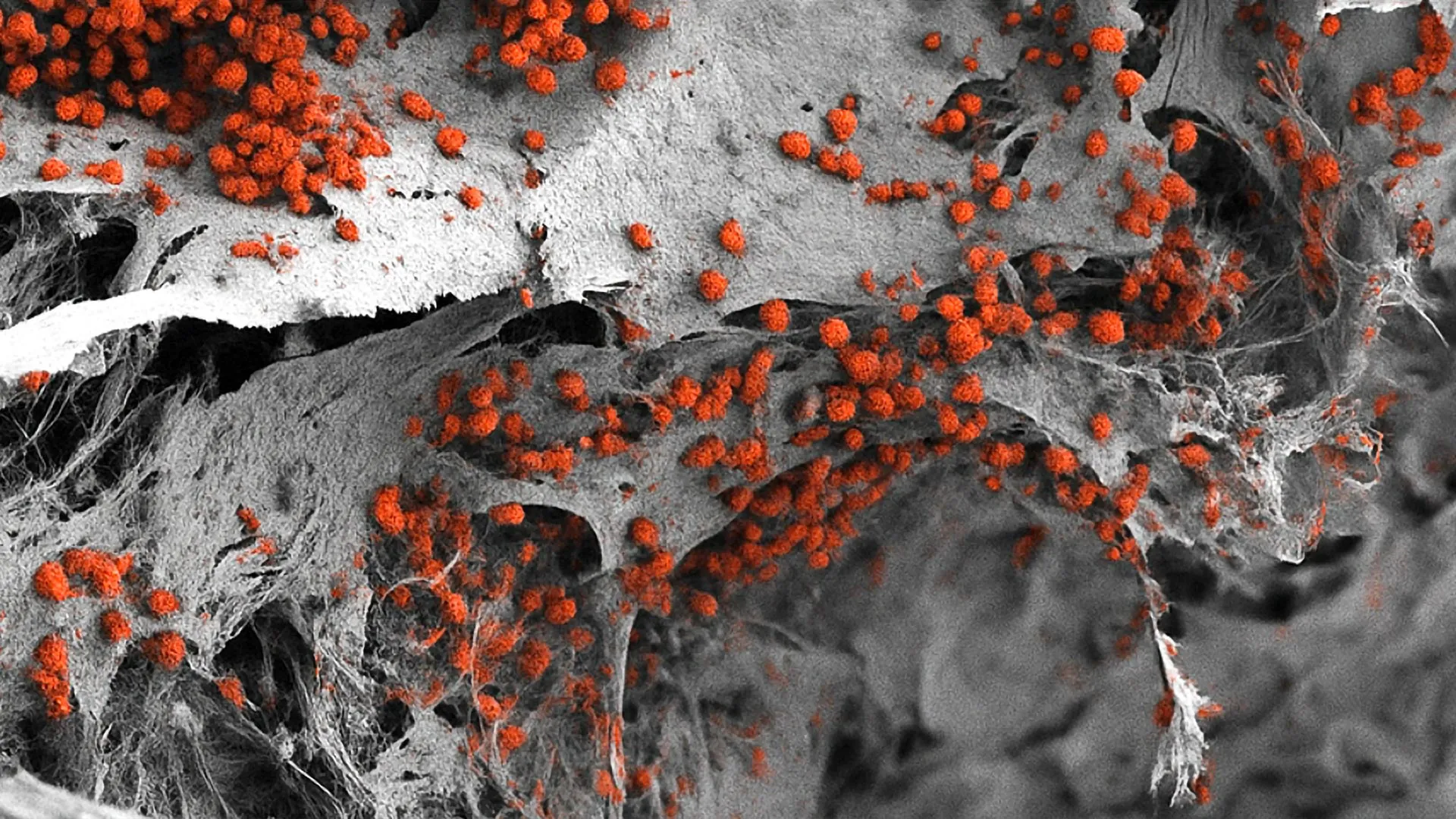
When placed in the correct environment with the right biochemical cues, these cells began to mimic the embryonic process of self-organization. They formed colonies of stem cells integrated into a dense, functional network of engineered capillary blood vessels. These vessels not only sustained the tissue but also allowed the newly produced human blood cells to be released into a flowing culture medium, effectively simulating the way the marrow populates the human circulatory system.
From Terrestrial Medicine to the International Space Station
The origins of this project date back nearly a decade and were fueled by an unlikely source: the quest for deep space exploration. Dr. G. Scott Worthen, an attending physician at CHOP and Professor Emeritus at PSOM, initially proposed the model to investigate why astronauts often experience weakened immune systems during long-duration missions.
Evidence from the International Space Station (ISS) suggested that prolonged exposure to microgravity and cosmic radiation significantly alters the production and function of immune cells. To test this, Huh and Worthen aimed to send their bone marrow-on-a-chip to the ISS for a series of paired experiments.
The journey to orbit was fraught with setbacks. During the first launch attempt, a flow controller in the "cubelab" system—the housing for the experiment—short-circuited during the ascent, rendering the tissue models non-viable. A second attempt was sidelined by the global COVID-19 pandemic. Despite these hurdles, the rigors of designing a system robust enough for space travel led the team to create a more resilient and sophisticated model than they had originally envisioned.
"I find it truly exciting that by using this system, we are now able to emulate some of the most essential features of the human marrow and our immune system," Dr. Huh remarked, noting that the project’s terrestrial applications have since expanded far beyond its original extraterrestrial goals.
Modeling Organ Crosstalk and Immune Response
One of the most impressive demonstrations of the chip’s capability is its ability to model "organ-on-a-chip" interconnectedness. In a landmark experiment, the researchers connected the bone marrow chip to a previously developed "lung-on-a-chip" model. This setup allowed them to observe, for the first time in an in vitro environment, the biochemical communication between two distinct organs during an infection.
When the lung chip was introduced to bacteria, it sent chemical signals—cytokines—through the engineered bloodstream to the bone marrow chip. In response, the marrow chip accelerated the production and release of white blood cells. These cells then traveled through the system, "trafficking" into the infected lung tissue to engulf and destroy the bacteria. This complete simulation of the innate immune response provides a powerful tool for studying inflammatory diseases and the efficacy of new antibiotics or immunotherapies.
Implications for Oncology and Drug Development
The immediate impact of this technology is expected to be felt in the pharmaceutical industry. The bone marrow-on-a-chip allows for high-throughput preclinical screening of new drugs. Currently, many promising anticancer agents are abandoned late in development because they are found to be "myelotoxic"—too damaging to the bone marrow.
By using the chip to test these drugs on actual human marrow tissue before they reach human trials, researchers can identify toxicities much earlier in the process. This could significantly reduce the cost of drug development and, more importantly, prevent patients in clinical trials from being exposed to dangerous side effects.
Furthermore, the chip provides a controlled environment to study the exact mechanisms by which radiotherapy and chemotherapy damage the marrow. This understanding could lead to the development of "radioprotective" drugs that shield the marrow while allowing the cancer-killing treatments to proceed.
The "Holy Grail" of Stem Cell Therapy
Beyond drug testing, the platform offers a potential solution to one of the most difficult challenges in hematology: the expansion of hematopoietic stem cells. Currently, bone marrow transplants are the gold standard for treating leukemias and other blood disorders. However, harvesting these cells is an invasive and painful process, and the number of cells obtained is often limited.
The researchers found that their marrow chip not only produces blood cells but also maintains the progenitor stem cells in a healthy state for extended periods. "Exploring the utility of our technology for HSC-based cell therapies will be an important goal of our future work," says Huh. If researchers can use these chips to expand a donor’s stem cells outside the body, it could make bone marrow transplants safer, more effective, and more widely available.
Automation and Future Scalability
To ensure the technology moves from the lab to the clinic, the team focused on automation. Through Vivodyne, the startup co-founded by Huh and Georgescu, the platform is being scaled for mass production. Automation allows for thousands of these chips to be monitored simultaneously, providing the "big data" necessary for modern drug discovery.
The study received support from a wide array of prestigious institutions, including the National Institutes of Health (NIH), the National Science Foundation (NSF), and the Paul G. Allen Foundation. Contributions also came from international partners and pharmaceutical giant GlaxoSmithKline, highlighting the global interest in the project.
As the scientific community moves toward a future where "personalized medicine" is the standard of care, tools like the bone marrow-on-a-chip will become indispensable. By using a patient’s own cells to populate the chip, doctors could potentially test how an individual’s immune system will react to a specific chemotherapy regimen before the first dose is ever administered.
While the "space-born" project may have faced terrestrial delays, its arrival signals a new era in bioengineering. The ability to build living human marrow tissue that functions with physiological accuracy is no longer a goal for the future—it is a reality that promises to reshape the landscape of oncology, immunology, and the safety of those who will eventually venture to the stars.