AMSBIO, a leading life sciences company headquartered in Oxford, UK, has officially launched RPMotion, an innovative spinning organoid bioreactor designed to dramatically enhance the speed, ease, and efficiency of organoid culture. This groundbreaking technology is set to significantly impact critical areas of biomedical research, including drug discovery, sophisticated disease modeling, and the burgeoning field of regenerative medicine. The introduction of RPMotion addresses long-standing challenges in organoid expansion and differentiation, offering a robust solution that promises to accelerate scientific breakthroughs and streamline laboratory operations worldwide.
Revolutionizing Organoid Culture: The Need for Innovation
Organoids, often referred to as "mini-organs-in-a-dish," are three-dimensional, self-organizing cell cultures derived from stem cells or progenitor cells. These intricate structures mimic the architecture and function of their corresponding organs in vivo, providing unprecedented opportunities for understanding human biology, disease progression, and therapeutic responses. Unlike traditional two-dimensional cell cultures, which often fail to replicate the complex cellular interactions and microenvironments found in living tissues, organoids offer a more physiologically relevant model system. This enhanced biological fidelity makes them invaluable tools for preclinical drug screening, personalized medicine approaches, toxicology studies, and the development of regenerative therapies.
Despite their immense potential, the widespread adoption and scaling of organoid technology have historically been hampered by several significant limitations. Conventional organoid expansion methods are predominantly static, characterized by high costs, labor-intensive manual processes, and considerable time commitments. Researchers often face challenges in maintaining consistent culture conditions, ensuring adequate nutrient supply, and efficiently removing waste products, particularly as organoids grow larger or are cultured in greater numbers. These factors necessitate large quantities of specialized materials and highly skilled personnel, thereby restricting throughput and increasing the financial burden on research institutions and pharmaceutical companies. The global organoid market, while projected to grow substantially, has been eagerly awaiting advancements that can overcome these scalability and efficiency bottlenecks. Industry reports indicate that the global 3D cell culture market, encompassing organoids, is expected to reach over $20 billion by 2028, underscoring the critical demand for more effective culture solutions.
Introducing the RPMotion Bioreactor: A Technical Deep Dive
The RPMotion bioreactor emerges as a direct response to these pervasive challenges, leveraging a novel design optimized for dynamic organoid culture. At its core, the RPMotion employs a spinning mechanism that creates a carefully controlled fluid environment. This dynamic motion ensures continuous mixing of the culture medium, facilitating superior nutrient and oxygen diffusion to the developing organoids while simultaneously improving the removal of metabolic waste products. This optimized microenvironment is crucial for promoting robust growth, differentiation, and long-term viability of organoids, factors often compromised in static culture systems due to gradients and nutrient depletion.
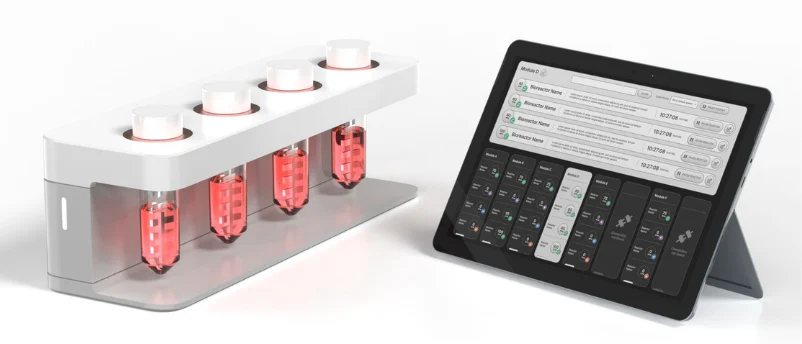
Designed for automated small-scale expansion and differentiation, the RPMotion operates efficiently with culture volumes ranging from 5ml to 50ml. This precise control over volume is ideal for researchers working with precious stem cell lines or seeking to conduct multiple parallel experiments without excessive material consumption. The system’s compact footprint further enhances its suitability for integration into various laboratory settings, including those with limited incubator space.
Control of the RPMotion is managed through an intuitive external LCD screen, a feature that significantly improves user experience and experimental flexibility. This interface allows researchers to easily cycle through different pre-programmed protocols or customize parameters to precisely match the specific requirements of various organoid types—be it brain, gut, liver, or kidney organoids, each with unique growth dynamics and differentiation cues. The ability to fine-tune spinning speeds, durations, and other environmental factors ensures optimal conditions for diverse research applications. Furthermore, the external control unit permits monitoring and adjustment of culture parameters without the need to repeatedly open the incubator, thereby minimizing contamination risks and maintaining stable temperature and CO2 levels crucial for sensitive cell cultures.
A key differentiator of the RPMotion is its multiplexing capability. The base unit is designed to run four culture tubes in parallel, enabling simultaneous experiments and comparative studies. This significantly boosts research throughput and allows for efficient testing of different conditions, genetic modifications, or drug compounds side-by-side. Beyond the initial four tubes, the system boasts a "plug-and-play" feature that allows up to 28 additional bioreactors to be connected and controlled by a single LCD screen. This remarkable scalability transforms the RPMotion from a benchtop device into a powerful high-throughput platform, capable of supporting extensive experimental arrays and larger-scale production demands.
Quantifiable Impact: Efficiency and Cost Savings
The introduction of RPMotion is set to deliver substantial, quantifiable improvements in organoid culture productivity and resource management. AMSBIO reports that the bioreactor facilitates, on average, a five-fold faster organoid expansion rate compared to existing static culture methods. This acceleration in growth kinetics translates directly into shorter experimental timelines, allowing researchers to generate sufficient organoid material for downstream applications much more quickly. For drug discovery pipelines, where speed is paramount, this could significantly reduce the time required for initial compound screening and validation.
Beyond speed, the RPMotion promises considerable economic benefits. Laboratories adopting this technology can anticipate a reduction in the cost of organoid culture ingredients by an estimated 60%. This saving is primarily attributed to the optimized nutrient delivery and waste removal mechanisms, which prolong media effectiveness and reduce the frequency of media changes. Moreover, the automation inherent in the RPMotion design leads to a remarkable 75% reduction in labor requirements. By minimizing the need for constant manual intervention, researchers can reallocate their skilled personnel to more complex analytical tasks, thereby maximizing human capital and overall laboratory efficiency. The system’s ability to operate with minimal attention and its remote monitoring capabilities further underscore its contribution to streamlining workflows and reducing operational overhead.
Ensuring Quality and Consistency: Towards GMP-Aligned Workflows
Beyond gains in efficiency and cost, the RPMotion bioreactor addresses a critical aspect of organoid research: the production of consistent, high-quality organoids. Variability in organoid morphology, size, and cellular composition can severely undermine the reproducibility and reliability of experimental results. This is a particularly acute concern in drug screening, where inconsistent models can lead to false positives or negatives, and in regenerative medicine, where therapeutic products must meet stringent quality standards.
The dynamic culture environment fostered by the RPMotion helps to mitigate variability by ensuring uniform exposure to nutrients and growth factors across all developing organoids. This consistent microenvironment promotes more homogeneous growth and differentiation, leading to the production of organoids with greater reproducibility batch-to-batch. Such consistency is invaluable for generating reliable data for scientific publications, supporting regulatory submissions, and ultimately accelerating the translation of research findings into clinical applications.
Crucially, the RPMotion is designed to aid in the production of organoids suitable for GMP-aligned (Good Manufacturing Practice) workflows. GMP standards are essential for the manufacturing of pharmaceutical products, including cell and gene therapies, ensuring their safety, quality, and efficacy. By providing a platform that supports standardized, automated, and reproducible organoid production, the RPMotion positions itself as a vital tool for researchers and companies looking to move organoid-based therapies from preclinical development into clinical trials and eventually commercialization. This alignment with GMP principles marks a significant step forward in making organoid technology viable for therapeutic applications.
Strategic Vision from AMSBIO
A spokesperson for AMSBIO highlighted the company’s long-standing commitment to empowering researchers with innovative tools that push the boundaries of life sciences. "The launch of RPMotion represents a pivotal moment for AMSBIO and for the broader scientific community," the spokesperson stated. "We recognized the growing potential of organoids but also the significant hurdles researchers faced in their routine culture. With RPMotion, we are providing a robust, scalable, and cost-effective solution that not only accelerates research but also elevates the quality and consistency of organoid models. Our vision is to unlock new possibilities in drug discovery, deepen our understanding of complex diseases, and pave the way for novel regenerative therapies."
This sentiment underscores AMSBIO’s strategic positioning within the life sciences sector. As part of the Europa Biosite group, AMSBIO has cultivated deep expertise in advanced cell culture, 3D cell models, and cryopreservation technologies. The company’s portfolio is strategically designed to support researchers across the entire R&D pipeline, from initial target discovery and assay development to sophisticated disease modeling and the intricate demands of clinical and GMP-ready applications. The RPMotion bioreactor seamlessly integrates into this broader strategy, complementing AMSBIO’s existing suite of innovative products and services.
The Broader Implications for Research and Medicine
The implications of RPMotion extend far beyond individual laboratories, promising to reshape several facets of biomedical research and therapeutic development.
- Accelerating Drug Discovery: The ability to rapidly expand high-quality organoids will significantly boost the efficiency of drug screening platforms. Pharmaceutical companies can screen more compounds against more physiologically relevant human models in less time, potentially identifying promising drug candidates faster and at a lower cost. This could lead to a reduction in the high attrition rates typically seen in drug development, where many promising compounds fail in later-stage clinical trials due to inadequate preclinical models.
- Advancing Disease Modeling: With greater access to consistent and scalable organoid models, researchers can develop more accurate and complex disease models for a wide range of conditions, from cancer and neurodegenerative diseases to infectious diseases and genetic disorders. This will enable a deeper understanding of disease mechanisms, identify novel therapeutic targets, and facilitate the testing of personalized treatment strategies. For instance, patient-derived organoids can be cultured and used to predict individual responses to specific drugs, ushering in an era of truly personalized medicine.
- Propelling Regenerative Medicine: The large-scale, consistent production of organoids is a prerequisite for their application in regenerative medicine. Whether for tissue repair, cell transplantation, or the development of bioengineered organs, the RPMotion provides a critical tool for generating the necessary quantities of high-quality cellular material. This could accelerate the development of therapies for organ failure, spinal cord injuries, and other debilitating conditions.
- Enhancing Research Reproducibility: By standardizing and automating the organoid culture process, RPMotion inherently improves research reproducibility—a persistent challenge in biomedical science. Consistent methodology leads to more reliable and comparable results across different experiments and laboratories, strengthening the foundation of scientific knowledge.
AMSBIO’s Enduring Commitment to Innovation
AMSBIO’s launch of RPMotion is a testament to its enduring commitment to fostering innovation in the life sciences. The company has a well-established track record of supporting researchers with cutting-edge products, including its integrated stem cell platform featuring StemFit™ media, iMatrix™ recombinant laminins, and CELLBANKER™ cryopreservation technology. Alongside these, AMSBIO offers an extensive range of extracellular matrix technologies, biospecimens, glycobiology tools, kits, assays, and custom services, including viral delivery solutions.
Drawing on extensive GMP expertise and a comprehensive human and animal biorepository, AMSBIO is internationally recognized for delivering high-quality, application-ready products and services. The company consistently engages in close scientific collaboration with partners in academic, biotech, and pharmaceutical markets, striving to translate innovation from the bench to the bedside. The RPMotion bioreactor perfectly encapsulates this mission, representing a significant stride forward in making advanced 3D cell culture technologies more accessible, efficient, and reliable for the global scientific community. Its arrival marks a new era in organoid research, promising to unlock unprecedented opportunities for discovery and therapeutic development.
For further information: the RPMotion spinning organoid bioreactor.