The fundamental mechanics of animal movement have long been attributed to the microscopic interactions of proteins, but a groundbreaking study from the University of Michigan and Harvard University suggests that the secret to muscle speed and power lies not just in molecular motors, but in the very water that saturates them. Published in the journal Nature Physics, the research introduces a transformative theoretical model that views muscle fibers as "active sponges," where the flow of internal fluid dictates the upper limits of how fast a muscle can twitch. This shift from a purely molecular perspective to a holistic, hydrodynamic framework reveals that the three-dimensional deformation of muscle—its tendency to bulge outward as it shortens—is governed by a newly identified property known as "odd elasticity." By integrating fluid dynamics with biomechanics, researchers Suraj Shankar and L. Mahadevan have provided a new lens through which to view the physiology of everything from the rattle of a snake to the high-frequency hum of a mosquito’s wings.
Reimagining Muscle as an Integrated Material
For decades, the scientific consensus on muscle contraction was dominated by the "sliding filament theory," which focuses on how actin and myosin filaments slide past one another to generate force. While this model successfully explains the chemical-to-mechanical energy conversion at a molecular level, it often overlooks the physical environment in which these proteins operate. Muscle tissue is approximately 70% water, yet most traditional models treated the fiber as a one-dimensional string or a dry machine.
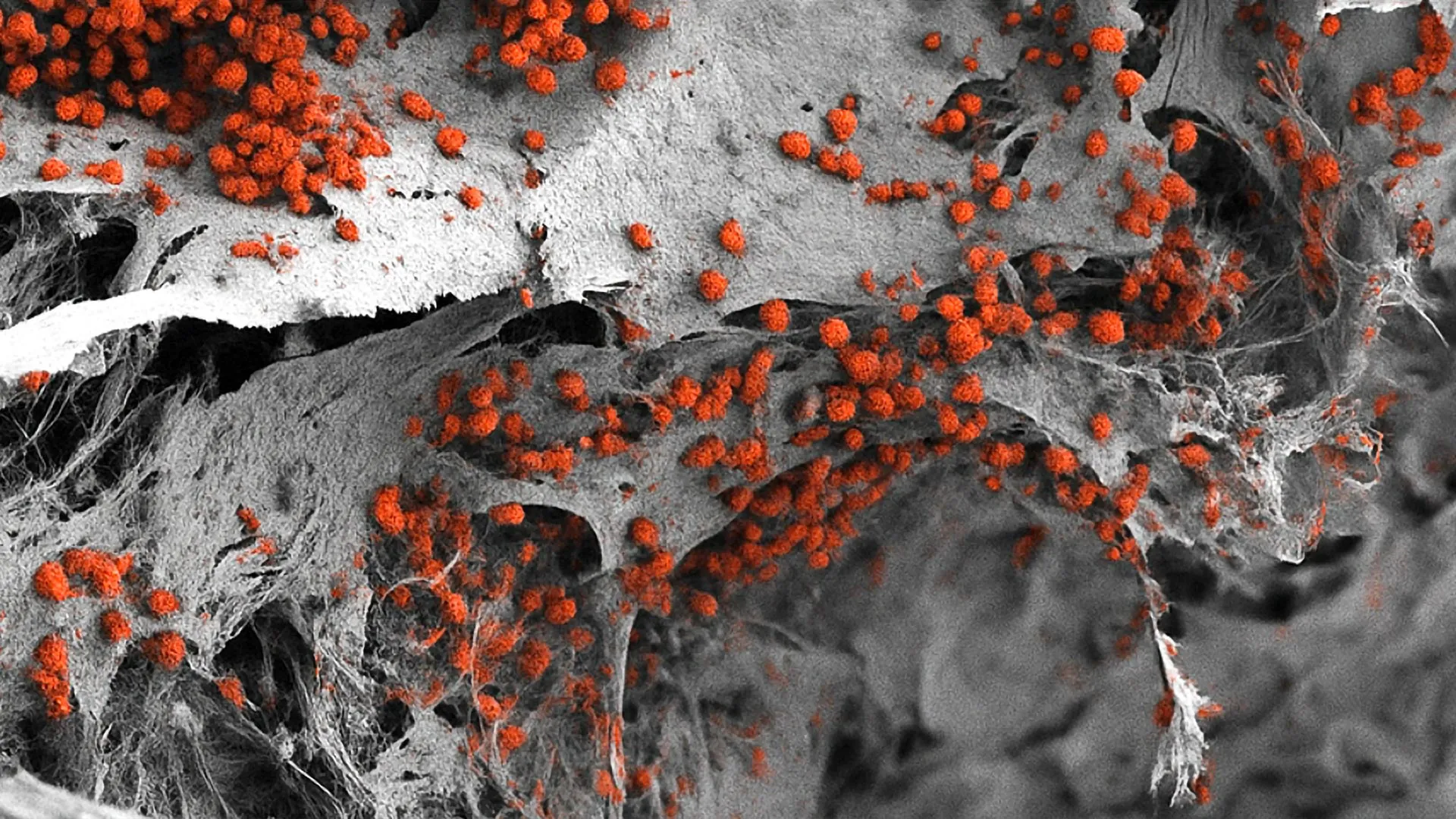
U-M physicist Suraj Shankar and Harvard professor L. Mahadevan challenged this simplification by treating the muscle fiber as a complex, hierarchically organized material. In their view, a muscle is more than a bag of molecules; it is a porous, water-filled network. Within this network, components such as cell nuclei, mitochondria, and various structural proteins form a matrix that is constantly bathed in fluid. When molecular motors like myosin convert chemical fuel into motion, they don’t just move filaments; they "squeeze" this porous network.
This "active sponge" analogy is central to the researchers’ findings. Just as squeezing a water-logged sponge requires the movement of liquid through its internal pores, the contraction of a muscle fiber necessitates the displacement of water. This process is not instantaneous. The resistance encountered by the water as it moves through the narrow gaps of the cellular machinery creates a physical bottleneck, establishing a definitive speed limit for how quickly a muscle can contract.
The Hydraulics of Speed: From Rattlesnakes to Mosquitoes
To validate their theoretical model, Shankar and Mahadevan analyzed the contraction speeds of a diverse array of organisms, including mammals, birds, reptiles, fish, and insects. Their goal was to determine where the "active hydraulics" of water flow became the dominant factor in limiting performance.
The researchers identified a clear distinction in how different animals manage high-speed movements. In larger animals or those with specialized "superfast" muscles, such as the tail-shaker muscle of a rattlesnake or the vocal muscles of certain fish, the contraction frequencies range from 10 to 100 times per second. In these cases, the study found that the nervous system remains the primary regulator. The speed is limited by the time it takes for calcium ions to signal the muscle or for molecular motors to bind and release. Because these contractions are relatively "slow" in the context of fluid dynamics, the internal water flow does not pose a significant hindrance.
However, the physics changes dramatically as the scale decreases and the frequency increases. Flying insects, such as mosquitoes and midges, beat their wings at frequencies approaching 1,000 times per second. At these "ultrafast" speeds, the nervous system cannot send signals fast enough to trigger each individual beat. Instead, these insects rely on asynchronous muscles that contract automatically when stretched.
It is in these extreme scenarios that fluid dynamics take center stage. The researchers found that at frequencies of several hundred to a thousand Hertz, the time required for water to flow through the muscle fiber becomes the limiting factor. According to Shankar, some insects appear to be operating right at the edge of this theoretically predicted limit. This suggests that evolution has pushed these organisms to the absolute physical boundary of what "wet" biological tissue can achieve.
Odd Elasticity: A New Physics of Power
One of the most significant discoveries of the study is the identification of "odd elasticity" within muscle tissue. In classical physics, elasticity is usually "even" or conservative. For example, when a rubber band is stretched, it stores potential energy. When released, it returns to its original shape, releasing the same amount of energy it took to stretch it (minus a small amount lost to heat). This is a reciprocal relationship: the force required to deform the object is equal and opposite to the force it exerts to return.
Muscle, however, is an "active" material that consumes chemical fuel (ATP) to do work. Because it is constantly injecting energy into the system, it can violate the standard laws of passive elasticity. The researchers discovered that muscle exhibits odd elasticity, meaning its response to being squashed in one direction is not the same as its response in another.
This property is visible in the common observation that a muscle fiber bulges perpendicularly when it contracts lengthwise. Because of odd elasticity, the muscle can generate power through these three-dimensional deformations in a way that a simple spring or rubber band cannot. This allows the muscle to function as a "soft engine," capable of producing sustained power through repetitive cycles of contraction and expansion. By recognizing that muscle is a 3D object that changes shape—rather than a 1D line that simply shortens—the researchers have opened a new door to understanding how animals generate such immense power relative to their size.
A Chronology of Biomechanical Evolution
The U-M and Harvard study represents a significant milestone in a timeline of research that has sought to bridge the gap between physics and biology.
- 1954: The Sliding Filament Theory is proposed by Andrew Huxley and Rolf Niedergerke, and independently by Hugh Huxley and Jean Hanson. This establishes the molecular basis for contraction.
- 1990s-2000s: Advances in microscopy allow scientists to observe individual molecular motors (myosin) "walking" along actin filaments. Research focuses heavily on the biochemistry of ATP hydrolysis.
- 2010s: The field of "Active Matter" physics emerges, treating biological tissues as systems of self-propelled particles. Scientists begin to look at the collective behavior of cells.
- 2020: The concept of "Odd Elasticity" is formally proposed in the context of synthetic active materials and microscopic systems.
- 2024: Shankar and Mahadevan apply these concepts to muscle physiology, integrating the "active sponge" model with fluid dynamics to solve long-standing questions about muscle speed limits.
This progression marks a shift from looking at the "parts" of the machine to looking at the "fluid" and "geometry" of the entire system.
Implications for Technology and Medicine
The findings of this study extend far beyond the realm of evolutionary biology. The researchers suggest that their "active sponge" framework can be applied to almost any tissue or cell type, as nearly all biological structures are water-saturated and porous.
Soft Robotics and Artificial Muscles
Currently, the field of soft robotics is struggling to develop "artificial muscles" that can match the speed and efficiency of biological ones. Most current soft actuators, which convert energy into motion, are triggered externally (via heat, electricity, or pneumatic pressure) and suffer from very slow contraction speeds. By incorporating the principles of active hydraulics and odd elasticity, engineers may be able to design materials that move water internally to achieve the "ultrafast" speeds seen in the insect world.
Microorganism Control
The study also provides insights into the movements of unicellular microorganisms. These tiny creatures often use cilia or flagella to swim, movements that are incredibly fast and dictated by the same fluid-structure interactions described in the "active sponge" model. Understanding these limits could lead to new ways to control or mimic microscopic biological motion for medical drug delivery systems.
Medical Insights into Muscle Disorders
On the clinical side, a more holistic view of muscle as a hydrated material could lead to new understandings of muscle-wasting diseases or aging. If the "porosity" of the muscle or the "viscosity" of the internal fluid changes due to pathology, it would directly impact the muscle’s ability to contract quickly, regardless of whether the molecular motors themselves are functioning. This suggests that maintaining the "hydraulic" health of muscle tissue may be just as important as maintaining protein integrity.
Conclusion: A Holistic Future for Biomechanics
The research by Suraj Shankar and L. Mahadevan serves as a reminder that biological systems are bound by the universal laws of physics. By proving that water flow and three-dimensional geometry are just as critical as molecular interactions, they have challenged the scientific community to look at muscle in a more integrated way.
"Our results suggest that even such basic questions as how quickly muscle can contract or how many ways muscle can generate power have new and unexpected answers when one takes a more integrated and holistic view," Shankar noted. As science moves forward, this "revised view" of muscle function will be essential for understanding the vast diversity of animal movement, from the slow, powerful stride of an elephant to the invisible, high-speed vibration of a gnat’s wing. The "active sponge" model does not replace the molecular work of the past; rather, it provides the missing physical context that explains how life moves through a watery world.