

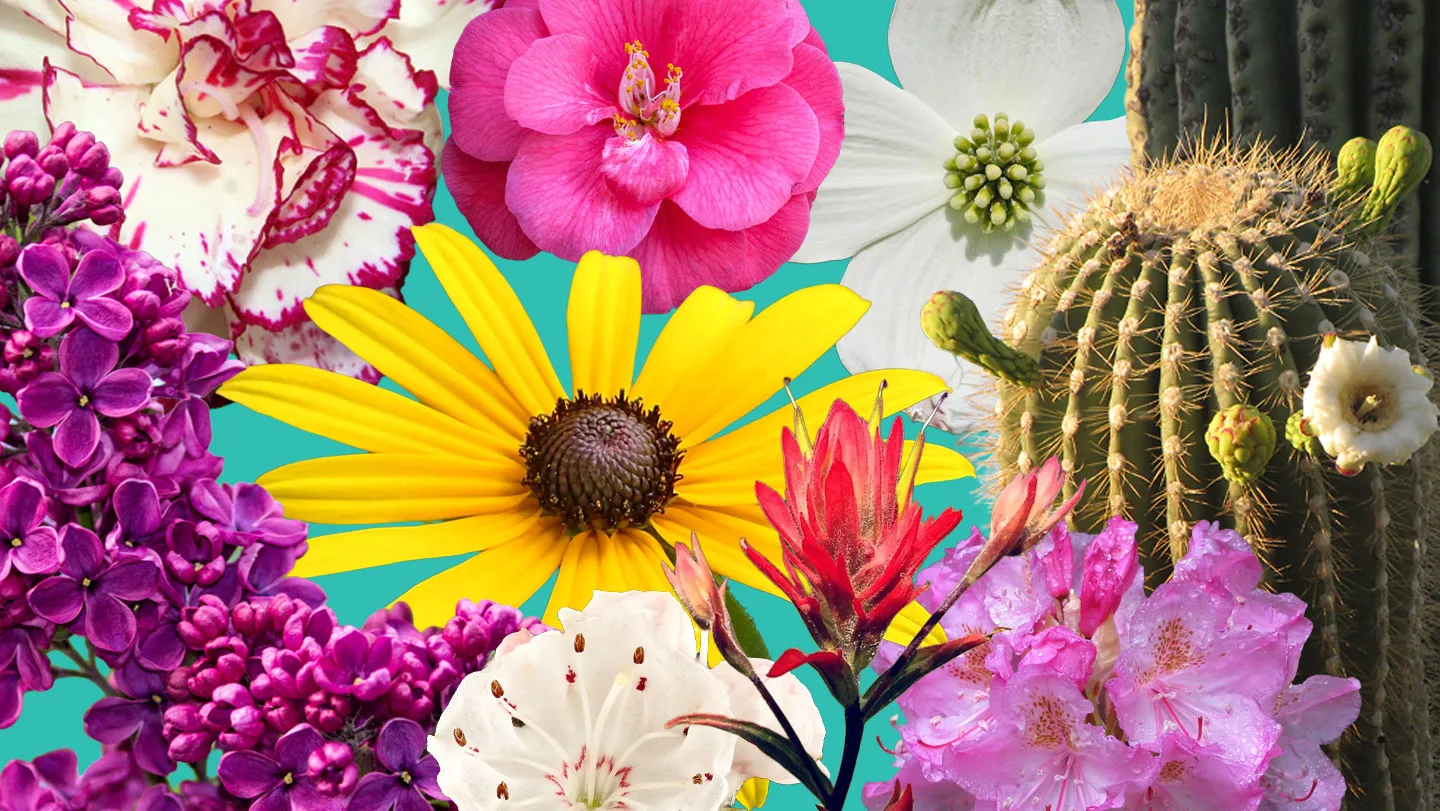
As the United States approaches its 250th anniversary, the U.S. Botanic Garden in Washington, D.C., has unveiled a unique and timely exhibition, "America’s State Flowers: An America 250 Celebration." This immersive display, running through October 12, offers visitors an extraordinary opportunity to explore the floral emblems of all 50 states, the District of Columbia, and various U.S. territories. Housed within the iconic glass-domed conservatory and extending into the surrounding outdoor gardens, the exhibit transforms the nation’s capital into a vibrant tapestry of botanical symbolism, inviting a deeper appreciation for the diverse natural heritage of the country.
The exhibition, a significant undertaking by the U.S. Botanic Garden, aims to commemorate the nation’s milestone by highlighting a less commonly celebrated aspect of American identity: its state flowers. These floral designations, often chosen for their historical significance, economic importance, or aesthetic appeal, represent a unique facet of each state’s identity. The exhibit serves as both an educational resource and a visually stunning celebration, drawing parallels between the resilience and diversity of plant life and the evolving narrative of the nation.
During an exclusive preview for media on opening day, experts from the U.S. Botanic Garden guided attendees through a curated selection of more than a dozen blooming specimens, sharing the rich histories and ecological significance behind each choice. This behind-the-scenes look underscored the meticulous research and horticultural expertise involved in assembling such a comprehensive collection.
A Floral Journey Across the Nation
Among the diverse array of blooms featured, the Oregon grape ( Berberis aquifolium ) stands out, not for its grape-like fruit, but for its significant medicinal properties. Lisa Philander, the garden’s deputy executive director and an expert in medicinal plants, explained that compounds derived from the Oregon grape’s roots and stems have a long history of use in traditional remedies for ailments such as bleeding, arthritis, and tuberculosis. This highlights how state flowers can often be linked to practical human uses and historical health practices.
Another remarkable specimen is Minnesota’s state flower, the lady’s slipper orchid ( Cypripedium reginae ). This particular orchid is unique in several respects: it is the only orchid to hold state flower status in the U.S., it thrives exclusively in intensely cold winter climates, and it is legally protected, making it illegal to pick in the wild. Its delicate beauty and specific ecological requirements serve as a potent symbol of nature’s fragility and the importance of conservation.
Perhaps one of the most unconventional choices represented in the exhibit is Maine’s state emblem: the white pine cone and tassel. Susan Pell, the Executive Director of the U.S. Botanic Garden, noted the peculiarity of this selection, as it does not involve a flower at all. Instead, it honors the Eastern white pine ( Pinus strobus ), a towering conifer that has played a pivotal role in Maine’s economy and identity since the 17th century. The Eastern white pine’s prominence across the state and its historical economic significance, from shipbuilding to timber, cemented its status. Adopted as the state’s floral emblem in 1895, it remains a powerful symbol, even appearing on Maine license plates today. Pell remarked on its deep connection to the state’s residents, humorously suggesting that "Maine likes being a little bit weird," a sentiment that perhaps reflects the state’s independent spirit and unique character.
Beyond the Bloom: Replicas and Research
The exhibition’s dynamic nature means that different flowers will reach their peak bloom throughout its duration. For those who may miss a particular specimen in its prime, the U.S. Botanic Garden has provided an innovative alternative. In the conservatory lobby, a meticulously curated display features exquisite, anatomically accurate paper flowers crafted by Washington, D.C.-based artist Emily Paluska. These lifelike replicas offer a permanent representation of each state and territory’s floral symbol. Beneath these delicate paper creations, visitors can delve into more scientific study by perusing books containing preserved botanical specimens.
These preserved specimens are not merely decorative; they represent a vital scientific resource. Pell explained that researchers collected these flora "to take a snapshot in time of what plants were occurring in a certain area." The dried specimens provide "rich data for us to be able to understand the impacts of climate change and other things like development and invasive species on the range of native plants." This scientific dimension of the exhibit underscores the crucial role of botanical gardens in environmental monitoring and research.
Climate Change and the Future of State Flowers
The implications of climate change on plant distribution are a significant undercurrent of the exhibition. Pell highlighted that as Earth’s average temperature rises, many plant species across the United States are migrating northward and increasing in elevation. In some instances, species unable to ascend higher or move further may face extinction. This ecological shift raises the possibility that states might eventually reconsider and update their floral emblems to reflect the changing botanical landscape.
"I will say that states are continuously changing their state flowers," Pell observed, noting that these designations are not static. A recent example of this evolving botanical symbolism occurred just prior to the exhibit’s opening, when Georgia updated its official flower. The state transitioned from the Cherokee rose ( Rosa laevigata ), an introduced species from Asia, to the sweetbay magnolia ( Magnolia virginiana ), a species native to Georgia. This decision reflects a growing emphasis on recognizing and celebrating indigenous flora.
A Call to Visit and Appreciate
The "America’s State Flowers: An America 250 Celebration" exhibition is more than just a display of botanical beauty; it is a narrative woven from history, ecology, and national identity. It offers a unique lens through which to view the diverse American landscape and the symbolic significance of its natural elements. As the nation gears up for its semiquincentennial, this exhibit provides a poignant reminder of the enduring connection between the land and its people, and the ever-present need to understand and protect our natural heritage.
For residents and visitors to Washington, D.C., the U.S. Botanic Garden extends an invitation to engage with this captivating exhibition. It is an opportunity to pause, learn, and appreciate the intricate beauty and profound stories held within America’s state flowers before the exhibition concludes on October 12. The experience promises to be both enlightening and inspiring, offering a fresh perspective on the nation’s past, present, and the botanical future it faces.
















Leave a Reply