The pharmaceutical industry faces a profound and escalating crisis marked by soaring costs, protracted timelines, and persistently high failure rates in drug development. Bringing a new drug from initial discovery to market approval typically spans a daunting 10 to 15 years, sometimes even longer, demanding investments ranging from hundreds of millions to multiple billions of dollars. This financial burden is not static; the inflation-adjusted cost of drug development has astonishingly doubled approximately every nine years, a phenomenon dubbed "Eroom’s Law" (Moore’s Law spelled backward), which starkly contrasts with efficiency gains seen in many other technology-driven sectors. At the heart of this inefficiency lies a critical challenge: the pervasive problem of clinical failure, primarily due to a lack of efficacy, underscoring a fundamental disconnect between preclinical research and actual biological outcomes in human trials.
The High Stakes of Pharmaceutical Innovation
The pharmaceutical pipeline is notoriously leaky. An extensive analysis of clinical trial data from 2010 to 2017 revealed that between 40% and 50% of drugs that fail during clinical trials do so because they simply do not work as intended. This grim statistic illuminates the inadequacy of current preclinical models and assays in accurately predicting a drug’s biological performance in a complex physiological system. The stakes are immense, not only for the pharmaceutical companies absorbing these colossal losses but, more importantly, for patients awaiting effective treatments for myriad diseases. Each clinical failure represents years of effort, billions of dollars, and deferred hope.
In recent years, the promise of artificial intelligence (AI) has drawn significant investment and optimism into the drug discovery sector. According to DealForma’s sector review, the AI drug discovery field attracted 612 venture rounds and approximately $19.9 billion in total capital in 2024 and 2025 alone. Despite this impressive influx of funding and technological advancement, AI has yet to demonstrably improve the industry’s stubbornly high 90% clinical failure rate. While AI excels at sifting through vast datasets, identifying potential targets, and predicting molecular interactions, its impact has been blunted by the same underlying issue plaguing traditional methods: a reliance on static, often oversimplified, representations of complex biological processes.
The "Snapshot Assay Problem" and Its Limitations
A core reason for the pervasive disconnect between preclinical findings and clinical outcomes lies in what industry experts term the "snapshot assay problem." Conventional drug discovery assays are fundamentally limited by their structural design. These methods typically reduce intricate, dynamic cellular behaviors into static, single-point measurements. Cells are often cultured in artificial conditions, then treated with a compound, and their response is assessed at one or a few discrete time points, providing only a fragmented view of a continuous biological process.
Furthermore, many powerful analytical techniques, such as transcriptome profiling, require the destruction of the cells being studied. This destructive nature makes it virtually impossible to track the dynamic gene expression patterns or phenotypic changes of an individual cell or cell population over multiple time points. Researchers are left with a series of isolated data points rather than a coherent narrative of how a cell responds and adapts to a drug over time. This static approach fails to capture the subtle, time-dependent cellular adaptations, feedback loops, and emergent properties that dictate a drug’s true efficacy and safety profile in a living system.
These inherent limitations have fueled a resurgence of interest in phenotypic drug discovery (PDD), an approach that shifts focus from modulating a single, pre-defined molecular target to observing complex cellular behavior in response to a compound. PDD aims to identify compounds that induce a desired cellular phenotype, such as cell death in cancer cells or differentiation in stem cells, without necessarily knowing the exact molecular target upfront. While PDD offers a more holistic view than target-based screening, it comes with its own set of challenges, including difficulty in validating hits, deconvoluting the specific molecular targets responsible for the observed phenotype, and translating complex phenotypic signals into actionable mechanistic insights. The very richness of phenotypic data can become a barrier to understanding, making it challenging to pinpoint why a drug works or fails.
Live Cell Dynamics (LCD): A New Paradigm Emerges
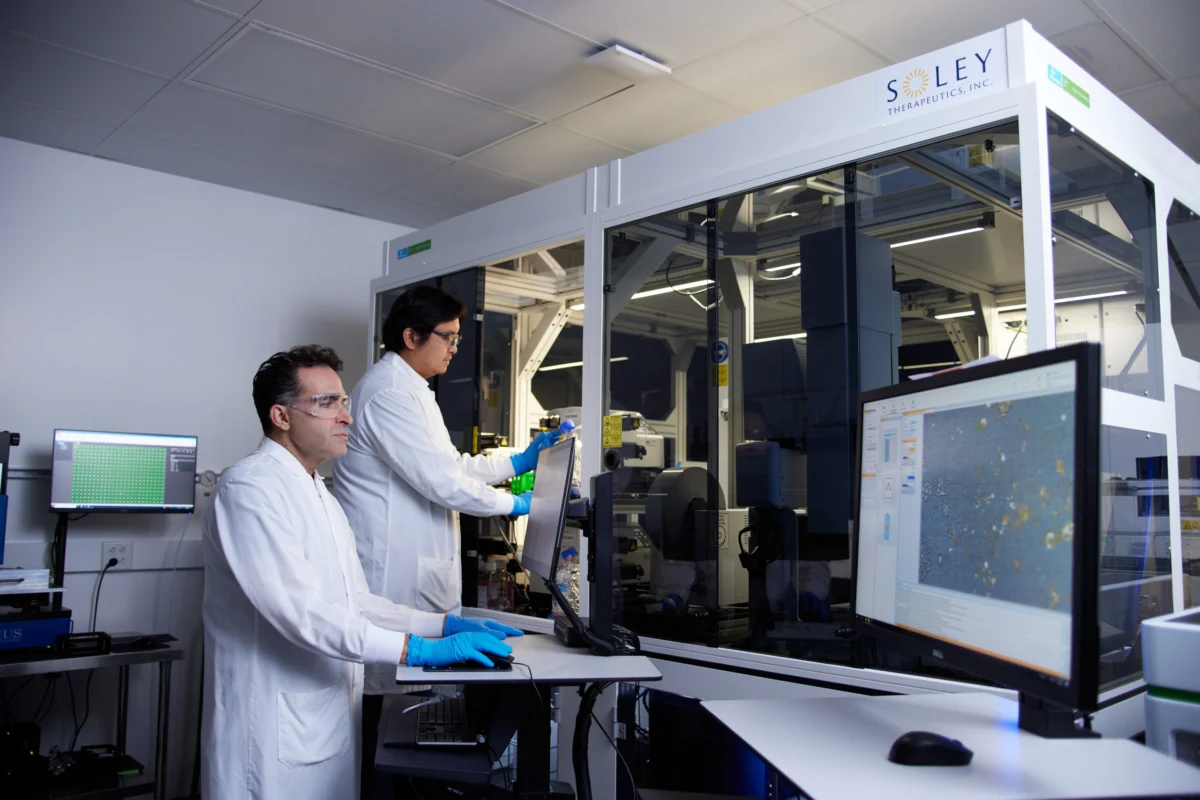
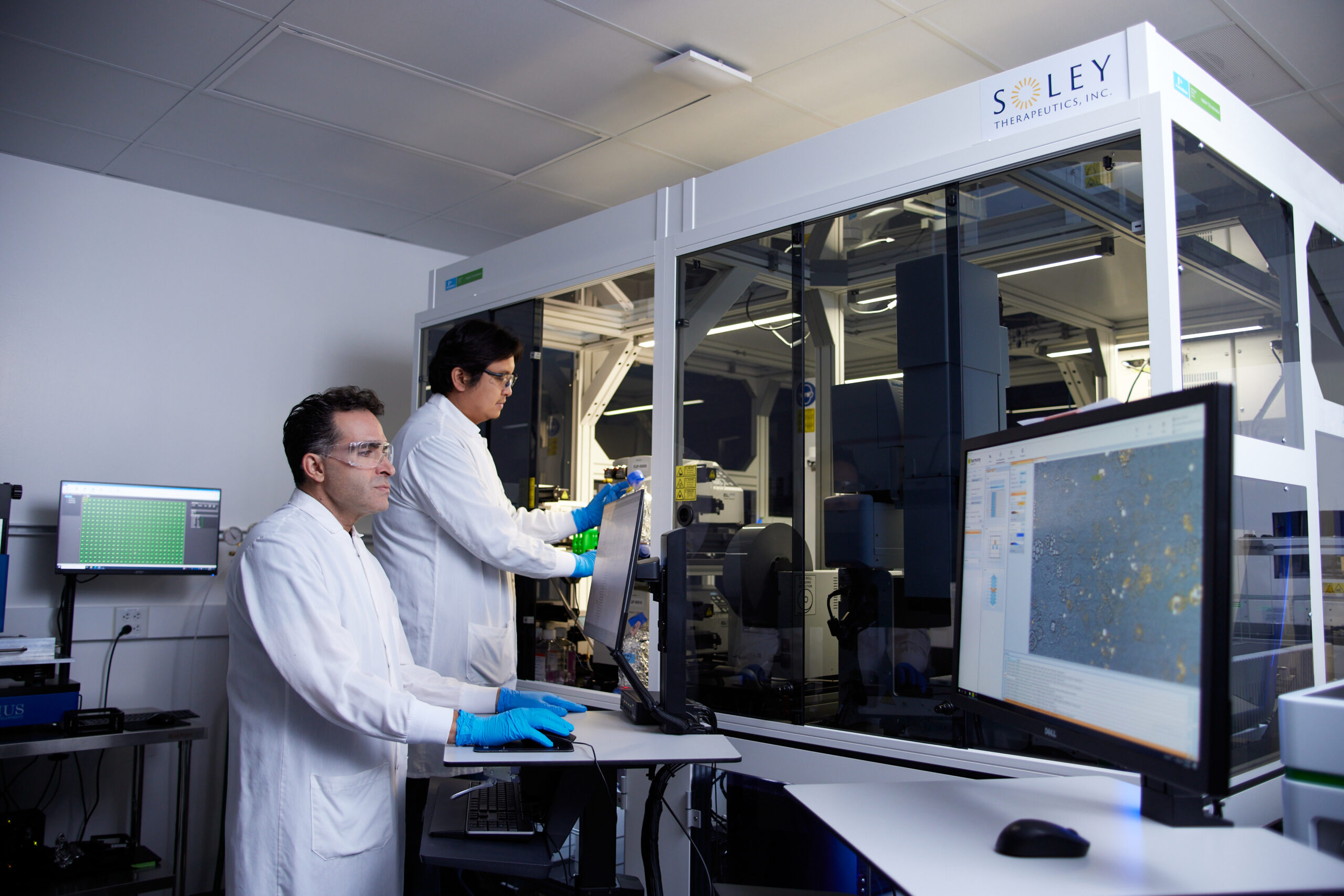
Against this backdrop of entrenched challenges, a groundbreaking methodology known as Live Cell Dynamics (LCD) is emerging as a potential solution to bridge the gap between preclinical insights and clinical success. Developed by scientists at Soley Therapeutics, LCD is a self-supervised machine learning pipeline designed to extract crucial dose- and time-dependent cellular state information directly from continuous brightfield images, crucially without the need for any stains or labels. This innovative approach was detailed in a January 2026 paper published in Scientific Reports, marking a significant step forward in rethinking how drug discovery assays are conducted.
Kurosh Ameri, co-founder and CSO of Soley Therapeutics, elucidated the fundamental shift LCD represents. "By treating cellular response as time-resolved information rather than a static snapshot, LCD enables mechanism classification, compound comparison, and detection of complex biology through measurable trajectories," Ameri explained. He emphasized that this provides "early forward-looking biological signal rather than a late binary readout, shifting drug discovery from observing damage to forecasting a drug’s direction and future impact." This change in perspective is profound, moving beyond simply observing the end-stage effects of a drug to understanding the dynamic pathway of cellular response from its earliest moments.
Soley Therapeutics’ Breakthrough Research and Findings
The study published by Soley Therapeutics showcased LCD’s capabilities through rigorous evaluation. Researchers pre-trained the LCD model on a diverse library of 189 compounds, then assessed its performance on an additional 81 held-out compounds, covering 10 distinct mechanisms of action. A single human osteosarcoma cell line (U2OS), a well-characterized model, was used for these experiments.
The results demonstrated LCD’s superior performance in phenotypic activity detection across all tested doses and time points, particularly excelling at early time points and low doses where traditional methods often struggle. When compared against conventional metrics like cell count and features extracted by CellProfiler, a widely used image analysis software, LCD consistently outperformed, especially in the crucial early stages of drug response. Ameri noted, "Learned representations from LCD preserved signal in those early regimes and performed strongly across dose and time, while the CellProfiler baseline tended to be comparable only later, or lower at early time points." This ability to detect subtle, early signals is critical, as it offers a more predictive understanding of a compound’s potential efficacy before significant cellular damage or adaptation occurs.
A key advantage highlighted by the research is LCD’s capacity to integrate multiple doses and time points, which incrementally improves mechanism-of-action classification. This comprehensive data allows LCD to disentangle mechanisms that might appear similar or converge in their effects at later stages, providing a finer resolution into a drug’s specific mode of action.
Unpacking LCD’s Advantages: Polypharmacology and Early Detection
One of the most significant and challenging aspects of drug discovery is the phenomenon of polypharmacology—where a single drug interacts with multiple biological targets simultaneously. While often considered a hurdle, polypharmacology can sometimes be beneficial, contributing to a drug’s efficacy by hitting multiple pathways relevant to a disease. However, detecting and characterizing it conventionally requires extensive and costly assay panels, making it a complex and time-consuming endeavor.
Remarkably, LCD demonstrated the ability to flag polypharmacology using only brightfield imaging. The model successfully identified both Aurora kinase and JAK inhibitor activity, findings consistent with prior studies that had necessitated extensive and resource-intensive kinome profiling to reach the same conclusions. This capability represents a substantial leap forward, potentially allowing researchers to identify and understand multi-target interactions much earlier and more efficiently in the discovery process.
The success of LCD in extracting meaningful biological information from brightfield images is particularly noteworthy because brightfield microscopy is notoriously challenging for automated analysis. As Ameri pointed out, "Brightfield is difficult because the signal is subtle, not evident to the naked eye, contrast is low, and small changes in optics, focus, plate position, or day-to-day setup can create batch effects that swamp biology." These technical variabilities can easily obscure genuine biological signals, making robust analysis difficult.
To overcome these inherent challenges, Soley Therapeutics incorporated two innovative training strategies into their LCD pipeline. The first, "plane-agnostic augmentation," teaches the model to recognize biological changes regardless of slight variations in the focal plane, effectively separating true biology from optical artifacts. The second, "cross-batch sampling," forces the model to learn features that remain stable across different experimental runs, thereby distinguishing genuine biological signals from technical noise introduced by daily setup variations. These innovations are crucial for ensuring the reliability and reproducibility of LCD’s analytical power.
The aggregate results underscore LCD’s potential to revolutionize how compounds are characterized. Ameri summarized, "LCD can represent compound behavior as a profile across dose and time, not a single label. Those profiles contain enough structure to separate closely related mechanisms and expose mixed activity, which is exactly the kind of complexity that shows up in development." This ability to generate rich, dynamic profiles offers a far more nuanced and predictive understanding of a drug’s interaction with cellular systems than traditional binary readouts.
The Road Ahead: Validation and Broader Implications
Despite the promising results, the study acknowledges important limitations that define the next steps for LCD. The research was conducted using a single, well-characterized cancer cell line (U2OS) under highly controlled laboratory conditions. This means that LCD’s performance and advantages in more complex and physiologically relevant models—such as primary cells, patient-derived organoids, or other disease-relevant models—remain to be fully evaluated. The central question that the work leaves open is whether the performance advantages observed within a controlled compound library will translate effectively to the "messier, more heterogeneous biology" inherent in real-world disease models.
According to Soley Therapeutics, the immediate next phase involves expanding LCD’s application to a broader range of cell types, including primary cells and those directly relevant to specific diseases. This expansion will also aim for broader mechanism coverage and, crucially, prospective use in active drug discovery programs. Before definitive claims about LCD’s clinical impact can be fairly assessed, it will need rigorous validation in settings that more closely mimic human disease conditions.
Broader Industry Impact and Future Outlook
The implications of Live Cell Dynamics, if successfully validated and scaled, are profound for the entire pharmaceutical industry. By providing earlier, more accurate, and dynamic insights into drug efficacy and mechanism of action, LCD has the potential to:
- Accelerate Drug Discovery Timelines: Earlier detection of effective compounds and faster deselection of ineffective ones could significantly shorten the discovery phase.
- Reduce Development Costs: Minimizing late-stage clinical failures, which are the most expensive, would lead to substantial cost savings.
- Improve Efficacy and Safety: A deeper, dynamic understanding of drug-cell interactions could lead to the development of more efficacious and safer drugs by identifying subtle adverse effects or optimal dosing regimens earlier.
- Enhance Precision Medicine: By better characterizing polypharmacology and subtle mechanism differences, LCD could contribute to more tailored therapeutic strategies.
- Reinvigorate Phenotypic Screening: By addressing the challenges of target deconvolution and mechanistic insight, LCD could unlock the full potential of phenotypic drug discovery, moving beyond simple observation to deep understanding.
- Complement AI Efforts: LCD’s ability to generate rich, dynamic biological data could serve as a powerful input for existing AI drug discovery platforms, providing the high-quality, time-resolved data that AI models need to truly learn and predict complex biological outcomes.
The journey from a promising laboratory method to a transformative industry standard is long and arduous. However, Live Cell Dynamics represents a significant conceptual and technological shift, offering a compelling vision for overcoming the persistent efficacy problem in drug discovery. By embracing the dynamic nature of cellular life, LCD stands poised to usher in an era where drug development is less about static snapshots and more about understanding the intricate, evolving biological narratives that define a compound’s true potential. The global scientific community will undoubtedly watch with keen interest as Soley Therapeutics pursues the critical validation necessary to demonstrate LCD’s full clinical impact.