University of Georgia researchers have officially identified and described two previously unrecognized species of black bass: Bartram’s bass and Altamaha bass. This significant ichthyological discovery, detailed in a recently published study, sheds new light on the biodiversity of Southeastern U.S. aquatic ecosystems and underscores the ongoing need for rigorous scientific exploration and conservation efforts. The formal classification marks a culmination of decades of observation, sampling, and advanced genetic analysis, confirming what keen observers and dedicated scientists suspected for years.
A Glimpse from the Past: The Genesis of Discovery
The recognition of these distinct bass species did not emerge overnight. Its roots trace back to the 1980s, when Dr. Bud Freeman, an ecologist now serving as a senior public service associate emeritus at the UGA Odum School of Ecology and lead author of the groundbreaking study, first encountered what he suspected was an undocumented fish. During a visit to the Broad River, a chance encounter with local anglers provided a tantalizing clue. The fishermen presented him with an unusual fish they had caught, which they intended to consume.
"That would have been an important specimen," Dr. Freeman recalled, reflecting on the missed opportunity to secure an early sample. The anglers’ understandable desire to enjoy their catch meant the potentially groundbreaking specimen was lost to science. This pivotal moment, however, ignited a persistent curiosity in Dr. Freeman, setting in motion a long-term quest to understand the enigmatic fish. Over the subsequent decades, he and his dedicated research team embarked on an extensive sampling expedition, meticulously collecting specimens from across the region. This painstaking work, driven by a commitment to scientific accuracy, laid the groundwork for the formal descriptions that would eventually follow.
Unveiling the Distinctive Traits: Morphology and Genetics Intertwined
Bartram’s bass, scientifically designated as Micropterus pucpuggy, and Altamaha bass, now known as Micropterus calliurus, were historically overlooked, often grouped with the more common redeye bass. However, closer examination by the UGA researchers revealed clear and consistent differences in their physical characteristics, setting them apart as unique evolutionary lineages.
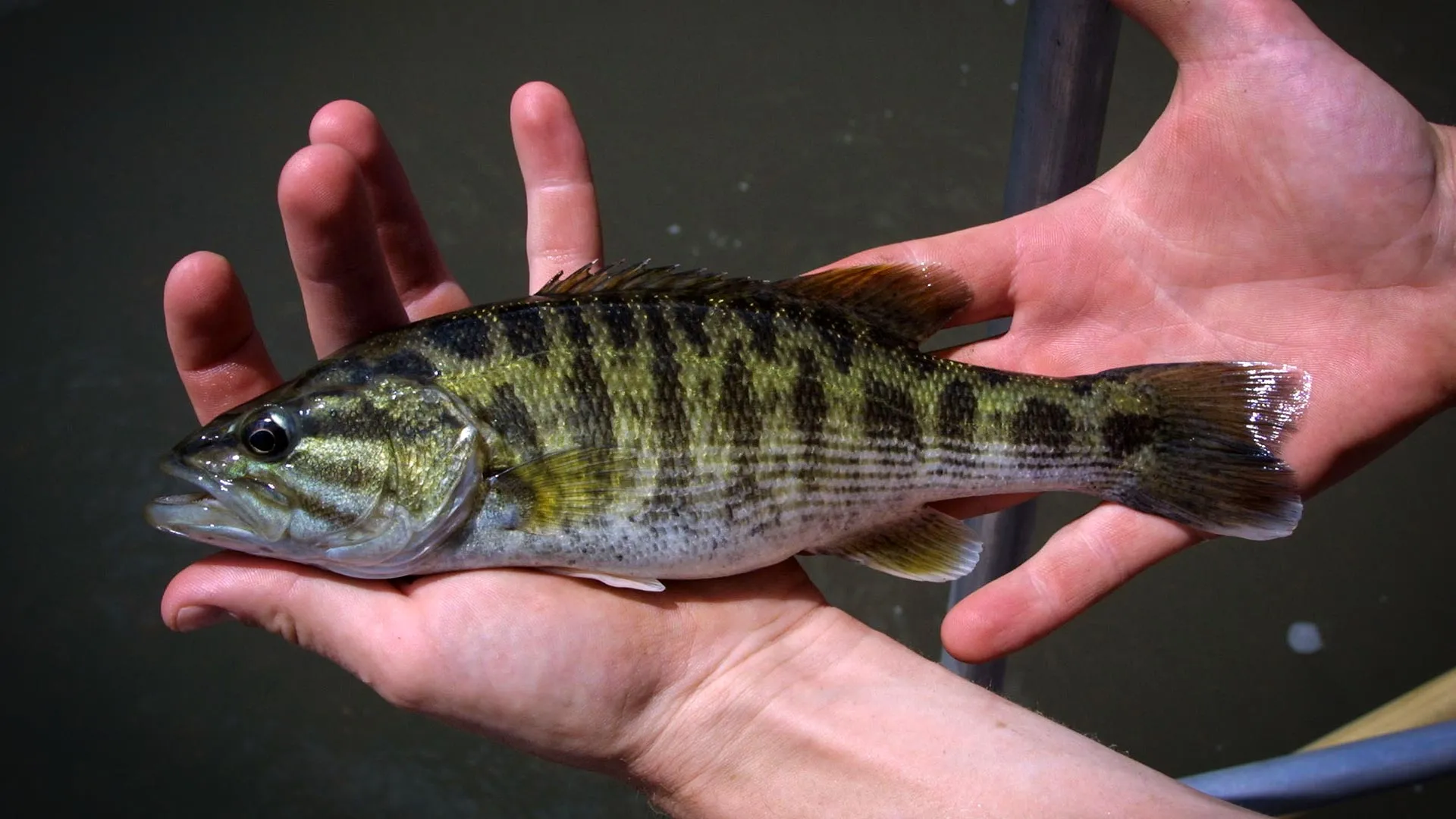
Bartram’s bass are characterized by a striking light golden hue, adorned with distinct dark brown blotches that run along their flanks. Their bellies exhibit a mottled pattern, and their fins possess a subtle rosy tint. A key identifying feature is their oval-shaped tooth patch, and their eyes are a remarkable ruby red, featuring a black pupil encircled by a thin, golden ring. These fish are known to reach impressive lengths, with individuals observed up to 15 inches long.
Altamaha bass, while also displaying golden scales, are distinguished by olive edging and darker markings along their sides. Their fins are accented with a vibrant orange hue, and they possess a smaller oval tooth patch. Similar to Bartram’s bass, they share the characteristic red eyes with a gold ring around the pupil. These impressive specimens can grow to approximately 14 inches in length.
Beyond these observable morphological distinctions, the confirmation of these species’ unique identities relied heavily on cutting-edge genetic analysis. "It used to be that you’d have to go out and catch the fish, bring it in, count the scales, measure the tail, measure this and that, write a description, and you’re done," explained Dr. Mary Freeman, a co-author of the study and adjunct faculty at the Odum School. "Now there is also genetic characterization. In this case, there’s genetic characterization of every single individual used to describe that fish to prevent including hybrid specimens."
This advanced approach involved the analysis of mitochondrial DNA, which provides insights into maternal lineage, and the utilization of sophisticated bioinformatics tools to scrutinize small segments of nuclear DNA. This comprehensive genetic profiling ensures the accuracy and integrity of the species descriptions. The study meticulously references over 100 specimens instrumental in defining these two new species. Furthermore, a broader dataset encompassing 570 fish, representing a diverse array of Micropterus species including smallmouth, largemouth, northern spotted, shoal, Tallapoosa, redeye, and Alabama bass, provided a crucial comparative framework for this extensive research.
"You’re laying the baseline for the future," Dr. Mary Freeman emphasized, highlighting the long-term implications of this work. "Hybridization may result in Bartram’s bass not existing as it has existed, but we’ll know what it was." This foresight underscores the importance of documenting species’ existence and characteristics before they are potentially altered or lost.
A Chronology of Discovery and Formalization
The journey from initial suspicion to formal scientific classification spans several decades, a testament to the perseverance and dedication of the researchers.
- 1980s: Dr. Bud Freeman’s initial encounter with an unusual bass species in the Broad River sparks curiosity and a long-term research interest.
- 1990s: Dr. Freeman proposes the name Bartram’s bass, honoring the naturalist William Bartram and his exploration of the region.
- Ongoing (Post-1980s to Present): Dr. Freeman and his team conduct extensive field sampling across various river systems in Georgia and South Carolina, collecting numerous specimens of what are now identified as Bartram’s and Altamaha bass.
- Recent Years: Advanced genetic analysis and detailed morphological studies are undertaken to rigorously differentiate the new species from existing ones and from potential hybrids.
- Present: The study formally describing Bartram’s bass (Micropterus pucpuggy) and Altamaha bass (Micropterus calliurus) is published in the scientific journal Zootaxa.
Habitat Alterations and the Looming Threat of Hybridization
Bartram’s and Altamaha bass are native to flowing river systems, environments where they typically thrive in calmer pools and swift-moving sections adjacent to rocky shoals. These specific habitat preferences underscore their ecological niche within these dynamic waterways. However, these natural environments have undergone significant alterations over time, posing a considerable threat to the long-term viability of these species.
The primary drivers of habitat degradation include increased sediment buildup, which can smother spawning grounds and reduce water clarity, and the widespread construction of dams. Dams fragment river systems, disrupt natural flow regimes, and create barriers to fish migration, isolating populations and altering the ecological characteristics of upstream and downstream habitats. These human-induced changes create less ideal conditions for the specialized needs of Bartram’s and Altamaha bass.
Compounding these habitat challenges is the increased risk of hybridization. The introduction of other Micropterus species, often facilitated by human activities such as stocking for recreational fishing, outside of their native ranges has led to increased interbreeding. When closely related species encounter each other in altered or newly created environments, hybridization can occur, leading to the dilution of unique genetic lineages. This genetic mixing threatens the integrity of Bartram’s and Altamaha bass, potentially leading to the loss of their distinct evolutionary characteristics and, in the worst-case scenario, their eventual disappearance as recognizable species.
"These evolutionarily distinct lineages are important to name," stated Dr. Bud Freeman. "In recognizing these species, we recognize how quickly they are becoming lost as extrinsic barriers are breached by human activities." His statement highlights the urgency of this discovery, as the very act of identifying these species coincides with the growing threats to their existence.
Naming Conventions and Scientific Collaboration
The naming of these newly identified species carries both scientific significance and historical resonance. The scientific name for Bartram’s bass, M. pucpuggy, is a tribute to the Seminole-Creek people of Florida. The name honors Chief Puc Puggy, a leader who bestowed this moniker upon the renowned naturalist William Bartram. Bartram, through his extensive travels in the region between 1773 and 1776, meticulously documented a wealth of previously unknown flora and fauna for early North American settlers, making him a fitting namesake for a species found within the territories he explored.
The Altamaha bass, M. calliurus, derives its scientific name from Greek roots. "Calliurus" is a combination of words meaning "beautiful" and "tail," likely referencing a notable physical attribute of the species.
The comprehensive study leading to this classification represents a significant collaborative effort involving numerous institutions and researchers. The research team includes contributions from Kelly N. Petersen, Bryson G. Hilburn, and Mary C. Freeman of the Odum School of Ecology; John P. Wares of the Odum School and UGA Department of Genetics; Mark C. Scott of the South Carolina Department of Natural Resources; Natalia J. Bayona-Vásquez of Oxford College of Emory University; and Andrew T. Taylor of the University of North Georgia. This interdisciplinary collaboration underscores the complex nature of modern species discovery and description.
Funding for this vital research was generously provided through a Competitive State Wildlife Grant. This grant, awarded to the South Carolina Department of Natural Resources and the Georgia Department of Natural Resources, highlights the commitment of state agencies to supporting critical biodiversity research and conservation initiatives within their respective jurisdictions. The successful outcome of this project serves as a model for how cooperative funding and inter-institutional partnerships can yield significant scientific advancements.
Broader Implications for Conservation and Biodiversity
The identification of Bartram’s bass and Altamaha bass carries substantial implications for conservation biology and our understanding of freshwater biodiversity. The formal recognition of these species elevates their status, making them eligible for targeted conservation strategies and protective measures. As Dr. Mary Freeman noted, "You’re laying the baseline for the future." This baseline is crucial for monitoring population health, assessing threats, and implementing effective management plans.
The documented instances of hybridization with other Micropterus species serve as a stark warning about the vulnerability of native fauna in an era of increasing human-induced environmental change. The fragmentation of habitats by dams and the introduction of non-native species are recognized as significant drivers of biodiversity loss globally. The case of Bartram’s and Altamaha bass underscores the need for a more integrated approach to fisheries management, one that prioritizes the preservation of genetic integrity and considers the ecological impacts of species introductions.
Conservation organizations and state wildlife agencies will likely use this research to inform their long-term management plans for the river systems where these bass are found. This could include efforts to restore degraded habitats, mitigate the impacts of dams, and potentially implement stricter regulations regarding the introduction of non-native fish species. Furthermore, the discovery encourages continued exploration and genetic analysis of other fish populations, as it is plausible that other unrecognized species may yet await formal description within the rich aquatic ecosystems of the Southeastern United States. The scientific community eagerly anticipates future discoveries that will further illuminate the intricate tapestry of life within our planet’s freshwater environments.