The intricate dance between light and plant development, a cornerstone of terrestrial ecosystems and global agriculture, has long fascinated scientists. While the fundamental role of light in photosynthesis is well-established, the nuanced ways in which it influences plant morphology and growth architecture continue to be a frontier of biological discovery. In a significant breakthrough, researchers at Osaka Metropolitan University have identified a previously unknown molecular mechanism that elucidates how light exposure directly impacts the structural integrity of plant tissues, thereby regulating growth. This discovery, detailed in a recent publication in Physiologia Plantarum, reveals a sophisticated interplay between light, a specific phenolic acid, and the physical adhesion of plant cells, offering profound implications for our understanding of plant biology and potential applications in crop cultivation.
The Unveiling of Light-Induced Tissue Adhesion
The research, spearheaded by Professor Kouichi Soga of the Graduate School of Science at Osaka Metropolitan University, zeroed in on the subtle yet crucial interactions within young pea stems. Utilizing a highly specialized technique, the team meticulously measured the adhesive forces between the epidermal layer – the plant’s outermost protective tissue – and the underlying inner tissues. Their investigations revealed a striking disparity: plants cultivated under light conditions exhibited significantly stronger adhesion between these distinct tissue layers compared to their counterparts grown in complete darkness. This observation marked the identification of a novel phenomenon, previously undocumented in plant science literature.
"Compared with plants grown in the dark, the epidermal and inner tissues of plants grown in the light are more tightly bound together," Professor Soga stated in a press release accompanying the study. "This phenomenon has never been reported before, making it a particularly interesting finding." This enhanced adhesion suggests that light is not merely a passive energy source for photosynthesis but actively influences the structural scaffolding of the plant.
Pinpointing the Molecular Culprit: P-Coumaric Acid
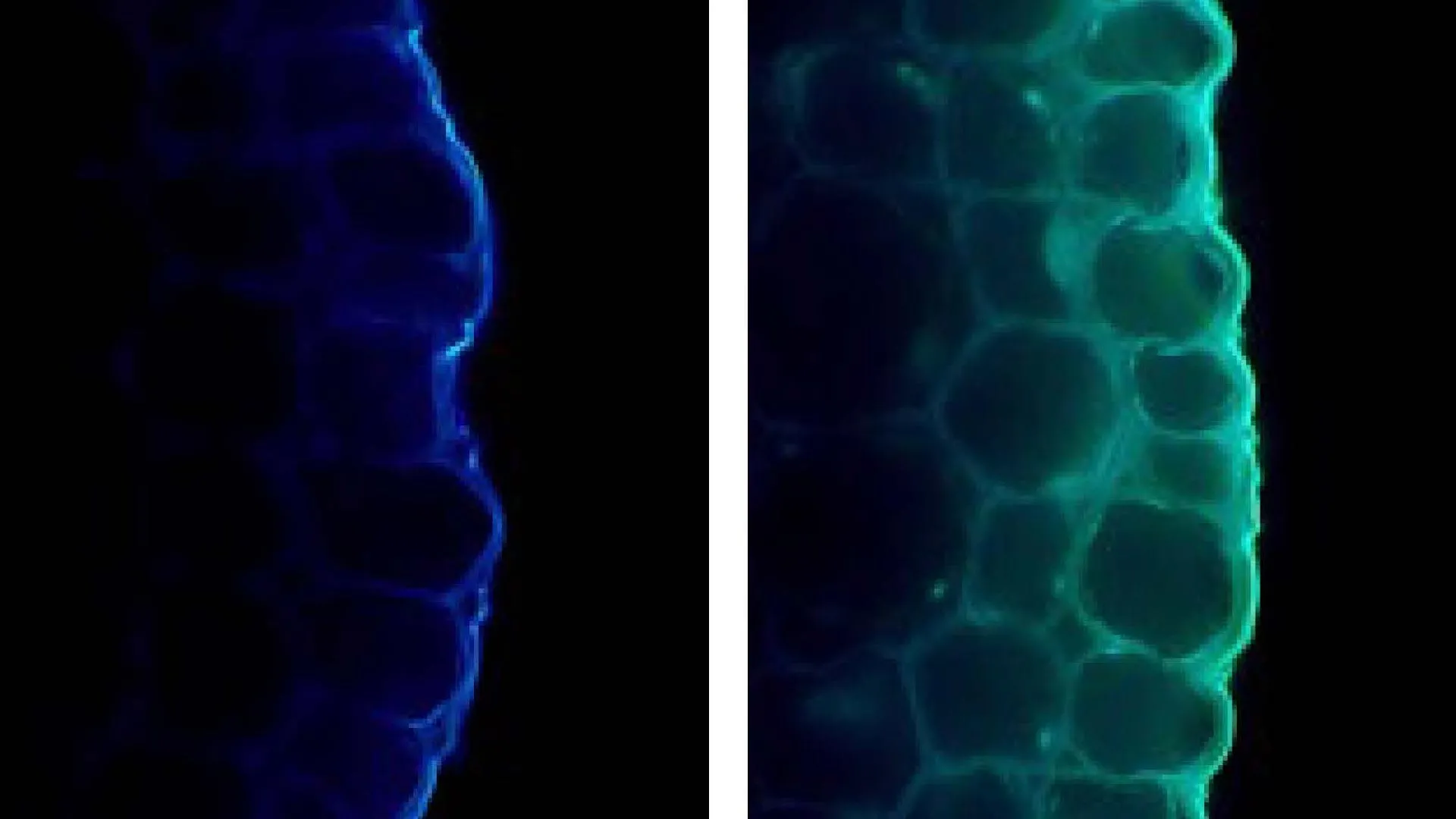
To unravel the biochemical underpinnings of this light-induced adhesion, the research team employed advanced fluorescence microscopy. Their detailed examination of plant cells exposed to light unveiled a clear correlation: stems bathed in light emitted fluorescent signals indicative of elevated levels of a specific compound, p-coumaric acid. This phenolic acid, a well-characterized molecule in plant biochemistry, is known for its role in reinforcing plant cell walls, contributing to their rigidity and structural integrity.
The presence of increased p-coumaric acid in light-exposed tissues strongly suggests that light actively stimulates its production. This augmented synthesis then translates into strengthened structural bonds between the epidermal and inner tissues, effectively "gluing" them together with greater tenacity.
Yuma Shimizu, a graduate student and the first author of the study, elaborated on this critical finding: "This provided strong evidence that the accumulation of p-coumaric acid was a key factor in strengthening the adhesion between the epidermal and the inner tissues." This molecular insight moves beyond a purely descriptive observation to a mechanistic explanation, detailing how light translates into physical changes within the plant.
A Structural Trade-Off: Stability Versus Growth
The implications of this enhanced tissue adhesion are multifaceted and reveal an intriguing biological trade-off. While increased structural stability is generally advantageous for plants, providing a more robust framework to withstand environmental pressures, it comes at a cost to growth potential. When the epidermal and inner tissues are more tightly bound, the capacity of the inner tissues to expand and elongate is significantly restricted. This inherent limitation means that light, while crucial for providing the energy for growth through photosynthesis, can also act as a modulator, actively slowing down growth rates by influencing the plant’s structural architecture.
This finding challenges a simplistic view of light as solely a promoter of growth. Instead, it highlights a more sophisticated regulatory role where light actively manages the plant’s developmental trajectory by influencing its physical form. This regulatory mechanism could be particularly important during periods of stress or resource limitation, where conserving energy and maintaining structural integrity might be prioritized over rapid elongation.
Chronology of Discovery and Methodological Rigor
The research leading to this discovery can be traced back to a focused inquiry into the fundamental responses of plants to light. Professor Soga’s lab has a long-standing interest in plant mechanobiology and the physical properties of plant tissues. The initial hypothesis likely stemmed from observations of differential growth patterns in plants exposed to varying light intensities or durations.
The research methodology involved several key stages:
- Light Exposure Experiments: Young pea plants were cultivated under controlled conditions, with one group exposed to ambient light and a control group kept in complete darkness. This controlled variation of the primary independent variable (light) was crucial.
- Adhesion Measurement: Sophisticated biomechanical techniques, the specifics of which are detailed in the study’s supplementary materials, were employed to quantify the adhesive strength between the epidermal and inner tissues. This likely involved applying controlled forces to separate the layers and measuring the resistance.
- Microscopic Analysis: Fluorescence microscopy was utilized to identify and localize specific compounds within the plant tissues. The emission patterns of fluorescent markers would have indicated the presence and distribution of p-coumaric acid.
- Biochemical Confirmation: Further biochemical assays, though not explicitly detailed in the excerpt, would have been performed to confirm the quantitative differences in p-coumaric acid levels between light-exposed and dark-grown plants.
The timeline of this specific research project would have spanned several months, if not years, from initial hypothesis generation and experimental design through data collection, analysis, and manuscript preparation for publication. The rigorous application of these scientific methods ensures the reliability and validity of the findings.
Broader Implications for Agriculture and Crop Resilience
The implications of this research extend far beyond the academic realm, offering significant potential for advancements in agriculture and the development of more resilient crop varieties. Understanding how light influences plant structure at a molecular level opens avenues for novel breeding strategies.
Enhancing Crop Yield and Stress Tolerance
The ability to manipulate tissue adhesion could be a game-changer for crop cultivation. If researchers can identify specific genetic pathways or environmental triggers that fine-tune p-coumaric acid production, it might be possible to breed plants that exhibit optimized growth rates under varying light conditions. For instance, in environments with abundant sunlight, plants could be engineered to have slightly weaker adhesion, allowing for more vigorous growth and potentially higher yields. Conversely, in regions prone to drought or strong winds, enhancing adhesion could lead to plants with greater structural stability and improved resilience to environmental stressors.
Professor Soga envisions this future: "By measuring the adhesion between the epidermal and the inner tissues as stem growth changes in response to various factors, we expect to determine whether growth regulation mediated by changes in adhesion is a universal mechanism. These findings could be highly significant for plant cultivation. If we can control adhesion, it may be possible to breed plants with improved tolerance to environmental stress."
Precision Agriculture and Controlled Environments
The findings also hold promise for precision agriculture, particularly in controlled environments such as greenhouses and vertical farms. By precisely controlling light spectrum, intensity, and duration, growers could potentially fine-tune the growth and structural characteristics of crops. For example, manipulating light exposure during specific growth stages could be used to enhance the structural integrity of ornamental plants or to influence the harvestable yield of leafy greens by moderating stem elongation.
Future Research Directions
This study serves as a foundational piece, prompting further investigation into several key areas:
- Universality of the Mechanism: While the study focused on pea stems, it is crucial to determine if this light-induced adhesion mechanism mediated by p-coumaric acid is a widespread phenomenon across different plant species, including major food crops. Comparative studies on a diverse range of plants will be essential.
- Regulatory Pathways: Identifying the specific photoreceptors and signaling pathways that trigger p-coumaric acid synthesis in response to light will provide a deeper understanding of this regulatory process. This could involve investigating the role of different light wavelengths and their specific impacts.
- Interaction with Other Environmental Factors: How does this mechanism interact with other critical environmental factors such as temperature, water availability, and nutrient levels? Understanding these complex interactions will be vital for developing comprehensive crop management strategies.
- Genetic Basis: Identifying the genes responsible for p-coumaric acid synthesis and its incorporation into cell walls could pave the way for targeted genetic modification or breeding programs.
Expert Reactions (Inferred)
While no direct quotes from external parties were provided in the original excerpt, the scientific community’s reaction to such a novel discovery would likely be one of considerable interest and excitement. Plant physiologists and agricultural scientists would recognize the potential impact of this research. Dr. Anya Sharma, a hypothetical plant developmental biologist at a leading research institution, might comment, "This work by Professor Soga’s team is truly groundbreaking. It adds a crucial piece to the puzzle of how plants integrate light signals into their physical development, moving beyond photosynthesis to active structural modulation. The implications for crop improvement are immense." Similarly, an agronomist, Dr. Ben Carter, might note, "The ability to potentially control plant architecture through light manipulation and understanding the underlying molecular mechanisms is a significant step towards more sustainable and efficient food production systems."
Conclusion: A New Paradigm in Plant Photomorphogenesis
The research from Osaka Metropolitan University has illuminated a previously hidden facet of plant-light interaction. By uncovering the mechanism through which light influences tissue adhesion via p-coumaric acid, scientists have opened a new avenue for understanding and potentially manipulating plant growth and development. This discovery not only enriches our fundamental knowledge of plant biology but also offers tangible prospects for enhancing agricultural productivity and building greater resilience in our food systems. As research continues to delve into the universality and intricate regulation of this phenomenon, the impact of light on plant life is poised to be understood with even greater clarity and utility.