A Yale-led research team has successfully mapped the intricate molecular mechanisms that prevent sperm cells from bonding with an egg, a discovery that could redefine the landscape of reproductive medicine. By identifying how a specific biological interaction found in mammals can thwart fertilization, the study provides a vital blueprint for addressing both the challenges of unexplained infertility and the growing demand for innovative, non-hormonal contraceptive methods. The research, conducted in collaboration with international partners and utilizing advanced structural biology techniques, was recently published in the journal Proceedings of the National Academy of Sciences (PNAS).
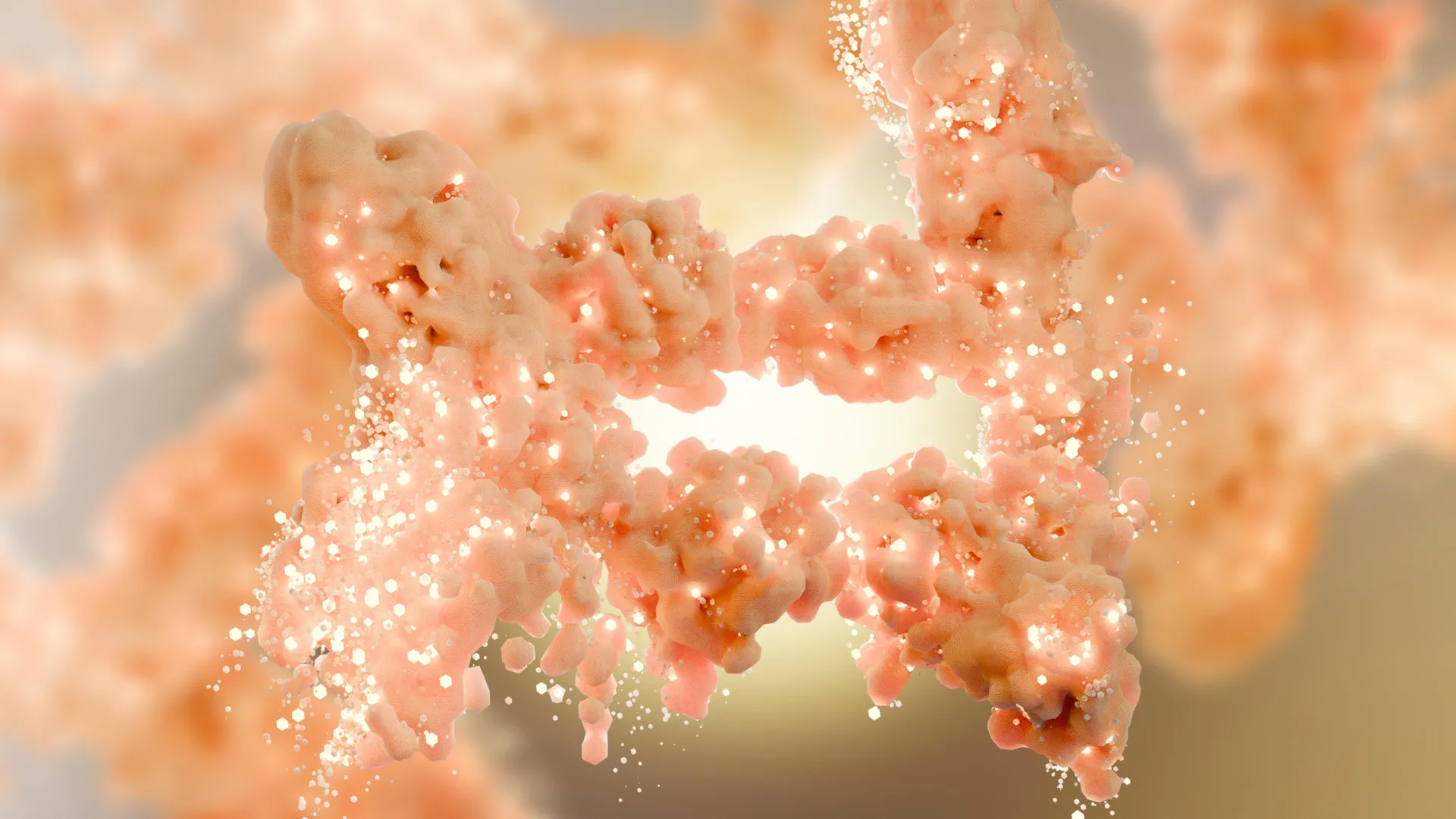
The findings center on the complex relationship between proteins on the surfaces of gametes—the sperm and the egg—and an antibody that can interrupt their union. For decades, the precise physical interactions that allow a single sperm to recognize and fuse with an egg remained one of the most significant mysteries in developmental biology. This new study illuminates the role of the OBF13 antibody, a naturally occurring agent that targets the sperm-surface protein IZUMO1, effectively "cloaking" the sperm and preventing it from engaging with its counterpart on the egg, the JUNO receptor.
The Molecular Lock and Key: IZUMO1 and JUNO
To understand the magnitude of this discovery, it is essential to look at the fundamental mechanics of mammalian fertilization. At the heart of this process are two critical proteins: IZUMO1, located on the sperm cell, and JUNO, a receptor found on the membrane of the egg. In a successful fertilization event, IZUMO1 and JUNO act as a molecular lock and key. Their binding is the primary event that triggers the fusion of the two cells, allowing for the exchange of genetic material.
Failures in this specific recognition process are a leading cause of reproductive issues. According to data from the Centers for Disease Control and Prevention (CDC) and the National Institutes of Health (NIH), approximately 9% of men and 11% of women of reproductive age in the United States encounter fertility difficulties. While many cases are attributed to hormonal imbalances or anatomical obstructions, a significant subset of patients suffers from "immuno-infertility." This condition occurs when the body’s immune system produces antibodies that mistakenly target reproductive cells, treating them as foreign pathogens.
The Yale-led study, headed by Steven Tang, an assistant professor of molecular biophysics and biochemistry in Yale’s Faculty of Arts and Sciences, provides the first high-resolution look at how these anti-sperm antibodies function at a structural level. "This will have direct implications for infertility and contraception research, especially immuno-infertility and immuno-contraception," Tang noted, emphasizing the dual-purpose nature of the findings.
A Forty-Year Mystery: The Legacy of OBF13
The antibody at the center of the research, OBF13, is not a new discovery. It was first identified 40 years ago by researchers at Osaka University in Japan. Since its discovery in the early 1980s, scientists have known that OBF13 possessed the ability to potently inhibit fertilization in rodent models by recognizing the IZUMO1 protein. However, the "how" and "why" remained elusive for four decades.
Without a clear understanding of the antibody’s structural interaction with its antigen (the sperm protein), scientists were unable to replicate the effect for contraceptive use or develop strategies to bypass it for fertility treatments. The breakthrough came when the Yale and Osaka teams utilized X-ray crystallography to visualize the OBF13-IZUMO1 complex.
By freezing the proteins in a crystalline state and hitting them with high-energy X-ray beams, the researchers were able to create a three-dimensional map of the atoms involved in the interaction. This analysis revealed that OBF13 does not simply block the sperm protein; it attaches itself in a specific orientation that reconfigures the surface of the sperm cell. This structural change prevents the IZUMO1 protein from ever reaching the JUNO receptor on the egg.
Chronology of Reproductive Protein Discovery
The journey to this discovery is marked by several landmark moments in reproductive science:
- 1980s: Researchers at Osaka University discover the OBF13 monoclonal antibody and observe its ability to block fertilization in mice.
- 2005: The protein IZUMO1 is identified on the sperm surface, named after a Japanese shrine dedicated to marriage. It is confirmed as essential for fusion.
- 2014: The JUNO receptor is discovered on the egg surface, completing the understanding of the primary binding pair.
- 2020–2023: The Yale-led team begins utilizing the SLAC National Accelerator Laboratory to perform high-resolution X-ray crystallography on the OBF13-IZUMO1 complex.
- 2024: The team publishes the first anti-sperm antibody-antigen complex structure, revealing the reconfiguration mechanism.
Advanced Findings: High-Affinity Variants and JUNO Sites
The study went beyond merely observing the OBF13 antibody. The research team identified a "high-affinity" variant of the antibody—a version that bonds even more tightly to the sperm protein. This variant was shown to block fertilization with significantly higher potency than the naturally occurring version. For the development of contraceptives, this represents a major leap forward, as it suggests that a very small amount of a designed drug or antibody could provide effective protection against pregnancy.
Furthermore, the researchers turned their attention to the JUNO receptor on the egg. By identifying the specific amino acid sites on JUNO that are required for binding with IZUMO1, the team discovered that these sites could be accessed even when interference was present. This suggests a potential path for fertility treatments: if clinicians can strengthen the IZUMO1-JUNO bond or protect these specific amino acid sites, they may be able to overcome the presence of inhibitory antibodies in patients struggling with immuno-infertility.
"In this work, we are reporting the first anti-sperm antibody-antigen complex structure," Tang said. "We provide high-resolution information that will open avenues for discovering IZUMO1 regulators, guide antibody and small-molecule inhibitor design, and support drug screening for contraceptive development."
Implications for Immuno-Contraception
The search for new contraceptive methods has increasingly focused on non-hormonal options. Current hormonal contraceptives, while effective, can carry side effects ranging from mood changes and weight gain to more serious cardiovascular risks. The Yale study opens the door to "immuno-contraception"—a method that uses the body’s immune logic to prevent pregnancy without altering hormone levels.
By mimicking the action of OBF13, pharmaceutical researchers could develop a topical or systemic agent that temporarily prevents sperm from being able to "see" or "bind" to an egg. Because this mechanism is highly specific to the reproductive cells, it would theoretically have no impact on other bodily systems, significantly reducing the risk of side effects.
The discovery of the high-affinity OBF13 variant is particularly promising for the Male Contraception Initiative, a group that supported the study. A male contraceptive that targets the sperm’s ability to bind to an egg would provide men with a reversible, non-surgical alternative to vasectomies or condoms.
Addressing the Crisis of Infertility
On the opposite side of the reproductive spectrum, the study offers hope to millions of couples. Immuno-infertility is often a "silent" cause of reproductive failure, frequently categorized under "unexplained infertility." When a woman’s reproductive tract produces antibodies against her partner’s sperm, or when a man produces antibodies against his own sperm (often following a vasectomy reversal or injury), the path to conception is blocked at the molecular level.
With the structural data provided by the Yale team, diagnostic companies could develop more precise tests to identify these specific antibodies in patients. Moreover, the identification of the binding sites on JUNO provides a target for future therapies. Scientists may be able to develop "decoy" molecules that soak up the harmful antibodies, or "stabilizers" that ensure the IZUMO1-JUNO connection is made despite the presence of OBF13-like inhibitors.
Global Collaboration and Future Research
The success of the study was the result of an international effort. The first author, Yonggang Lu, and co-author Masahito Ikawa are both from Osaka University, bridging the gap between the original discovery of the antibody in Japan and the advanced structural analysis performed at Yale.
The research was supported by a diverse array of institutions, reflecting its global importance. Funding came from the National Institutes of Health (NIH), the David Sokal Innovation Award of the Male Contraception Initiative, the Japan Society for the Promotion of Science, and the Japan Agency for Medical Research and Development. Crucially, the team utilized the specialized facilities at the SLAC National Accelerator Laboratory in California, which is supported by the U.S. Department of Energy’s Office of Science. The use of a national accelerator highlights the level of technological sophistication required to visualize these microscopic biological events.
As the scientific community digests these findings, the next steps will involve moving from rodent models to human applications. While the IZUMO1-JUNO mechanism is conserved across mammals, human-specific variations must be mapped with the same level of precision. The Yale team’s work has laid the groundwork for a new era of reproductive health—one where the molecular dance of life is no longer a mystery, but a process that can be understood, assisted, and, when necessary, safely paused.