

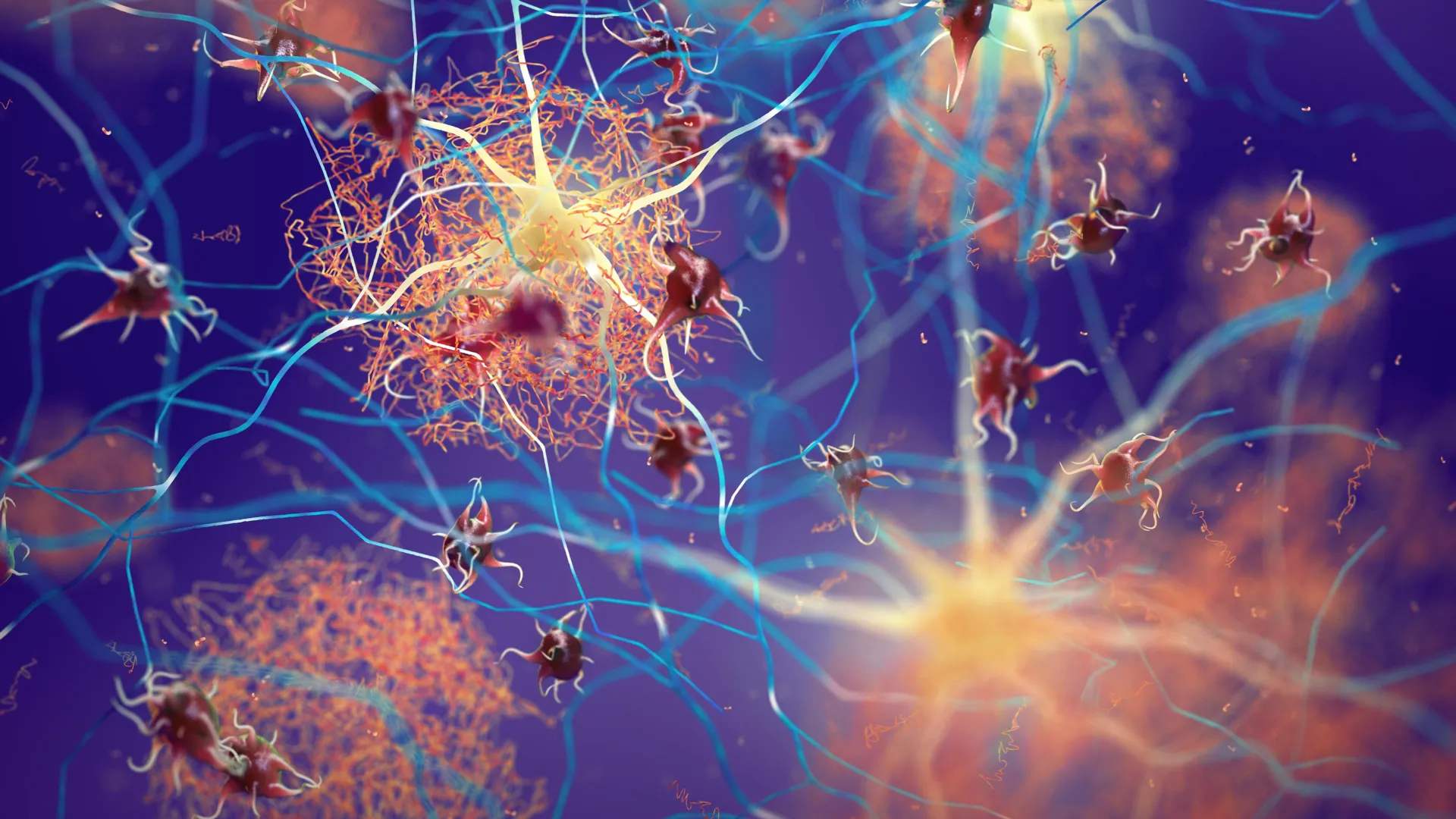
In a landmark study that shifts the focus of neurodegenerative research from neurons to the brain’s intrinsic support system, scientists at Baylor College of Medicine have identified a biological mechanism capable of reversing the accumulation of toxic amyloid plaques. The research, centered on the star-shaped glial cells known as astrocytes, reveals that the protein Sox9 acts as a master regulator of the brain’s ability to "vacuum" away the debris associated with Alzheimer’s disease. By modulating this single protein, researchers were able to restore cognitive function and clear existing plaques in mouse models that had already reached advanced stages of the disease, offering a potential new pathway for therapeutic intervention in humans.
The Shift Toward Glial-Centered Research
For decades, the search for an Alzheimer’s cure has primarily focused on neurons—the cells responsible for transmitting electrical signals and storing memories. However, the failure of many neuron-centric drugs has led researchers to look more closely at the "infrastructure" of the brain. Astrocytes, which outnumber neurons in many parts of the brain, were once thought to be merely "nerve glue" (the literal translation of "glia"). We now know they are essential for maintaining the blood-brain barrier, providing nutrients to neurons, and regulating synaptic activity.
As the brain ages or succumbs to neurodegeneration, these astrocytes undergo profound changes. Until now, the specific nature of these alterations and their contribution to disease progression remained largely shrouded in mystery. The study published in Nature Neuroscience provides some of the first concrete evidence that the functional decline of astrocytes is not just a byproduct of Alzheimer’s, but a driver of it—and more importantly, a process that can be reversed.
The Discovery of the Sox9 Mechanism
The research team, led by Dr. Dong-Joo Choi and Dr. Benjamin Deneen, focused their investigation on Sox9, a transcription factor known to play a vital role in the development of the nervous system. Transcription factors like Sox9 act as "master switches," turning various genes on or off to control how a cell behaves. In the context of the aging brain, the researchers discovered that Sox9 levels and activity significantly influence how astrocytes respond to the presence of amyloid-beta, the protein that clumps together to form the plaques characteristic of Alzheimer’s.
The study demonstrated that as Sox9 levels fluctuate, so does the astrocyte’s physical structure and its "phagocytic" ability—its capacity to engulf and digest cellular waste. When Sox9 expression was artificially lowered, the astrocytes became simplified in structure, losing the complex, branching arms they use to interact with their environment. Consequently, these "diminished" astrocytes were unable to keep up with the buildup of amyloid plaques, leading to accelerated cognitive decline.
Conversely, when the team increased Sox9 levels, the astrocytes underwent a dramatic transformation. They became more structurally complex and active, effectively identifying and "eating" existing amyloid deposits. This internal cleanup process was so effective that it significantly reduced the plaque burden even in brains where the disease was already well-established.
Experimental Design: A Focus on Established Symptoms
One of the most significant aspects of this study is the timing of the intervention. Many previous Alzheimer’s studies have focused on prevention, treating mouse models before they show signs of memory loss or plaque buildup. While valuable, these studies often fail to translate to human clinical trials because most human patients do not seek treatment until symptoms are already present.
To address this gap, Dr. Choi and his team utilized mouse models that already exhibited cognitive impairment and significant plaque density. "An important point of our experimental design is that we worked with mouse models of Alzheimer’s disease that had already developed cognitive impairment, such as memory deficits, and had amyloid plaques in the brain," said Dr. Choi, now an assistant professor at the University of Texas Health Science Center at Houston.
The researchers tracked these symptomatic mice over a six-month period, employing a battery of tests to measure their cognitive health. This included "object recognition" tasks, where mice are evaluated on their ability to remember familiar environments versus new ones—a direct analog to the short-term memory struggles faced by human Alzheimer’s patients.
Supporting Data: The Impact of Sox9 Modulation
The data collected over the six-month observation period revealed a stark contrast between the control groups and those with boosted Sox9 levels. The researchers quantified several key metrics:
- Plaque Density: Mice with increased Sox9 expression showed a statistically significant reduction in the total area of the brain covered by amyloid-beta plaques compared to the control group.
- Astrocyte Morphology: Under high-resolution imaging, astrocytes with elevated Sox9 displayed increased "ramification"—a higher number of fine processes or branches. This increased surface area is believed to be what allows the cells to more effectively "scout" for and engulf toxic plaques.
- Cognitive Performance: In behavioral testing, mice with higher Sox9 levels performed significantly better in spatial memory tasks. They were able to distinguish between familiar and novel objects with a success rate comparable to healthy, non-Alzheimer’s mice.
- The "Vacuum" Effect: The team observed a direct correlation between Sox9 activity and the presence of amyloid within the lysosomes (the digestive compartments) of the astrocytes, confirming that the cells were physically removing the plaques from the extracellular space.
"We found that increasing Sox9 expression triggered astrocytes to ingest more amyloid plaques, clearing them from the brain like a vacuum cleaner," noted Dr. Benjamin Deneen. This finding is revolutionary because it suggests that the brain’s own "waste management system" is still present in the late stages of the disease; it simply needs to be reactivated.
Contextualizing the Findings in Current Alzheimer’s Research
The timing of this discovery coincides with a period of cautious optimism in the Alzheimer’s community. Recently, the FDA has approved drugs like lecanemab (Leqembi) and aducanumab (Aduhelm), which are monoclonal antibodies designed to bind to and clear amyloid from the brain. However, these treatments have faced criticism for their high costs, the requirement for frequent intravenous infusions, and potential side effects such as brain swelling or microhemorrhages (ARIA).
The Sox9 approach offers a fundamentally different philosophy. Instead of introducing external antibodies into the bloodstream, this method seeks to "re-awaken" the brain’s resident immune and support cells. By leveraging the brain’s natural biology, a Sox9-based therapy could potentially be more efficient and carry fewer side effects than current synthetic treatments.
Furthermore, current treatments are often criticized for their modest impact on actual cognitive decline. While they clear plaques, the improvement in memory is often marginal. The Baylor study is particularly encouraging because the clearance of plaques via Sox9 was directly linked to a preservation of thinking ability, suggesting a more holistic recovery of brain function.
Broader Implications and Future Directions
The implications of this study extend beyond Alzheimer’s disease. Many neurodegenerative conditions, including Parkinson’s disease and Huntington’s disease, are characterized by the accumulation of misfolded proteins and the decline of glial support. If Sox9—or similar transcription factors—can be used to maintain astrocyte health, it could lead to a broad-spectrum "glial therapy" for a variety of brain disorders.
However, the transition from mouse models to human medicine remains a significant hurdle. Human astrocytes are far more complex than those of mice, and the long-term effects of overexpressing a protein like Sox9 must be carefully studied. There is also the challenge of delivery; any future treatment would likely require a gene therapy approach to target astrocytes specifically without affecting other cell types or organs.
"More work is needed to understand how Sox9 functions in the human brain over time," the researchers emphasized. The next phase of research will likely involve studying human induced pluripotent stem cell (iPSC)-derived astrocytes to see if the Sox9 mechanism holds true in human biology.
Collaborative Effort and Funding
The success of the study was the result of a multi-institutional effort involving a diverse team of researchers. Contributors from Baylor College of Medicine included Sanjana Murali, Wookbong Kwon, Junsung Woo, and several others who provided expertise in neurosurgery, cancer neuroscience, and molecular biology.
The research was heavily supported by the National Institutes of Health (NIH), with grants from the National Institute on Aging and the National Institute of Neurological Disorders and Stroke. Additional support came from the David and Eula Wintermann Foundation and the Jan and Dan Duncan Neurological Research Institute at Texas Children’s Hospital. This level of funding underscores the scientific community’s recognition of the importance of glial research in the fight against dementia.
As the global population ages, the prevalence of Alzheimer’s is expected to rise exponentially, placing an immense burden on healthcare systems and families. The discovery of the Sox9 "vacuum cleaner" mechanism provides a glimmer of hope that the key to treating this devastating disease may not be a foreign chemical, but a dormant power already residing within the brain’s own star-shaped cells. By learning to harness the natural defenses of the astrocyte, science may finally be moving toward a treatment that doesn’t just slow the decline, but cleanses the brain of the very toxins that cause it.














Leave a Reply