

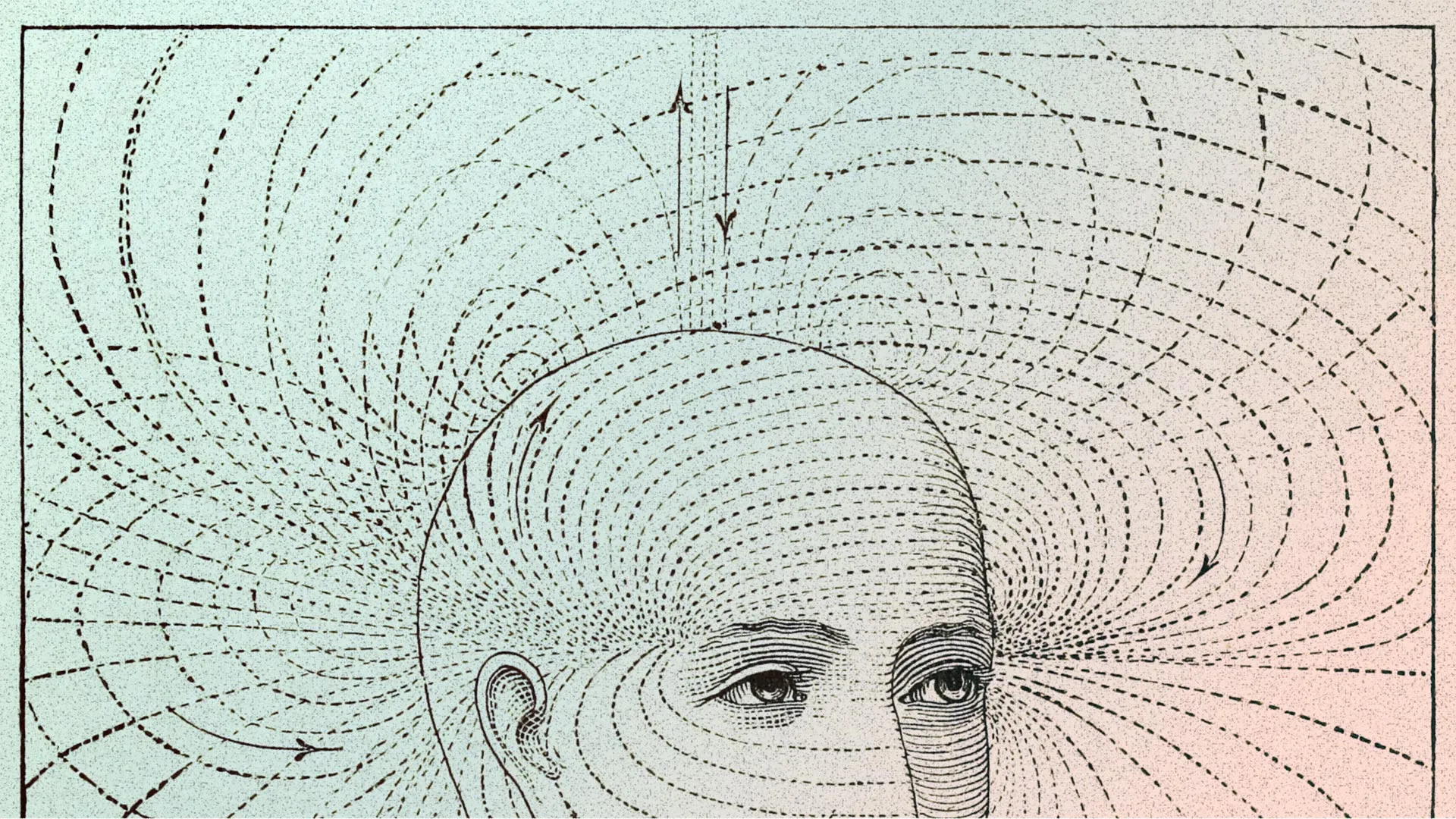
The nature of human memory, the progression of time, and the very foundation of cosmological history have been called into question by a provocative new study led by Santa Fe Institute (SFI) Professor David Wolpert, SFI Fractal Faculty member Carlo Rovelli, and physicist Jordan Scharnhorst. Their research provides a rigorous re-examination of the "Boltzmann brain" hypothesis, a long-standing paradox in physics that suggests our entire perceived reality—including our memories of the past and our observations of the universe—could be nothing more than a momentary, random fluctuation in a state of high entropy. By dissecting the mathematical and logical structures that underpin our understanding of thermodynamics, the team has identified a pervasive issue of circular reasoning that complicates the debate over whether the past we remember actually occurred.
The Paradox of the Spontaneous Mind
The Boltzmann brain hypothesis originates from the work of 19th-century physicist Ludwig Boltzmann, who sought to explain the Second Law of Thermodynamics through the lens of statistical mechanics. The Second Law states that the entropy, or disorder, of an isolated system tends to increase over time. This principle provides the "arrow of time," distinguishing the past from the future. However, Boltzmann’s own equations, specifically the H-theorem, revealed a startling symmetry: the fundamental laws of physics do not distinguish between moving forward or backward in time.
If the universe is a statistical system in equilibrium, high-entropy states are vastly more common than low-entropy states. This leads to a disturbing statistical conclusion. It is far more likely for a single, complex brain to spontaneously fluctuate into existence out of the void—complete with false memories of a life and a universe—than it is for a whole, low-entropy universe to have evolved over billions of years starting from a Big Bang. In this scenario, the "brain" exists for a fleeting second, perceives a coherent world that isn’t there, and then dissolves back into chaos.
While often dismissed as a philosophical curiosity, the Boltzmann brain problem is a genuine crisis in modern cosmology. If a theory of the universe predicts that we are likely to be Boltzmann brains, that theory is considered "empirically unstable" because it undermines the reliability of the very observations used to create the theory.
Historical Context: From the H-Theorem to Modern Cosmology
To understand the weight of the new study by Wolpert, Rovelli, and Scharnhorst, one must look at the timeline of how the scientific community has grappled with the directionality of time.
- 1872: Ludwig Boltzmann publishes the H-theorem, attempting to show how the movements of individual molecules lead to an overall increase in entropy.
- 1895: Johann Josef Loschmidt argues that because the underlying laws of motion are reversible, the H-theorem must be capable of producing a "time-reversed" version where entropy decreases, highlighting a fundamental contradiction.
- 1927: Arthur Eddington coins the term "The Arrow of Time," emphasizing that the direction of entropy is the only physical link to the passage of time we experience.
- 2004: Cosmologists Andreas Albrecht and Lorenzo Sorbo formally describe the "Boltzmann Brain" problem in the context of de Sitter space and cosmic inflation, noting that certain models of the universe’s expansion make these fluctuations inevitable.
- Present Day: The new study from the Santa Fe Institute enters the fray, not by trying to disprove the existence of Boltzmann brains, but by analyzing the logical frameworks scientists use to argue against them.
The "Entropy Conjecture" and the Problem of Circularity
The core of the research by Wolpert and his colleagues revolves around what they term the "entropy conjecture." This conjecture points to a hidden flaw in the way physicists defend the reality of the past. Traditionally, to avoid the Boltzmann brain paradox, scientists rely on the "Past Hypothesis"—the assumption that the universe began in an exceptionally low-entropy state at the moment of the Big Bang.
However, the study argues that many of these arguments are inherently circular. To prove that our memories are reliable, we point to the Second Law of Thermodynamics and the Past Hypothesis. But our only evidence for the Second Law and the Big Bang comes from our observations and memories. If we assume the past is real to prove our memories are real, we have proven nothing.
The researchers developed a formal mathematical framework to examine how different assumptions about time affect our conclusions. They found that the "truth" of the past often depends entirely on which point in time a researcher chooses to treat as "fixed." If you fix the current state of the universe (the "now"), the statistics of the H-theorem suggest the past is likely a high-entropy fluctuation (a Boltzmann brain scenario). If you fix the beginning of the universe as a low-entropy state, the past becomes a sequence of real events. The laws of physics, being time-symmetric, do not tell us which point to fix.
Supporting Data and Statistical Realities
The statistical weight of the Boltzmann brain argument is staggering. In a universe governed purely by random fluctuations in equilibrium, the probability of a specific configuration of matter (like a human brain) appearing is proportional to $e^-S$, where $S$ is the entropy of that configuration.
While the probability of a brain forming is infinitesimally small, the probability of a whole universe with billions of galaxies and trillions of years of history forming is even smaller. In a state of thermal equilibrium that lasts for an infinite amount of time, the "cheapest" way (in terms of entropy) to produce an observation of a starry night is to fluctuate a single observer into existence who thinks they see a starry night, rather than creating the actual stars.
The Wolpert-Rovelli-Scharnhorst paper suggests that our preference for the "real universe" explanation over the "fluctuation" explanation is not based on the data itself, but on the interpretive lens we apply to the H-theorem. Their framework demonstrates that without an external, non-physical reason to prefer the Past Hypothesis, the mathematics of statistical mechanics remains indifferent to the reality of our history.
Inferred Reactions from the Scientific Community
While the study is a theoretical exploration, it resonates across various fields of physics. Theoretical physicists working on "Quantum Gravity" and "Loop Quantum Gravity"—a field in which Carlo Rovelli is a pioneer—often struggle with the disappearance of time at the fundamental level.
Cosmologists are likely to view this work as a cautionary tale. If the "Past Hypothesis" is merely an aesthetic choice rather than a proven necessity, the foundations of the Standard Model of Cosmology (Lambda-CDM) may require a more robust philosophical justification. Critics might argue that the study leans too heavily into "epistemological nihilism," but the authors maintain that their goal is transparency. They are not claiming the past is a lie; they are claiming that our current mathematical proofs for the past’s reality are logically circular.
Broader Impact and Implications for Science
The implications of this research extend far beyond the ivory towers of theoretical physics. It touches upon the "Simulation Hypothesis" and the nature of objective truth. If we cannot strictly prove through physics that our memories of yesterday are real, it places a greater emphasis on the role of the observer in defining reality.
- Redefining the Big Bang: If the Past Hypothesis is an assumption we make to keep our logic consistent, we must ask why the universe began in such a low-entropy state. This moves the question from "what happened?" to "why does the math require this starting point?"
- Information Theory: The study suggests that the way we process information and form memories is inextricably linked to our assumptions about thermodynamics. This could influence future research into artificial intelligence and how synthetic systems "perceive" the passage of time.
- The Reliability of Science: By highlighting the "entropy conjecture," the researchers are calling for a more rigorous approach to empirical evidence. If scientific observations are themselves subject to the fluctuations of entropy, the methodology of science must account for this inherent uncertainty.
Conclusion: A More Transparent Physics
The work of Wolpert, Rovelli, and Scharnhorst does not provide a comfortable answer to the Boltzmann brain paradox, nor does it provide a new law of physics to banish the haunting idea that we might be solitary minds in a void. Instead, it provides a mirror. It shows that the "arrow of time" is not just a feature of the universe, but a product of the assumptions we bake into our equations.
By separating the role of physical laws from the interpretive assumptions used to explain them, the study paves the way for a more honest and transparent exploration of cosmology. As we continue to probe the edges of the universe and the beginning of time, this research serves as a reminder that the most profound mysteries may not lie in the stars themselves, but in the logic we use to understand them. The "unsettling" nature of the Boltzmann brain remains, but through this new framework, the structure of the debate has been clarified, moving us one step closer to understanding the true relationship between entropy, memory, and the flow of time.

















Leave a Reply