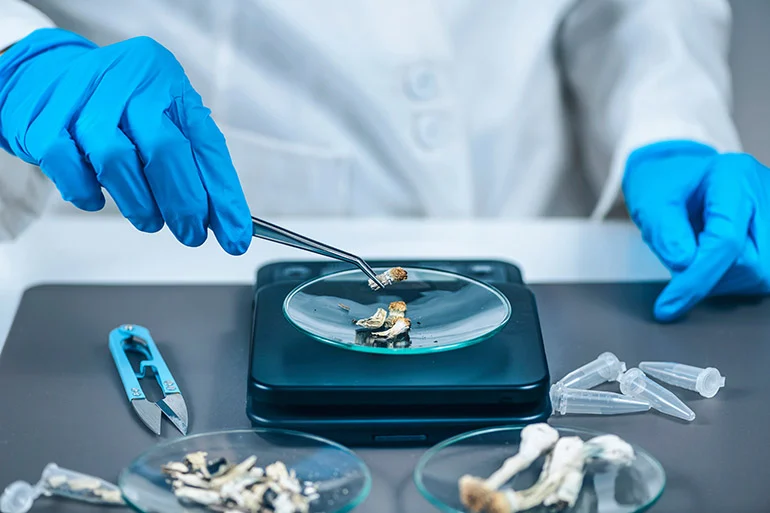
Emerging data from recent studies and meta-analyses suggest that the highly anticipated efficacy of classic psychedelics, particularly psilocybin, in treating depression may be more modest than initial, high-profile trials indicated. This evolving understanding positions psilocybin’s potential impact on mental health treatment closer to that of established pharmaceutical interventions like selective serotonin reuptake inhibitors (SSRIs), rather than the transformative breakthrough once envisioned. The arc of psilocybin research appears to be mirroring the journey of SSRIs, which, despite initial fanfare, ultimately delivered incremental gains for many patients in real-world settings.
The Historical Parallel: From Prozac’s Pedestal to Nuanced Reality
The narrative surrounding psilocybin today bears a striking resemblance to the early days of SSRIs. In the late 1980s and early 1990s, the introduction of fluoxetine, better known as Prozac, ignited immense hope. New York magazine famously hailed it as a "wonder drug" in 1989, and Newsweek declared it a "breakthrough for depression" a year later. Approved by the FDA in 1987, Prozac entered a landscape desperately seeking more effective and tolerable options for depression. The prevailing scientific understanding, widely popularized at the time, posited that depression stemmed from a "chemical imbalance" in the brain, a deficit of neurotransmitters like serotonin. SSRIs and the subsequent serotonin-norepinephrine reuptake inhibitors (SNRIs) were presented as the elegant solution to correct this imbalance.
However, decades of research and real-world clinical experience gradually tempered this initial enthusiasm. By 2022, a systematic review published in Molecular Psychiatry definitively concluded that there was "no support for the hypothesis that depression is caused by lowered serotonin activity or concentrations," effectively debunking the long-held chemical imbalance theory that underpinned the marketing and perceived mechanism of SSRIs.
The clinical record for SSRIs and SNRIs, while significant, proved more modest than initial pivotal trials suggested. The Sequenced Treatment Alternatives to Relieve Depression (STARD) study, launched in 2001 and considered the largest real-world trial of antidepressant treatment ever conducted, provided crucial insights into the effectiveness of these drugs in diverse patient populations. Enrolling over 4,000 outpatients, STARD found that only about one-third of patients achieved remission on their first antidepressant medication. Roughly two-thirds required at least one additional drug, with remission rates hovering around 28% on the clinician-rated Hamilton Depression Rating Scale (HAM-D17) and 33% on the patient-reported Quick Inventory of Depressive Symptomatology (QIDS-SR16) after the initial treatment step. These figures painted a picture of valuable, but not universally transformative, efficacy, highlighting the persistent challenge of achieving full remission for many individuals battling depression.
Psilocybin’s Journey: From Transformative Hype to Incremental Gains
The trajectory of psilocybin, the most extensively studied classic psychedelic for depression, appears to be echoing this pattern. Early, smaller-scale trials generated considerable excitement, reporting remarkably high response and remission rates that fueled public and scientific anticipation for a revolutionary treatment. For instance, a 2021 Johns Hopkins study involving 24 patients with major depression reported a striking 71% response rate and 54% remission rate four weeks after just two psilocybin sessions. That same year, a head-to-head trial comparing psilocybin with the SSRI escitalopram suggested psilocybin’s response rate approached 70%. These results contributed to a burgeoning "psychedelic renaissance," suggesting that these compounds could offer a paradigm shift in mental health care, particularly for treatment-resistant depression (TRD).
However, as research progressed to larger, more rigorous clinical trials, the initial signal of dramatic efficacy began to cool. Compass Pathways, a pharmaceutical company focused on psilocybin therapy, conducted a Phase 2b trial for treatment-resistant depression, which was the largest of its generation. This study initially reported a response rate of approximately 37%, but this figure declined to 20% by week 12, indicating a less robust and durable effect than previously observed.
The trend of moderating efficacy continued with the arrival of pivotal Phase 3 data. Compass Pathways announced that both its Phase 3 trials achieved their primary endpoints – one involving a single dose in 2025 and another with two doses in early 2026. However, the separation from the control group was modest, registering around 3.6 and 3.8 points on the MADRS (Montgomery-Åsberg Depression Rating Scale), respectively. Notably, the company utilized a 25% response threshold rather than the more conventional 50% for evaluating success. Compass Pathways plans to seek FDA approval by the end of 2026.
Real-World Data from Zurich: A Glimpse into Clinical Practice
Adding a critical "real-world" perspective to this evolving picture is a recent retrospective study published in The Lancet Regional Health – Europe. Psychiatrists at the University Hospital of Psychiatry Zurich followed 19 patients suffering from treatment-resistant depression who received psilocybin under Switzerland’s limited-medical-use exemption – one of the few frameworks allowing the drug outside of strict clinical trials. This unique setting provided valuable insights into how psilocybin might perform in ordinary clinical conditions, free from the highly controlled environments of early-phase research.
The study found that depression scores among these patients fell from an average of 31 to 20 on the MADRS, a statistically significant reduction. Approximately one-third of the patients responded to the treatment, and about one-fifth achieved remission. The authors themselves noted that these figures sit at the lower end of the trial literature and are roughly comparable to the remission rates observed in the STAR*D study for conventional antidepressants. Furthermore, the benefit appeared to be "front-loaded" onto the first session, with repeat dosing adding little that the small sample size could definitively distinguish from chance.
Rotem Petranker, Ph.D., who directs the Canadian Centre for Psychedelic Science and has extensively studied microdosing, expressed a nuanced view on these findings. "All the participants in this study had treatment-resistant depression, meaning nothing works," Petranker stated. "Imagine any disorder where nothing works, where every treatment we can give you is palliative, and then something works, even if it doesn’t work for everyone. I think that’s pretty cool." He emphasizes that while the results may not match the initial "transformative" claims, any effective treatment for TRD patients represents a significant step forward. However, he also acknowledged that the 19-patient Zurich cohort, while providing real-world data, is inherently low-powered. "No single study contains all the truth," Petranker cautioned. "The consensus seems to be that there’s something there… it appears to be a novel, effective treatment for some mental health disorders, so it’s worth pursuing."
The Cautionary Tale of MDMA and Regulatory Hurdles
The journey of MDMA-assisted therapy for PTSD offers another crucial lesson in the complexities of bringing psychedelic-based treatments to market. Lykos Therapeutics, a company spun out of the Multidisciplinary Association for Psychedelic Studies (MAPS), pursued FDA approval for MDMA-assisted therapy based on two positive Phase 3 trials. However, in August 2024, the FDA declined to approve the treatment and requested another Phase 3 trial, leading Lykos to cut roughly three-quarters of its staff.
According to Petranker, the outcome was foreseeable. "It was clear to everyone but MAPS that the FDA wouldn’t approve it, because their submission didn’t fit the requirements," he commented. He believes this experience served as a wake-up call for the entire field: "A lot of people learned from that. Now Compass and others really try to cross their t’s and dot their i’s when they submit."
A significant challenge for MDMA, and potentially for classic psychedelics, lies in the nature of the therapy itself. MDMA is not a standalone pill; it is inextricably linked with intensive psychotherapy. "MDMA won’t work on its own; it requires a psychotherapy component," Petranker explained. This bundled approach creates regulatory complexities. In a January 2026 review in Neuropsychopharmacology, psychiatry researchers Philip Harvey and Charles Nemeroff highlighted that the FDA rejected the MDMA program "for reasons that could apply to clinical trials for classical psychedelics." Key among these reasons is the inherent difficulty in blinding patients and therapists in psychedelic trials, as participants often become aware if they have received an active drug due to its profound subjective effects. This can inflate the placebo response and introduce bias, making it harder to isolate the drug’s specific effect.

Despite these hurdles, some researchers remain optimistic about regulatory approval for psilocybin. Sandeep Nayak, who directs the Johns Hopkins Center for Psychedelic and Consciousness Research, expressed his anticipation that psilocybin treatment will clear the FDA, citing the design of the trials and the durability data.
The Relative Paucity of Psychedelic Data and the Call for "Slow Science"
One often-overlooked aspect of psychedelic research is the sheer volume of data compared to conventional treatments. Petranker points out a significant disparity: "Over the last 20 years, something like 1,500 people have been administered psilocybin in a clinical trial setting. Really not that many." For context, the STARD study alone evaluated approximately 2,900 patients in its first* treatment step, out of 4,041 total outpatients enrolled. This limited dataset for psychedelics underscores the need for continued, rigorous investigation rather than premature declarations of efficacy.
Petranker advocates for a more cautious, evidence-driven approach. "Almost everyone [in the field] says, ‘We know it works, we just need to show it,’ and I’m like, ‘That’s not science. Science is, let’s see if it works,’" he asserted. He believes the field is moving away from "very large, bombastic statements, ‘we’ve cured depression, this is it,’" towards a more realistic view: "’this is a new tool we’ll use in the psychiatric toolbox.’" As a self-proclaimed skeptic, Petranker anticipated that the perceived effects would diminish as trials moved closer to real-world conditions. "The 50 or 60 percent response rates we’ve seen in some clinical trials? I’m very skeptical of those. If you look at SSRI trial results, the effects there are much bigger than what you see in real life," he said, attributing this discrepancy partly to the powerful placebo response and high patient expectancy surrounding novel treatments.
More Data, More Muted Signal: Comparative Meta-Analyses
Recent meta-analyses further support the argument that psilocybin, despite its unique mechanism of action, may not offer dramatically superior efficacy compared to existing treatment options.
In a study published in JAMA Network Open, Hieronymus and colleagues conducted a meta-analysis comparing active-arm response rates across psilocybin, SSRIs, and esketamine. They found remarkably similar rates: 48% for psilocybin, 46% for SSRIs, and 52% for esketamine. Interestingly, psilocybin control arms responded at a lower rate than SSRI or esketamine controls, suggesting that the "active" effect might not be as pronounced when compared to inert substances in those specific trial designs.
Another significant meta-analysis by Williams, Barnett, and Szigeti, published in JAMA Psychiatry, took an innovative approach. Recognizing the blinding challenges inherent in psychedelic trials, they treated psychedelic-assisted therapy trials as "functionally open-label" and then compared their outcomes with those of open-label antidepressant trials. Across 24 trials, the results were strikingly similar: psychedelic-assisted therapy and open-label antidepressants produced nearly identical improvements on the 17-item Hamilton Depression Rating Scale. There was a minuscule 0.3-point difference favoring antidepressants, with a confidence interval spanning both directions (95% CI, -1.39 to 1.98; P = .73), indicating no statistically significant advantage for psychedelic-assisted therapy under conditions of equal unblinding.
This finding genuinely surprised Balázs Szigeti, one of the authors. "What I wanted to show is that even if you compare psychedelics to open-label antidepressants, psychedelics are still much better," he told UCSF. "Unfortunately, what we got is the opposite result, that they are the same, which is very surprising given the enthusiasm around psychedelics and mental health."
The Microdosing Conundrum: A Further Test of Efficacy
The concept of microdosing psychedelics, involving the regular intake of sub-perceptual doses, also garnered considerable public interest for its purported benefits in mood, focus, and creativity. Petranker himself was once more hopeful, noting in a 2020 interview that survey data suggested people who microdosed "fare better than people who don’t."
However, further rigorous investigation has led Petranker to become more skeptical. His team conducted what has been described as the largest randomized trial of psilocybin microdosing for depression, administering two milligrams – a fraction of a standard dose – to patients. The study found that both the drug and placebo groups showed improvement, and critically, more than half of the participants correctly guessed which arm they were in, undermining the integrity of the blinding. The clearest signal appeared not on standard depression scales but on a measure of dysfunctional attitudes. "I used to think a dose so small it’s unnoticeable could still be effective," Petranker reflected. "I don’t really think that anymore." A preprint of these findings was published earlier this year.
Implications for the Future of Mental Health Treatment
The evolving scientific consensus suggests a more nuanced role for psilocybin and other psychedelics in psychiatric care. While they hold promise, particularly for individuals with treatment-resistant depression who have exhausted other options, the evidence increasingly points to an efficacy profile that may be comparable, rather than dramatically superior, to existing treatments.
This understanding carries several significant implications:
- Redefining Expectations: The public and scientific community must recalibrate expectations, shifting from a "magic bullet" narrative to viewing psychedelics as potentially valuable "tools in the psychiatric toolbox." They may be effective for a subset of patients, but not a universal cure.
- Regulatory Scrutiny: The FDA’s stringent requirements, as demonstrated by the MDMA decision, highlight the challenges for psychedelic therapies. Issues like blinding, the integral psychotherapy component, and the need for robust, durable efficacy data will continue to be critical for approval. Companies like Compass Pathways are likely to face intense scrutiny on their Phase 3 data.
- Treatment Access and Cost: Psychedelic-assisted therapy is resource-intensive, requiring specialized training for therapists and supervised administration sessions that can last for many hours. If approved, the cost and logistical challenges of widespread access will be substantial, potentially limiting its availability to all who might benefit.
- Ongoing Research Priorities: The modest numbers underscore the need for continued "rigorous, slow science." Future research should focus on identifying specific patient populations most likely to benefit, optimizing dosing and therapeutic protocols, understanding the long-term effects, and elucidating the precise neurobiological mechanisms at play. Large-scale, real-world effectiveness studies, similar to STAR*D, will be crucial.
- Integration into Mainstream Psychiatry: If approved, psychedelics will likely be integrated as a specialized treatment option, probably for severe or treatment-resistant cases, rather than a first-line therapy. Their use will demand careful patient selection, comprehensive psychological support, and ongoing monitoring within established healthcare frameworks.
In conclusion, while the initial exuberance surrounding psychedelics as a revolutionary treatment for depression has been tempered by more comprehensive and rigorous data, their potential remains significant, especially for patients with treatment-resistant depression. However, the emerging picture suggests that their real-world efficacy may align more closely with the incremental gains offered by conventional antidepressants, rather than the transformative breakthroughs once widely anticipated. The path forward demands cautious optimism, meticulous scientific inquiry, and a commitment to understanding how these powerful compounds can best serve mental health needs within a robust, evidence-based framework.