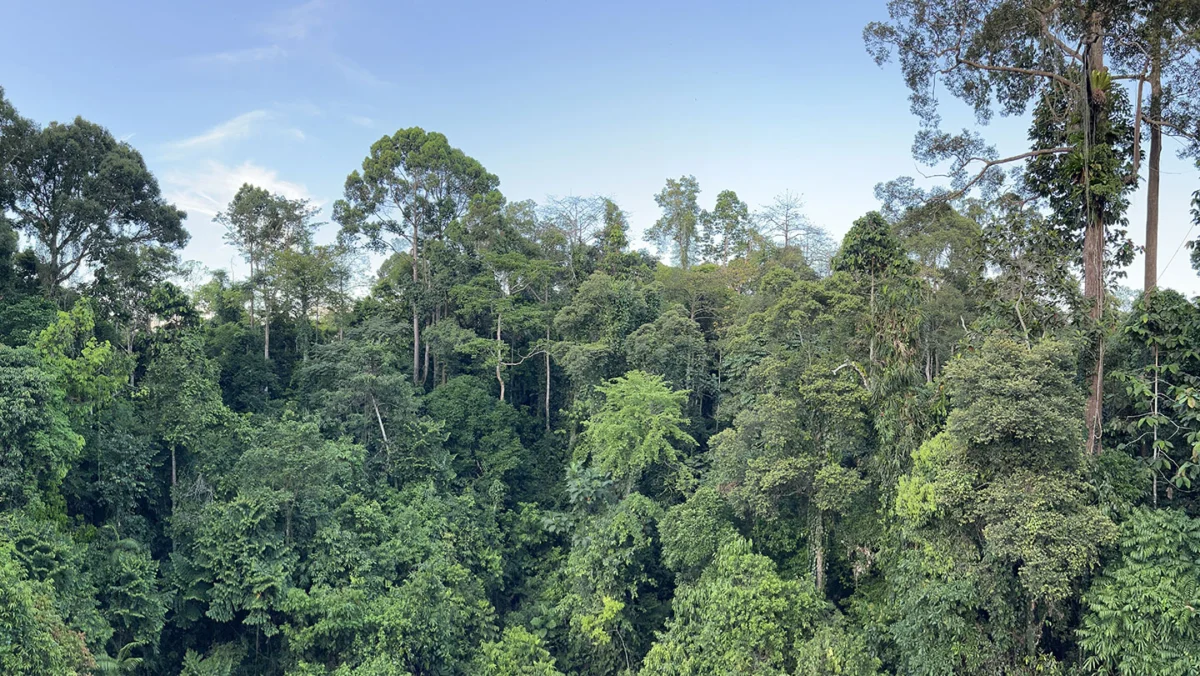
The towering giants of the rainforest, particularly species like dipterocarps that can soar over 65 meters into the canopy, possess an astonishing ability to sustain life in their uppermost reaches even during prolonged dry periods. Recent scientific investigations are beginning to unravel the intricate physiological and structural modifications that allow these arboreal titans to overcome the challenges of drought, a critical adaptation in an era of escalating climate change. These adaptations, observed in ecosystems such as the Kabili-Sepilok Forest Reserve in Malaysia, offer profound insights into the survival strategies of the planet’s most impressive plant life.
Understanding the Hydraulic Challenge
Transporting water from the soil to the highest leaves of a multi-story tree is a formidable feat of engineering. This process, known as the transpiration stream, relies on a delicate balance of water potential gradients and the integrity of the tree’s vascular system, the xylem. When soil moisture diminishes and atmospheric humidity drops, the tension within the xylem, driven by the evaporative pull from the leaves, increases dramatically. This can lead to a phenomenon called cavitation, where air bubbles form and expand within the xylem conduits, effectively blocking water flow and potentially causing irreversible damage. For trees of extreme height, this hydraulic challenge is amplified, making them particularly vulnerable to drought stress.
Adaptations in Foliage: The First Line of Defense
Trees employ a sophisticated suite of leaf-level adaptations to mitigate water loss. These include changes in leaf morphology, such as increased leaf thickness, a reduced surface area-to-volume ratio, and the development of dense coverings of hairs (trichomes) that create a humid microenvironment around the leaf surface and reflect solar radiation. Furthermore, the regulation of stomata, the tiny pores on leaf surfaces responsible for gas exchange and transpiration, is crucial. During dry spells, trees can significantly reduce stomatal aperture, thereby limiting water vapor escape. Some species may even undergo abscission, shedding leaves to conserve water.
In the context of giant trees, these foliar adaptations become even more critical. A larger leaf surface area, while beneficial for photosynthesis under optimal conditions, represents a greater potential for water loss. Therefore, the ability to efficiently manage stomatal function and potentially reduce overall leaf area during drought is paramount. Studies have indicated that some large tree species exhibit a greater capacity for stomatal closure than their smaller counterparts, allowing them to maintain hydraulic integrity under stress. The specific types of leaves found in the upper canopy, often smaller and thicker than those in lower strata, may also represent an evolutionary response to reduced water availability at extreme heights and greater exposure to drying winds and intense sunlight.
Vascular System Resilience: The Xylem’s Crucial Role
Beyond the leaves, the internal plumbing of the tree, the xylem, plays a pivotal role in drought survival. The xylem consists of specialized cells called tracheary elements (tracheids and vessel elements) that form continuous pipelines for water transport. The diameter and structure of these conduits are critical. Wider vessels are more efficient at transporting large volumes of water but are also more susceptible to cavitation. Conversely, narrower vessels are more resistant to cavitation but can limit the overall flow rate.
Research suggests that many drought-tolerant species possess xylem with a higher proportion of narrow vessels, providing a degree of hydraulic safety. Additionally, trees can employ several strategies to recover from cavitation. One such mechanism is the refilling of embolized vessels, a process that is still not fully understood but is thought to involve a process of root pressure or localized hydraulic redistribution. Another key adaptation is the ability of trees to increase the production of new xylem tissue during favorable conditions, effectively expanding their hydraulic capacity in anticipation of future dry periods.
For the exceptionally tall dipterocarps, the sheer length of the xylem conduits presents a unique challenge. Maintaining hydraulic continuity over such distances requires robust structural integrity and efficient physiological regulation. Scientists are investigating whether these giant trees have evolved specific xylem structures or functional properties that enhance their ability to withstand the immense negative pressures involved in lifting water to their crowns. This might include thicker xylem cell walls, specialized pit structures that limit air bubble propagation, or a greater capacity for rapid recovery from cavitation events.
A Chronology of Adaptation and Research
The understanding of these complex adaptations has been a gradual process, built upon decades of ecological observation and physiological research. Early studies in forest ecology often focused on the general factors limiting tree growth and distribution, with drought being a significant, albeit sometimes generalized, consideration.
- Mid-20th Century Onward: Initial research began to highlight the importance of water transport in trees and the phenomenon of cavitation. Studies on different species revealed varying degrees of drought tolerance, leading to hypotheses about structural and functional differences in their xylem.
- Late 20th Century: Advances in physiological measurement techniques, such as the use of pressure chambers to estimate leaf water potential and dendrometers to measure stem diameter changes (indicating water status), allowed for more precise quantification of tree responses to water stress.
- Early 21st Century: Molecular biology and genomics began to provide insights into the genetic basis of drought tolerance. Researchers started identifying genes and pathways involved in stomatal regulation, xylem development, and stress response.
- Present Day: Modern research combines field observations, advanced imaging techniques (e.g., X-ray computed tomography to visualize xylem structure), and sophisticated hydraulic modeling to provide a comprehensive understanding of how trees, particularly giant species, cope with drought. The work in places like the Kabili-Sepilok Forest Reserve represents the forefront of this research, focusing on the ecological context of these adaptations.
Supporting Data and Observations
While specific quantitative data from the Kabili-Sepilok study are not detailed in the provided text, general scientific literature offers supporting evidence for the mechanisms described. For instance, studies on coniferous forests in arid regions have shown that trees with smaller leaf size and higher stomatal density tend to be more drought-tolerant. Similarly, research on Mediterranean ecosystems has revealed that species with higher wood density and narrower xylem conduits are better equipped to survive seasonal drought.
Regarding the extreme heights of dipterocarps, data on hydraulic conductivity in tall trees often reveal a steep decline in water potential from the roots to the leaves, underscoring the energetic cost of water transport. For example, studies have indicated that water potential can drop by as much as 0.1 MPa per meter of height in tall trees. This necessitates highly efficient water transport systems and robust cavitation resistance. The tallest dipterocarps, exceeding 65 meters, would experience water potential gradients of 6.5 MPa or more from their roots to their crowns, a significant hydraulic challenge that their adaptations must overcome.
Broader Impact and Implications: A Climate Change Perspective
The ability of giant trees to withstand drought has profound implications for forest ecosystems and their role in the global carbon cycle. These massive trees are significant carbon sinks, storing vast amounts of carbon in their biomass. If they are unable to adapt to increasingly frequent and severe droughts, this could lead to widespread tree mortality, releasing stored carbon back into the atmosphere and exacerbating climate change.
The findings from research on dipterocarps and other giant tree species contribute to our understanding of forest resilience in the face of climate change. This knowledge is crucial for:
- Conservation Efforts: Identifying and protecting forests with a high proportion of drought-tolerant species, especially old-growth forests with large trees, can help maintain carbon stocks and biodiversity.
- Forest Management: Informing strategies for reforestation and forest management to select species and genotypes that are more likely to thrive in future climates.
- Climate Modeling: Improving the accuracy of climate models by incorporating more realistic representations of tree physiological responses to drought.
- Ecological Understanding: Deepening our appreciation for the complex adaptations that allow life to persist in challenging environments, offering insights into the evolutionary history and future trajectory of plant life on Earth.
The ongoing research into the remarkable resilience of giant trees highlights the intricate and dynamic ways in which nature adapts to environmental pressures. As our planet continues to warm, understanding these survival strategies is not just an academic pursuit but a critical necessity for safeguarding vital ecosystems and the services they provide. The silent, stoic giants of the rainforest, through their subtle yet powerful adaptations, offer a compelling testament to the enduring power of life.