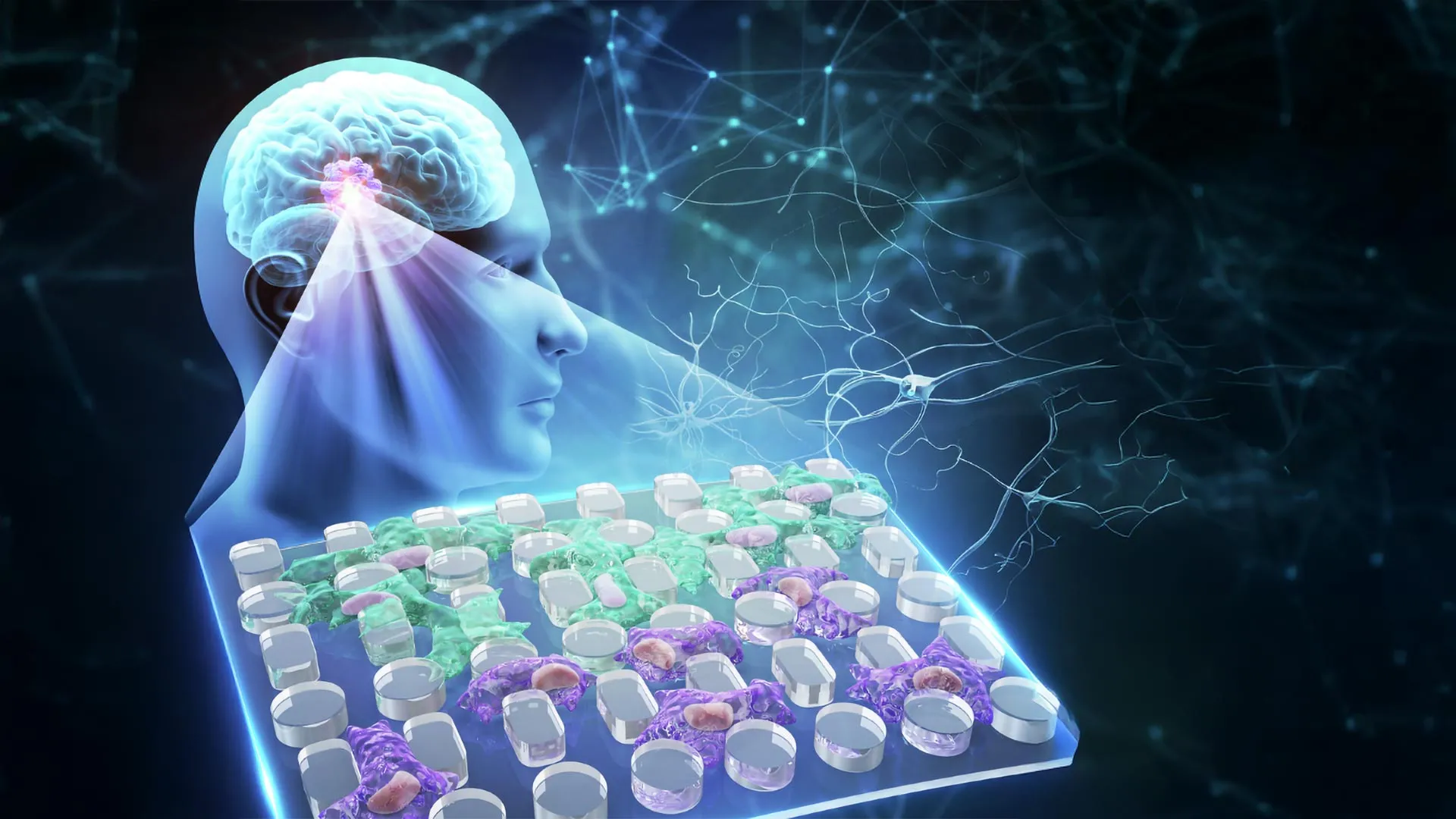
The scientific community has long grappled with a biological paradox: why do some individuals maintain perfect mental clarity until the end of their lives, even when their brains are riddled with the toxic plaques and tangles characteristic of Alzheimer’s disease? A groundbreaking study conducted by the Netherlands Institute for Neuroscience (NIN) has provided a potential answer to this mystery, identifying a rare population of "immature neurons" that appear to act as a biological safeguard. By analyzing how these specific cells respond to damage, researchers have uncovered a new dimension of cognitive resilience—the brain’s inherent ability to maintain function despite the presence of advanced pathology.
For decades, Alzheimer’s research has focused primarily on the accumulation of amyloid-beta plaques and tau protein tangles, the hallmarks of the disease. However, clinical data consistently shows that the correlation between brain pathology and cognitive decline is not absolute. Approximately 30 percent of older adults whose brains meet the post-mortem criteria for Alzheimer’s disease never exhibited any symptoms of dementia while alive. This discrepancy suggests that certain brains possess a "reserve" or "resilience" that allows them to bypass the traditional trajectory of the disease. The findings from the NIN, led by senior author Evgenia Salta, suggest that the secret may lie not in the quantity of brain cells, but in the specific survival strategies of a rare subset of neurons.
The Mystery of Cognitive Resilience and the Aging Brain
Cognitive resilience is the phenomenon where the brain continues to function normally despite significant neurological damage. In the context of Alzheimer’s, this means that while the "hardware" of the brain shows signs of decay, the "software" continues to run smoothly. Dr. Salta and her team set out to investigate whether the aging human brain possesses a mechanism for self-repair that is more robust in some individuals than in others.
The study centered on the concept of adult neurogenesis—the birth of new neurons in the adult brain. This has been a subject of intense debate within the neuroscientific community for over two decades. While it is well-established that rodents and other mammals generate new neurons throughout their lives, some studies have suggested that human neurogenesis drops off sharply after childhood. The NIN study sought to settle this debate by using high-precision analytical tools to scan donated human brain tissue for signs of "immature neurons," which serve as markers for ongoing cellular development.
Methodology: Mining the Netherlands Brain Bank
To conduct the research, the team utilized samples from the Netherlands Brain Bank, one of the world’s most comprehensive repositories of human brain tissue. The researchers analyzed samples from three distinct groups: healthy individuals with no pathology, patients who died with clinical Alzheimer’s and cognitive decline, and a third, critical group—individuals who had significant Alzheimer’s pathology but showed no signs of dementia before death.
The focus was narrowed to a specific region within the hippocampus known as the dentate gyrus, a site critical for memory formation and one of the few areas where neurogenesis is thought to persist into adulthood. Identifying these cells is a significant technical challenge; immature neurons are exceedingly rare in the aged brain, often described as searching for a needle in a haystack.
To overcome this, the researchers developed a novel suite of analytical methods tailored specifically for human tissue. Historically, much of what is known about neurogenesis comes from animal models, but human biology often presents unique complexities that animal studies cannot replicate. By "zooming in" on the exact anatomical niches where these cells reside and applying advanced molecular profiling, the team was able to identify immature neurons in individuals as old as 80 and 90 years.
Rare Immature Neurons: Behavior Over Numbers
The study’s first major revelation was that immature neurons do, in fact, persist into very old age across all groups. Whether a person was healthy, suffered from Alzheimer’s, or was resilient to the disease, these "young" cells were present in their memory centers. This finding provides strong evidence that the human brain retains a degree of plasticity and the potential for cellular renewal far longer than previously thought.
However, the most surprising discovery was that the resilient individuals—those with Alzheimer’s pathology but no symptoms—did not necessarily have a higher number of these immature neurons. Instead, the difference lay in the molecular behavior of the cells. In resilient brains, the immature neurons appeared to activate specific genetic programs associated with survival, cellular maintenance, and the mitigation of damage.
"In resilient individuals, these cells seem to activate programs that help them survive and cope with damage," Salta noted. "We also see lower signals related to inflammation and cell death."
This suggests that in a "non-resilient" brain, the immature neurons may become overwhelmed by the toxic environment created by Alzheimer’s pathology. In contrast, in a resilient brain, these same cells adapt. They appear to be more "stress-resistant," allowing them to remain functional and potentially support the surrounding neural network.
The "Fertilizer" Hypothesis: A New Role for New Cells
The traditional view of neurogenesis is that new cells are born to replace those that have died. However, the NIN findings suggest a more nuanced role. Dr. Salta describes these immature neurons as a form of "biological fertilizer." Rather than simply acting as replacement parts, these cells may secrete factors or create connections that stabilize the existing neural environment.
In a brain "garden" that has begun to fall apart due to the "weeds" of amyloid and tau, these immature neurons may provide the necessary nutrients and structural support to keep the remaining healthy neurons functioning. This shift in perspective—from "cell replacement" to "tissue support"—could fundamentally change how scientists approach regenerative medicine for the brain. If these cells act as a support system, then therapeutic strategies might focus on enhancing their "fertilizing" properties rather than just trying to increase their numbers.
A Chronology of Alzheimer’s Research Paradigms
The NIN study represents a significant milestone in a shifting research landscape. To understand its importance, one must look at the timeline of Alzheimer’s research:
- 1906: Dr. Alois Alzheimer first identifies "plaques and tangles" in the brain of a patient with profound memory loss.
- 1980s-1990s: The "Amyloid Hypothesis" becomes the dominant theory, suggesting that removing amyloid plaques is the key to curing the disease.
- 2000s-2010s: Numerous high-profile clinical trials for amyloid-clearing drugs fail to improve cognitive function, leading to a crisis in the field.
- 2018-2022: New research begins to focus on neuroinflammation, metabolic health, and the concept of "cognitive reserve."
- 2024: The NIN study identifies the molecular behavior of immature neurons as a specific mechanism for resilience, moving the focus from "what causes the damage" to "what preserves the function."
This evolution reflects a growing realization that Alzheimer’s is a multifactorial disease. While the pathology is a major component, the brain’s response to that pathology is equally critical.
Supporting Data: The Scale of the Challenge
The urgency of this research is underscored by global health statistics. According to the World Health Organization (WHO), more than 55 million people worldwide are currently living with dementia, a number expected to rise to 139 million by 2050 as the global population ages. Alzheimer’s disease contributes to 60-70% of these cases.
The economic impact is equally staggering, with the global cost of dementia estimated at $1.3 trillion annually. Despite these figures, the "success rate" for Alzheimer’s drug development has historically been among the lowest in the pharmaceutical industry. The discovery of specific cellular behaviors that confer resilience offers a new, potentially more effective target for drug development. Instead of trying to remove the "garbage" (plaques) from the brain—a task that has proven difficult—researchers might instead focus on "fortifying the workers" (the immature neurons).
Official Responses and Implications for the Scientific Community
While the findings have been met with excitement, the research team and other experts in the field emphasize that this is not a "silver bullet." Dr. Salta has been careful to frame this as "one piece of a very large puzzle." Cognitive resilience is likely influenced by a combination of genetics, lifestyle, and biological factors.
Other experts in neurology have noted that while the study is robust, the nature of using donated brain tissue means that researchers are looking at a "snapshot" in time. They cannot see the cells in action or prove a direct cause-and-effect relationship between cell behavior and memory preservation in a living person. Future research will need to use advanced imaging or organoid models to observe these interactions in real-time.
However, the implications for future therapy are profound. If scientists can identify the specific molecules that allow immature neurons to survive in a toxic environment, they could potentially develop drugs that mimic these "resilience signals." This would move Alzheimer’s treatment away from a one-size-fits-all approach toward a more personalized strategy that bolsters the brain’s natural defenses.
The Future: Toward a Resilient Aging Process
The study from the Netherlands Institute for Neuroscience marks a departure from the "deficit-based" model of aging. For decades, the narrative of the aging brain has been one of inevitable decline and loss. This new data suggests a more optimistic reality: the aging brain is a dynamic, adaptable organ that continues to produce new life and attempt repair even in the face of severe disease.
The next phase of Dr. Salta’s research will focus on the communication pathways between these immature neurons and their older neighbors. Understanding the "dialogue" between cells could reveal how the brain maintains its network integrity.
As the global population continues to age, the quest to understand cognitive resilience becomes more than just a scientific pursuit; it is a societal necessity. By shifting the focus from the damage of the disease to the strength of the brain, researchers are opening a new door to a future where Alzheimer’s pathology no longer means an inevitable loss of self. The "fertilizer" in the brain’s garden may eventually be the key to ensuring that the mind remains vibrant, even as the body grows old.