Merck’s latest investigational drug, calderasib, is not merely another entry into the burgeoning field of KRAS G12C inhibition; it represents a strategic departure in therapeutic design, engineered specifically for optimal combinability and enhanced potency within complex treatment regimens. This innovative approach seeks to overcome the rapid resistance and limited efficacy often encountered with monotherapy in the challenging landscape of KRAS-mutated cancers, marking a significant evolution in precision oncology.
The Elusive KRAS Target: A Decade-Long Quest
For decades, the Kirsten rat sarcoma viral oncogene homolog (KRAS) gene was deemed "undruggable" by the pharmaceutical industry. This proto-oncogene, a pivotal regulator of cell growth, differentiation, and survival, is among the most frequently mutated genes across human cancers, driving approximately 25% of all solid tumors. Its smooth, featureless surface made it notoriously difficult for small molecules to bind effectively and inhibit its activity. Scientists grappled with this challenge, recognizing the immense potential of targeting KRAS given its prevalence in aggressive cancers like pancreatic (up to 90%), colorectal (40-50%), and non-small cell lung cancer (NSCLC) (15-20%).
The breakthrough came with the discovery of a specific, transient pocket that emerges when KRAS is in its inactive, GDP-bound state, particularly with the G12C mutation. This specific mutation, where glycine at position 12 is replaced by cysteine, not only locks KRAS in a persistently active, GTP-bound state, thereby continuously signaling for uncontrolled cell growth, but crucially, it also creates a unique electrophilic cysteine residue amenable to covalent drug binding. This revelation paved the way for the development of the first generation of KRAS G12C inhibitors.
These pioneering drugs, such as sotorasib (Lumakras, Amgen) and adagrasib (Krazati, Mirati/Bristol Myers Squibb), represented monumental achievements. Approved for specific indications, primarily NSCLC, they demonstrated the feasibility of directly targeting KRAS G12C. Their mechanism involved covalently attaching to the G12C mutant protein, trapping it in an inactive conformation. However, their efficacy was often challenged by the dynamic nature of KRAS signaling. In many cancer cells, a substantial fraction of KRAS molecules remain stubbornly in the active state, escaping inhibition by drugs designed to target the inactive form. Furthermore, the intricate web of overlapping cellular pathways interacting with KRAS frequently led to rapid development of resistance, limiting the durability of monotherapy responses.
"Because KRAS is such an important protein involved in so many cellular processes, resistance to these medications happens quickly and is quite common, since there are a lot of overlapping pathways that interact with KRAS," explained Jane Healy, Vice President and Head of Oncology Early Development at Merck Research Laboratories. This inherent challenge underscored the need for a more robust and adaptable therapeutic strategy.
Merck’s Strategic Design: Beyond Monotherapy Potency
Merck’s development of calderasib directly addresses these limitations, embodying a forward-thinking design philosophy. Instead of solely striving for the highest potency as a standalone agent, the primary objective was to create the "most combinable inhibitor." This meant engineering a molecule with specific characteristics that would allow it to integrate seamlessly and effectively with other anti-cancer agents, thereby achieving deeper and more durable responses.
The core tenets of calderasib’s design include:
- High Specificity to Mutant KRAS: Calderasib was meticulously designed to selectively target the mutant KRAS G12C protein, minimizing interaction with the wild-type KRAS. This specificity is paramount for reducing off-target toxicities, a critical factor when contemplating combination therapies. Lower toxicity profiles for individual agents in a regimen allow for higher, more effective doses of each component, or simply make the overall treatment more tolerable for patients.
- Optimized Pharmacokinetics: While not explicitly detailed in the provided text, a drug designed for combinability often possesses pharmacokinetic properties that are favorable for co-administration, such as a predictable half-life, minimal drug-drug interactions, and a wide therapeutic window. These characteristics enable flexible dosing schedules and reduce the likelihood of synergistic toxicities.
- Mechanism Complementarity: The strategy implicitly suggests that calderasib’s mechanism of action, while targeting KRAS G12C, may be designed to complement other pathways or resistance mechanisms when combined with other drugs. This allows for a more comprehensive blockade of cancer cell survival and proliferation pathways.
"We designed it to be highly specific to mutant KRAS, thereby minimizing interaction with the wild-type version and reducing toxicity, but we also designed it with combinability in mind," Healy reiterated. This dual focus on specificity and combinability represents Merck’s strategic investment in overcoming the inherent adaptive resistance mechanisms that cancer cells deploy against targeted therapies.
KANDLELIT-001: Early Clinical Insights and Biomarker Validation
The KANDLELIT-001 Phase 1 trial served as the initial proving ground for calderasib, investigating its safety, tolerability, and preliminary efficacy as both a monotherapy and in combination regimens across various advanced solid tumors with KRAS G12C mutations. A pivotal aspect of this trial was the innovative use of circulating tumor DNA (ctDNA) to track therapeutic response, highlighting a growing trend in oncology towards less invasive and more dynamic monitoring methods.
Researchers collected ctDNA, fragments of tumor DNA shed into the bloodstream, via simple blood draws at multiple points throughout the treatment course. From these samples, they measured the KRAS G12C variant allele fraction (VAF) – the proportion of ctDNA carrying the specific G12C mutation. VAF serves as a highly sensitive and early biomarker for tumor burden. A decline in VAF indicates fewer mutant tumor cells are circulating and shedding DNA, suggesting a positive treatment response. Conversely, a rising VAF can signal tumor growth or resistance, often preceding changes visible on traditional imaging scans.
"If you track the KRAS G12C variant allele fraction over the course of treatment, it declines, and we can track that across all patients in the study," Healy noted. "The reduction in variant allele fraction in the blood correlates quite nicely with the responses we’re seeing by imaging." This strong correlation underscores the utility of VAF as a reliable surrogate endpoint for clinical efficacy.
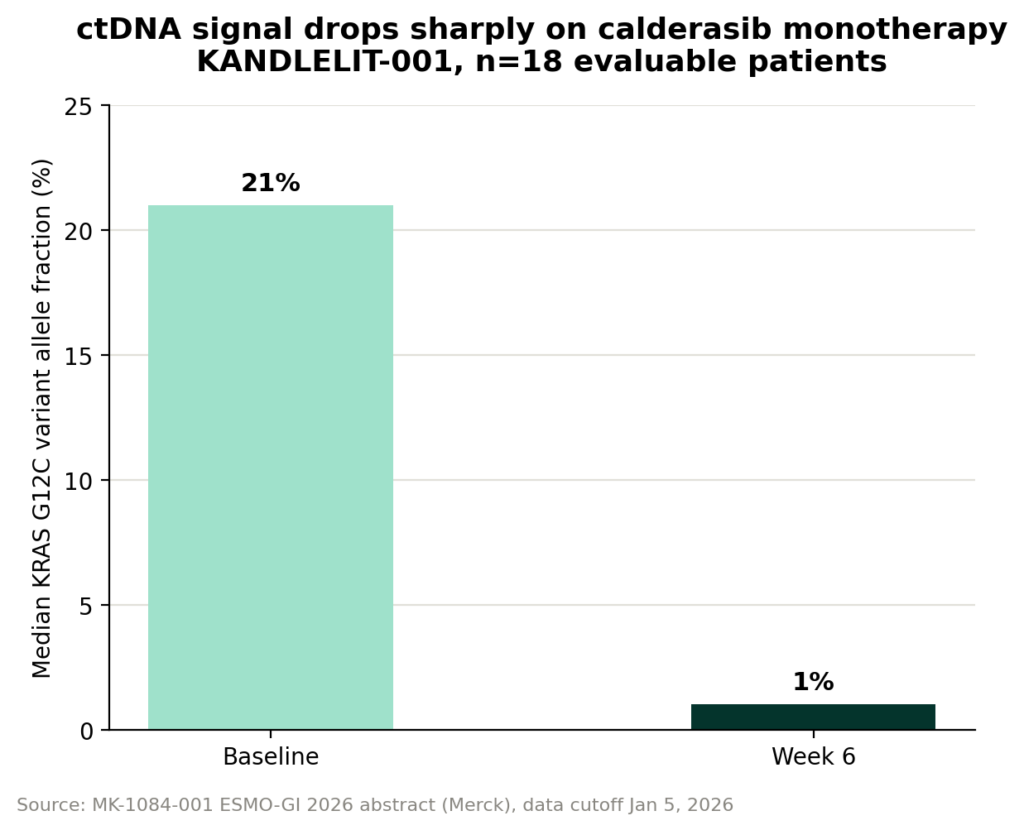
In the monotherapy arms of KANDLELIT-001, calderasib demonstrated a median VAF reduction of approximately 95%, dropping from an average baseline of 21% to 1% by week 6. While this impressive data point was based on a small cohort of 18 ctDNA-evaluable patients, Healy confirmed that this VAF-response correlation extended across the full study population, including those receiving combination therapies, with detailed figures anticipated in subsequent presentations.
The adoption of VAF measurement via blood draws offers substantial advantages over traditional imaging: it is generally faster, more cost-effective, and less burdensome for patients. This "liquid biopsy" approach opens the door to more frequent and proactive monitoring, potentially allowing clinicians to detect early signs of resistance or disease progression well before they become clinically apparent or visible on scans, enabling timelier intervention. However, it’s crucial to acknowledge that VAF is a relative fraction and not an absolute measure of total tumor burden; its value can be influenced by factors beyond just mutant DNA shedding, such as the overall amount of ctDNA present in the bloodstream.
Pioneering the Tumor-Agnostic Paradigm
Merck’s strategic foresight extends beyond drug design into regulatory pathways, particularly its pioneering work in tumor-agnostic approvals. This "biomarker-first" approach, where treatment decisions are based on the presence of specific genetic mutations or biomarkers rather than the tumor’s anatomical origin, has been a hallmark of Merck’s oncology development.
The company notably achieved the first tumor-agnostic approval for a drug with its immunotherapy pembrolizumab (Keytruda). Through the KEYNOTE-158 program, pembrolizumab received approval for patients with microsatellite instability-high (MSI-High) status, a marker indicating deficient mismatch repair genes. This approval was groundbreaking because it demonstrated that patients with this biomarker, regardless of their specific cancer type, exhibited a consistently higher response rate to pembrolizumab. Merck reinforced this by drawing on retrospective data from confirmatory trials, observing the same pattern across diverse tumor types. Pembrolizumab later secured a second tumor-agnostic approval based on tumor mutational burden (TMB-High), further solidifying this innovative regulatory strategy.
"Merck actually had the first tumor-agnostic approval for a drug, with pembrolizumab, through our KEYNOTE-158 program… That was the first tumor-agnostic biomarker approval for a drug," Healy stated, expressing pride in the company’s leadership in this space. "So it’s now a precedented approach, and we’re proud to have been first to use that strategy."
Merck is now applying this validated, tumor-agnostic framework to calderasib. The company has initiated a pan-tumor study investigating calderasib’s activity across any solid tumor type harboring a KRAS G12C mutation. This means patients qualify for the study based solely on their KRAS G12C mutation status, irrespective of the cancer’s organ of origin. This strategy represents a fundamental shift in oncology, moving away from a traditional organ-centric classification of cancer towards a mutation-centric, personalized treatment paradigm. It underscores a durable development philosophy within Merck, rather than a singular regulatory maneuver. The success of this approach for calderasib, mirroring pembrolizumab’s trajectory, will hinge on the forthcoming clinical data.
Clinical Efficacy: The Power of Combination Therapy
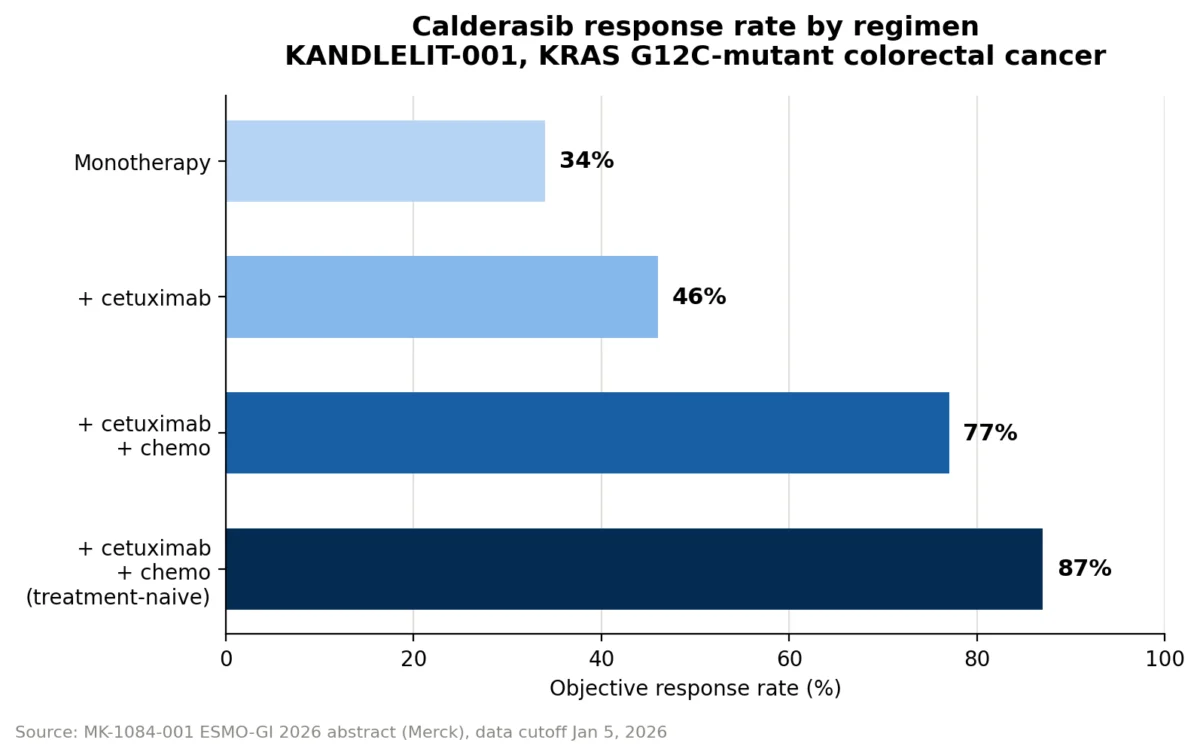
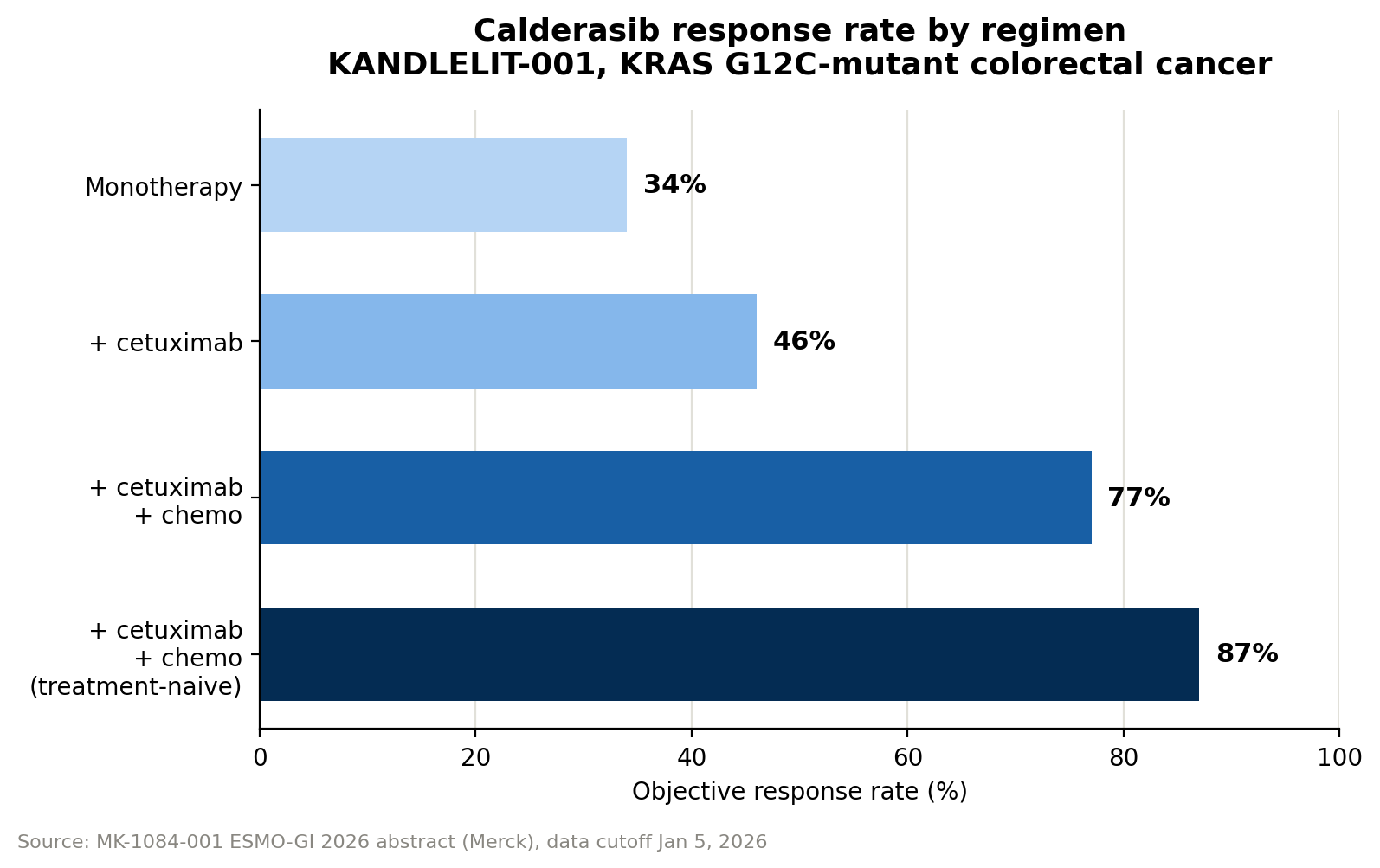
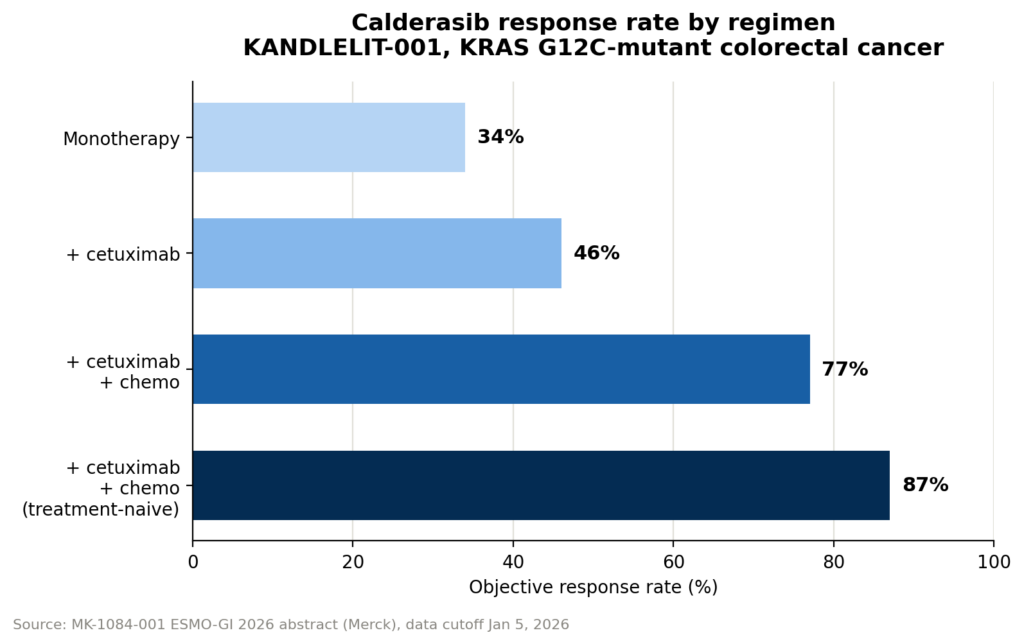
The KANDLELIT-001 trial provided compelling evidence supporting Merck’s combinability thesis, particularly in its objective response rate (ORR) data. While calderasib monotherapy demonstrated a respectable ORR of 34%, the true potential of the drug became evident in combination regimens:
- Monotherapy (Calderasib alone): 34% ORR
- Doublet Therapy (Calderasib + Cetuximab): ORR increased to 46%
- Triplet Therapy (Calderasib + Cetuximab + Chemotherapy): ORR soared to 77%
The most striking results were observed in patients receiving the triplet therapy who had not previously received any systemic therapy (first-line setting). In this cohort, the ORR climbed even higher, reaching an impressive 87%. This data suggests that the combination of calderasib, cetuximab (an EGFR inhibitor often used in colorectal cancer), and conventional chemotherapy creates a synergistic effect, effectively blocking multiple pathways critical for cancer cell survival and proliferation, leading to profound clinical responses. This finding is particularly significant for challenging diseases like KRAS G12C-mutant colorectal cancer (CRC), where treatment options, especially in the first-line setting, can be limited.
Navigating Safety and Tolerability
While the efficacy data for combination regimens was highly promising, it is equally crucial to assess the safety and tolerability profile. As expected with multi-agent chemotherapy, the incidence of adverse effects increased with the complexity of the regimen:
- Monotherapy (Calderasib alone): Only 9% of patients experienced Grade 3 or 4 drug-related adverse effects (AEs).
- Doublet Therapy (Calderasib + Cetuximab): Grade 3 or 4 AEs rose to 20%.
- Triplet Therapy (Calderasib + Cetuximab + Chemotherapy): Grade 3 or 4 AEs reached 42%.
Despite the increase in higher-grade adverse events with combination therapies, Jane Healy emphasized that "the combination appears manageable and reflective of the profiles of those individual agents." This indicates that the observed toxicities are largely consistent with the known side effect profiles of cetuximab and standard chemotherapy, and importantly, they were deemed controllable within a clinical setting. Managing side effects effectively is paramount for maintaining patient quality of life and ensuring treatment adherence, especially in long-term cancer care.
The Road Ahead: Phase 3 Trials and Future Horizons
It is important to contextualize the KANDLELIT-001 findings within the framework of drug development. As a Phase 1 trial, it involved a relatively small, non-randomized dataset, meaning these results, while highly encouraging, are considered preliminary. Definitive proof of efficacy and safety will come from larger, randomized, controlled Phase 3 trials.
Merck is already advancing calderasib into a pivotal Phase 3 study, the KANDLELIT-012 trial. This trial is designed to evaluate calderasib in combination with cetuximab and chemotherapy specifically for first-line KRAS G12C-mutant colorectal cancer (CRC). The primary endpoints will likely include progression-free survival (PFS) and overall survival (OS), providing the robust evidence needed for potential regulatory approval. The success of KANDLELIT-012 could position calderasib as a transformative first-line option for a significant subset of CRC patients.
The competitive landscape for KRAS G12C inhibitors is evolving rapidly, with sotorasib and adagrasib already approved and other next-generation inhibitors and combination strategies in various stages of development. Merck’s strategic emphasis on combinability and its proven track record with tumor-agnostic approvals could give calderasib a distinct advantage, particularly in settings where monotherapy responses are suboptimal or resistance is a major concern.
Ultimately, calderasib represents Merck’s concerted effort to push the boundaries of precision oncology. By designing a drug specifically to thrive in combination therapies and by leveraging a pioneering biomarker-driven, tumor-agnostic development strategy, Merck aims to provide more effective and durable treatment options for patients battling KRAS G12C-mutated cancers, marking a new chapter in the fight against this historically challenging oncogenic driver. The forthcoming data from Phase 3 trials will be critical in determining the full impact of this innovative approach.