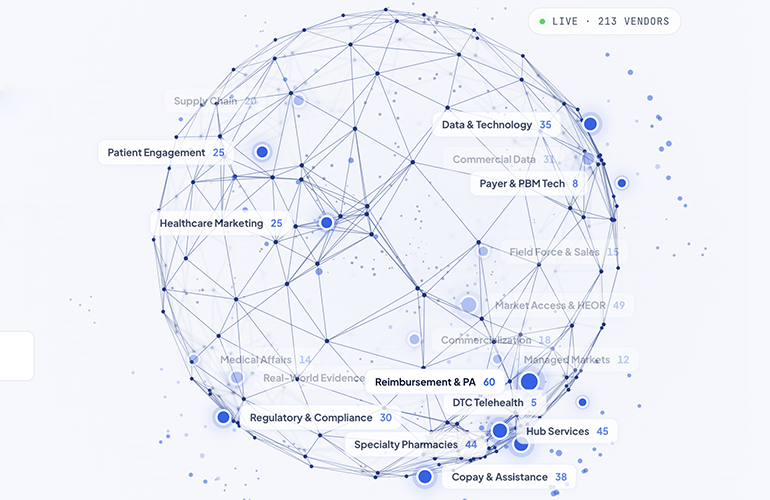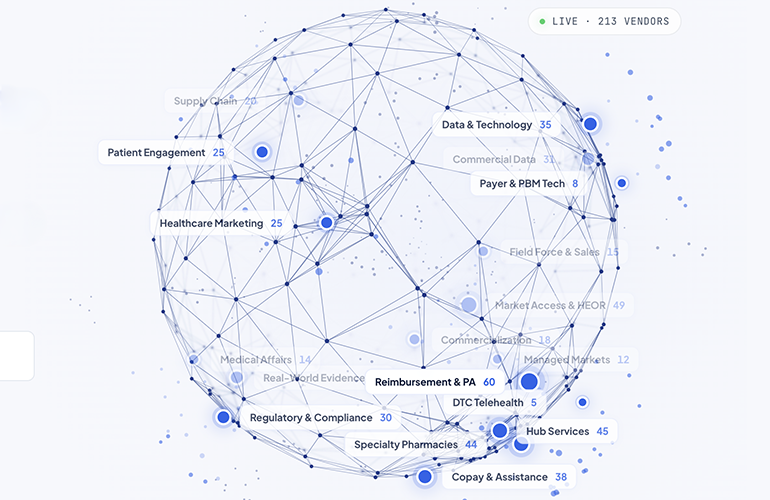
For pharmaceutical companies navigating the complex transition from clinical research to commercial launch, the selection of service providers—ranging from distribution networks and pricing strategy firms to sophisticated Customer Relationship Management (CRM) platforms—has long operated in a "black box." Unlike the consumer or general enterprise software markets, which benefit from transparent, data-driven benchmarking sites like G2 or Gartner Peer Insights, the multi-billion-dollar pharma commercial services industry has remained tethered to informal professional networks and anecdotal word-of-mouth recommendations.
This opaque landscape is exactly what Hoyt Gong, an MBA candidate at Harvard Business School, seeks to dismantle with the launch of Rx Almanac. By providing a centralized, editorial-led directory, Gong aims to offer pharma commercial teams a neutral platform to evaluate service providers based on rigorous criteria rather than hearsay.
The Genesis of a Digital Yellow Pages for Pharma
The impetus for Rx Almanac was born from professional necessity. During his tenure as a senior product manager at a prominent insulin pump manufacturer, Gong found himself tasked with the high-stakes responsibility of vetting and selecting vendors for the company’s commercial scaling. The process was grueling and characterized by a lack of objective, side-by-side comparative data.
"I was responsible for picking our CRM vendor, thinking through our distribution strategy, choosing our pharmaceutical distribution partners, selecting our pricing vendors, and navigating our PBM (Pharmacy Benefit Manager) strategy," Gong recalled. "I realized there was no ‘Yellow Pages’ for this industry. You were essentially flying blind, relying on who you knew or what a vendor told you in a pitch deck."
Recognizing that the post-clinical stage is often the most critical point of failure for new drugs, Gong identified a gap in the market. While R&D and clinical trials are heavily documented and scrutinized, the commercialization phase—the "last mile" of drug delivery—remains underserved by analytical content. Supported by backing from both Harvard and Google, Gong launched Rx Almanac to professionalize how these critical partnerships are forged.
The Complexity of Commercialization: A Chronological Burden
The drug commercialization lifecycle is a marathon, not a sprint. For a pharmaceutical entity, the sequence typically follows a rigid timeline that begins long before regulatory approval.

- Pre-Launch Strategy (18–24 months out): The focus shifts from clinical efficacy to market access. Companies must begin vetting PBM strategies and distribution channels to ensure that once a drug receives FDA clearance, it can reach the patient.
- Platform Integration (12–18 months out): Selection of a commercial CRM is paramount. This is the central nervous system for sales reps and medical science liaisons.
- Go-to-Market Execution (6–12 months out): Finalizing third-party logistics (3PL) providers and specialized pharmacy partnerships.
- Post-Market Optimization: Monitoring pricing, patient access, and real-world evidence (RWE) to maintain market share.
Historically, this timeline has been marred by "vendor fatigue," where decision-makers, overwhelmed by the volume of pitches, rely on superficial metrics or established industry relationships. Rx Almanac attempts to solve this by creating granular "buyer matrices." A primary example is the platform’s recent head-to-head comparison of Veeva Vault CRM and Salesforce Life Sciences Cloud. Instead of relying on marketing rhetoric, the analysis breaks down performance based on technical pillars: migration feasibility, validation requirements, data integrity, commercial workflow efficiency, implementation partner ecosystems, risk profiles, and total cost of ownership.
Market Consolidation and the Private Equity Influence
A central theme emerging from Gong’s research is the rapid consolidation of the commercial services sector. The industry is currently witnessing a wave of mergers and acquisitions (M&A) driven by private equity giants such as Carlyle, KKR, and Summit Partners.
These firms are aggressively acquiring smaller, niche service providers and stitching them together into comprehensive "end-to-end" solutions. While this provides a one-stop-shop appeal for pharma companies, it introduces significant risks regarding integration and capability.
"A lot of these companies are buying each other out, and that gobbling up is how they are growing," Gong noted. "This leads to legitimate concerns from pharma leadership: Are these services truly the most capable, or are they just piecemealed together? The risk is that the combined entity lacks the cohesive DNA necessary to manage a drug’s commercial success effectively."
For launch teams, the challenge is no longer just finding a vendor, but verifying whether a conglomerate can deliver on the integrated promises they make. This is where Rx Almanac’s mission to assess what vendors are "actually capable of versus what they say they can do" becomes essential for institutional risk mitigation.
The AI Hype vs. Reality
In the current tech landscape, the term "AI agent" has become ubiquitous in sales pitches, often obscuring the actual utility of the software. Gong, who maintains a skeptical eye toward industry buzzwords, emphasizes the need for transparency in how these technologies function.
"One of my pet peeves is when someone talks about AI but isn’t crisp about what the agents are actually doing and how they add value," Gong said. "We need to distinguish between generative AI wrappers and genuine, backend predictive analytics that can actually improve patient outcomes or streamline distribution workflows."

As pharma companies face increasing pressure to optimize their commercial spend—particularly as drug pricing scrutiny reaches new legislative heights—the ability to distinguish between performative AI and transformative AI will be a competitive differentiator. Rx Almanac is positioning itself as the arbiter of this distinction.
Implications for the Future of Pharma Commercialization
The emergence of a neutral, analytical directory like Rx Almanac reflects a broader trend toward digital maturity in the life sciences sector. As pharma companies transition from traditional sales-rep-heavy models to data-driven, omnichannel commercial strategies, the quality of the tech stack and the reliability of service partners have become inextricably linked to the commercial success of a drug.
For stakeholders, the implications are three-fold:
- Increased Accountability: Vendors will no longer be able to hide behind opaque reputation management. If their performance is consistently ranked low on objective metrics, the cost of customer acquisition will likely rise.
- Streamlined Procurement: For the procurement departments of large and mid-sized pharma companies, having a "single source of truth" for vendor capabilities can reduce the evaluation period by weeks, if not months, allowing teams to focus on strategy rather than vendor vetting.
- Patient-Centricity: Ultimately, the goal is to improve the patient experience. If a company selects a superior distribution or CRM partner, the result is better access, clearer communication, and more affordable patient support.
The success of Rx Almanac will likely depend on its ability to scale its editorial coverage while maintaining the neutrality that makes it valuable to potential buyers. As Gong continues to build out the platform’s library of content, he is effectively creating a new standard of due diligence for the industry.
In a sector where a single misstep in commercial strategy can cost a company hundreds of millions of dollars in unrealized revenue, the shift toward evidence-based vendor selection is not merely a convenience—it is a necessity. By bringing the scrutiny of the Gartner-style model to the niche world of pharma commercial services, Rx Almanac is helping to ensure that the most important part of the drug development journey—getting the therapy to the patient—is as robust as the clinical science that made it possible.