In a significant advancement for the field of quantum condensed matter physics, a collaborative research team led by the University of British Columbia (UBC) has successfully demonstrated a novel method for controlling the rotation of molecules immersed in superfluid liquid helium. By employing a sophisticated optical centrifuge technique, the researchers have managed to overcome the inherent challenges of manipulating particles within a frictionless fluid, providing a transformative tool for studying the microscopic behavior of superfluids. The study, conducted in partnership with the University of Freiburg and published in the prestigious journal Physical Review Letters, marks the first time scientists have achieved precise, directional, and speed-adjustable control over molecular rotation inside a quantum solvent.
The ability to manipulate individual molecules within a superfluid environment opens a new window into the mysterious transition between classical and quantum states of matter. For decades, the interaction between a guest molecule and its surrounding superfluid environment has remained a subject of intense theoretical debate. This new experimental capability allows physicists to probe the limits of superfluidity at the atomic scale, potentially revealing how and when the frictionless properties of the medium begin to falter under the influence of rapid rotation.
The Nature of Superfluids and the Challenge of Solvation
Superfluidity is a unique state of matter characterized by the complete absence of viscosity, allowing the fluid to flow without any loss of kinetic energy. This phenomenon typically occurs in isotopes of helium—specifically helium-4 and helium-3—when cooled to temperatures nearing absolute zero. In the case of liquid helium-4, the transition to a superfluid state occurs at the "lambda point" (approximately 2.17 Kelvin). At these extreme temperatures, the atoms follow the laws of quantum mechanics rather than classical fluid dynamics, resulting in a substance that can crawl up the walls of containers or leak through pores so small they would block any normal liquid.
Despite their lack of internal friction, superfluids serve as an exceptional medium for "droplet spectroscopy." In this process, scientists dissolve molecules into tiny droplets of liquid helium, which act as a cryogenic "nanolaboratory." Because the droplets are nearly absolute zero (typically around 0.37 Kelvin), the dissolved molecules are held in a state of high isolation, allowing for incredibly precise measurements of their properties.
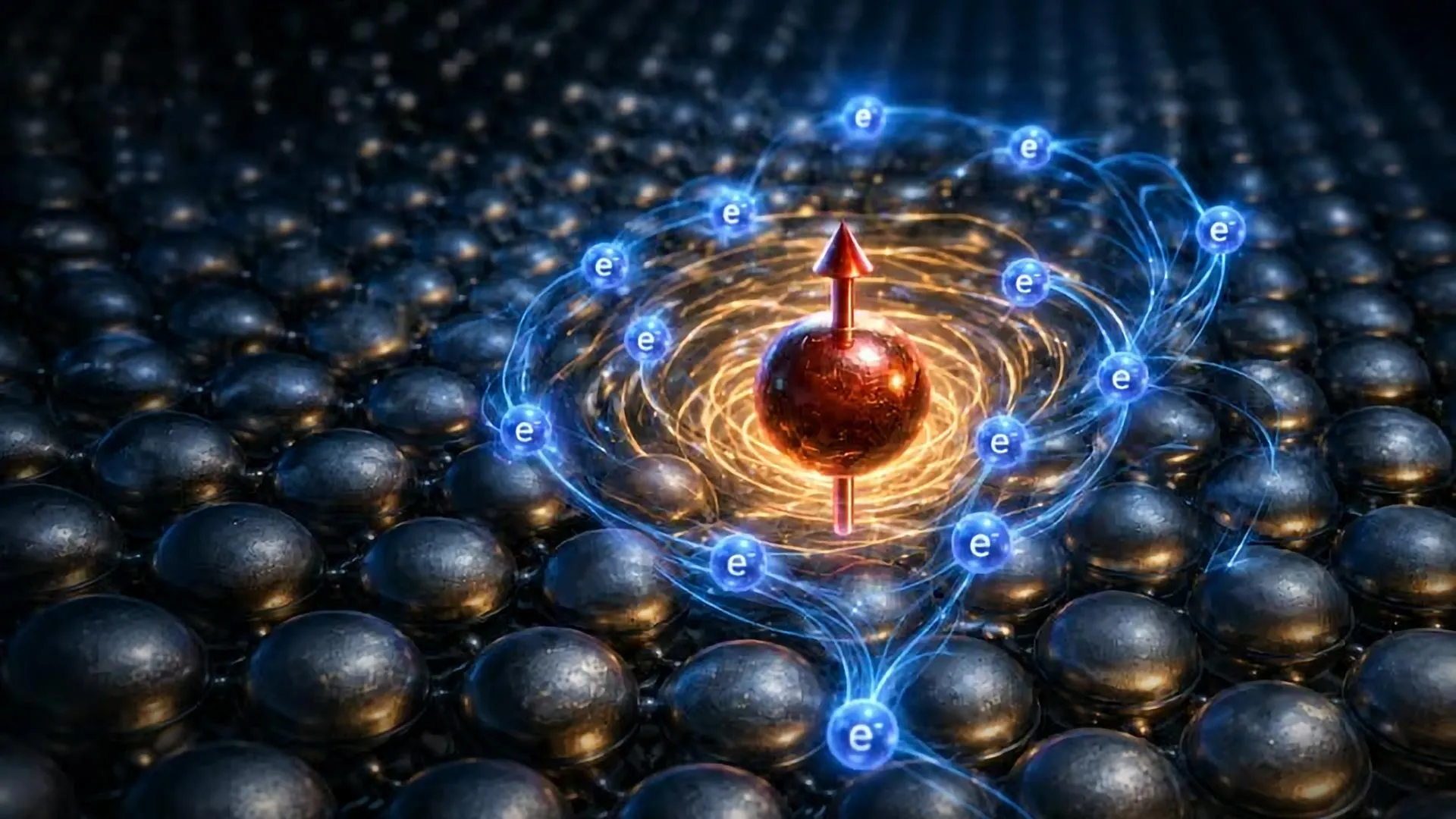
However, controlling the motion of these dissolved molecules has historically proven difficult. When a molecule is placed inside a fluid, it interacts with the surrounding atoms. Even in a superfluid, the molecule becomes "dressed" in a cloud of helium atoms, a phenomenon often referred to as the formation of a "hydrodynamic halo" or "snowball." Dr. Valery Milner, an associate professor with UBC’s Department of Physics and Astronomy and a lead author of the study, explains that this interaction significantly increases the effective mass of the molecule. "Imagine making a snowball," Dr. Milner noted. "It’s very easy to move it when it’s small, but gets harder and harder as more snow gets attached to it." This increased inertia makes it challenging to "spin up" the molecule to high rotational frequencies using traditional methods.
The Innovation of the Optical Centrifuge
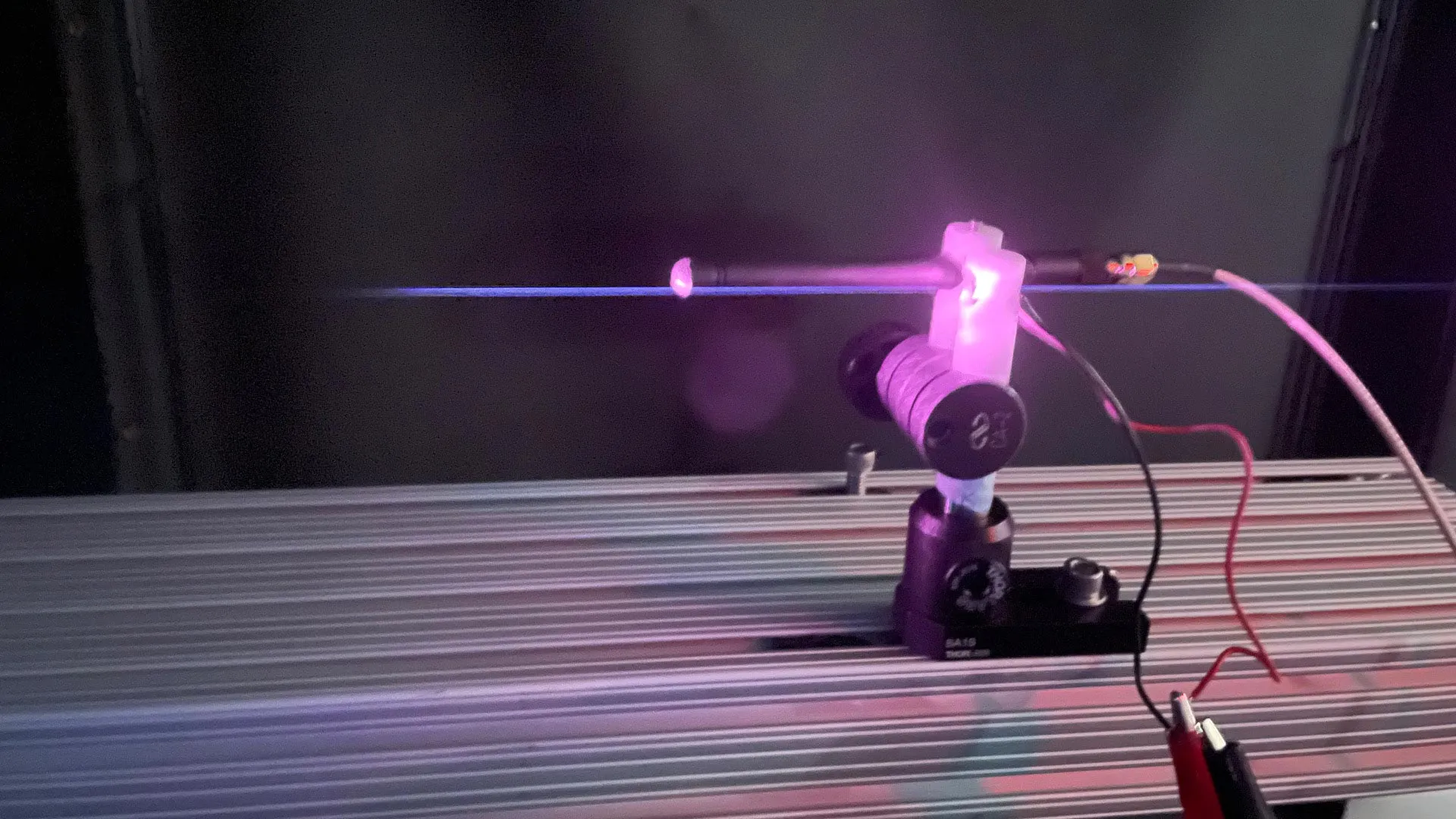
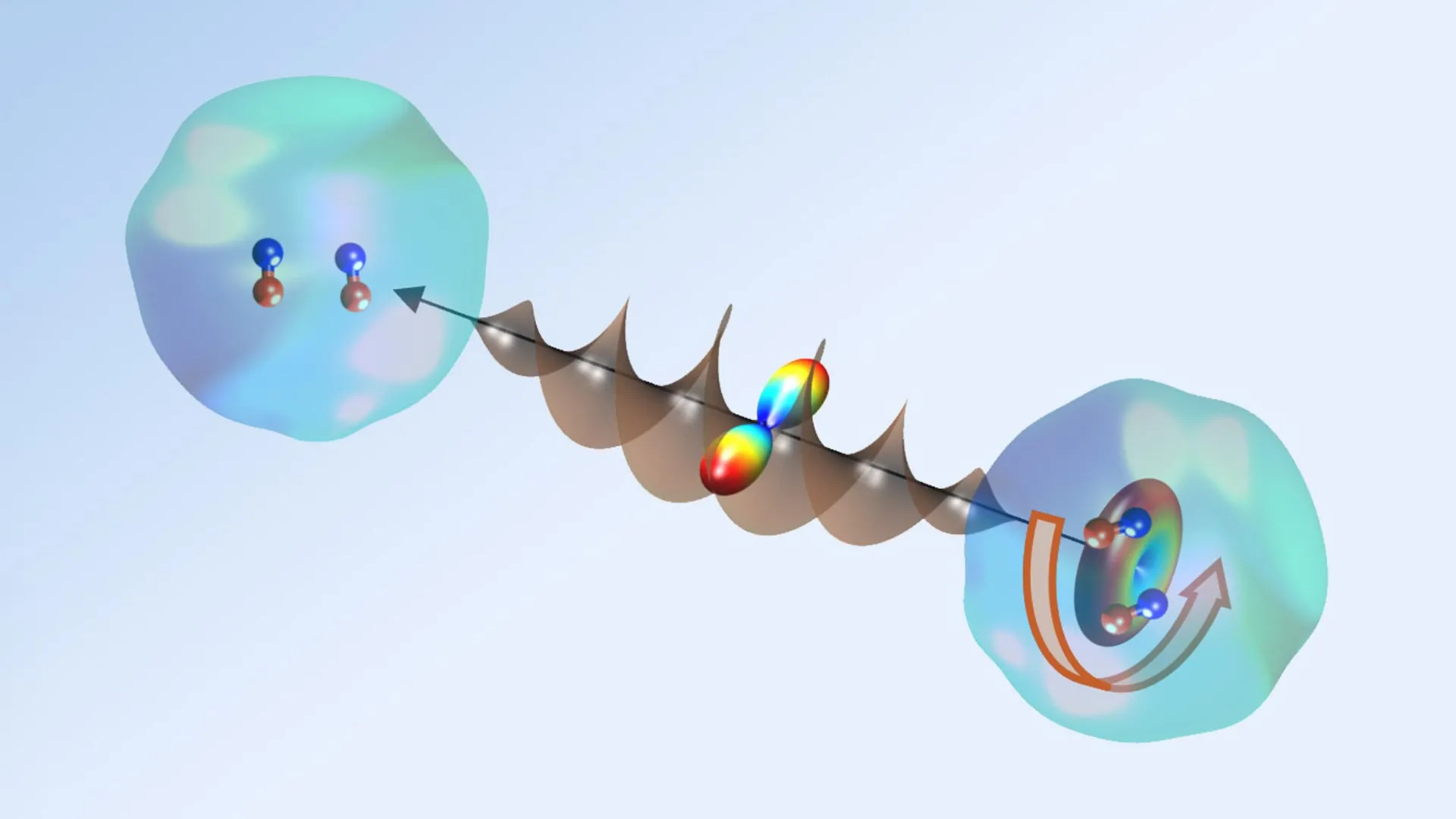
To address this challenge, the UBC and Freiburg team utilized an "optical centrifuge." Unlike a mechanical centrifuge used in biology or chemistry to separate liquids, an optical centrifuge uses an ultra-fast laser pulse to create a rotating electric field. The pulse is "chirped," meaning its frequency changes over time, and it is shaped such that the direction of its electric field polarization rotates at an accelerating rate.
When gas-phase molecules are exposed to this rotating laser field, they align with the field’s polarization and are dragged along, reaching rotational speeds of several trillion revolutions per second. While this technique has been highly successful for molecules in a vacuum or a gas, it previously failed to produce the same results when applied to molecules submerged in liquid helium. The interaction with the superfluid medium would typically dampen the effect or prevent the molecule from keeping pace with the accelerating laser field.
The breakthrough in the current study involved a modification of the laser pulse sequence. The researchers embedded nitric oxide (NO) dimers—pairs of nitric oxide molecules—into helium nanodroplets. Instead of a single continuous pulse, they introduced a brief, precisely timed delay between the laser pulses. This delay created a specific interference pattern that effectively lowered the initial barrier to rotation. By adjusting the timing, the researchers could control the "spinnability" of the molecules, allowing them to overcome the drag of the helium "snowball" and achieve steady, controlled rotation within the droplet.
Experimental Data and Methodology
The experiment was conducted using a complex apparatus that combines molecular beam technology with ultrafast laser spectroscopy. The process began with the creation of helium nanodroplets, formed by expanding high-pressure helium gas into a vacuum through a cryogenic nozzle. These droplets, containing between 1,000 and 100,000 helium atoms, then passed through a "pickup cell" where they captured nitric oxide molecules.
The key data points analyzed by the team focused on the rotational wave packets of the nitric oxide dimers. By using a technique called "ion imaging," the researchers could visualize the orientation of the molecules after they were kicked into rotation by the optical centrifuge. The data revealed several critical findings:
- Directional Control: For the first time in a liquid medium, the researchers could dictate whether the molecule spun clockwise or counter-clockwise relative to the laboratory frame.
- Frequency Tuning: By adjusting the "chirp" of the optical centrifuge and the pulse delay, the team could precisely set the rotational frequency of the molecules.
- The Drag Factor: The data confirmed that the molecules in the superfluid rotated slower than they would in a vacuum, providing a direct measurement of the "effective moment of inertia" caused by the helium atoms clinging to the molecule.
This quantitative data allows researchers to map out the "coupling" between the molecule and the superfluid. At low speeds, the molecule moves with its helium shell in a way that preserves the superfluid’s properties. However, the researchers are now looking for the "critical point"—a specific rotational speed where the interaction becomes so violent that the local superfluidity breaks down.
Historical Context and Scientific Timeline
The study of superfluids dates back to 1937, when Pyotr Kapitsa, John F. Allen, and Don Misener independently discovered the zero-viscosity flow of liquid helium. Since then, the field has been a cornerstone of low-temperature physics, leading to multiple Nobel Prizes.
- 1938: Fritz London and László Tisza proposed the "two-fluid model," suggesting that liquid helium below the lambda point is a mixture of a "normal" fluid and a "superfluid" component.
- 1940s: Lev Landau developed the theoretical framework for superfluidity, introducing the concept of "elementary excitations" (phonons and rotons) and predicting a "critical velocity" above which superfluidity vanishes.
- 1990s: The development of helium nanodroplet spectroscopy allowed researchers to use droplets as a "cryogenic matrix" for high-resolution molecular studies.
- 2000s: The optical centrifuge was first developed to study molecules in the gas phase, leading to the discovery of "superrotors"—molecules spinning so fast they exhibit unique collision properties.
- 2024: The UBC-Freiburg collaboration successfully bridges the gap between optical centrifuge technology and superfluid physics.
This timeline highlights the long-standing quest to understand how macroscopic quantum phenomena like superfluidity manifest at the microscopic level of individual molecular interactions.
Broader Implications and Official Perspectives
The implications of this research extend beyond the niche of low-temperature physics. The ability to control molecular rotation in a quantum solvent has potential applications in several advanced fields.
Quantum Information Science: Because superfluids are highly coherent quantum systems, understanding how to manipulate guest particles within them could inform the development of new types of quantum bits (qubits) or quantum memory storage devices.
Precision Chemistry: At temperatures near absolute zero, chemical reactions are governed by quantum tunneling and long-range interactions rather than thermal collisions. Controlling the rotation of reactants in a helium droplet allows scientists to study these "cold chemistry" reactions with unprecedented detail.
Material Science: The study of how superfluidity breaks down at high rotational frequencies provides insight into the behavior of other quantum fluids, such as the electron fluid in superconductors or the matter inside neutron stars.
Dr. Milner emphasizes that the current work is just the beginning. "The question of interest in the science of quantum matter is what changes from the perspective of the dissolved molecule when you make the transition from a normal fluid to this type of quantum superfluid," he said. "It is not well understood how and when—for example at what frequency—this transition will happen at such a tiny atomic scale."
While the scientific community has reacted with enthusiasm, the team remains focused on the next phase of their investigation. The researchers plan to use their new "control knob" to push molecules to even higher speeds. According to the Landau criterion, there should be a threshold where the rotating molecule begins to create excitations (rotons) in the fluid, effectively "breaking" the superfluid state locally and creating friction where none existed before.
Funding and Institutional Support
The research was made possible through significant investment from both Canadian and international scientific bodies. Funding was provided by the Natural Sciences and Engineering Research Council of Canada (NSERC), which supports high-impact fundamental research. Additional infrastructure and logistical support came from the Canada Foundation for Innovation (CFI) and the BC Knowledge Development Fund.
The collaboration with the University of Freiburg highlights the global nature of modern physics research, combining UBC’s expertise in ultrafast optics with European advancements in molecular beam technology. As the team moves forward, their findings are expected to become a benchmark for theoretical physicists working on the "many-body problem"—the complex mathematics of how multiple quantum particles interact in a system.
By successfully demonstrating that the rotation of a molecule can be steered and accelerated within a quantum liquid, the UBC team has moved the scientific community one step closer to mastering the manipulation of matter at its most fundamental, frictionless level. The "optical centrifuge" has officially moved from a tool for studying gases to a powerful probe for the deep mysteries of the quantum liquid state.