In a significant milestone for materials science and thermodynamic engineering, an international research team has developed and successfully tested the world’s first true three-dimensional thermal invisibility cloak. This groundbreaking device is engineered to completely conceal objects from infrared cameras while simultaneously shielding them from hostile, extreme thermal environments. Published in the prestigious journal Nature Communications, this advancement bridges a decades-long theoretical gap in thermal physics, offering unprecedented potential applications ranging from next-generation microchip cooling and sensitive electronics protection to advanced military stealth capabilities.
The research was spearheaded by Shelly Zhang, a professor of civil and environmental engineering at the University of Illinois Urbana-Champaign, working alongside postdoctoral researcher Weichen Li, graduate student Yibo Wang, and professor Ole Sigmund of the Technical University of Denmark. By fundamentally rethinking how specialized materials can manipulate thermal energy, the team has achieved an omnidirectional cloaking effect that eluded previous generations of scientists.
The Evolution of Thermal Cloaking: From Two-Dimensional Limits to 3D Reality
The quest to control heat flow through artificial means has occupied physicists and engineers for years. For much of the early development phase, thermal cloaking was constrained by severe dimensional and directional limitations. Early experimental devices were strictly confined to two dimensions, functioning merely as flat surfaces that could redirect heat horizontally or along a single, predetermined vector. If the direction of ambient heat shifted, the illusion of thermal absence immediately collapsed.
Furthermore, previous iterations relied heavily on blocking or resisting heat rather than seamlessly routing it around a protected core. This passive obstruction often created unnatural thermal bottlenecks, causing noticeable temperature anomalies that could easily be detected by standard infrared sensors.
To break through these technological roadblocks, the research team returned to the foundational principles of transformation thermotics—a theoretical framework that explores how material properties can be mathematically engineered to guide the trajectory of thermal energy. The central challenge facing the team was identifying a material architecture complex enough to encompass the full spectrum of thermal conductivity requirements necessary for a flawless, multidirectional cloak.
"A real thermal cloak should work no matter where the heat comes from," Zhang explained, highlighting the universality of the newly tested device. "Our device can hide a complex 3D object in an infinite number of directions while keeping the temperature inside stable and protected."
Engineering the Microstructure: Advanced Materials and 3D Metal Printing
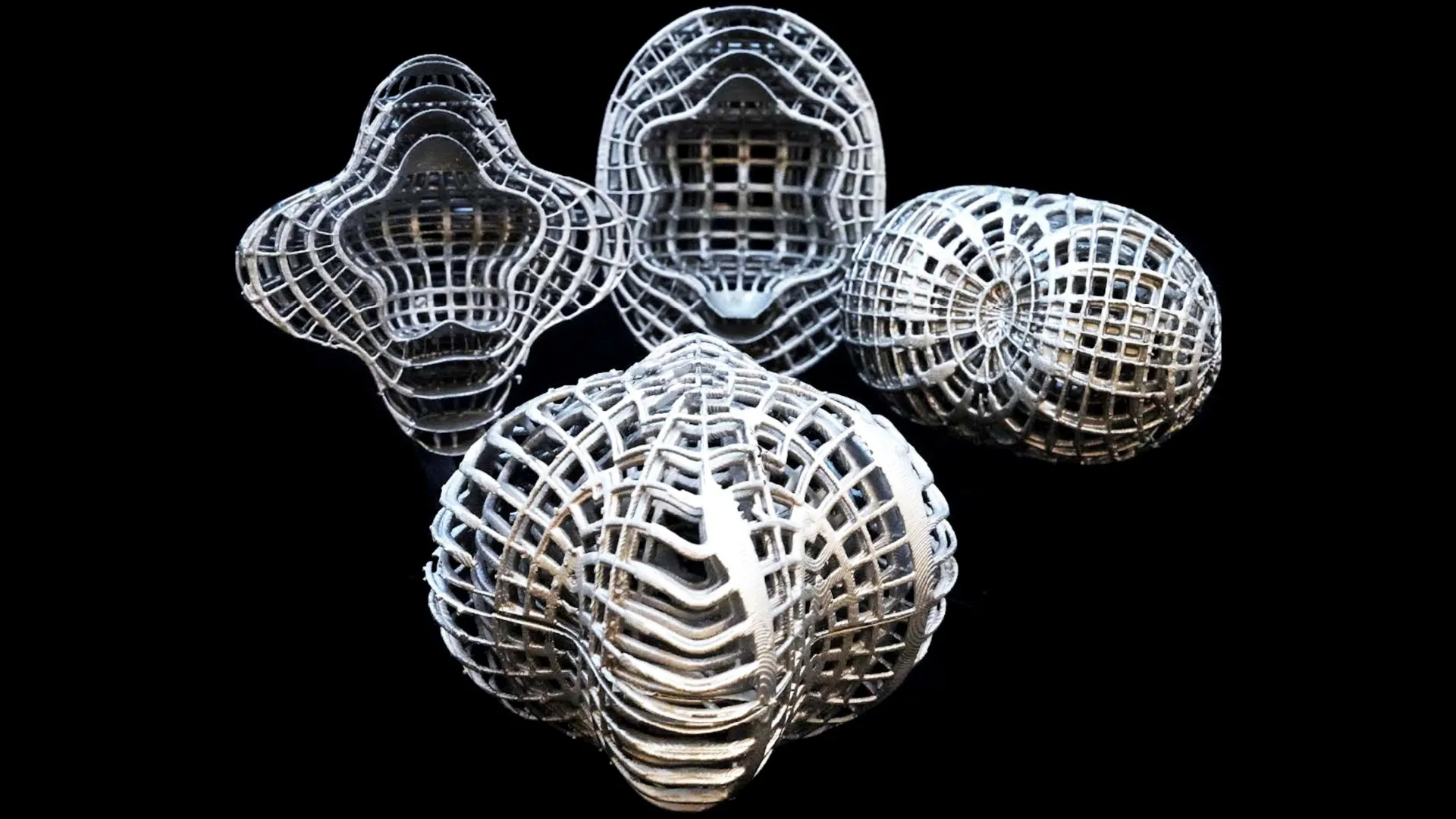
The breakthrough ultimately hinged on the creation of an entirely new class of lattice-based composite materials. Unlike traditional substances with uniform thermal properties, this newly engineered material features a sophisticated internal architecture that can be independently adjusted across all three spatial dimensions. This precise customizability allows researchers to meticulously calibrate how efficiently thermal energy traverses different zones of the cloak.
To transition from abstract mathematical models to a physical prototype, the team utilized cutting-edge 3D metal printing technology. They manufactured an intricate aluminum lattice framework designed to provide high-efficiency pathways for heat conduction. Subsequently, the remaining void spaces within the lattice were filled using a specialized rubber-like elastomer characterized by poor thermal conductivity.
This dual-material synergy grants the device extraordinary control over thermodynamic behavior. Rather than stopping heat, the aluminum pathways gently guide thermal energy around the central cavity, while the rubber matrix prevents the heat from bleeding inward. Consequently, the internal region remains thermally isolated and stable, even when exposed to severe temperature fluctuations on the exterior.
Rigorous Laboratory Testing and Infrared Verification
To empirically validate the effectiveness of the 3D thermal cloak, the research team established a controlled experimental environment. The device was strategically positioned between distinct hot and cold thermal reservoirs, generating a continuous, directional temperature gradient across the testing apparatus.
Using high-resolution infrared thermal imaging cameras, the scientists monitored the resulting surface temperature distribution to assess whether the cloak could successfully obscure the hidden region without creating detectable thermal distortions.
The empirical results confirmed the theoretical predictions. When observed through an infrared lens, the environment surrounding the cloak displayed a smooth, uninterrupted thermal gradient, making the concealed object appear entirely non-existent. Simultaneously, internal sensor data verified that the temperature within the protected cavity remained entirely uniform, effectively insulating the interior space from external thermal extremes.
Going a step further, the researchers tested the device’s geometric adaptability by concealing intricate, highly irregular three-dimensional forms, including detailed physical replicas of human heads. According to the research group, no prior experimental thermal cloaking device has successfully demonstrated this level of structural complexity combined with such high-fidelity thermal performance.
Industrial, Technological, and Defense Implications
The successful demonstration of a three-dimensional omnidirectional thermal cloak carries sweeping implications across multiple industrial sectors. As microprocessors and semiconductor components continue to shrink while increasing in computational density, thermal management has become one of the foremost engineering challenges in modern electronics.
The ability to dynamically steer heat around delicate components could enable engineers to design high-performance microchips that operate safely under extreme thermal loads. By preventing localized overheating and shielding sensitive circuitry from environmental thermal stress, this technology could substantially extend the operational lifespan of critical electronic hardware deployed in aerospace, automotive, and heavy industrial applications.
Beyond commercial electronics, the defense and security sectors have taken note of the technology’s potential for stealth applications. Because military vehicles, infrastructure, and personnel are frequently tracked via their infrared signatures, an adaptive thermal cloak capable of rendering complex three-dimensional forms invisible to thermal imaging systems could redefine modern camouflage. Furthermore, the technology could be utilized to protect vital military assets and sensitive payloads from extreme thermal environments encountered in combat or specialized operational theaters.
"Any field that needs precise control of heat or needs to protect something from being detected thermally could benefit from this work," Zhang noted, summarizing the broad utility of the research. "But we also see it more broadly: it’s about hiding and protecting information that is carried by heat."
Future Horizons: Active Thermal Manipulation and Heat-Generating Objects
Despite the monumental success of the current passive thermal cloak, the research team is already looking toward the next frontier of thermodynamic engineering. While the present device excels at protecting objects from external heat sources and hiding them from passive infrared detection, it operates under the assumption that the concealed object itself is thermally inert.
The next major technological hurdle is developing advanced cloaking systems capable of concealing objects that actively generate their own internal heat—such as operational engines, power generators, or active electronic circuits. Achieving this will require a transition from passive thermal redirection to active thermal manipulation.
Future iterations of the technology will need materials capable of dynamically concentrating, dispersing, or restructuring thermal energy in real-time as internal and external conditions fluctuate. Such capabilities would vastly expand the scope of transformation thermotics, bridging the gap between theoretical physics and practical, real-world thermodynamic control.
"We’ve shown that a true 3D omnidirectional thermal cloak is possible," Zhang concluded, reflecting on the milestone achieved. "The next step is to make cloaks that don’t just hide and protect, but also actively manipulate heat in useful ways."
The foundational research supporting this breakthrough was made possible through grants and funding provided by the National Science Foundation, the Villum Foundation, and the Air Force Office of Scientific Research. In addition to her role in the Department of Civil and Environmental Engineering, Professor Zhang maintains affiliations with the Department of Mechanical Science and Engineering and the National Center for Supercomputing Applications at the University of Illinois Urbana-Champaign, positioning her team at the nexus of multidisciplinary scientific innovation.