In a significant leap forward for agricultural technology, researchers at Tufts University in Massachusetts have unveiled a groundbreaking system of tiny, tattoo-like sensors and kirigami-inspired stem bands designed to monitor plant health with unprecedented intimacy and precision. This innovative approach, moving beyond traditional smart devices for humans, positions plants as the next frontier for wearable technology, offering a real-time "plant’s-eye view" of their physiological state. The development heralds a potential paradigm shift in how crops are managed, offering farmers crucial insights into hydration, growth dynamics, and responses to environmental stressors, ultimately aiming to fortify global food systems against the escalating challenges of climate change.
The Imperative for Advanced Crop Monitoring in a Changing World
Global agriculture stands at a critical juncture. A burgeoning world population, projected to reach nearly 10 billion by 2050, demands a substantial increase in food production, estimated at 50-70%. Simultaneously, the agricultural sector grapples with the severe impacts of climate change, which manifests through increasingly frequent and intense droughts, unpredictable rainfall patterns, soaring temperatures, and heightened pest and disease pressures. These environmental shifts contribute to significant crop yield losses, estimated to cost the global economy billions annually, and threaten food security in vulnerable regions worldwide. For instance, recent reports indicate that climate change has already reduced global agricultural productivity growth by 21% since 1961.
In response, farmers and agricultural scientists are increasingly turning to data-driven strategies embodied by precision agriculture. This methodology seeks to optimize resource allocation—water, fertilizers, pesticides—by tailoring interventions to the specific needs of individual plants or localized areas within a field. The ultimate goal is to maximize yields, minimize waste, reduce environmental impact, and enhance profitability. The global market for precision agriculture, valued at approximately $7 billion in 2022, is projected to reach over $20 billion by 2030, underscoring the urgency and investment in this domain.
Existing advancements in precision agriculture primarily leverage remote sensing technologies, including satellite imaging, aerial photography from drones, and ground-based sensors. These tools provide valuable macro-level data on crop health indicators such as canopy temperature, vegetation indices, soil moisture, and signs of pest damage or uneven growth across vast fields. While powerful for broad-acre management, these technologies often fall short in providing granular, real-time insights into the physiological state of individual plants. They detect stress after visible symptoms have manifested, potentially too late for optimal intervention. Furthermore, current leaf-level sensors, while offering more direct measurements, often struggle with the simultaneous tracking of multiple stressors and growth parameters, and frequently rely on external batteries, posing logistical and environmental challenges for large-scale deployment.
A New Chapter: Tufts’ Innovative Plant Wearables Emerge
The Tufts University team, led by senior researcher Sameer Sonkusale, has addressed these limitations with a novel, scalable plant health monitoring system that offers a truly "plant’s-eye view." Their innovation comprises two primary components: a flexible, tattoo-like sensor designed to adhere to the leaf surface, and a wrap-around sensor inspired by kirigami, the Japanese art of paper cutting, which encases the plant stem.
The ingenuity of this system lies not only in its ability to provide direct, localized data but also in its self-powering mechanism, a critical breakthrough that circumvents the need for external batteries. The leaf-based tattoo sensor acts as a miniature moisture electric generator. It incorporates a nanosheet membrane embedded with vanadium pentoxide crystals, strategically positioned between two graphene-coated layers. This sophisticated architecture allows the sensor to harvest power directly from ambient moisture, generating just over 0.1 microwatts per square centimeter. This minute yet sufficient power output enables continuous operation, delivering high sensitivity to both humidity and temperature. Through these measurements, the sensor can accurately estimate the vapor pressure deficit (VPD), a crucial indicator of plant transpiration and water stress, for over ten days, maintaining functionality until the onset of leaf senescence.
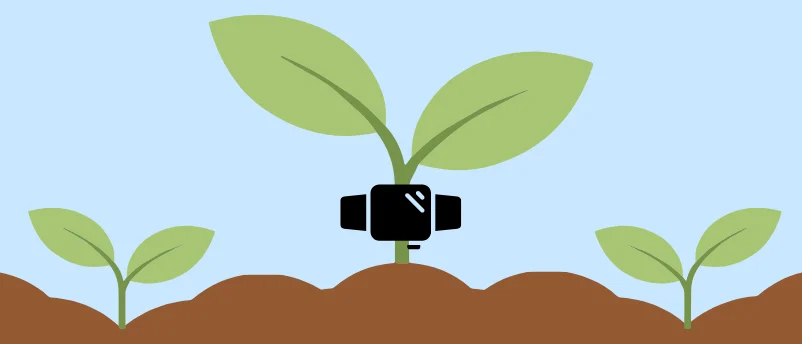
Complementing the leaf sensor is the stem-based wearable. Drawing inspiration from kirigami, known for its ability to create complex 3D structures from a single sheet of paper, the sensor’s design ensures exceptional flexibility and adaptability. It can comfortably wrap around a plant stem, accommodating its natural expansion and contraction as the plant grows. This sensor is coated in eutectogel, a material whose electrical resistance changes in response to physical deformation. As the stem’s diameter fluctuates—a direct indicator of water status and growth—the eutectogel’s resistance shifts, allowing for continuous and precise tracking of radial stem growth for more than 20 days. The synergy between these two distinct sensors provides a comprehensive, multi-parameter assessment of plant health, offering insights into both the immediate atmospheric conditions surrounding the leaf and the internal physiological processes reflected in stem dynamics.
Experimental Validation and Expanding Horizons
The efficacy of the Tufts system was rigorously tested on bell pepper plants, a common agricultural crop. During these trials, researchers successfully demonstrated the sensors’ ability to distinguish and detect two major forms of abiotic stress: water deficit and high salinity. The real-time data provided by the wearables allowed for early identification of these stressors, often before visible symptoms would typically manifest, thus enabling timely intervention. This capability is paramount for preventing irreversible damage and optimizing resource application.
Beyond the immediate applications of hydration and growth monitoring, the research team envisions a broader future for their platform. The technology holds immense promise for powering additional sensors capable of detecting a wider array of critical plant health indicators. This includes monitoring macronutrient levels (such as nitrogen, phosphorus, and potassium, essential for growth), phytohormone levels (like auxins, cytokinins, and abscisic acid, which regulate growth and stress responses), and biopotentials (electrical signals within the plant that can indicate rapid responses to stimuli or stress). Integrating these capabilities would provide an even more holistic understanding of plant physiology, moving beyond basic physical parameters to biochemical and electrophysiological insights. The self-powering nature of the existing system makes it an ideal candidate to extend its functionality to these more complex biochemical analyses, opening doors to truly comprehensive plant diagnostics.

Broader Implications: Transforming Agriculture and Food Security
The development from Tufts University carries profound implications for the future of agriculture, touching upon economic, environmental, and food security dimensions.
Economic Impact:
For farmers, the adoption of such a system could translate into significant economic benefits. By providing precise, real-time data on plant health, the technology enables highly targeted interventions. This means applying water only when and where it is needed, optimizing fertilizer use to prevent over-application and nutrient runoff, and deploying pesticides only when pest or pathogen threats are confirmed at an early stage. Such precision reduces input costs, which are a major expenditure for agricultural operations. Moreover, by mitigating stress and preventing yield losses, farmers can expect improved crop quality and higher overall yields, directly boosting profitability. The global market for smart agriculture, projected to reach $29.8 billion by 2027, suggests a robust demand for innovations that enhance efficiency and output, positioning this technology to capture a significant share.
Environmental Impact:
The environmental benefits are equally compelling. Water conservation is paramount in many agricultural regions facing increasing water scarcity. Precision irrigation, guided by plant-level hydration data, can drastically reduce water consumption, alleviating pressure on freshwater resources. Similarly, optimized fertilizer use minimizes nutrient leaching into groundwater and surface waters, thereby reducing agricultural pollution and protecting aquatic ecosystems. Reduced pesticide application not only safeguards beneficial insects and biodiversity but also lessens the chemical footprint on soil health and surrounding environments. These practices contribute directly to more sustainable agricultural systems, aligning with global efforts to combat climate change and preserve natural resources.
Food Security:
Ultimately, the ability to maintain optimal plant health and prevent widespread crop failures through early detection and intervention directly enhances global food security. By making agricultural systems more resilient to environmental stressors and climate variability, the technology can help ensure more stable and consistent food supplies, particularly in regions most vulnerable to climate shocks. This contributes to reducing hunger and malnutrition, fostering greater stability in food markets, and building a more robust global food system for a growing population.
Expert Perspectives and Future Outlook
The potential of this technology has garnered enthusiastic reactions from various stakeholders within the agricultural ecosystem. Dr. Eleanor Vance, an agronomist specializing in crop physiology at a leading agricultural research institute, noted, "The ability to gather real-time, individual plant data, especially on early stress indicators, fundamentally shifts our approach from reactive measures to proactive, preventive interventions. This is a game-changer for integrated crop management and could significantly improve yields and resource efficiency."
A farmer from California’s Central Valley, facing persistent drought conditions, commented, "Knowing exactly when and where my plants need water or nutrients could save me thousands of dollars and drastically improve my harvest. This kind of intimate knowledge is what we’ve been dreaming of."
Sameer Sonkusale’s vision underscores the transformative potential: "The larger promise is not merely that one plant can wear one sensor. It is that fields could one day contain networks of plant-level monitors, each reporting early signs of thirst, salt stress, disease or nutrient imbalance. Satellites and drones already give farmers a bird’s-eye view. Plant wearables could provide something more intimate: the plant’s-eye view." This distributed network of smart plants, continuously communicating their needs, represents the ultimate realization of precision agriculture.
Challenges and the Road Ahead
While the promise of Tufts’ plant wearables is immense, several challenges must be addressed for widespread adoption. The cost of manufacturing and deploying these sensors at a massive scale across millions of hectares of farmland will be a key factor. Researchers will need to focus on miniaturization, cost-effective materials, and efficient production processes. Furthermore, managing and interpreting the vast amounts of data generated by networks of these sensors will require sophisticated artificial intelligence and machine learning algorithms, as well as user-friendly interfaces for farmers. Integration with existing farm management systems and agricultural machinery will also be crucial for seamless implementation. Durability and longevity of the sensors in harsh agricultural environments, exposed to weather, pests, and machinery, will require further refinement and rigorous field testing across diverse crops and climates.
Looking ahead, future research will likely focus on expanding the range of detectable parameters, enhancing sensor robustness, and developing predictive analytics that can forecast potential issues before they become critical. The concept of integrating such "wearable" data with subterranean insights, perhaps using methods like ddPCR DNA tests to quantify root biomass and carbon storage directly from soil samples (as alluded to in related research), could provide an even more holistic understanding of plant and soil health. This convergence of above-ground and below-ground data would offer an unparalleled diagnostic capability for optimizing plant performance from root to leaf.
In conclusion, the plant wearables from Tufts University represent a significant stride towards a more intelligent, sustainable, and resilient agricultural future. By providing an unprecedented level of intimacy with plant physiology, this technology holds the potential to revolutionize crop management, enhance global food security, and empower farmers with the precise insights needed to thrive in an increasingly challenging world. The era of the "plant’s-eye view" is dawning, promising a healthier planet and more abundant harvests.