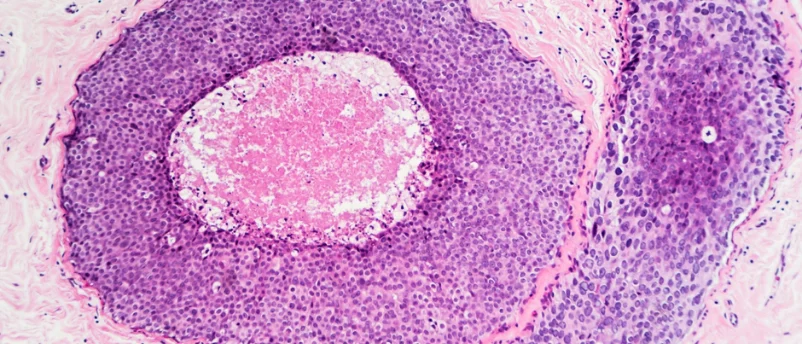
A collaborative research effort, leveraging extensively characterized biospecimens provided by AMSBIO, has yielded groundbreaking insights into the multifaceted role of Fibroblast Activation Protein (FAP) within the tumor microenvironment (TME), significantly advancing biomarker development for cancer immunotherapies. Scientists at Roche Pharma Research, based in Basel, Switzerland, conducted a large-scale immuno-oncology study, meticulously analyzing FAP expression across an unprecedented 23 distinct tumor types. This comprehensive investigation, employing both immunohistochemistry and RNA sequencing techniques, underscores the indispensable value of high-quality human tumor samples for robust translational immunology research, particularly in unraveling the intricate biology of the TME. The findings suggest FAP’s strong association with poorer clinical outcomes in several cancer types and highlight its potential as both a prognostic biomarker and a promising therapeutic target, paving the way for more refined and effective cancer treatments.
The Indispensable Role of Premium Biospecimens in Translational Research
The journey from initial scientific hypothesis to clinical application is often arduous, demanding rigorous data and high-fidelity biological materials. At the heart of this landmark Roche study was the critical contribution of AMSBIO’s premium biospecimens. The company, renowned globally for its extensively characterized human and animal biospecimens, supplied the essential tissue samples that enabled Roche scientists to conduct their comprehensive analysis of FAP expression. The success of such a large-scale investigation hinges entirely on the quality, consistency, and detailed characterization of the biological samples. Poorly preserved or inadequately documented biospecimens can introduce significant variability, confound results, and ultimately undermine the validity of scientific conclusions.
AMSBIO’s biorepository is a meticulously managed collection that encompasses a vast array of samples from healthy, tumor, and various other disease states, sourced from multiple donors. Each sample undergoes rigorous screening and is accompanied by comprehensive demographic metadata, ensuring traceability and relevance. Crucially, AMSBIO adheres to strict ethical compliance standards, a cornerstone of responsible biomedical research, alongside providing detailed pathology reports. This commitment to quality, ethics, and exhaustive documentation transforms raw biological material into invaluable scientific assets, enabling researchers like those at Roche to confidently pursue complex investigations into molecular pathways and disease mechanisms. As Philipp Boder, business development manager at AMSBIO, aptly stated, "By enabling immunohistochemistry and RNA-based analyses at scale, our well-characterized biospecimens support research that advances understanding of immune-modulating targets within the tumor microenvironment." This statement encapsulates the profound impact that a reliable biospecimen provider can have on accelerating scientific discovery and translational medicine.
Roche’s Pursuit of Immuno-Oncology Breakthroughs
Roche Pharma Research, a division of the global pharmaceutical and diagnostics giant, has long been at the forefront of cancer research, particularly in the burgeoning field of immuno-oncology. Their commitment to innovation drives efforts to develop therapies that harness the body’s own immune system to fight cancer. The present study exemplifies Roche’s strategic focus on identifying novel biomarkers and therapeutic targets within the complex tumor ecosystem. Their decision to undertake a pan-cancer analysis of FAP reflects a growing understanding that cancer is not a monolithic disease, but rather a collection of diverse conditions often sharing common molecular pathways. By investigating FAP across 23 tumor types, Roche aimed to uncover broad patterns of expression and prognostic significance, thereby maximizing the potential applicability of any FAP-targeted therapeutic strategies.
The methodological rigor employed by the Roche team, combining both immunohistochemistry (IHC) and RNA sequencing, provided a multi-dimensional view of FAP expression. IHC, a technique that visualizes specific proteins in tissue sections, offers crucial spatial information about FAP distribution within the tumor and its surrounding stroma. RNA sequencing, on the other hand, provides a quantitative assessment of gene expression, revealing the transcriptional activity of FAP. The synergy of these two powerful techniques allows for a comprehensive understanding of FAP’s presence and activity at both the protein and genetic levels, enhancing the reliability and depth of the study’s findings. This dual-pronged approach is a hallmark of sophisticated translational research, ensuring that insights gained are robust and clinically relevant.
Unpacking Fibroblast Activation Protein (FAP): A Key Player in the Tumor Microenvironment
To fully appreciate the significance of Roche’s findings, it is essential to understand Fibroblast Activation Protein (FAP) and its role in cancer biology. FAP is a serine protease that belongs to the dipeptidyl peptidase IV family. In normal adult tissues, FAP expression is typically low or absent, primarily restricted to specific cells involved in wound healing, tissue remodeling, and certain pathological conditions like fibrosis. However, in the context of cancer, FAP is dramatically upregulated and widely expressed by cancer-associated fibroblasts (CAFs) within the tumor stroma, making it an attractive target due to its selective overexpression in pathological settings.
The tumor microenvironment (TME) is a complex ecosystem comprising cancer cells, immune cells, endothelial cells, pericytes, and various stromal cells, predominantly fibroblasts. CAFs, which express FAP, are critical architects of the TME, playing a multifaceted and often detrimental role in tumor progression. They secrete a plethora of growth factors, cytokines, chemokines, and extracellular matrix (ECM) components that collectively contribute to tumor growth, angiogenesis (new blood vessel formation), metastasis, and immunosuppression. FAP-expressing CAFs remodel the ECM, creating a stiff, desmoplastic environment that physically impedes immune cell infiltration and drug delivery, while simultaneously promoting tumor cell invasion and survival. Furthermore, CAFs can directly suppress anti-tumor immune responses by recruiting regulatory T cells (Tregs) and myeloid-derived suppressor cells (MDSCs), which dampen the activity of cytotoxic T lymphocytes. Given this intricate interplay, FAP stands out as a promising target for therapeutic intervention, as its inhibition or elimination could potentially disrupt multiple pro-tumorigenic pathways within the TME, thereby sensitizing tumors to existing therapies or acting as a standalone treatment.
Key Findings: FAP’s Pan-Cancer Expression and Prognostic Significance
The Roche study’s findings provided critical insights into FAP’s expression patterns and clinical relevance across a broad spectrum of malignancies. The research confirmed that elevated FAP expression was most frequently observed in several aggressive cancer types, including breast, pancreatic, oesophageal, and lung cancers. This finding aligns with previous smaller-scale studies and reinforces the idea that FAP is a common feature of the TME in many solid tumors, particularly those characterized by a prominent stromal component. Conversely, FAP expression was found to be low or entirely absent in most normal tissues, emphatically highlighting its tumor-associated profile and minimizing concerns about off-target toxicity if FAP were to be therapeutically targeted.
Beyond mere presence, the study delved into the prognostic implications of FAP expression. By analyzing 29 clinical cohorts from 12 diverse trials, encompassing both immunotherapy and chemotherapy studies, the researchers uncovered a significant correlation: higher FAP expression was frequently associated with poorer clinical outcomes. This association manifested as reduced overall survival, progression-free survival, or diminished response rates to treatment. While the effects varied by specific cancer type and the context of treatment, this overarching trend suggests that FAP is not merely a bystander but an active participant in driving aggressive tumor behavior and resistance to therapy. For instance, in pancreatic cancer, a notoriously difficult-to-treat malignancy characterized by an extremely dense and immunosuppressive stroma, high FAP expression has long been implicated in poor prognosis. The Roche study’s broad analysis strengthens this link and extends its relevance to other high-burden cancers like lung and breast cancer. Understanding this prognostic value is crucial for patient stratification, where FAP levels could potentially be used to identify patients who might benefit most from FAP-targeted therapies or require more aggressive treatment regimens.
FAP: A Multifaceted Role and a Promising Therapeutic Target
The authors of the study concluded that FAP plays a multifaceted role in tumor biology and influences the response to immunotherapy, reinforcing its considerable potential as both a biomarker and a therapeutic target within the TME. This conclusion opens several avenues for future research and clinical development.
From a therapeutic perspective, targeting FAP offers several compelling strategies. One approach involves the direct inhibition of FAP’s enzymatic activity using small molecule inhibitors. These inhibitors could potentially disrupt the ECM remodeling capabilities of CAFs, making the tumor more accessible to immune cells and chemotherapy agents. Another innovative strategy involves FAP-targeted immunotherapies. This could include FAP-directed antibodies, which can deliver cytotoxic payloads directly to FAP-expressing CAFs, or FAP-directed chimeric antigen receptor (CAR) T-cells, engineered to specifically recognize and eliminate these stromal cells. By depleting or reprogramming CAFs, these therapies aim to normalize the TME, reduce immunosuppression, and enhance the efficacy of existing treatments, such as immune checkpoint inhibitors (e.g., PD-1/PD-L1 inhibitors). For instance, preclinical studies have shown that FAP-targeted CAR T-cells can significantly reduce tumor growth and enhance the efficacy of checkpoint blockade in various mouse models. The Roche study provides clinical context for such strategies, suggesting which cancer types might be most responsive.
As a biomarker, FAP holds significant promise for precision oncology. Its expression levels could potentially serve as:
- Prognostic Marker: To predict disease aggressiveness and patient outcome, as demonstrated by the study’s findings linking high FAP to poorer prognosis.
- Predictive Marker: To identify patients most likely to respond to FAP-targeted therapies, or conversely, those who might experience resistance to standard immunotherapies due to high FAP-driven immunosuppression.
- Monitoring Marker: To track treatment response or disease recurrence. Changes in FAP expression levels during therapy could indicate whether a treatment is effectively modulating the TME.
The variability in FAP’s impact across different cancer types and treatment contexts, as highlighted by the study, underscores the need for continued research to precisely define its role in each specific clinical scenario. This nuance is critical for developing highly targeted and effective therapies.
Broader Implications for Cancer Research and Drug Development
The findings from this Roche study, facilitated by AMSBIO’s high-quality biospecimens, represent a significant stride forward in our understanding of cancer immunology and the critical role of the tumor microenvironment. For Roche, these insights are invaluable, potentially guiding their extensive oncology pipeline towards novel FAP-targeting agents or combination therapies that can enhance the efficacy of their existing portfolio. The identification of FAP as a robust pan-cancer prognostic marker also aids in refining patient stratification strategies for ongoing and future clinical trials.
From a broader scientific perspective, this study reinforces several key tenets of modern cancer research:
- The centrality of the TME: It is no longer sufficient to focus solely on the cancer cell; the surrounding microenvironment is an equally, if not more, crucial determinant of tumor progression and therapeutic response.
- The power of large-scale, multi-modal analysis: Combining diverse techniques like IHC and RNA sequencing across a wide range of tumor types provides a comprehensive and generalizable understanding of complex biological phenomena.
- The critical importance of high-quality biospecimens: Without ethically sourced, meticulously characterized, and properly preserved human tissue samples, such extensive and reliable translational research would simply not be possible. This study serves as a testament to the essential service provided by biorepositories like AMSBIO.
Looking ahead, this research will undoubtedly stimulate further investigations. Future studies will likely focus on:
- Mechanistic Elucidation: Delving deeper into the precise molecular mechanisms by which FAP-expressing CAFs exert their pro-tumorigenic and immunosuppressive effects in different cancer types.
- Combination Therapies: Exploring the synergistic potential of FAP-targeted therapies when combined with chemotherapy, radiation, or existing immunotherapies.
- Clinical Validation: Conducting prospective clinical trials to validate FAP as a predictive and prognostic biomarker and to assess the efficacy and safety of FAP-targeting agents in human patients.
AMSBIO’s Comprehensive Support for the Life Sciences Ecosystem
Beyond its crucial role in providing biospecimens for this specific study, AMSBIO stands as a pivotal partner across the broader life sciences landscape. As part of the Europa Biosite group, AMSBIO is a leading life sciences company supporting drug discovery, translational research, and cell and gene therapy across Europe, North America, and wider international markets. The company’s in-depth expertise spans advanced cell culture, 3D cell models, and cryopreservation technologies, positioning it uniquely to assist researchers from early discovery stages through to clinical and GMP-ready applications.
AMSBIO’s extensive portfolio of innovative products and services supports multiple stages of the research pipeline. This includes target discovery, assay development, and disease modeling, extending to cutting-edge stem cell and organoid-based research. Key solutions offered by AMSBIO include an integrated stem cell platform combining StemFit™ media, iMatrix™ recombinant laminins, and CELLBANKER™ cryopreservation technology. Additionally, AMSBIO provides a wide array of extracellular matrix technologies, glycobiology tools, kits and assays, and a comprehensive range of custom services, including viral delivery solutions. Drawing on extensive GMP expertise and its comprehensive human and animal biorepository, AMSBIO is internationally recognized for delivering high-quality, application-ready products and services. The company has a consistent record of close scientific collaboration with partners in academic, biotech, and pharmaceutical markets, facilitating the translation of innovation from the laboratory bench to the patient’s bedside. This broad spectrum of offerings ensures that AMSBIO remains an indispensable resource for the scientific community, continuously enabling breakthroughs like the one achieved by Roche Pharma Research.
In conclusion, the collaborative effort between AMSBIO and Roche Pharma Research has significantly advanced our understanding of Fibroblast Activation Protein’s critical role in cancer. By leveraging high-quality biospecimens, the study has firmly established FAP as a compelling biomarker and therapeutic target within the tumor microenvironment, offering renewed hope for the development of more effective and personalized cancer immunotherapies. This research not only underscores the scientific prowess of Roche but also highlights the foundational importance of specialized providers like AMSBIO in fueling the engine of biomedical innovation.