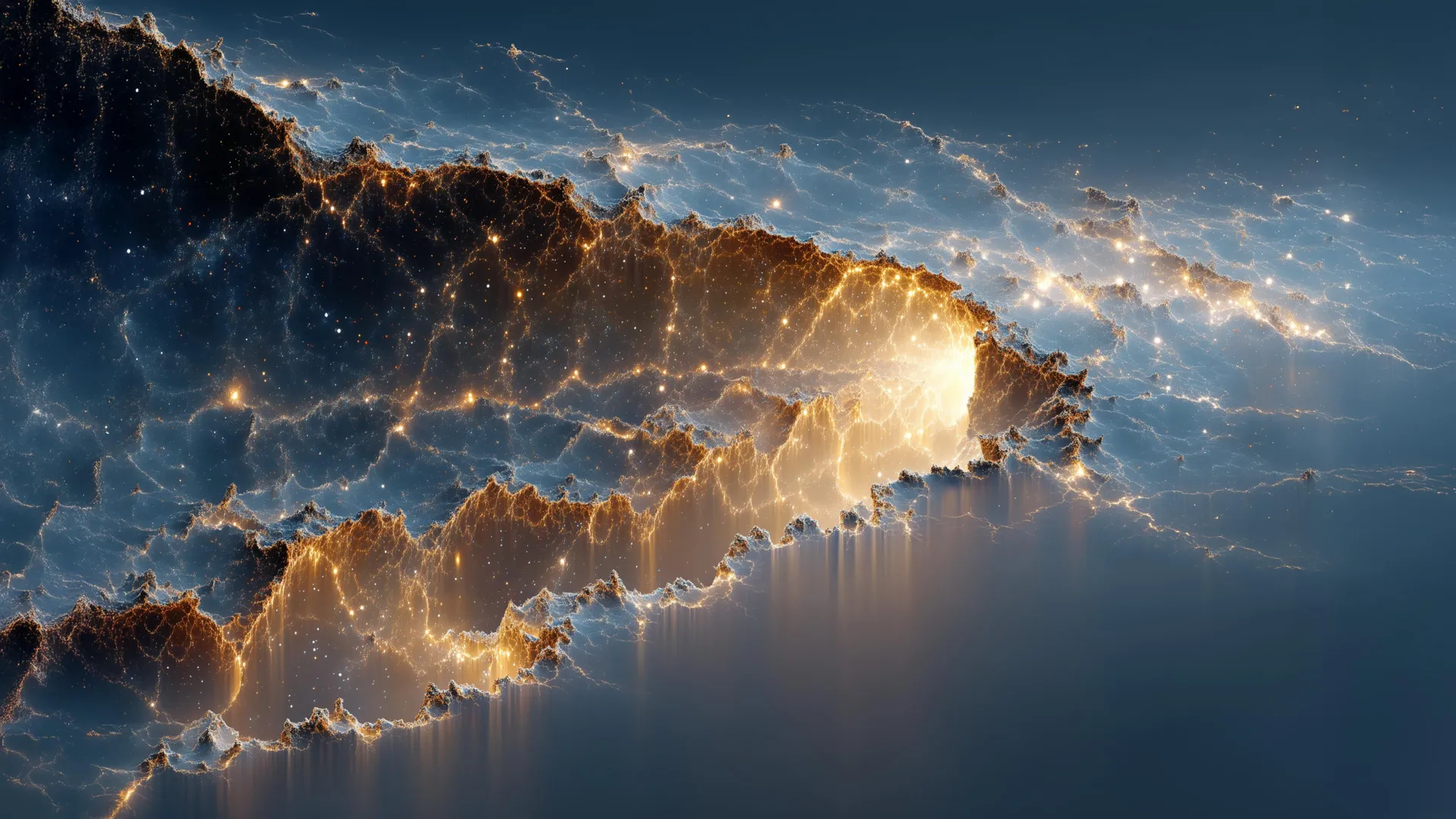
In the vast expanse of the cosmos, the regions that appear most empty are increasingly being recognized as the most influential drivers of the universe’s evolution. While traditional astronomy has long focused on the luminous matter of stars, galaxies, and nebulae, modern cosmology is shifting its gaze toward the "cosmic voids"—enormous, cavernous reaches of space that contain almost no matter. To the casual observer, these voids represent a state of absolute nothingness. However, through the lens of quantum field theory and general relativity, these regions are revealed to be teeming with activity, serving as the primary laboratories for the mysterious force known as dark energy.
To understand the nature of a cosmic void, one must perform a mental experiment of total extraction. If an observer were to remove every atom of ordinary matter, every passing neutrino, every particle of dark matter, and all traces of cosmic radiation from a void, the remaining space would still possess physical properties. This realization challenges the classical intuition that space is merely a passive stage upon which matter performs. Instead, the vacuum of space-time is a fundamental substance in its own right, characterized by quantum fluctuations and an inherent energy density that dictates the fate of the entire universe.
The Quantum Foundations of Empty Space
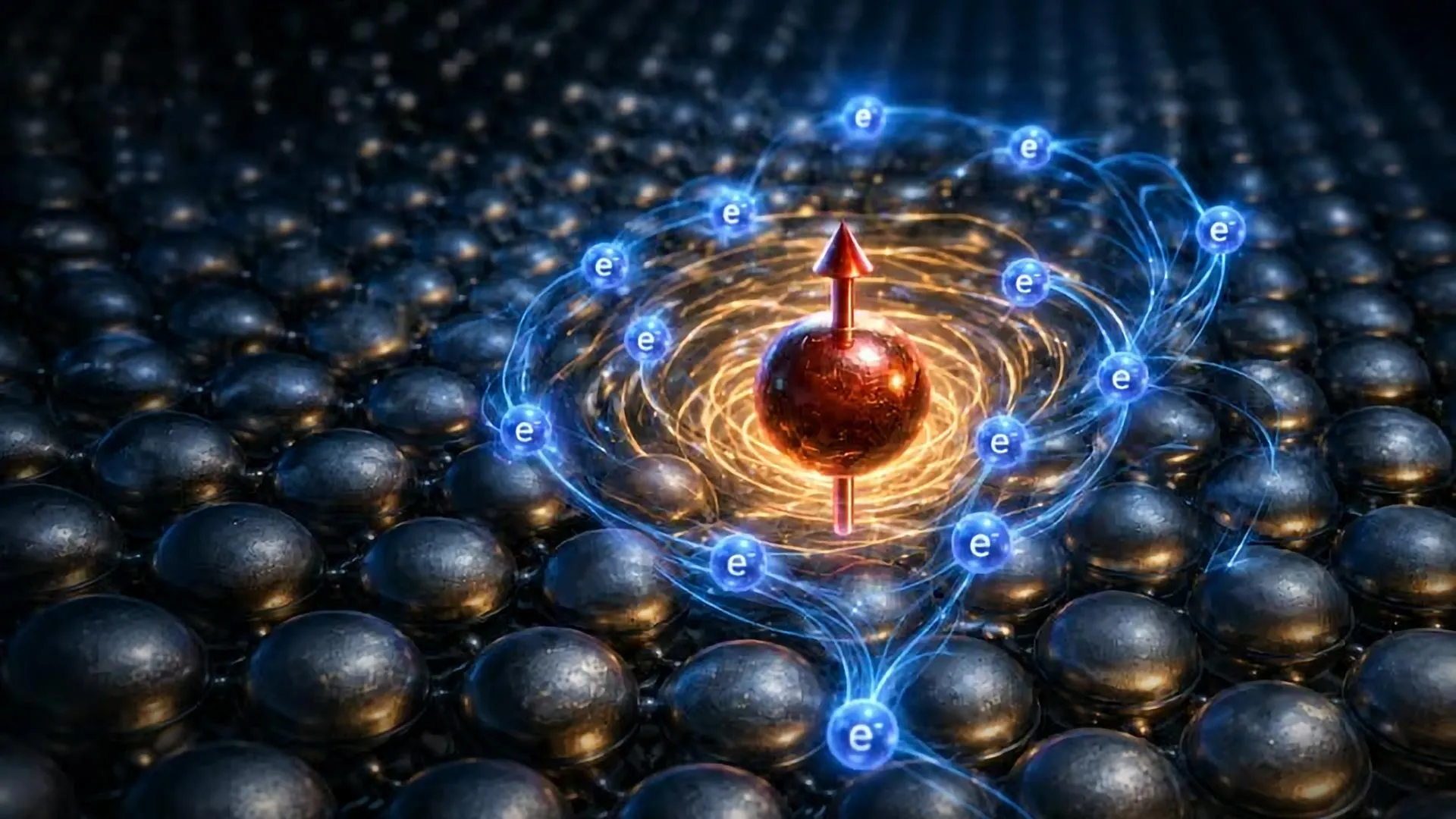
The misconception that a vacuum is "nothing" stems from a pre-quantum understanding of physics. In the contemporary framework of Quantum Field Theory (QFT), the universe is not composed of isolated particles traveling through a void. Rather, the universe is filled with overlapping quantum fields that permeate every cubic centimeter of existence. Every fundamental particle known to science—including electrons, quarks, and photons—is interpreted as an "excitation" or a localized vibration within its respective field.
For example, an electron is not a discrete point-like object in the traditional sense; it is a ripple in the universal electron field. When the energy in a specific region of that field reaches a certain threshold, a particle manifests. Even when no particles are present, the fields themselves remain. These fields have existed since the Big Bang and provide the underlying fabric of reality. Consequently, even the most desolate cosmic void is saturated with these fields, maintaining a baseline level of activity that physicists call "vacuum energy."
The existence of this energy is mandated by the Heisenberg Uncertainty Principle, a cornerstone of quantum mechanics. The principle posits that it is impossible to know certain pairs of physical properties, such as energy and time, with absolute precision. Therefore, the energy level of a field cannot remain at a static zero; it must fluctuate. These fluctuations create a non-zero "zero-point energy," meaning that the vacuum itself possesses a measurable density.
The Role of Dark Energy in Universal Expansion
The measurable manifestation of vacuum energy is what cosmologists identify as dark energy. While dark energy remains one of the most significant mysteries in modern science, its effects are well-documented. It acts as a repulsive force, or a negative pressure, that counteracts the attractive force of gravity on a cosmological scale.
In regions of high matter density, such as within the Milky Way or the solar system, the gravitational pull of atoms, stars, and dark matter is overwhelming. In these environments, the influence of dark energy is effectively invisible. This explains why the expansion of the universe does not affect the size of the Earth, the orbit of the Moon, or the chemical bonds within a human body. On these local scales, the "clumping" of matter creates a stable gravitational environment that masks the subtle pressure of the vacuum.
However, in cosmic voids, the situation is reversed. These regions, which can span hundreds of millions of light-years in diameter, contain so little matter that gravity becomes negligible. Without the counteracting force of mass, dark energy becomes the dominant physical influence. It is within these voids that the accelerated expansion of the universe is most pronounced. As dark energy exerts pressure outward, the voids themselves expand, pushing the surrounding walls of the "cosmic web" further apart.
A Chronology of Discovery: From the Cosmological Constant to Acceleration
The scientific journey toward understanding the energy of the vacuum began in 1917, when Albert Einstein introduced the "cosmological constant" ($Lambda$) into his equations of general relativity. At the time, Einstein believed the universe was static, and he added the constant to provide a repulsive force that would prevent gravity from collapsing the universe into a single point. He later famously discarded the idea, calling it his "greatest blunder," after Edwin Hubble’s 1929 observations proved that the universe was expanding.
The concept of vacuum energy remained a theoretical curiosity until the late 20th century. A pivotal turning point occurred in 1998, when two independent teams of astronomers—the Supernova Cosmology Project and the High-Z Supernova Search Team—observed distant Type Ia supernovae. Their data revealed that these stellar explosions were fainter than expected, indicating they were further away than a steadily expanding universe would allow. This led to the Nobel Prize-winning conclusion that the expansion of the universe is not slowing down under the weight of gravity, but is instead accelerating.
This acceleration is attributed to the dark energy residing within the vacuum of space. Subsequent missions, such as the Wilkinson Microwave Anisotropy Probe (WMAP) and the Planck satellite, have refined our understanding of the universe’s composition. Current estimates suggest that dark energy makes up approximately 68.3% of the total energy-matter density of the universe, while dark matter accounts for 26.8% and ordinary matter (atoms) comprises a mere 4.9%.
Supporting Data: The Scale and Impact of Cosmic Voids
Cosmic voids are not rare anomalies; they are the primary components of the universe’s volume. The large-scale structure of the cosmos resembles a foam-like network, often called the "cosmic web." In this structure, galaxies and galaxy clusters are concentrated along thin filaments and at the intersections of these filaments (nodes). The vast gaps between these filaments are the voids.
One of the most famous examples is the Boötes Void, sometimes called the "Great Nothing." Spanning nearly 330 million light-years in diameter, it contains significantly fewer galaxies than expected for a region of its size. If the Milky Way were located in the center of the Boötes Void, humanity might not have discovered the existence of other galaxies until the development of advanced telescopic technology in the 1960s, as the nearest neighbors would be millions of light-years further away than they are in our current celestial neighborhood.
Data from the Sloan Digital Sky Survey (SDSS) has allowed astronomers to map these voids in three dimensions. These maps show that voids are growing larger over time. As dark energy pushes the boundaries of a void, the matter on the edges—the galaxies and filaments—is pulled away. This creates a feedback loop where the increasing volume of empty space leads to a greater total amount of dark energy, which in turn drives even faster expansion.
Official Responses and Current Scientific Inquiry
The astrophysical community remains divided on the exact nature of the vacuum energy found in voids. Dr. Adam Riess, one of the co-discoverers of the universe’s acceleration, has frequently highlighted the "Hubble Tension"—a discrepancy between the rate of expansion measured in the local universe and the rate predicted by observations of the early universe (the Cosmic Microwave Background).
"The fact that the universe is expanding faster than our best models predict suggests that there may be something fundamentally missing in our understanding of dark energy or the physics of the vacuum," Riess has noted in various scientific fora.
To resolve these questions, space agencies have launched dedicated missions. The European Space Agency’s (ESA) Euclid mission, launched in 2023, is currently mapping the geometry of the dark universe. By observing the shapes and distributions of billions of galaxies across 10 billion years of cosmic history, Euclid aims to measure how the expansion of cosmic voids has evolved. Similarly, NASA’s upcoming Nancy Grace Roman Space Telescope will provide high-resolution data to determine whether dark energy is a constant property of the vacuum (as Einstein’s cosmological constant suggests) or a dynamic field that changes over time.
Broader Impact: The Dissolution of the Cosmic Web
The dominance of dark energy within cosmic voids has profound implications for the long-term future of the universe. Current models suggest that as voids continue to expand and merge, the cosmic web will slowly disintegrate. The gravitational bonds that hold large-scale structures together will eventually be overcome by the repulsive pressure of the vacuum.
In approximately 10 to 20 billion years, the accelerated expansion will have pushed neighboring galaxy clusters so far apart that they will disappear beyond the "cosmological horizon." This means that light from other clusters will no longer be able to reach our local group. Eventually, the universe will enter an era of extreme isolation, where every gravitationally bound system becomes a lonely island in an infinite, dark sea of expanding vacuum.
This "Big Freeze" or "Heat Death" scenario is the logical conclusion of a universe dominated by the energy of the void. It underscores the irony of modern cosmology: the very regions of "nothingness" that seem most irrelevant to daily life are the engines driving the universe toward its eventual end.
Analysis of Implications
The study of cosmic voids forces a reassessment of the relationship between matter and space. For centuries, matter was considered the primary actor in the universe, with space serving as a secondary, empty container. The realization that voids are filled with quantum fields and dark energy suggests that the vacuum is the primary actor, and matter is merely a localized perturbation within it.
Furthermore, the behavior of voids provides a crucial bridge between quantum mechanics (the physics of the very small) and general relativity (the physics of the very large). The vacuum energy that dictates the expansion of a 300-million-light-year void is the same energy generated by subatomic quantum fluctuations. Solving the mystery of the cosmic void may therefore be the key to the "Theory of Everything"—a unified framework that joins the two disparate pillars of modern physics.
In conclusion, cosmic voids are far from the desolate wastelands they appear to be. They are the reservoirs of the universe’s most potent energy and the architects of its future structure. While matter provides the light by which we observe the cosmos, it is the invisible, energetic vacuum of the voids that determines the ultimate fate of the celestial tapestry. Whether in the heart of a galaxy or the center of the deepest void, the universe is never truly empty; it is a vibrant, expanding medium shaped by the fundamental laws of quantum existence.