The global manufacturing landscape is currently witnessing a significant shift in the production of high-performance materials, spearheaded by a breakthrough in the fabrication of Tungsten Carbide-Cobalt (WC-Co). A collaborative research team from Hiroshima University’s Graduate School of Advanced Science and Engineering and the Mitsubishi Materials Hardmetal Corporation has successfully demonstrated a novel additive manufacturing technique that utilizes hot-wire laser irradiation to produce cemented carbides. This development, recently detailed in the International Journal of Refractory Metals and Hard Materials, addresses long-standing challenges regarding material waste, production costs, and the geometric limitations of traditional metallurgy. By focusing on a "softening" rather than a full-melting approach, the researchers have managed to preserve the extreme hardness of WC-Co while opening the door for more sustainable industrial practices.
The Industrial Significance of Cemented Carbides
Tungsten carbide-cobalt, often referred to in industry circles as "cemented carbide" or "widia" (from the German wie Diamant, meaning "like diamond"), serves as the backbone of heavy industry. Its unique composition—hard tungsten carbide particles "cemented" together by a metallic cobalt binder—results in a material that possesses a rare combination of high compressive strength, extreme hardness, and remarkable wear resistance. These properties make it indispensable for the manufacturing of cutting tools, mining drill bits, armor-piercing ammunition, and various wear-resistant components in the aerospace and automotive sectors.
Despite its utility, the very characteristics that make WC-Co desirable also make it notoriously difficult to process. With a melting point for tungsten carbide exceeding 2,800 degrees Celsius, traditional casting is impossible. Consequently, the industry has relied almost exclusively on powder metallurgy for decades. While effective at producing high-quality parts, powder metallurgy is a multi-step, energy-intensive process that involves pressing metal powders into a "green" shape and then sintering them in a furnace at temperatures just below the melting point of the binder. This process often results in significant material loss during post-processing and limits the complexity of the shapes that can be produced.
Challenges of Traditional Production and the Economic Context
The drive toward more efficient production methods is not merely a matter of technical curiosity but an economic necessity. Tungsten and cobalt are both classified as critical raw materials. Tungsten is primarily sourced from a limited number of geographical locations, leading to price volatility and supply chain vulnerabilities. Cobalt, meanwhile, is subject to intense scrutiny due to ethical concerns surrounding its mining and its high demand in the battery sector for electric vehicles.
Traditional subtractive manufacturing—where a larger block of cemented carbide is ground down to the desired shape—is exceptionally wasteful. Because WC-Co is so hard, the grinding process is slow, requires expensive diamond-tipped tools, and generates significant amounts of scrap material that is difficult to recycle into high-grade carbide. The research led by Assistant Professor Keita Marumoto at Hiroshima University targets these specific pain points. By utilizing additive manufacturing (AM), or 3D printing, the team aims to deposit material only where it is strictly required, potentially reducing raw material consumption by a significant margin.
Technical Breakdown: Hot-Wire Laser Irradiation
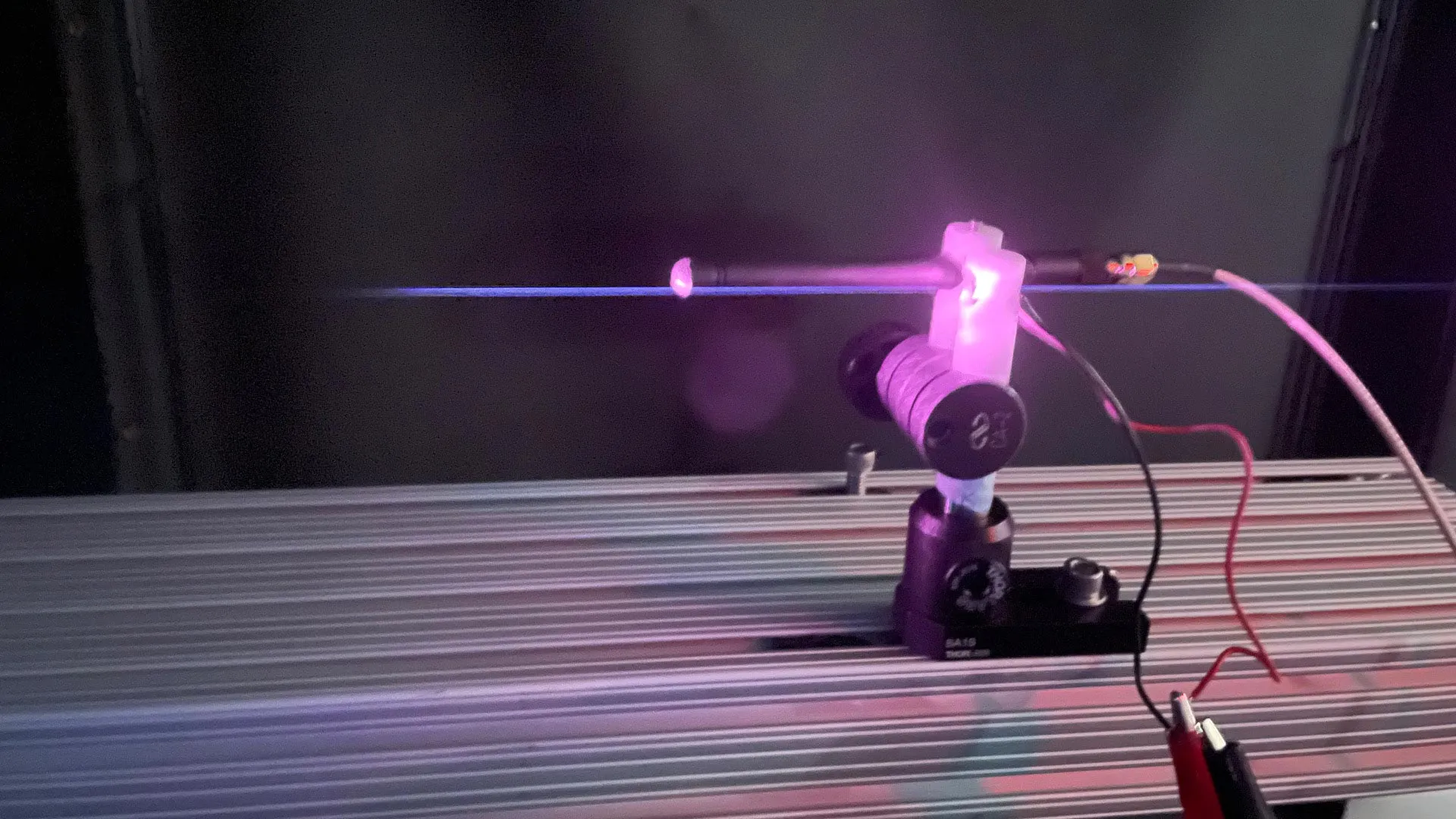
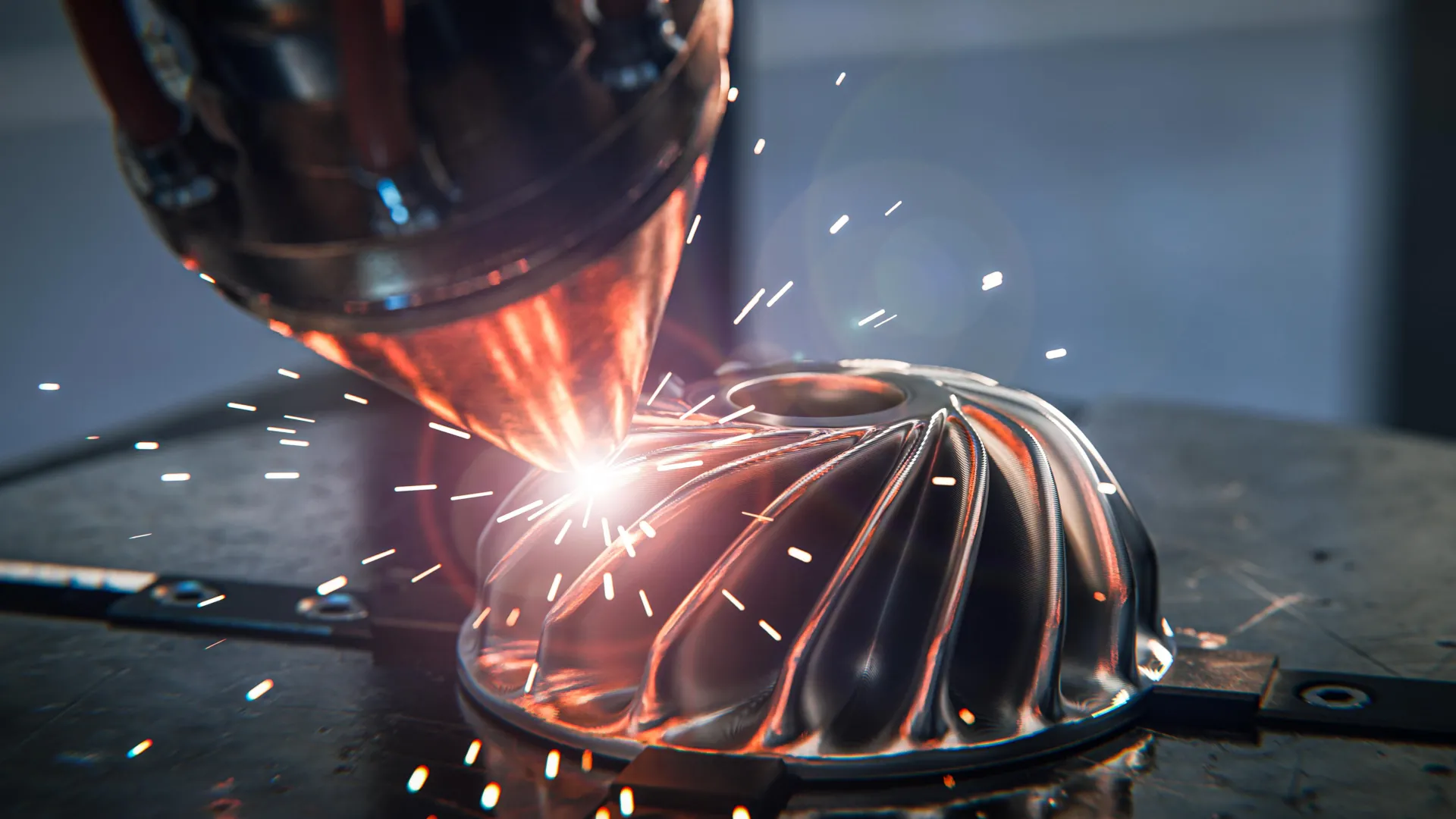
The core of the new methodology lies in the integration of hot-wire laser irradiation, a technique more commonly associated with high-efficiency welding. In this process, a laser beam serves as the primary energy source, while a filler wire—in this case, a cemented carbide rod—is pre-heated by an electric current before it enters the laser’s path.
This dual-energy approach allows for a much higher deposition rate compared to standard laser powder bed fusion (LPBF) or other common 3D printing methods. By pre-heating the wire, the laser energy required to incorporate the material into the build is reduced, allowing for a more controlled thermal environment. The researchers explored two distinct fabrication strategies to determine the optimal delivery of energy and material:
- The Rod-Leading Strategy: In this configuration, the cemented carbide rod moves ahead of the laser. The laser beam is directed at the top of the rod, softening the material as it is pressed onto the substrate.
- The Laser-Leading Strategy: Here, the laser precedes the rod, directing energy into the interface between the base material (iron) and the incoming carbide rod. This method focuses on preparing the surface to receive the softened filler material.
The fundamental innovation in both strategies is the "softening" paradigm. Unlike traditional metal 3D printing, which typically melts the feedstock entirely, this method heats the WC-Co until it is malleable. This prevents the "boiling off" of the cobalt binder and reduces the risk of decarburization—a common failure in carbide processing where the carbon leaves the tungsten, resulting in a more brittle and less durable material.
Achieving Structural Integrity and 1400 HV Hardness
The primary benchmark for success in this study was the Vickers hardness (HV) of the printed material. For a cemented carbide to be industrially viable for cutting tools, it must typically exceed a hardness of 1300 to 1400 HV. The researchers reported that their laser-based additive manufacturing strategy successfully achieved hardness levels above 1400 HV, placing the printed material on par with those produced via traditional sintering.
However, the path to defect-free fabrication was not without hurdles. The "Rod-Leading" technique, while efficient, showed a tendency for the tungsten carbide to decompose near the top of the build, leading to microscopic defects and structural inconsistencies. The "Laser-Leading" method, conversely, occasionally struggled to maintain the uniform hardness required throughout the entire structure.
To solve these issues, the team introduced a nickel alloy-based intermediate layer between the iron substrate and the cemented carbide. This layer acted as a thermal and chemical buffer, improving the "wettability" of the carbide and preventing the formation of brittle intermetallic phases that often occur when joining dissimilar metals. Furthermore, by strictly controlling the temperature to stay above the melting point of cobalt (approximately 1,495°C) but below the temperatures that trigger rapid grain growth, the researchers were able to maintain a fine-grained microstructure, which is essential for high hardness.
Chronology of the Research and Key Milestones
The development of this technique followed a rigorous experimental timeline that spanned several years of collaboration between academia and industry.
- Phase 1: Conceptualization and Simulation. The team identified the inefficiencies in Mitsubishi Materials’ existing tool-making processes and sought to apply Hiroshima University’s expertise in laser processing to solve the problem.
- Phase 2: Initial Testing. Early experiments focused on whether a solid carbide rod could even be manipulated using hot-wire technology. These tests established the basic parameters for laser intensity and wire heating.
- Phase 3: Strategy Comparison. The researchers conducted side-by-side comparisons of the rod-leading and laser-leading configurations, utilizing electron microscopy and Vickers hardness testing to evaluate the results.
- Phase 4: Optimization via Intermediate Layers. Recognizing the issues with cracking and decomposition, the team introduced the nickel-based buffer layer, which proved to be the turning point for achieving industrial-grade consistency.
- Phase 5: Publication and Peer Review. The findings were finalized and submitted to the International Journal of Refractory Metals and Hard Materials, with the formal print publication scheduled for April 2026.
Official Responses and Industrial Implications
The implications of this research have been met with optimism by both the scientific community and industrial stakeholders. Assistant Professor Keita Marumoto emphasized the economic and environmental benefits of the breakthrough. "By using additive manufacturing, cemented carbide can be deposited only where it is needed, thereby reducing material usage highly desirable," Marumoto stated. He further noted that the "softening" approach is a "novel" concept that could revolutionize how we handle other "un-meltable" or difficult-to-process high-performance alloys.
Industry experts from Mitsubishi Materials Hardmetal Corporation, including Takashi Abe and Akio Nishiyama, who contributed to the study, suggest that this technology could eventually lead to "on-demand" manufacturing of custom cutting tools. In current industrial settings, if a specialized tool breaks, a replacement must be sintered and ground, a process that can take weeks. With this AM technique, a new edge could potentially be printed onto a tool shank in a matter of hours.
From a fact-based analysis perspective, the implications extend to:
- Supply Chain Resilience: Reducing the amount of tungsten and cobalt needed per tool decreases the industry’s reliance on volatile foreign markets.
- Energy Efficiency: While lasers require significant power, the elimination of long sintering cycles in massive furnaces could lead to a net reduction in the carbon footprint of carbide production.
- Design Freedom: Additive manufacturing allows for internal cooling channels in cutting tools—features that are nearly impossible to create with traditional drilling or sintering—which can significantly extend tool life during high-speed machining.
Future Outlook: Complexity and Commercialization
Despite the success of the study, the researchers acknowledge that there is more work to be done before this method becomes a standard on the factory floor. The current focus remains on relatively simple geometries. The next phase of research will look into how to mitigate residual stress and cracking when printing more complex, three-dimensional shapes.
The team also plans to investigate the applicability of this hot-wire laser irradiation method to other super-hard materials and ceramics. If the "softening" technique can be adapted for materials like silicon carbide or boron nitride, it could trigger a broader revolution in the manufacturing of components for extreme environments, such as jet engines and nuclear reactors.
As the industry moves toward the "Industry 4.0" model, which emphasizes digitalization and resource efficiency, the work of Marumoto and his colleagues provides a vital link between traditional metallurgy and the future of smart manufacturing. The upcoming print issue of the International Journal of Refractory Metals and Hard Materials in April 2026 is expected to serve as a foundational text for subsequent research in the field of high-hardness additive manufacturing.