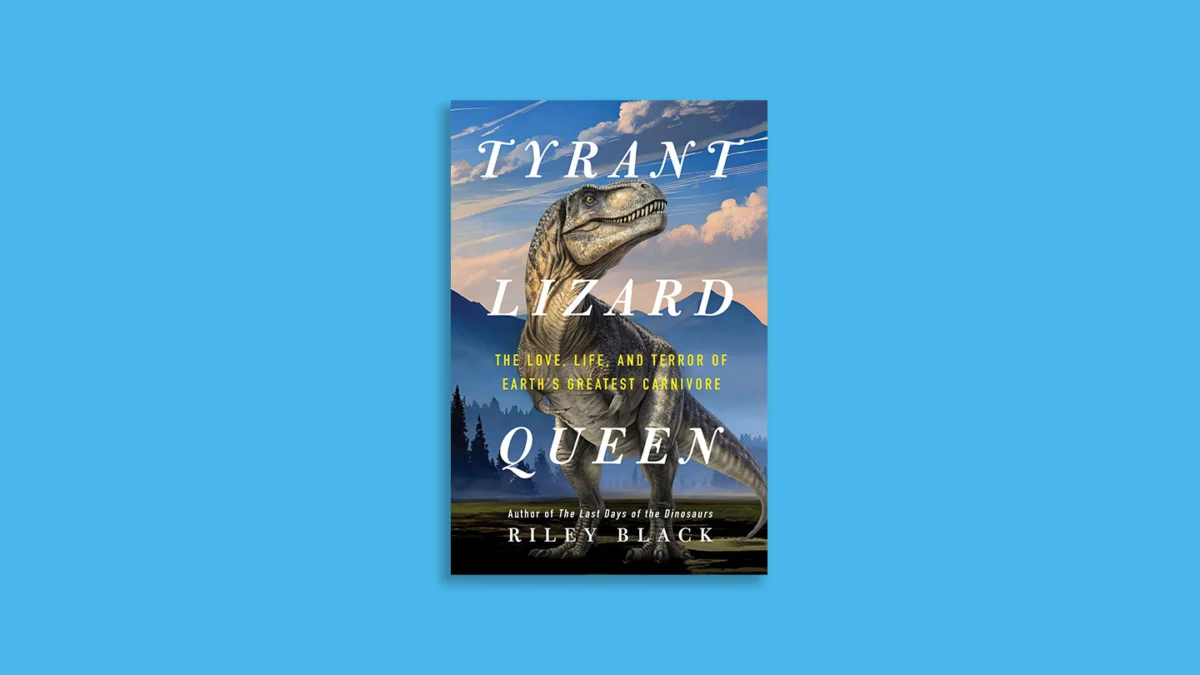
For over a century, the Tyrannosaurus rex has been immortalized as the ultimate cinematic villain and a museum centerpiece of predatory perfection. From the earth-shaking footsteps in Jurassic Park to the fossilized reconstructions that draw millions of visitors to natural history museums annually, the image of T. rex is firmly cemented as a mindless, ravenous killing machine. However, a new book by paleontologist and science writer Riley Black, titled Tyrant Lizard Queen, challenges this monolithic perception, inviting readers to look past the kaiju-like façade and examine the complex biological reality of one of Earth’s most successful evolutionary experiments.
Beyond the Hollywood Villain
The popular imagination typically views the T. rex through the lens of pure aggression. As an apex carnivore measuring 12 meters in length and weighing approximately eight metric tons, the animal certainly commanded respect. Nutritional studies suggest that a fully grown adult required nearly 150 kilograms of meat daily to sustain its massive metabolic demands. Such consumption rates necessitated a lifestyle characterized by bone-crushing power and aggressive territorial defense. Yet, Black argues that this narrow focus on the T. rex as a "flesh ripper" ignores the nuanced existence of the creature as a living, breathing animal that navigated a complex Cretaceous ecosystem.
By utilizing a narrative device centered on "Snag," a fictional T. rex residing in the prehistoric forests of what is now Utah, Black bridges the gap between cold, hard fossil data and the lived experience of a vertebrate organism. The narrative follows Snag from her vulnerable inception as a hatchling—constantly at risk from aerial predators like pterosaurs and the crushing weight of massive sauropods like Alamosaurus—through her adolescence and into maturity.
Evolutionary History and Chronology of the Tyrannosaur
To understand the T. rex, one must view it not as an isolated monster, but as the culmination of 80 million years of evolutionary refinement. The lineage of the Tyrannosauridae began long before the massive T. rex appeared on the scene.
- Early Cretaceous (approx. 125–100 million years ago): The emergence of basal tyrannosauroids, which were significantly smaller, faster, and less specialized than their later descendants.
- Late Cretaceous (approx. 90–68 million years ago): A period of rapid diversification and size increase, during which the tyrannosaurids evolved the massive skulls and reduced forelimbs that would eventually characterize the T. rex.
- Late Maastrichtian (approx. 68–66 million years ago): The peak of the T. rex era. During this timeframe, the species dominated the North American landscape, acting as the primary apex predator of the Hell Creek Formation and surrounding ecosystems.
Black’s work emphasizes that the rise of the T. rex was far from inevitable. The path from a small-statured dinosaur occupying the fringes of the food web to the "monarch" of the Late Cretaceous required a series of unlikely environmental and biological alignments. This evolution was not just about increasing size; it was about developing a sensory and physiological profile capable of supporting life at the top of the food chain.
Bridging the Gap: Scientific Methodology and Behavioral Inference
One of the most significant challenges in modern paleontology is the interpretation of soft-tissue behaviors that leave no trace in the fossil record. Questions regarding how these animals mated, socialized, or slept are inherently difficult to answer. To address these gaps, researchers like Black turn to "extant phylogenetic bracketing," a method that uses living relatives—such as crocodilians and birds—to infer behaviors in extinct dinosaurs.
The resulting portrait of Snag’s life includes moments of profound vulnerability and awkwardness. The narrative depicts the "rivals-to-lovers" dynamic between Snag and another female, Sweet, noting that mating rituals for such massive animals were likely as clumsy and complex as those of modern apex predators. These scenes, while dramatized, are grounded in the biological necessity of survival and reproductive success.
Black acknowledges in the book’s appendix that no two paleontologists view the same fossilized skeleton in the exact same way. The reconstruction of dinosaur behavior is an exercise in informed imagination. By admitting that "dinosaurs thrive in the gaps our questions create," Black positions paleontological research not as a static record of the past, but as a dynamic field that evolves alongside our ability to interpret disparate fossil fragments.
Ecological Interdependence: The Hunt and the Habitat
A critical takeaway from Tyrant Lizard Queen is the concept of reciprocal environmental influence. T. rex was not merely a creature that existed within an environment; it was an active architect of its ecosystem. Black highlights the symbiotic-like relationship between the predator and its prey.
The constant predatory pressure exerted by T. rex forced herbivorous dinosaurs to develop various defensive strategies, such as increased speed, defensive armor, and more complex social behaviors. Conversely, the behaviors of these prey species shaped the physical geography of the landscape. For instance, the movement of large sauropods created trails and water sources, while their waste provided the nutrients necessary for the vegetation that fueled the entire food web.
The author posits that "habitat changes the hunt, and the hunt changes the habitat." This feedback loop suggests that the extinction of the T. rex would have had cascading effects on the biodiversity and physical structure of the Cretaceous world, further elevating the species’ importance to scientific study.
Broader Impact and Academic Implications
The publication of Tyrant Lizard Queen coincides with a broader shift in the paleontological community. There is an increasing emphasis on viewing dinosaurs as biological entities with complex life histories rather than merely as objects of display. This shift has implications for how museums design exhibits and how public science communication is handled.
By humanizing (or rather, "animalizing") the T. rex, Black encourages the public to appreciate the species for its evolutionary ingenuity rather than just its terrifying bite. Critics and fellow researchers often praise this approach for its accessibility, noting that it makes the rigorous science of paleontology more engaging without sacrificing technical accuracy. The book serves as a reminder that every bone found in a dig site represents a life that was subjected to the same evolutionary pressures that govern the natural world today.
Conclusion: The Enduring Mystery of the Tyrant Lizard
The T. rex remains one of the most heavily studied and widely recognized animals in history. Despite this, the mystery surrounding its daily life persists. From its potential for cannibalism—a behavior observed in some modern reptiles—to the complexities of its social hierarchy, the T. rex continues to challenge our understanding of what it means to be a successful apex predator.
Riley Black’s work does not attempt to provide a definitive, final word on the T. rex. Instead, it provides a framework for ongoing inquiry. By acknowledging the uncertainty inherent in the fossil record, Tyrant Lizard Queen invites readers to participate in the scientific process of discovery. It moves the discourse away from the "villain" trope and toward a more profound realization: the Tyrannosaurus rex was a highly specialized, deeply integrated part of a complex, thriving world. As we continue to uncover new fossils and refine our analytical tools, the image of the "Tyrant Lizard Queen" will undoubtedly continue to evolve, reminding us that even the most feared creatures in Earth’s history were, above all, survivors.