In a significant advance for condensed matter physics, researchers at TU Dortmund University have successfully demonstrated that multiple time crystals can emerge simultaneously within a single semiconductor and synchronize their internal oscillations. Building upon a breakthrough achieved earlier in the year regarding the persistence of a single continuous time crystal, Prof. Alex Greilich and his research team published their latest findings in Nature Communications, detailing how spatially separated quantum oscillators can lock into a unified frequency over surprisingly large distances. This development marks a transition from simply observing exotic non-equilibrium states of matter to actively controlling and interconnecting them, paving the way for advanced spin-based technologies and non-local quantum networks.
To understand the weight of this new discovery, one must look closely at the foundational nature of time crystals. First conceptualized by Nobel laureate Frank Wilczek in 2012, time crystals are quantum systems that break continuous time-translation symmetry. In standard physical systems, physical laws and steady states do not change over time. In contrast, time crystals exhibit internal motion that repeats periodically without any periodic driving force from the outside. They are essentially perpetual motion at the quantum level, though they do not violate the laws of thermodynamics because they do not perform work or extract usable energy from their environment.
The timeline of this research reflects a rapid acceleration in experimental condensed matter physics. In January 2024, the TU Dortmund team made headlines by proving that a continuous time crystal could be stabilized inside a solid-state semiconductor, maintaining its regular oscillations for hours—a dramatic improvement over earlier implementations that degraded rapidly. Prior to this, time crystals were typically observed in discrete systems like trapped ions or atomic gases, where they required periodic external pulses, known as "floquet" driving, to maintain their rhythm. The Dortmund team’s achievement of a continuous time crystal operating autonomously under constant illumination shifted the paradigm. The current study represents the logical next phase of this research: investigating how multiple such crystals interact when they form within the same physical substrate.
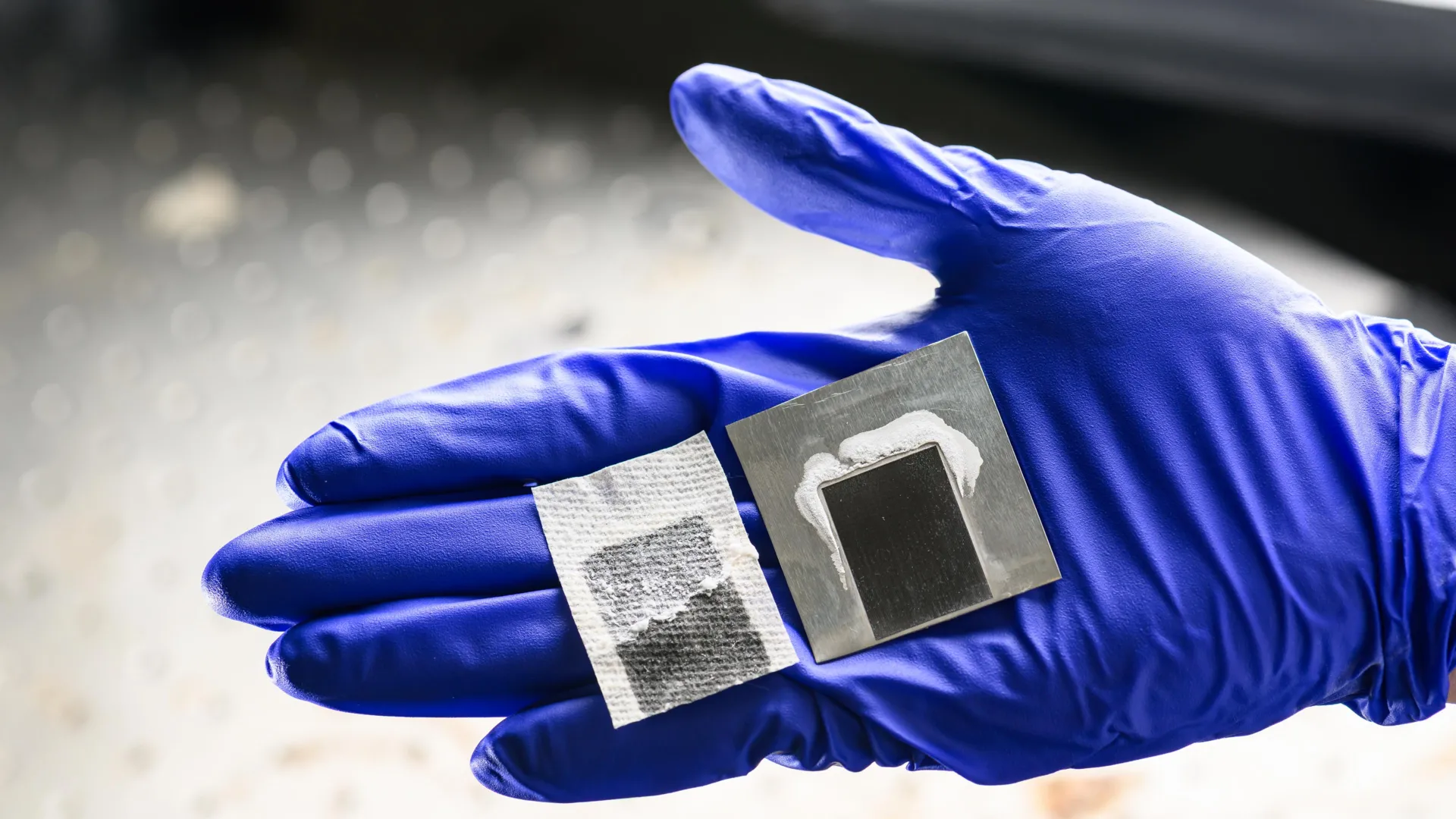
The experimental setup centers on a specialized semiconductor crafted from gallium arsenide, doped deliberately with trace amounts of indium and silicon. These foreign atoms introduce imperfections and localized potential wells that trap electrons within specific regions of the crystal lattice. Operating at extreme cryogenic temperatures close to -270 degrees Celsius—just a few degrees above absolute zero—each localized electron engages in a complex quantum dance with roughly one million surrounding atomic nuclei via hyperfine interactions.
Initiating the time crystal phase requires a precise sequence of optical operations. The researchers deploy a circularly polarized pump laser to align the spins of the localized electrons. Through contact hyperfine interaction, these electrons subsequently transfer their polarization to the surrounding nuclear spin bath. When a weak external magnetic field is introduced, the collective polarization of these nuclear spins begins to precess or rotate. A delicate feedback loop between the electron spins and the nuclear spins sustains these rhythmic oscillations. A second, weaker probe laser allows the experimentalists to monitor the evolution of these oscillations in real time, reading out the internal rhythm of the crystal without significantly disturbing it.
However, creating a single time crystal is vastly different from managing a multi-crystal ecosystem. Because semiconductors possess microscopic structural variations and local inhomogeneities, no two regions within the material are entirely identical. Consequently, if time crystals form independently in separate locations across the semiconductor, their natural oscillation frequencies will inherently diverge. Left to their own devices, these disparate regions would beat out of step with one another, creating a chaotic landscape of uncoordinated quantum rhythms.
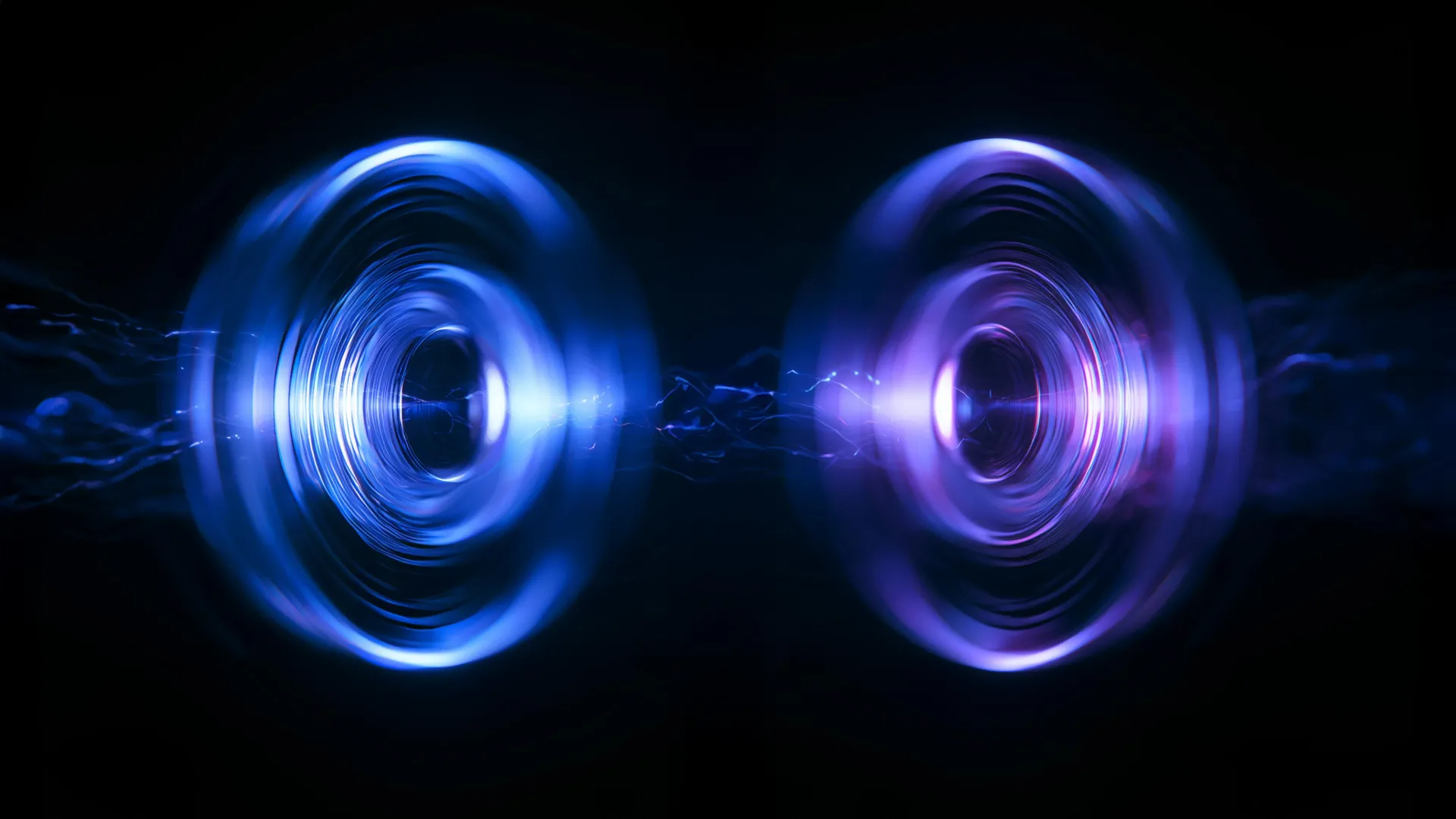
The Dortmund team resolved this challenge by illuminating multiple regions simultaneously with a broad, uniform laser beam. Under this specific optical regime, the researchers observed a remarkable collective phenomenon: the separate oscillations fell into synchronization, locking together to operate at a single, unified frequency.
This behavior bears a striking conceptual resemblance to a classical physics phenomenon documented by Dutch physicist Christiaan Huygens in 1665. Huygens noticed that two pendulum clocks mounted on the same wooden beam would spontaneously synchronize their swings, driven by the weak mechanical energy transmitted through the shared support structure. In the TU Dortmund semiconductor experiment, however, the coupling mechanism is fundamentally quantum mechanical. Instead of macroscopic mechanical vibrations traveling through wood or metal, the time crystals become mutually entangled and coupled through the dynamic diffusion and movement of spin-polarized electrons acting across the medium.
Quantifying the limits of this synchronization revealed spatial scales that surprised the research team. The experiments demonstrated that time crystals separated by distances of up to 40 micrometers could successfully lock into synchronization. To put this into perspective, 40 micrometers is more than one thousand times larger than the characteristic spatial footprint of a single oscillator within the material. This proves that the synchronization is not a localized proximity effect but a robust, non-local phenomenon spanning macroscopic distances relative to the quantum scale. Beyond the 40-micrometer threshold, the coupling weakens sufficiently that the individual time crystals break free of the collective frequency, reverting to independent oscillations.
The implications of this research extend far beyond fundamental physics, touching upon potential paradigms in engineering and computing. By establishing that non-local coupling can coordinate spatially separated spin systems, the TU Dortmund group has laid an experimental foundation for building complex networks of controllable spin oscillators.
In the broader context of the quantum technology sector, researchers are constantly searching for stable, scalable platforms to process and transmit information. Traditional electronic devices rely on the charge of electrons, which generates heat and suffers from resistance losses. Spin-based electronics, or spintronics, utilize the intrinsic angular momentum of electrons instead, offering pathways toward faster, more energy-efficient data processing. The ability to synchronize multiple time crystals over measurable distances introduces a novel mechanism for coordinating states across a solid-state substrate without relying on conventional electrical wiring.
While commercial applications remain on the horizon, the scientific community has welcomed the findings as a crucial step toward harnessing non-equilibrium quantum states. The transition from isolated time crystals to synchronized multi-crystal ensembles demonstrates that these complex systems can be organized, scaled, and managed under laboratory conditions. As Prof. Greilich and his colleagues continue to refine their optical control methods and explore higher-dimensional material structures, the semiconductor is increasingly viewed not merely as a passive medium for electronics, but as an active, breathing landscape of synchronized quantum time.