A landmark study conducted at the European Organization for Nuclear Research (CERN) has provided physicists with an unprecedentedly sharp look at the inner workings of atomic nuclei, illuminating the complex and elusive behavior of gluons at subatomic scales. Published in the prestigious academic journal Physical Review Letters, the research was spearheaded by an international collaboration of scientists working within the ALICE experiment at CERN’s Large Hadron Collider (LHC). Among the leading figures in this breakthrough is Daniel Tapia Takaki, a professor of physics and astronomy at the University of Kansas (KU), whose collaborative efforts with academic institutions such as the Czech Technical University in Prague helped drive the project to completion.
The findings mark a significant leap forward in experimental subatomic physics. By successfully executing the first multidimensional measurement of incoherent J/ψ (pronounced "JAY-sigh") photonuclear production that simultaneously tracks both interaction energy and momentum transfer, the research team has opened a new window into the distribution of gluons within nuclear matter. This technical achievement allows scientists to probe spatial structures inside atomic nuclei with a degree of precision previously thought impossible, offering vital clues that could help resolve a long-standing debate concerning the fundamental nature of the strong nuclear force.
Understanding the Building Blocks of Visible Mass
To appreciate the gravity of the CERN experiment, one must first understand the fundamental role that gluons play in the architecture of the universe. In standard educational models of physics, atoms are depicted as a dense nucleus of protons and neutrons surrounded by a cloud of electrons. Diving deeper, protons and neutrons are themselves composed of elementary particles called quarks, which are bound together by the strong force—one of the four fundamental forces of nature.
However, a common misconception in popular science is that the mass of everyday objects is derived almost entirely from these quarks. In reality, while quarks contribute a minute fraction of an object’s mass, nearly all the mass of the visible universe—from the minerals in the earth to the atoms within the human body and the colossal matter inside stars—originates from the kinetic and potential energy carried by gluons and the powerful strong interaction fields they generate.
"Although quarks are often described as the fundamental building blocks of matter, nearly all the mass of the visible universe actually comes from the energy carried by gluons and the strong force that binds quarks together," explained Tapia Takaki. "Understanding how gluons behave inside nuclei is therefore essential to understanding how matter itself acquires its mass and structure."
Despite their critical importance, the collective behavior of large numbers of gluons packed tightly inside atomic nuclei remains one of the least understood frontiers in modern physics. While individual quarks and gluons are well-characterized under high-energy conditions, how they organize, fluctuate, and interact when compressed densely inside a heavy nucleus is a central puzzle of quantum chromodynamics (QCD), the theoretical framework that describes the strong interaction.
Turning the Large Hadron Collider Into a Subatomic Microscope
The breakthrough at CERN was made possible by leveraging the immense energy and precision of the Large Hadron Collider, specifically utilizing data harvested during the facility’s extensive Run 2 operating period. Rather than executing direct, head-on collisions between particles—the traditional method used to shatter protons and search for exotic particles—the researchers utilized a more delicate, indirect mechanism known as incoherent J/ψ photonuclear production.
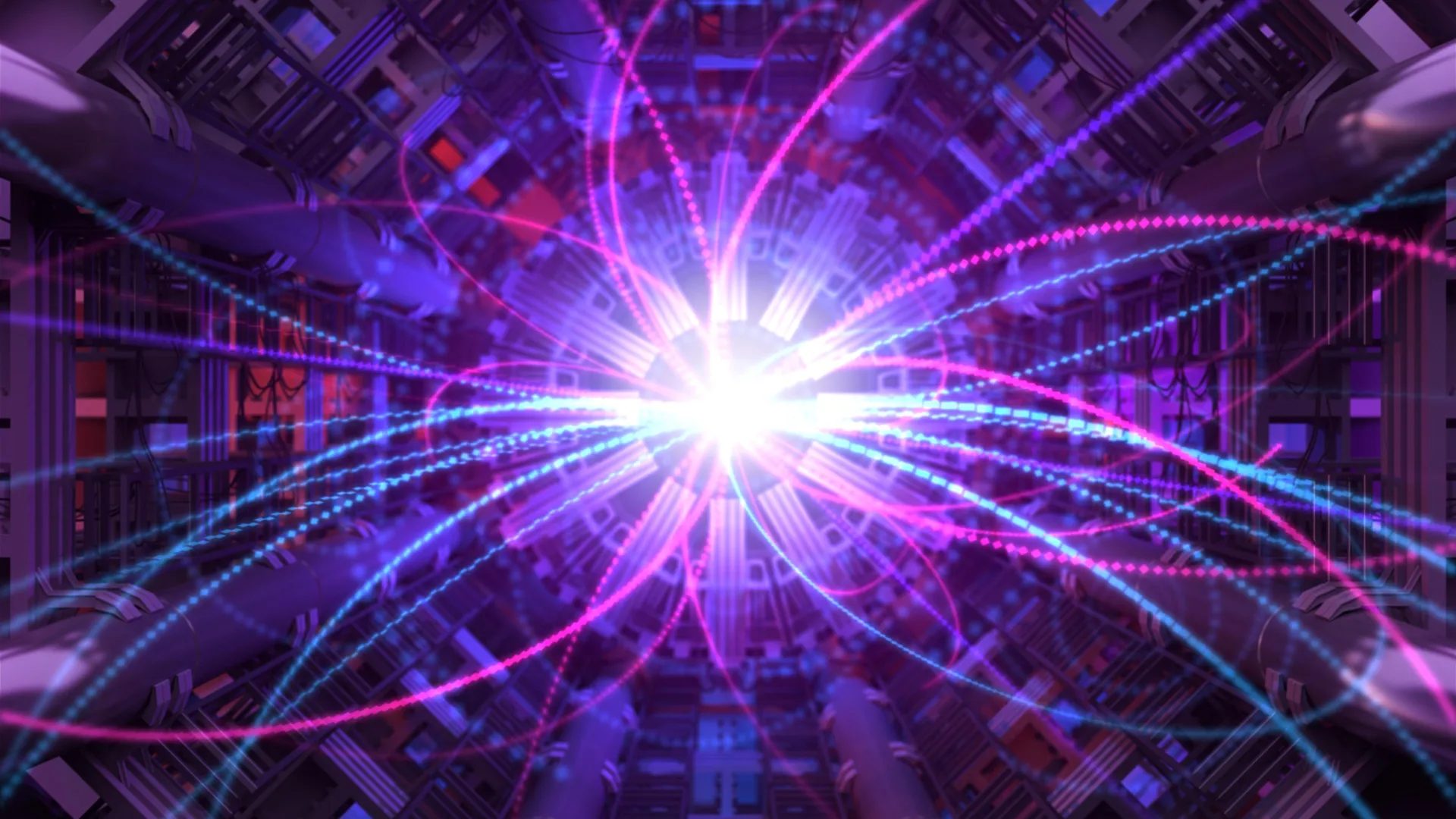
During Run 2, high-energy lead nuclei were accelerated to near-light-speed velocities, passing in close spatial proximity to one another without experiencing a direct physical crash. These ultra-fast lead ions generate immensely powerful electromagnetic fields in their immediate surroundings. Under specific quantum mechanical conditions, these intense electromagnetic fields effectively behave as beams of high-energy photons—particles of light.
When one of these virtual photons strikes a neighboring atomic nucleus, it can briefly produce a J/ψ particle. The creation and subsequent decay of this particle serve as a highly sensitive, reliable probe of the underlying gluon structure within the target nucleus.
Many conventional subatomic measurements average out the distribution of gluons across the entirety of a nucleus, providing a smeared, macroscopic picture of internal density. By contrast, incoherent J/ψ production isolates localized changes in gluon density, allowing researchers to investigate spatial structures significantly smaller than the diameter of an individual proton.
"Our experiments using incoherent production are like switching from a blurry image to a high-resolution microscope," Tapia Takaki noted. "This process allows us to see how gluons fluctuate and organize themselves inside nuclei. By varying the momentum transfer, our experiment effectively changes the focus of our microscope."
Through this method, the ALICE collaboration successfully probed progressively smaller regions inside lead nuclei at resolutions scaling down to 0.6, 0.3, and 0.2 femtometers. The finest of these resolutions corresponds to structural features measuring only about one-quarter the size of a single proton. To contextualize this scale for a macroscopic audience, Tapia Takaki offered a striking spatial analogy: if an atomic nucleus were somehow enlarged to the massive scale of a modern football stadium, the highest resolution achieved by the ALICE experiment would be sharp enough to distinguish distinct features measuring only a few yards wide on the playing field.
Chronology and Collaborative Framework
The path to this discovery represents a multi-year effort rooted in international scientific cooperation. The experimental data utilized for the study was gathered during LHC Run 2, which took place at CERN’s sprawling facility straddling the Franco-Swiss border near Geneva. Following the completion of data collection, a rigorous analytical phase was initiated, led jointly by researchers from the University of Kansas and the Czech Technical University in Prague.
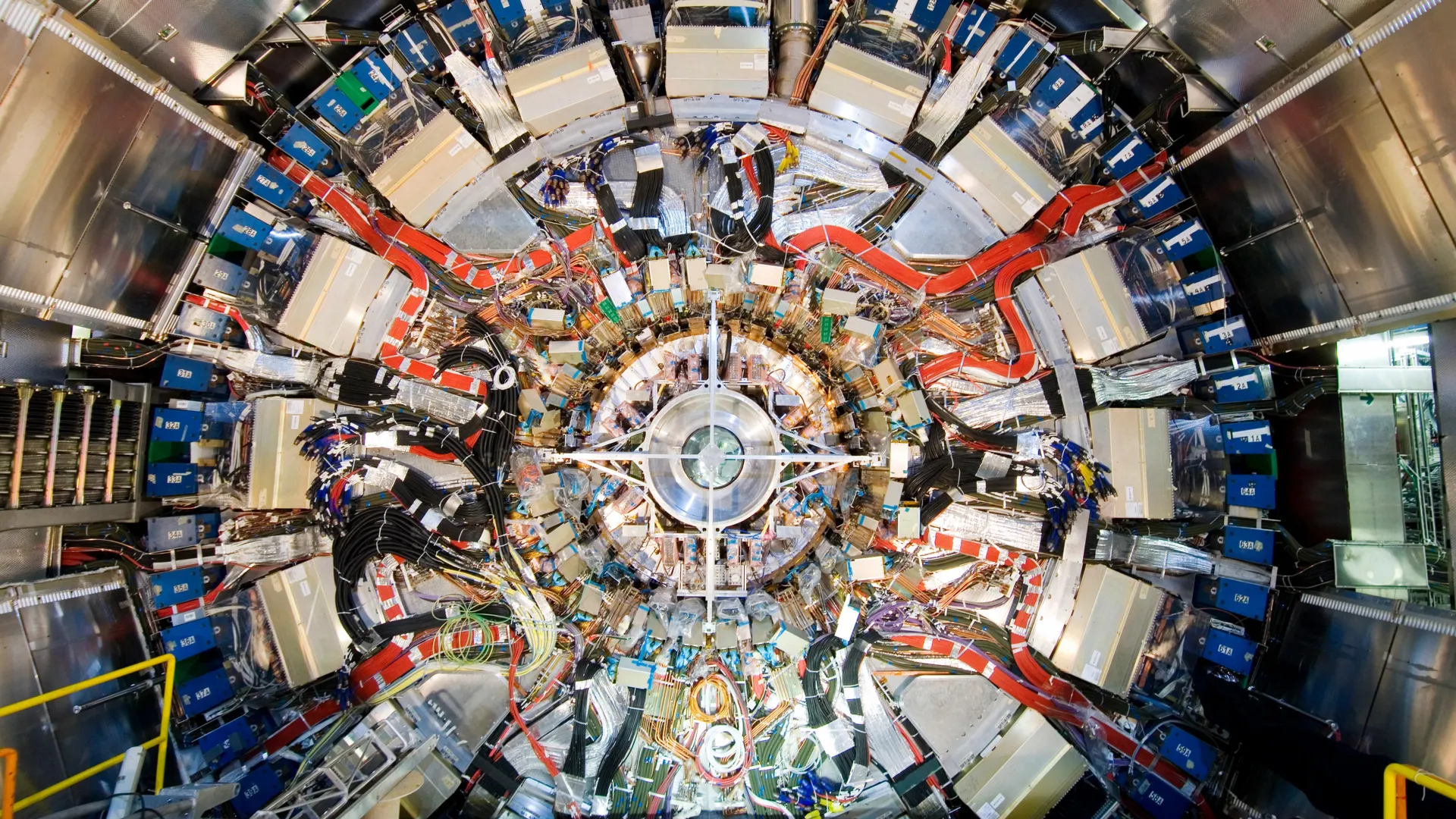
The institutional partnership between KU and the Czech Technical University has long fostered academic exchanges for both graduate students and senior researchers, creating a fertile environment for collaborative nuclear physics research. Over several years, Tapia Takaki and his international colleagues developed and refined the complex theoretical models necessary to interpret the massive datasets generated by the ALICE detector—a massive, multi-purpose apparatus specifically designed to study heavy-ion collisions and quark-gluon plasma.
The culmination of this analytical work was submitted to Physical Review Letters, undergoing rigorous peer review before its formal publication, which has since drawn intense interest from the global nuclear physics community.
Unveiling Gluon Hot Spots and Testing Theoretical Models
For years, theoretical physicists have debated how gluons behave when subjected to extreme compression. Tapia Takaki has long been a pioneer in developing experimental approaches and theoretical frameworks in which gluons do not merely distribute themselves uniformly, but instead cluster into localized regions of exceptionally high density, colloquially termed "hot spots."
Within the energy-dependent hot-spot model, these dense spatial configurations evolve dynamically as collision energies increase, offering researchers unique signatures of uncharted physics within the strong interaction.
To test these models, the CERN research team measured incoherent J/ψ production across a broad spectrum of photon-nucleus collision energies, ranging from 20 billion electron volts (GeV) all the way up to 633 billion electron volts. Simultaneously, they tracked how the production rates varied across different levels of momentum transfer, which directly dictates the microscopic spatial scale being illuminated within the target nucleus.
The resulting dataset revealed a stark and unexpected pattern. At the absolute smallest spatial scales probed during the experiment, the production rate of J/ψ particles exhibited a significant, statistically robust suppression, registering a statistical significance of approximately three standard deviations.
Challenging Nuclear Shadowing and Pointing Toward Gluon Saturation
This pronounced suppression presents an immediate challenge to a long-standing physical explanation known as "nuclear shadowing," a theoretical framework that has successfully accounted for the outcomes of numerous prior nuclear scattering experiments.
In the nuclear shadowing paradigm, gluons residing within the dense interior of an atomic nucleus are theorized to partially overlap and obscure one another—functioning analogously to layered clouds blocking direct sunlight from reaching the ground. This obscuration effect reduces the overall mathematical probability of specific particle production processes occurring.
However, the latest high-resolution measurements from the ALICE collaboration indicate that conventional nuclear shadowing, by itself, is mathematically insufficient to account for the suppression pattern observed at ultra-small spatial scales.
Instead, the empirical findings align closely with an alternative theoretical prediction derived directly from quantum chromodynamics: gluon saturation.
"In this regime, gluons become so densely packed that they begin interacting strongly with one another, limiting how many can exist in a given region," Tapia Takaki explained. When gluon density reaches this theoretical maximum threshold, the gluons effectively shield each other and recombine, preventing the density from escalating infinitely and fundamentally altering the local dynamics of the nuclear interior.
Broader Impact, Implications, and Future Outlook
The implications of the ALICE collaboration’s findings extend far beyond the specialized subfield of heavy-ion physics. By providing compelling evidence that points toward gluon saturation at fine spatial resolutions, the research offers a critical stepping stone toward a complete, unified understanding of quantum chromodynamics.
As theoretical physicists work to refine their models to account for the newly observed J/ψ suppression, the scientific community is already looking toward future upgrades and upcoming runs at the Large Hadron Collider, as well as future facilities like the Electron-Ion Collider (EIC) currently under development in the United States. These next-generation accelerators will build directly upon the foundational methodologies established by the ALICE experiment, promising even higher luminosities and more refined multi-dimensional analyses.
Ultimately, by peering deeper into the subatomic architecture of atomic nuclei, researchers at CERN are not only solving long-standing mysteries regarding the origins of mass within the visible universe, but are also pushing the boundaries of human comprehension regarding the fundamental forces that govern physical reality.