The landscape of modern condensed matter physics has undergone a profound shift following a groundbreaking experimental demonstration that quantum fluctuations within a vacuum can be harnessed to actively strengthen superconductivity. Published recently in the peer-reviewed scientific journal Nature, the study marks a monumental departure from traditional methodologies of controlling quantum states, which typically rely on external energy sources such as electrical currents, intense laser fields, or thermal manipulation. Instead, an international team of researchers has successfully demonstrated that modifying the electromagnetic environment of empty space itself can induce macroscopic changes in quantum materials.
The collaborative effort was spearheaded by Professors Changgan Zeng and Guanghui Cheng of the University of Science and Technology of China, operating under the auspices of the Chinese Academy of Sciences. The multidisciplinary team also featured vital theoretical and experimental contributions from Professor Qingdong Jiang of Shanghai Jiao Tong University, Nobel laureate Professor Frank Wilczek of the Massachusetts Institute of Technology, and several other prominent physicists. By bridging the gap between quantum electrodynamics and materials science, this international partnership has laid the foundational stone for an emerging subfield of physics known as "vacuumronics," where empty space is no longer treated as a passive backdrop, but rather as an active tool for technological control.
Deconstructing the Myth of Empty Space
To understand the magnitude of the discovery, one must reexamine the conventional definition of a vacuum. In everyday parlance, a vacuum denotes a region devoid of matter, a complete emptiness. However, modern quantum mechanics paints a radically different, highly dynamic picture. According to the principles of quantum electrodynamics and Werner Heisenberg’s uncertainty principle, even the absolute lowest energy state of a system—the vacuum state—is never truly quiescent or still.
At the microscopic and subatomic levels, virtual particles constantly fluctuate into and out of existence, creating an omnipresent background of quantum fluctuations. Far from being merely mathematical abstractions or philosophical curiosities, these fluctuations exert genuine, measurable physical consequences on the physical universe. For decades, physicists have observed the manifestations of these vacuum phenomena through established touchstones of modern physics, including the Lamb shift in atomic energy levels, spontaneous emission in quantum optics, and the macroscopic attraction or repulsion known as the Casimir effect.
Building upon this foundational knowledge, the research teams led by Zeng and Cheng spent several years investigating whether these relentless vacuum fluctuations could be systematically coupled with condensed-matter systems. In an earlier phase of their research, the team successfully demonstrated that they could directly manipulate vacuum fluctuations by deploying an external magnetic field to reversibly switch the Casimir force between attractive and repulsive states. That success catalyzed a much larger and more ambitious scientific inquiry: Could quantum vacuum fluctuations be elevated from a microscopic curiosity into a macroscopic control mechanism capable of governing complex quantum states of matter?
The Theoretical Genesis of Vacuumronics
While experimental teams in China focused on manipulating electromagnetic boundaries, Professor Jiang’s theoretical group approached the fundamental problem from an analytical perspective. The theoreticians modeled how engineered quantum vacuum environments could systematically influence, alter, and guide various exotic states of matter. This extensive theoretical labor culminated in the conceptualization of "vacuumronics," a novel paradigm proposing that customized vacuum enclosures could be utilized to govern electronic and photonic behaviors at a fundamental level.
This theoretical framework proved instrumental in interpreting the unexpected phenomena observed during the subsequent laboratory experiments. As Professor Zeng noted, natural vacuum fluctuations in free space are inherently too weak to produce discernible, let alone useful, effects on macroscopic condensed-matter systems. Free-space fluctuations are diffuse and uncoordinated, washing out any potential interaction with the electronic lattices of solid-state materials.
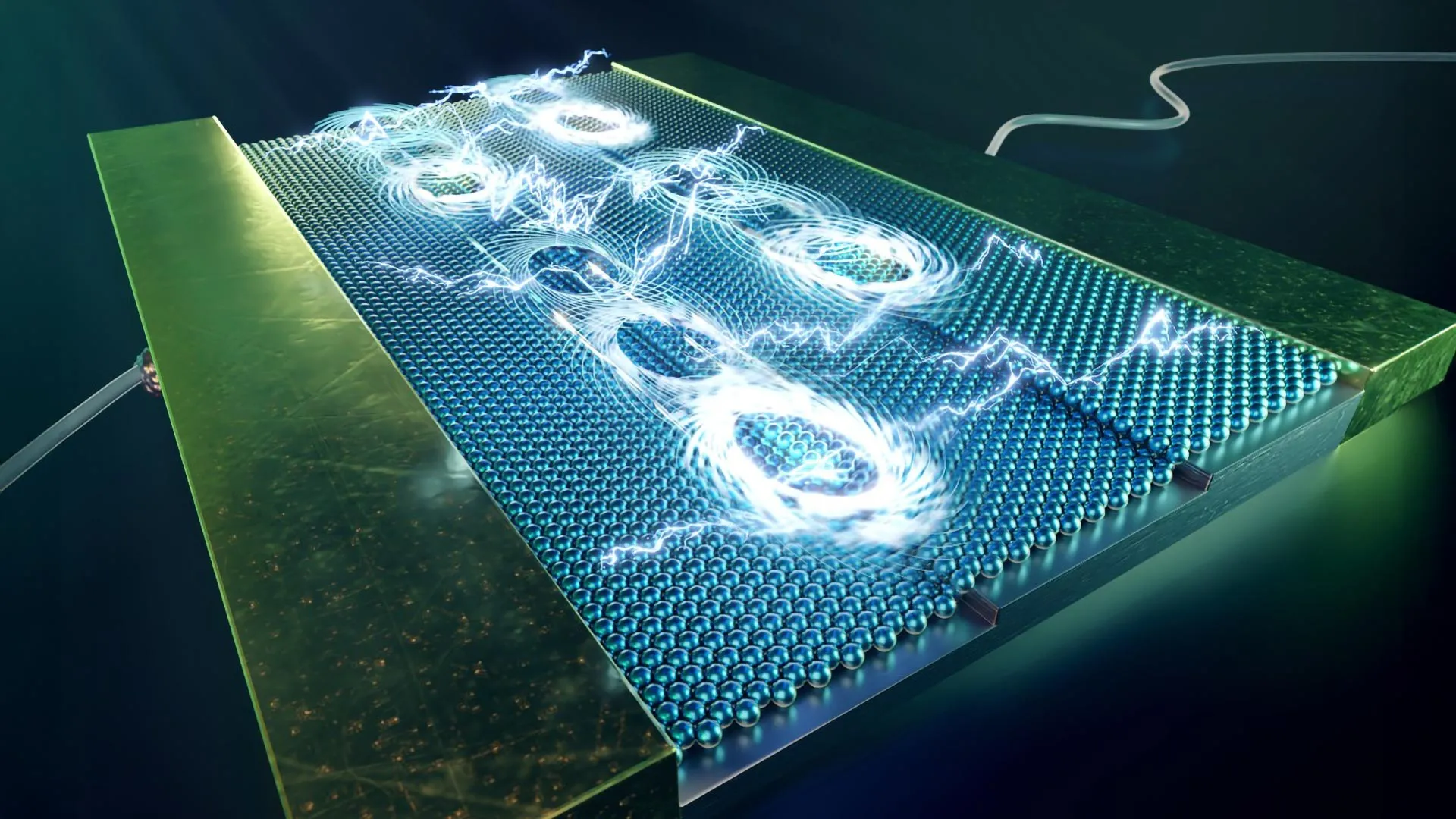
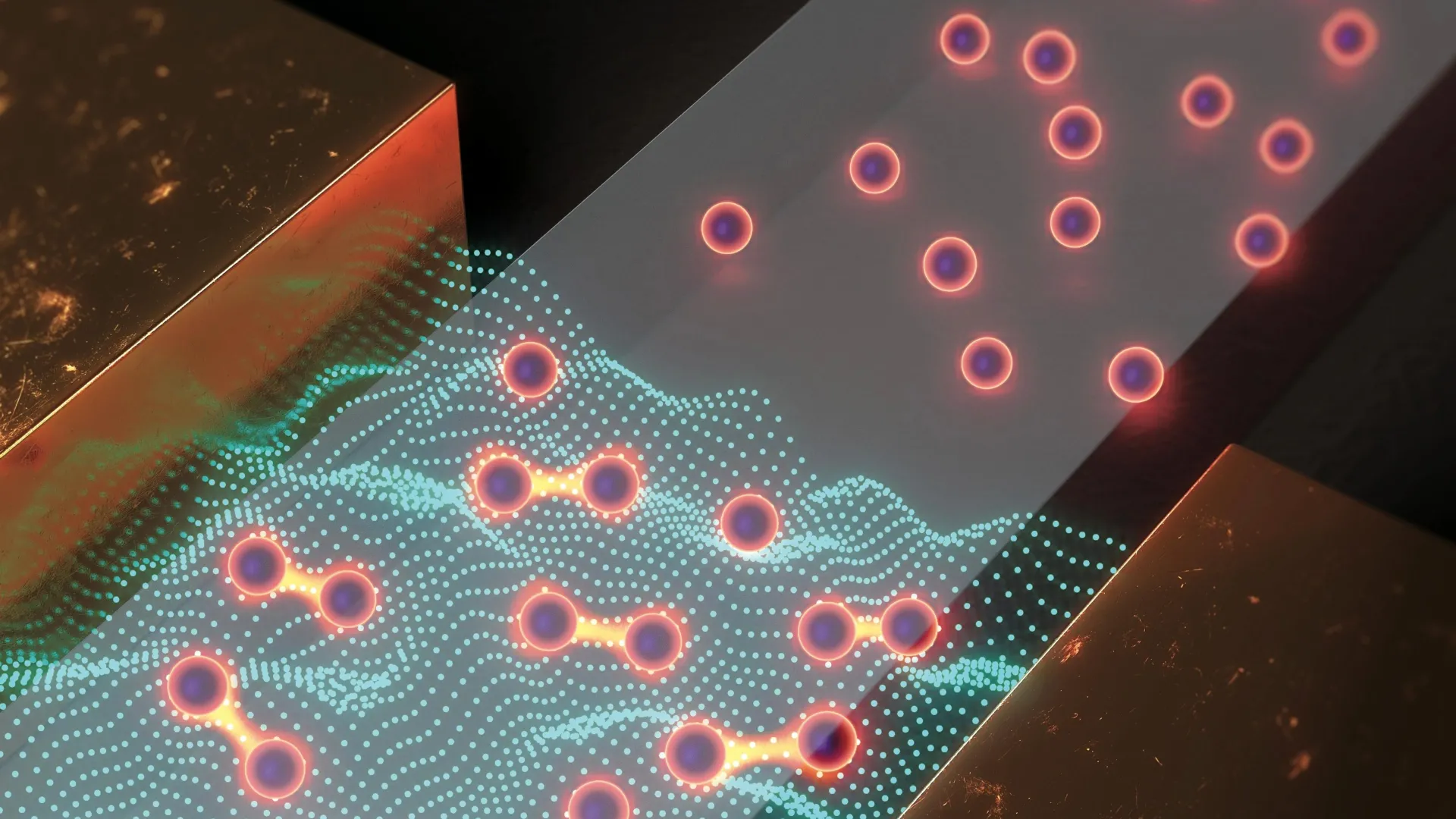
To bypass this formidable physical limitation, the research collective engineered a specialized terahertz split-ring resonator. Acting as a "dark cavity," this microfabricated metallic structure was specifically designed to reshape the local electromagnetic environment, confining and substantially amplifying the intensity of the vacuum fluctuations within a tightly controlled spatial volume.
Experimental Verification and Methodology
With the theoretical models and hardware in place, the team proceeded to test their hypothesis empirically. They selected niobium diselenide ($textNbSe_2$), a well-characterized transition metal dichalcogenide known for its robust superconducting properties, and integrated it directly into the interior of the terahertz dark cavity. This setup forged a tightly coupled hybrid system where the superconducting material was forced to interact continuously with the custom-engineered electromagnetic vacuum modes of the cavity.
To rigorously validate their findings, the experimentalists conducted exhaustive comparative analyses, measuring the superconducting behavior of the $textNbSe_2$ samples both inside and outside the dark cavity framework. The empirical data yielded an immediate and striking revelation: housing the superconducting material within the engineered vacuum environment induced a substantial, repeatable increase in its superconducting critical temperature ($T_c$)—the thermal threshold below which electrical resistance drops entirely to zero.
According to Professor Cheng, a six-layer $textNbSe_2$ device placed within the dark cavity exhibited a critical temperature increase of up to 5.4%. Furthermore, complementary metrics such as the critical current density and the critical magnetic field experienced marked enhancements near the superconducting phase transition boundary. These observations represent the first documented empirical verification of superconductivity being actively enhanced via vacuum fluctuations.
Rulings and Control Experiments
In any pioneering physical experiment, distinguishing a novel quantum phenomenon from artifactual interference or material degradation is paramount. To confirm that the observed enhancement was genuinely driven by cavity-vacuum coupling rather than conventional external influences, the research team designed and executed a battery of rigorous control experiments.
The investigators systematically varied multiple parameters of the experimental apparatus, including the precise geometry of the dark cavity, the characteristic resonant frequencies, the physical thicknesses of the material samples, the choice of underlying dielectric substrates, and the metallic strip configurations. By isolating each variable, the scientists were able to conclusively rule out alternative explanations, such as mechanical strain-induced modifications, material degradation, structural inhomogeneity, or extrinsic metallic screening effects.
The definitive piece of evidence emerged from mapping the relationship between the magnitude of the superconductivity enhancement and the characteristic frequency of the dark cavity. Rather than changing in a smooth, monotonic fashion, the enhancement displayed a sharp, resonance-like peak centered precisely at a specific characteristic frequency.
"This result, closely tied to the cavity’s photonic properties, provides strong experimental evidence of the coupling between the superconducting state and dark-cavity modes," Professor Zeng explained. The resonance confirmed that energy was being systematically channeled through specific electromagnetic channels native to the engineered vacuum enclosure.
The Mechanics of Virtual Photon Exchange
To formulate a comprehensive physical mechanism explaining the experimental data, Professor Jiang’s theoretical branch joined forces with Professor Wilczek. Together, they constructed an advanced theoretical model extending the traditional Ginzburg-Landau framework of superconductivity to account for quantum electrodynamical boundary conditions.
The resulting theoretical consensus suggests that the macroscopic quantum state of the superconductor engages in a continuous exchange of virtual photons with the electromagnetic modes of the dark cavity. This quantum-level interaction effectively lowers the ground-state energy of the superconducting condensate, rendering the superconducting phase significantly more stable and resilient against thermal fluctuations.
"When the characteristic energy of the cavity mode matched the low-energy superconducting fluctuations, the $textNbSe_2$ device exhibited resonant enhancement, producing the peak in superconductivity enhancement," Professor Jiang elaborated.
This mechanism fundamentally challenges the classical view of the vacuum in condensed matter physics. Instead of serving as a passive, inert stage upon which the drama of particle interactions simply unfolds, the quantum vacuum can be actively engineered, sculpted, and deployed as an active participant to manipulate the intrinsic properties of matter.
As Professor Wilczek observed, "In most practical physics, the vacuum serves merely as the passive stage on which phenomena play out. This work shows that the background itself can become an actor—engineered to strengthen superconductivity and reshape the behavior of quantum matter."
Broader Implications and Future Horizons
The implications of this study extend far beyond the specific behavior of niobium diselenide within a terahertz resonator. By demonstrating that macroscopic quantum states can be regulated without direct physical contact or the injection of external driving energy, the research opens a promising avenue for noncontact quantum control.
Traditional approaches to enhancing superconductivity or manipulating quantum phase transitions often involve extreme environments, high pressures, chemical doping, or heavy electrical gating, all of which can introduce defects, impurities, or unwanted heating effects. The vacuumronics approach sidesteps these limitations by leveraging the intrinsic electromagnetic properties of space itself.
Looking forward, the research collective plans to refine and optimize their cavity designs and explore a wider array of quantum materials, including high-temperature superconductors and topological insulators. With further refinement, vacuum-fluctuation coupling could evolve into a versatile, scalable toolkit for tailoring the properties of quantum materials on demand.
As the boundaries between quantum optics, electrodynamics, and condensed matter physics continue to dissolve, this milestone study from the University of Science and Technology of China, Shanghai Jiao Tong University, and MIT demonstrates that the path to future technologies may lie not just in building better materials, but in mastering the very space that surrounds them.