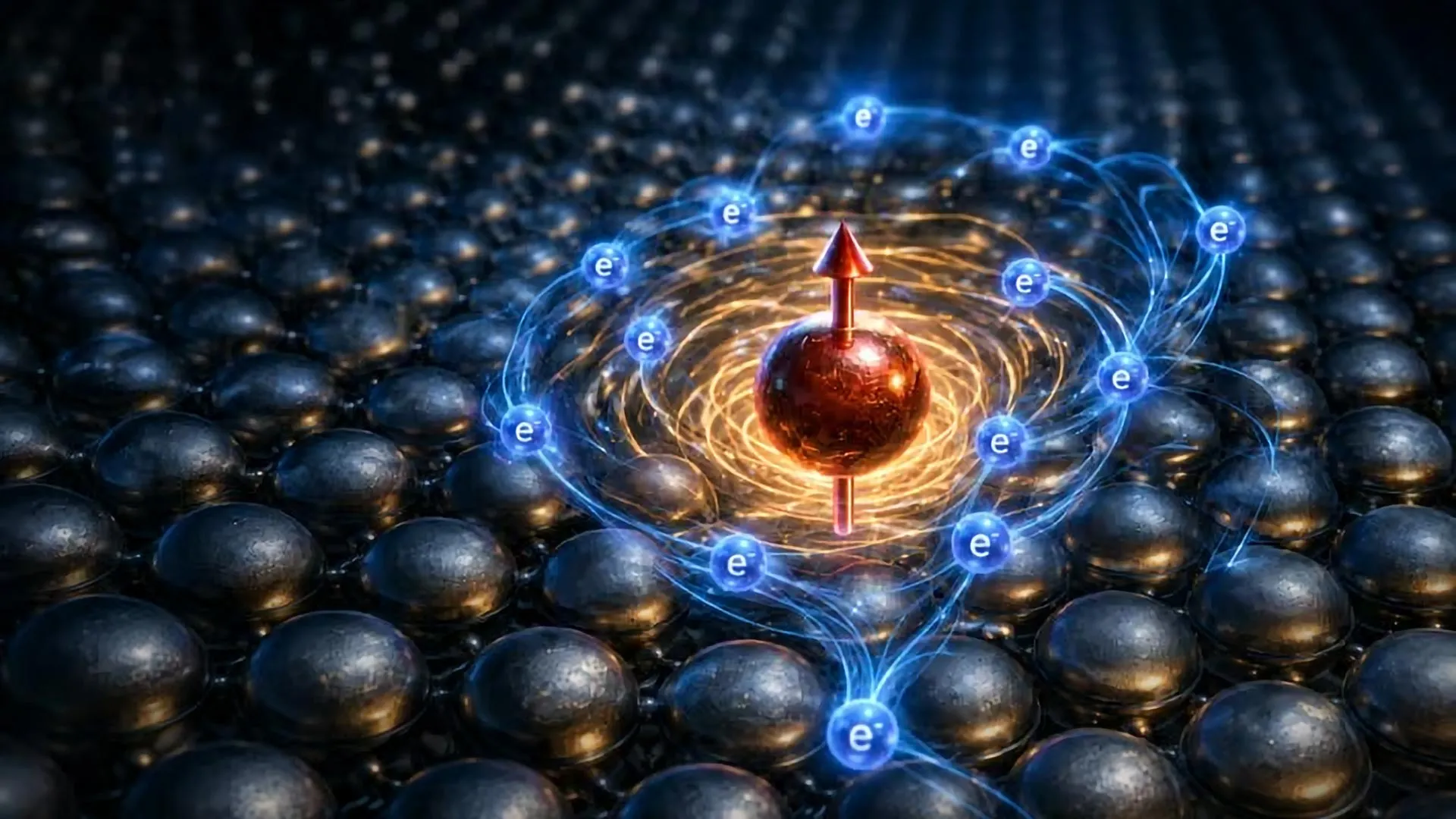
In the fraction of a second immediately following the Big Bang, the universe was not composed of the familiar atoms, stars, and galaxies that populate the cosmos today. Instead, space was filled with an unimaginably dense, trillions-of-degrees-Celsius expanse of fundamental matter known as quark-gluon plasma (QGP). This primordial soup existed for only a few millionths of a second before rapidly cooling and condensing into protons, neutrons, and other subatomic particles. Recreating and studying this extreme state of matter has long been a holy grail for modern particle physicists seeking to understand how the universe transitioned from a hot, structureless energy state into the complex chemistry we observe today.
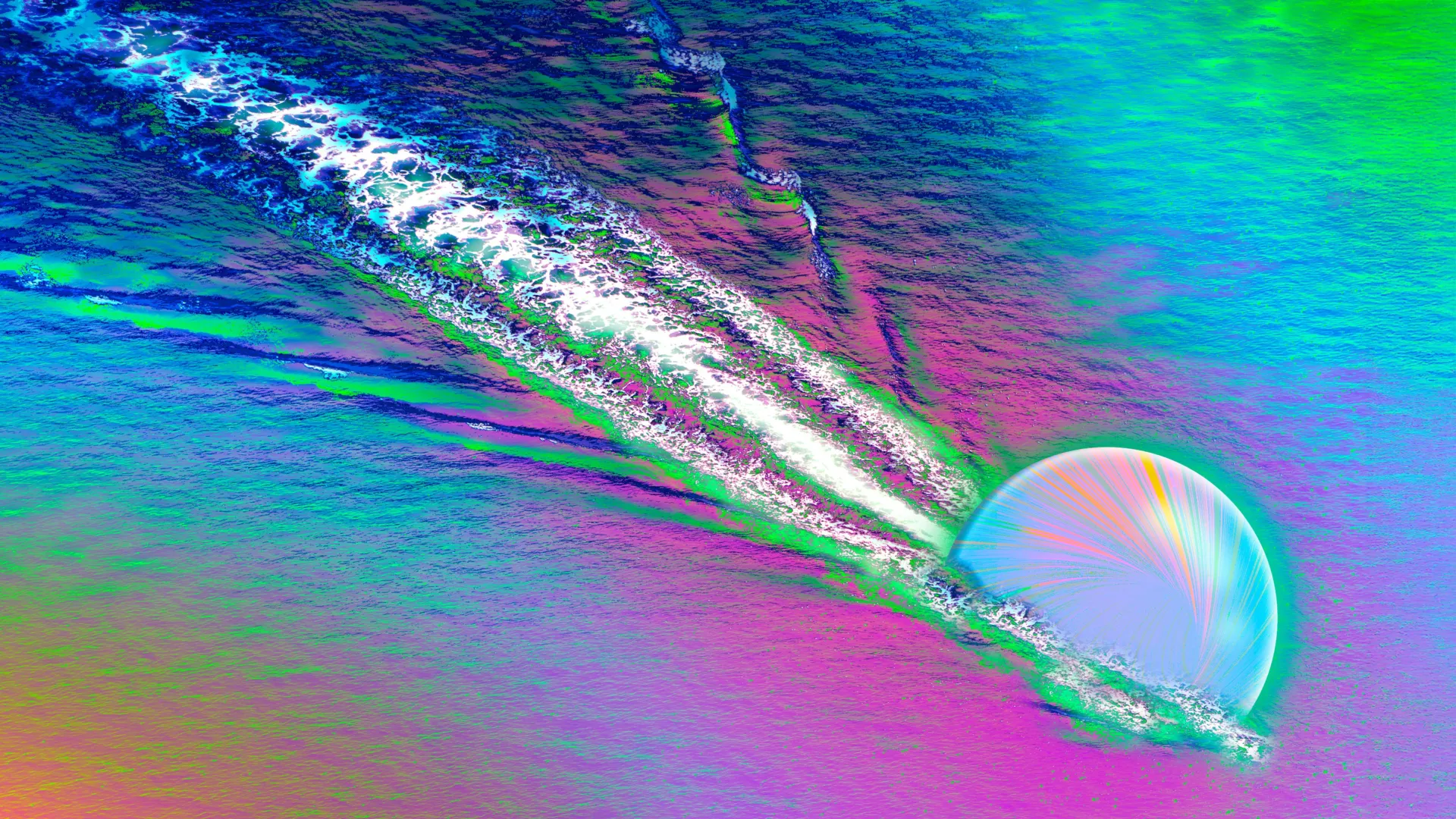
Now, an international team of researchers working with the Compact Muon Solenoid (CMS) detector at CERN’s Large Hadron Collider (LHC) in Switzerland has achieved a major milestone. Led by physicists from the Massachusetts Institute of Technology (MIT) in collaboration with Vanderbilt University, the research group has uncovered the first direct evidence that individual quarks generate physical wakes as they tear through quark-gluon plasma. Much like a motorized watercraft leaving a V-shaped ripple across the surface of a calm lake, a high-energy quark plowing through the QGP creates measurable waves, splashes, and turbulent swirling motions. The findings, published in the open-access journal Physics Letters B, settle a longstanding debate regarding whether the universe’s earliest liquid behaves as a unified, fluid-like medium or merely as a disconnected cloud of independently scattering particles.
Recreating the Big Bang Conditions at the Large Hadron Collider
To investigate the physics of the early universe, researchers at CERN rely on the Large Hadron Collider, the world’s largest and most powerful particle accelerator. Housed in a 27-kilometer circular tunnel beneath the Franco-Swiss border near Geneva, the LHC accelerates heavy ions—such as lead nuclei—to velocities very close to the speed of light. When these massive ions are smashed together in head-on collisions, the immense kinetic energy concentrated into a microscopic volume melts the boundaries between individual nucleons. For a fleeting instant lasting less than a quadrillionth of a second, the protons and neutrons dissolve, freeing their constituent quarks and gluons into a microscopic droplet of quark-gluon plasma.
Because this exotic state of matter cools and disintegrates almost instantaneously, physicists cannot observe it directly through a traditional optical microscope. Instead, they must capture high-resolution electronic snapshots of the collision debris using massive general-purpose detectors like the CMS. By analyzing the trajectories, momenta, and energy distributions of the thousands of particles that spray outward from the collision point, researchers work backward to reconstruct the properties of the QGP droplet during its brief existence.
Over decades of experimentation at both the LHC and the Relativistic Heavy Ion Collider (RHIC) at Brookhaven National Laboratory in New York, accumulated data has consistently pointed toward an astonishing conclusion: quark-gluon plasma is not a gas, but a liquid. Furthermore, theoretical calculations and hydrodynamic simulations suggest it is the hottest liquid ever known and potentially a near-perfect liquid, meaning it flows with virtually zero internal friction or viscosity.
Theoretical Foundations: The Hybrid Model and Fluid Dynamics
The newly published discovery builds directly upon years of theoretical advancements in fluid dynamics and quantum chromodynamics (QCD), the fundamental theory describing the strong nuclear force. Among the most influential theoretical frameworks is the hybrid model, developed by Krishna Rajagopal, the William A. M. Burden Professor of Physics at MIT, alongside his academic collaborators.
Prior to this experimental breakthrough, the hybrid model predicted that if quark-gluon plasma truly behaves as a continuous fluid rather than a tenuous gas of particles, an energetic quark traveling through it should act as a moving disturbance. According to hydrodynamics, this fast-moving particle should displace the surrounding dense medium, leaving behind a hydrodynamic wake characterized by localized ripples, pressure waves, and fluid splashes.
Detecting this elusive wake, however, proved exceptionally difficult. For years, experimental searches focused primarily on identifying pairs of quarks and antiquarks produced simultaneously during heavy-ion collisions. The logic seemed straightforward: if two quarks were generated and traveled in opposite directions, both should leave visible wakes in the plasma. In practice, however, this method was fundamentally flawed. When two energetic quarks stream away from each other, their respective wakes overlap and interfere with one another, causing one quark’s disturbance to overshadow and obscure the wake of the other. Consequently, finding unambiguous, isolated evidence of a single quark wake remained out of reach until a fundamentally new detection strategy was devised.
Using Z Bosons as a Precision Wake Tag
Overcoming the masking effect of paired quarks required a stroke of methodological ingenuity. Yen-Jie Lee, a professor of physics at MIT, and his research group—working closely with Professor Yi Chen’s team at Vanderbilt University—developed an innovative technique that bypassed the traditional quark-antiquark pairing dilemma.
Instead of searching for two interacting quarks, the researchers combed through heavy-ion collision data for events featuring a quark traveling in nearly the opposite direction of a "Z boson." A Z boson is an electrically neutral elementary particle that mediates the weak nuclear force. Crucially, Z bosons interact very weakly with the surrounding quark-gluon plasma, allowing them to pass straight through the dense medium without disturbing it or being disturbed by it. Furthermore, Z bosons are produced at a distinct, highly predictable energy level, making them exceptionally easy for physicists to identify amidst the debris of high-energy collisions.
Within the chaotic environment of a lead-ion smashup, trillions of quarks and gluons constantly interact. On rare occasions, a high-momentum collision generates a Z boson flying off in one direction and an energetic quark shooting out in the opposite direction. Because the Z boson serves as a clean, undisturbed reference point, any hydrodynamic ripples, splashes, or swirling energy patterns detected on the opposite side of the collision can be definitively attributed to the passage of that single, solitary quark.
Sifting Through Billions of Collisions
Executing this strategy required processing an immense volume of experimental data generated by the CMS detector. The research team analyzed a massive dataset comprising approximately 13 billion individual heavy-ion collisions recorded at the Large Hadron Collider.
Out of this astronomical number of events, the researchers filtered and identified roughly 2,000 specific collision events in which a high-momentum Z boson was produced alongside a lone, fast-moving quark. For each of these targeted events, the team mapped the precise spatial distribution of energy deposited across the short-lived quark-gluon plasma.
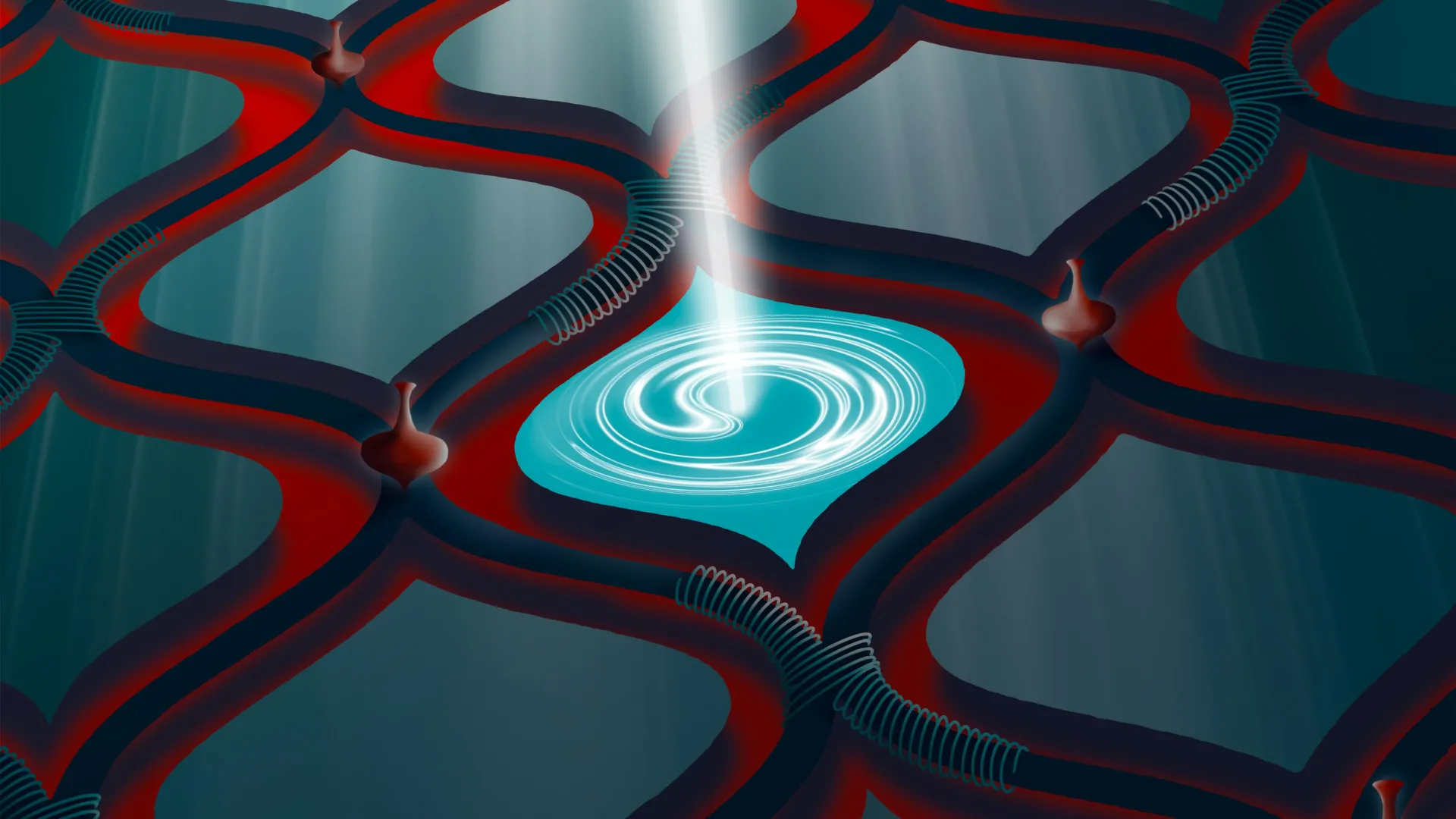
The results were striking. Across the dataset, the researchers consistently observed distinct, fluid-like wake patterns—including localized energy splashes and rotational swirls—directly opposite the trajectory of the Z boson. Because the Z boson itself leaves no wake, these patterns provided unequivocal proof that the individual quark was dragging the surrounding plasma along with it, forcing the dense medium to react collectively as a unified liquid. The observed data matched theoretical predictions generated by the hybrid model with remarkable precision.
Scientific Implications and Future Research Horizons
The confirmation that quarks generate physical wakes in quark-gluon plasma represents a major leap forward in our understanding of nuclear physics and cosmology. By measuring the physical dimensions of these wakes—including their overall size, propagation speed, spatial extent, and dissipation time—physicists now possess a powerful new diagnostic tool. These metrics will allow researchers to calculate fundamental thermodynamic and transport properties of the QGP, such as its shear viscosity and equation of state, with unprecedented precision.
Furthermore, because quark-gluon plasma filled the entire universe during its first microseconds, decoding its mechanical properties offers a direct window into the conditions that prevailed at the dawn of space and time. The technique developed by the MIT and Vanderbilt collaboration transforms what was once an untestable theoretical concept into a quantifiable observational science.
"Studying how quark wakes bounce back and forth will give us new insights on the quark-gluon plasma’s properties," notes Professor Yen-Jie Lee. "With this experiment, we are taking a snapshot of this primordial quark soup."
As CERN prepares for future upgrades to the Large Hadron Collider and physicists continue to refine analysis techniques utilizing machine learning and advanced data processing, the window into the universe’s infancy continues to widen. The findings published in Physics Letters B not only validate decades of theoretical modeling regarding the universe’s first liquid, but they also establish a robust framework for future explorations into the fundamental forces that shaped reality itself.