

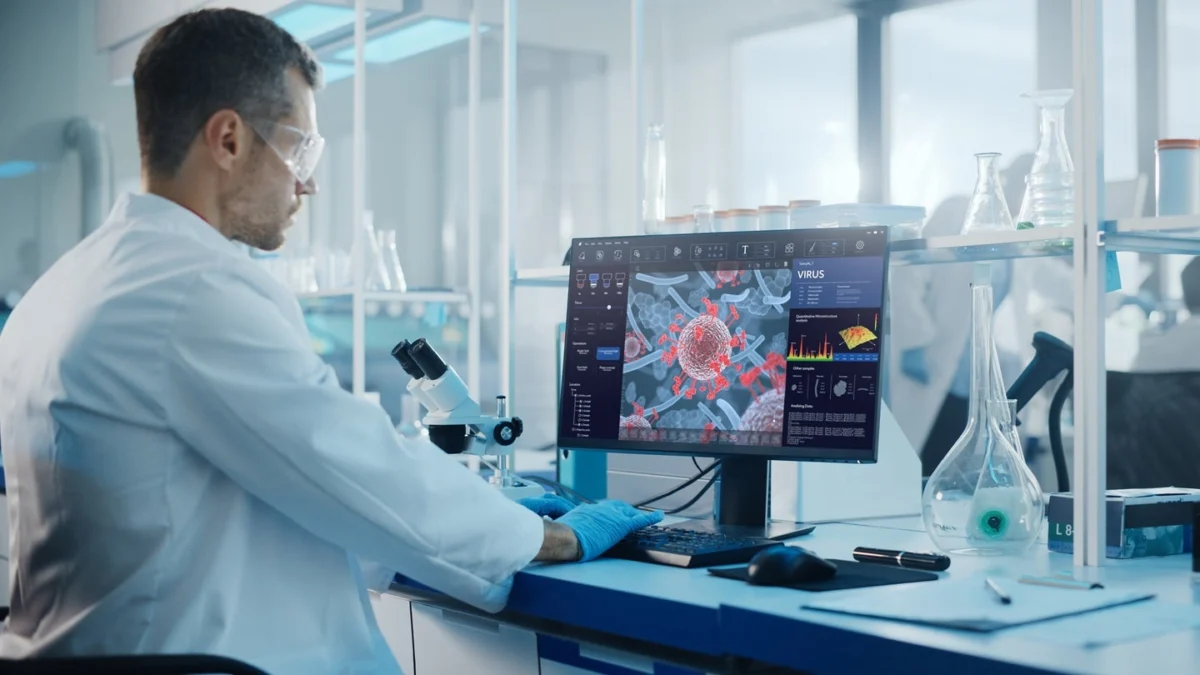
The integration of NVIDIA’s accelerated computing and BioNeMo platform with QIAGEN Digital Insights’ bioinformatics capabilities is poised to usher in a new era of artificial intelligence-driven drug discovery. This strategic collaboration aims to empower pharmaceutical and biotechnology researchers with more sophisticated tools and curated knowledge bases, enabling them to accelerate the identification of novel therapeutic targets, unravel complex disease biology, and discover crucial biomarkers for next-generation medicines.
Advancing the Frontiers of Pharmaceutical Innovation
At its core, this partnership addresses the increasingly complex challenges faced by the life sciences industry in bringing new drugs to market. The drug discovery and development process is notoriously lengthy, expensive, and fraught with high failure rates. Traditional methods, while foundational, often struggle to keep pace with the exponential growth of biological data and the intricate nature of diseases. AI and machine learning offer a compelling pathway to overcome these hurdles, and this collaboration seeks to harness their potential to its fullest.
QIAGEN Digital Insights, with over two decades of experience in building comprehensive biomedical knowledge foundations, brings to the table a wealth of curated data and established bioinformatics expertise. This includes vast repositories of genomic, proteomic, transcriptomic, and other multi-omics data, meticulously organized and annotated. NVIDIA, a global leader in accelerated computing and AI, contributes its cutting-edge hardware and sophisticated AI software platforms, including the BioNeMo framework, designed specifically for accelerating AI model development in biology and chemistry.
The synergy between these two powerhouses is expected to yield significant advancements in several key areas of drug discovery:
- Enhanced Disease Understanding: By leveraging AI to analyze vast and diverse datasets, researchers will gain deeper insights into the molecular mechanisms underlying diseases. This can lead to the identification of previously unrecognized pathways or cellular processes that are critical to disease progression, opening up new avenues for therapeutic intervention.
- Precision Target Identification: The integration will facilitate more accurate and efficient identification of potential drug targets. AI algorithms, powered by NVIDIA’s computing infrastructure and informed by QIAGEN’s curated knowledge, can sift through complex biological networks to pinpoint proteins or genes that are most likely to be druggable and relevant to specific diseases.
- Biomarker Discovery: Identifying reliable biomarkers is crucial for diagnosing diseases, predicting treatment response, and monitoring disease progression. This collaboration will enable the discovery of novel biomarkers that can be used for patient stratification, personalized medicine approaches, and early disease detection.
- Accelerated Hypothesis Generation: The ability to rapidly generate and test hypotheses is a cornerstone of scientific progress. By applying graph-based AI and reasoning over biomedical knowledge graphs, researchers can explore complex biological relationships and formulate novel hypotheses more effectively, thereby streamlining the early stages of drug discovery.
The Power of Graph-Based AI and Knowledge Graphs
A key technological underpinning of this collaboration is the application of graph-based AI. This approach treats biological entities – such as genes, proteins, diseases, and drugs – as nodes in a network, with the relationships between them represented as edges. By constructing and querying these sophisticated biomedical knowledge graphs, researchers can uncover intricate connections and patterns that might be missed by traditional linear analyses.
NVIDIA’s BioNeMo platform plays a pivotal role in this by providing the tools and infrastructure to build and train large language models (LLMs) and other AI models that can reason over these knowledge graphs. This allows for retrieval and reasoning methods that can explore evidence across diverse biological systems. Furthermore, the platform supports the creation of "agentic" workflows, where AI agents can perform multi-step tasks autonomously, significantly accelerating research processes.
Nitin Sood, Senior Vice President and Head of Product Portfolio and Innovation at QIAGEN, emphasized the foundational role of QIAGEN’s expertise: "QIAGEN Digital Insights has spent more than 25 years building the biomedical knowledge foundation that researchers rely on to interpret complex biology. Through this collaboration with NVIDIA, we can accelerate the impact of that knowledge by combining it with advanced AI to help customers improve critical steps in drug discovery, from target identification to biomarker research and hypothesis generation."

This sentiment highlights the long-term vision of the partnership: not just to provide tools, but to fundamentally enhance the scientific process, making it more efficient, insightful, and ultimately, more successful.
A Phased Approach to Implementation
The rollout of this integrated solution will be a carefully managed process, beginning with initial pilot programs. These early-stage initiatives will be made available to a select group of pharmaceutical and biotechnology partners. This phased approach allows for rigorous testing, refinement, and validation of the technology in real-world research environments. Feedback from these initial partners will be instrumental in shaping the broader rollout, ensuring that the final offering meets the diverse needs of the industry.
The selection of pilot partners is likely to focus on companies at the forefront of innovation, those actively engaged in complex drug discovery programs and eager to adopt cutting-edge technologies. This strategic approach aims to build a strong foundation of successful use cases and demonstrate the tangible benefits of the integrated platform before a wider market launch.
Broader Implications for the Pharmaceutical Landscape
The implications of this QIAGEN-NVIDIA collaboration extend beyond the immediate research environment. A more efficient and effective drug discovery process has the potential to:
- Reduce the Cost of Drug Development: By accelerating timelines and improving success rates, the overall cost of bringing new medicines to patients could be significantly reduced. This could lead to more affordable treatments and a greater return on investment for pharmaceutical companies.
- Increase the Pace of Innovation: With AI-driven tools that expedite key research stages, the pipeline of new drug candidates is likely to expand, leading to a faster introduction of novel therapies for unmet medical needs.
- Enable Personalized Medicine: The enhanced ability to understand disease biology and identify biomarkers is fundamental to the advancement of personalized medicine. This collaboration will empower the development of treatments tailored to an individual’s genetic makeup and disease profile.
- Address Rare and Complex Diseases: The sophisticated analytical capabilities offered by this partnership could be particularly beneficial in tackling rare diseases and complex conditions that have historically been challenging to research due to limited data or understanding.
The pharmaceutical industry has been increasingly investing in AI and advanced computing. In a notable preceding development, in October 2025, Eli Lilly and NVIDIA announced plans to build one of the most powerful supercomputers specifically designed for pharmaceutical research, aiming to dramatically accelerate drug discovery and reduce development cycles. This QIAGEN-NVIDIA partnership aligns with this broader industry trend, signaling a collective push towards leveraging technology to overcome long-standing challenges in medicine.
The Future of Drug Discovery: Collaboration and Intelligence
The QIAGEN Digital Insights and NVIDIA collaboration represents a significant step forward in the quest to develop life-saving medicines more rapidly and efficiently. By combining QIAGEN’s deep biomedical knowledge with NVIDIA’s pioneering AI and accelerated computing capabilities, researchers will be equipped with unprecedented tools to decipher the complexities of human biology and accelerate the journey from scientific discovery to patient benefit.
The emphasis on graph-based AI and curated knowledge graphs underscores a sophisticated approach to data analysis, moving beyond simple pattern recognition to enable deeper understanding and more robust decision-making. As this technology matures and is adopted more widely, it has the potential to reshape the landscape of pharmaceutical research and development, ultimately leading to better health outcomes for people worldwide. The initial pilot programs will be a critical phase in validating this potential, paving the way for a future where AI is an indispensable partner in the fight against disease.
















Leave a Reply