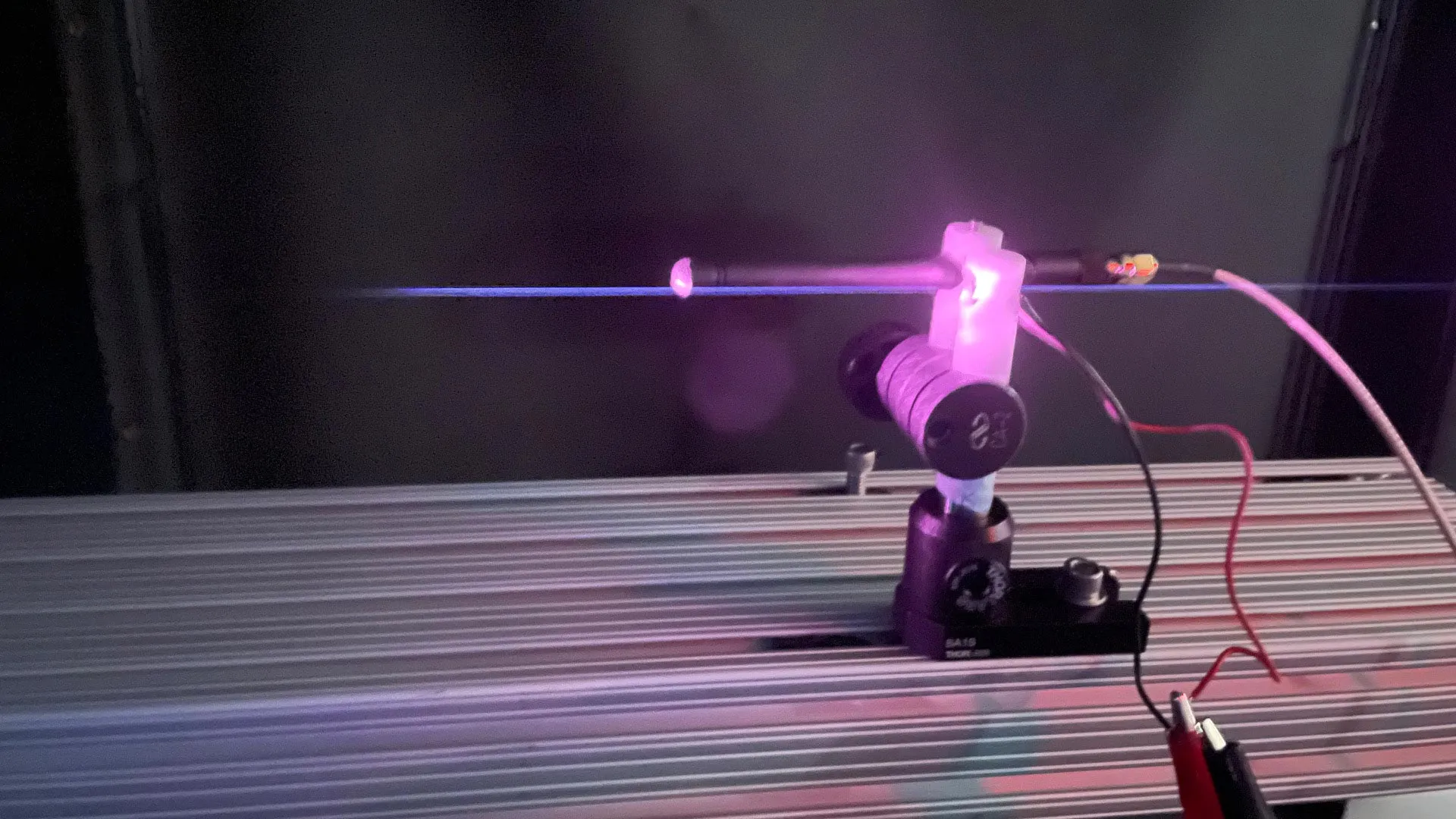
Researchers at Oregon State University (OSU) have unveiled a groundbreaking class of crystalline materials capable of harnessing solar energy to efficiently split water molecules and produce clean hydrogen fuel. Spearheaded by materials scientist Kyriakos Stylianou of the OSU College of Science, the research introduces a novel photocatalytic system that bypasses the need for expensive precious-metal catalysts. Published in the Journal of the American Chemical Society, the discovery represents a major methodological shift in solar-to-chemical energy conversion, offering a potentially cost-effective pathway to scale up green hydrogen production and mitigate global greenhouse gas emissions.
The breakthrough centers on a customized metal-organic framework (MOF) designated as BVR-19. Unlike conventional photocatalysts that rely heavily on expensive noble metals like platinum or iridium to drive chemical reactions, the OSU team engineered BVR-19 to utilize unique organic sulfur bonds to capture light energy and mobilize electrons. This architectural strategy not only simplifies the material design process but also introduces a scalable, low-energy room-temperature manufacturing method that could significantly reduce the baseline production costs of green hydrogen.
The Scientific Framework: How BVR-19 Harnesses Sunlight
At the heart of the innovation are metal-organic frameworks, a versatile class of synthetic materials characterized by extensive porosity and crystalline structures. MOFs are constructed through the self-assembly of positively charged metal ions interconnected by organic linker molecules. Because chemists can mix and match these components at a molecular level, the resulting materials boast an exceptionally high surface area and tunable chemical properties. Theoretical chemistry models suggest that millions of unique MOF configurations are possible; to date, researchers worldwide have synthesized approximately 100,000 variants, while the properties of another half-million have been successfully predicted using computational simulations.
In their quest to optimize solar water-splitting, Stylianou and his team at OSU’s Materials Discovery Laboratory (MaD Lab) focused on the specific behavior of sulfur-containing organic building blocks within the BVR-19 framework. When exposed to light, an unusual sulfide-to-sulfide bond within the material temporarily dissociates, generating highly reactive sulfur species.
"The organic component does the important work," Stylianou explained regarding the mechanism. "Instead of relying primarily on the metal atoms, our material uses its sulfur-containing organic building blocks to capture light energy and move electrons where they are needed to produce hydrogen. This represents a different way of thinking about how these materials should be designed."
Furthermore, BVR-19 possesses a distinct logistical advantage: the material forms spontaneously in aqueous solutions at standard room temperature. This low-energy synthesis profile stands in sharp contrast to many advanced nanomaterials that require high-temperature furnaces, toxic organic solvents, or pressurized reaction chambers, thereby shrinking the overall carbon footprint associated with manufacturing the catalyst itself.
Chronology of the Research and Collaborative Efforts
The development of BVR-19 is the culmination of years of targeted investigation into porous materials and solar energy conversion at Oregon State University. The research trajectory leading to the recent publication involved a multidisciplinary team spanning chemistry, materials science, and computational physics.
Initial exploratory work in the MaD Lab focused on cataloging the stability and light-absorption characteristics of various sulfur-linked MOFs. Over a multi-month period, graduate students and postdoctoral researchers—including MaD Lab members Emmanuel Musa, Dylan Pyle, Jacob Lessard, Andrzej Gladysiak, Ankit Yadav, Silas Blessed, and Prayash Mohanty—synthesized dozens of experimental variations.
Concurrently, a specialized analysis group within the university—comprising Logan Lancaster, Taylor Krueger, Min Soo Jung, Galen Fritz, Jacob Hirschi, Hongliang Huang, William Stickle, Xiulei "David" Ji, Chong Fang, and Tim Zuehlsdorff—conducted rigorous spectroscopic and structural characterizations. This phase involved mapping electron transfer dynamics and verifying the behavior of the sulfide-to-sulfide bonds under simulated solar irradiation.
Financial and institutional support proved critical in accelerating the timeline of the project. The study received substantial backing from the National Science Foundation (NSF), which funds foundational research in sustainable energy technologies, as well as the Murdock Charitable Trust and the OSU College of Science. This funding enabled the acquisition of high-resolution analytical equipment necessary to observe molecular-level transformations in real time, ultimately leading to the final manuscript submission and peer-reviewed acceptance by the American Chemical Society.
Economic and Environmental Imperatives of Clean Hydrogen
The urgency behind developing novel photocatalytic systems is rooted in the current economic and environmental realities of hydrogen production. Hydrogen is an indispensable industrial commodity utilized extensively in ammonia synthesis for fertilizers, petroleum refining, and plastics manufacturing. Additionally, it serves as the primary energy carrier in hydrogen fuel cell electric vehicles (FCEVs), which emit zero tailpipe emissions, releasing only water vapor.
However, the prevailing industrial method for generating hydrogen is far from clean. Approximately 95% of commercial hydrogen is produced via methane-steam reforming (MSR), a thermochemical process that reacts natural gas with high-temperature steam. While economically attractive—yielding hydrogen at an average market cost of roughly $1.50 per kilogram—MSR is carbon-intensive, releasing substantial quantities of carbon dioxide into the atmosphere and contributing directly to global climate change.
In contrast, "green hydrogen" produced by splitting water molecules using renewable energy offers a zero-emission alternative. Water-splitting is commonly achieved through water electrolysis powered by electricity or via direct photocatalysis using solar energy. Yet, water electrolysis faces economic headwinds: the environmental benefit of electrolytic hydrogen depends entirely on the cleanliness of the electrical grid, and the final product currently costs approximately $5.00 per kilogram, pricing it out of widespread commercial adoption.
Direct photocatalytic water-splitting—the method advanced by the OSU researchers—seeks to bypass the electrical grid entirely by using sunlight directly to drive the chemical reaction. By eliminating intermediary steps and expensive noble-metal catalysts, innovations like BVR-19 target the cost barriers that currently prevent green hydrogen from competing directly with fossil-fuel-derived hydrogen.
Broader Implications and Future Outlook for Green Energy
The introduction of BVR-19 and the accompanying design rules established by the OSU research team provide a systematic blueprint for future catalyst development. By systematically altering the metal centers while preserving the functional organic backbone, the researchers were able to isolate the exact structural features that dictate catalytic efficiency.
Energy analysts and environmental policy experts note that scaling up renewable fuel technologies requires continuous innovation in materials science. If laboratory-scale photocatalysts can be successfully transitioned into durable, large-scale panel systems, humanity could leverage vast expanses of non-arable land and sunlight to generate carbon-neutral fuels continuously.
Stylianou emphasizes that the broader significance of the study extends beyond a single material. The design principles uncovered by the MaD Lab offer a predictive framework that other research institutions can use to engineer next-generation solar-to-fuel systems. As global climate policies tighten and industries face mounting pressure to decarbonize heavy manufacturing and long-haul transportation, advancements in low-cost, light-driven hydrogen production will play a pivotal role in shaping the future global energy matrix.