In a decisive move to address the burgeoning public health risks associated with the proliferation of synthetic, highly potent derivatives of the kratom plant, the United States Drug Enforcement Administration (DEA) has officially moved to place three specific synthetic alkaloids—mitragynine pseudoindoxyl, MGM-15, and MGM-16—under Schedule I of the Controlled Substances Act (CSA). This emergency scheduling order, which took effect on August 25, 2026, marks a significant escalation in federal oversight of the kratom market, shifting focus from traditional botanical products toward high-potency, laboratory-synthesized compounds that demonstrate opioid-like physiological effects.
The regulatory action follows a series of administrative procedures initiated on July 1, 2026, when the DEA published notices signaling its intent to exercise its authority to temporarily schedule these substances. By categorizing these compounds as Schedule I, the federal government has effectively classified them as having a high potential for abuse, no currently accepted medical use in the United States, and a lack of accepted safety for use under medical supervision.
A Chronology of Regulatory Intervention
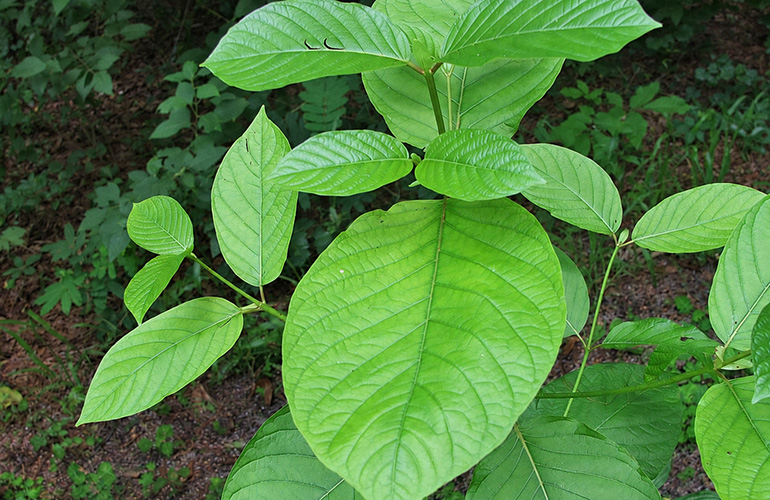
The path to the current scheduling order began with mounting concern within the U.S. Department of Health and Human Services (HHS) and the Food and Drug Administration (FDA) regarding the evolution of products derived from Mitragyna speciosa. While natural kratom leaf has long been a subject of debate, the emergence of synthetic and semi-synthetic analogs—specifically those chemically modified to increase potency—created an urgent regulatory vacuum.
On July 6, 2026, the official Federal Register notices confirmed that the FDA had performed an exhaustive review, concluding that the substances in question—mitragynine pseudoindoxyl, MGM-15, and MGM-16—posed an imminent hazard to public safety. Following the mandated 30-day public comment period, during which the Office of the Assistant Secretary for Health (OASH) processed feedback for the Attorney General, the DEA proceeded with the temporary scheduling order. This order mandates that, as of August 25, 2026, all manufacturing, distribution, importation, exportation, and research activities involving these substances must comply with strict Schedule I protocols.
The Science of Synthetic Potency
The DEA’s justification for this action is grounded in extensive pharmacological data suggesting that these synthetic derivatives bear little resemblance to the traditional, mild effects historically associated with natural kratom. Mitragynine pseudoindoxyl is a chemical rearrangement product of 7-hydroxymitragynine (7-OH), while MGM-15 is a synthetic derivative of the same. Perhaps most concerning to regulators is MGM-16, a 9-fluoro derivative of mitragynine pseudoindoxyl, which research indicates possesses an exceptionally high affinity for the mu-opioid receptor.
Preclinical data presented by the agency highlights a stark disparity in potency between natural alkaloids and these synthetic variants. Mitragynine pseudoindoxyl has been found to be approximately 100 times more potent than mitragynine, while MGM-15 and MGM-16 have demonstrated potencies between 50 and 240 times that of morphine. These compounds act as full mu-opioid receptor agonists, producing physiological responses—such as severe respiratory depression and physical dependence—that mirror those of potent synthetic opioids like fentanyl.
The DEA’s assessment of the "scope, duration, and significance of abuse" suggests that the marketing of these products has been intentionally deceptive. Manufacturers have frequently utilized bright, consumer-friendly packaging and fruity flavor profiles, marketing the substances as tools for stress relief or mental clarity. Despite this "wellness" branding, the rapid onset and long duration of effect, combined with the lack of age restrictions at many retail points of sale, have contributed to a documented prevalence of use that reached an estimated 2 million individuals by 2022.
Regulatory Implications and Compliance
The immediate impact of the August 25 order is the total prohibition of commercial sale for the identified substances. Any individual or entity currently in possession of these compounds must, under the CSA, either secure a valid Schedule I registration or surrender the materials for disposal. Retailers and distributors are now prohibited from selling any products containing these specific chemicals, and those who continue to handle them without federal authorization face severe administrative, civil, and criminal sanctions.
For the scientific and research community, the scheduling order necessitates a transition to more rigorous oversight. Researchers who wish to study these substances for potential therapeutic use or harm reduction must now obtain a Schedule I license. This includes maintaining stringent security measures for the storage and handling of these substances, as well as keeping meticulous records of all laboratory usage, as required by the DEA for all Schedule I narcotics.
The Ambiguity of the 7-OH Threshold
While the scheduling of the three aforementioned synthetic substances is finalized, the DEA’s approach to 7-hydroxymitragynine (7-OH) remains a complex, ongoing point of discussion. The agency has proposed a threshold-based scheduling approach for 7-OH, suggesting that botanical material containing more than 0.050% of 7-hydroxymitragynine on a dry weight basis should be treated as a controlled substance.
This proposal has introduced a significant legal ambiguity regarding the definition of the term "in," as it pertains to the presence of 7-OH within a "finished product." Industry experts, including legal counsel specializing in FDA and DEA regulatory affairs, have pointed out that the lack of a formal definition for "article" or "in" within the context of the CSA creates potential for inconsistent enforcement. The OASH has extended the public comment period for this specific threshold determination until September 10, 2026, inviting stakeholders to weigh in on how these thresholds should be applied to avoid unintended consequences for the legitimate, non-synthetic botanical market.
Broader Public Health and Market Impact
The federal crackdown represents a pivot point for the kratom industry. For years, the market has existed in a "gray zone" where traditional botanical products have been sold alongside increasingly potent synthetic analogs. By distinguishing between natural kratom and these highly engineered, synthetic derivatives, the DEA is effectively attempting to decouple the two markets.
The implications for public health are substantial. By curbing the availability of substances that mimic the lethality of illicit opioids, the government aims to prevent an expansion of the current overdose crisis. However, the move also places a heavy burden on retailers to verify the chemical composition of their inventory. With products often mislabeled or marketed under ambiguous names, the risk of accidental non-compliance is high for retailers who do not have access to sophisticated laboratory testing.
Furthermore, the lack of investigational drug applications (INDs) or approved new drug applications (NDAs) for these synthetic substances underscores the government’s stance: these products are viewed as dangerous research chemicals rather than legitimate therapeutic interventions. As the deadline for comments on the 7-OH threshold approaches, the industry remains in a state of flux. Stakeholders are advised to maintain robust quality control measures and prepare for potential further regulatory tightening as the federal government continues to scrutinize the chemical profile of all products derived from or related to Mitragyna speciosa.
The DEA’s actions throughout the latter half of 2026 illustrate a shift toward a more granular, science-based approach to the regulation of psychoactive alkaloids. While this provides a clearer regulatory landscape for researchers, it signals a definitive end to the period of unrestricted retail availability for high-potency, synthetic kratom derivatives. As the two-year temporary scheduling window begins, the federal government has signaled that the burden of proof for the safety and utility of these compounds now lies squarely with those seeking to continue their manufacture or research.