The global landscape of immunology has shifted significantly in the wake of the COVID-19 pandemic, leaving the vast majority of the human population with a durable, sophisticated immune memory of the SARS-CoV-2 virus. A Cleveland-based biotechnology startup, Celloram, is now attempting to repurpose this widespread biological imprint to solve one of oncology’s most persistent challenges: the insufficient activation of T cells against solid tumors. In a study recently published in Nature Communications, researchers from Celloram, in collaboration with Case Western Reserve University and the University Hospitals Cleveland Medical Center, detailed a novel dendritic cell vaccine platform, dubbed Protexi, that leverages COVID-19-specific immune memory to supercharge the body’s anti-tumor response.
The Challenge of Dendritic Cell Vaccines
For decades, the promise of cancer immunotherapy has centered on the ability to train the immune system to recognize and eliminate malignant cells with the same precision it uses to fight viral infections. Dendritic cell vaccines represent a cornerstone of this effort; these specialized immune cells function as the "generals" of the immune system, capturing tumor antigens and presenting them to CD8 T cells, which then proliferate to seek and destroy cancer.
Despite their theoretical elegance, clinical outcomes for dendritic cell vaccines have remained underwhelming. Data indicates that only approximately 15% of patients achieve an objective clinical response when treated with conventional dendritic cell therapies. The primary failure point is often the inability of the vaccine to sustain a robust, long-term CD8 T cell attack. Researchers have long understood that CD8 "killer" T cells require the assistance of CD4 "helper" T cells to reach their full potential, yet identifying the precise tumor-specific epitopes capable of activating these helper cells has proven to be a monumental hurdle.
Protexi: A New Paradigm in Immunotherapy
The Protexi platform approaches this bottleneck by bypassing the difficult search for tumor-specific CD4 epitopes. Instead, it utilizes epitopes derived from the SARS-CoV-2 Spike protein—a target for which billions of people already possess a pre-existing, highly efficient, and durable immune memory.
By loading dendritic cells with both the tumor-specific antigen and the Spike-derived CD4 epitope, the vaccine creates a "dual-trigger" effect. The Spike epitope serves as a beacon, recruiting and activating CD4 helper T cells that are already primed to respond to COVID-19 components. These activated CD4 cells, in turn, provide the necessary chemical signals to fully empower the CD8 T cells to target the tumor. This mechanism effectively recruits the immune system’s established viral defenses to act as a catalyst for a novel anti-tumor mission.
Preclinical Performance and Experimental Results
The efficacy of the Protexi platform was demonstrated in rigorous mouse models. In a comparative trial, mice treated with the Protexi vaccine achieved a 100% survival rate through day 40, a stark improvement over the 40% survival rate observed in mice treated with conventional, non-spiked dendritic cell vaccines.
In a specific study targeting melanoma, the results were similarly compelling. By day 26, five out of seven mice in the treatment group showed tumor volumes of less than 200 cubic millimeters, suggesting a significant inhibition of tumor growth compared to control groups. These findings provide strong evidence that the integration of a well-known, highly immunogenic viral antigen can serve as an effective "booster" for cancer immunotherapy.
The Legacy of COVID-19 Immune Memory
The foundational premise of the Protexi vaccine relies on the durability of T cell memory. Research cited in the study highlights that SARS-CoV-2-specific CD4 T cell responses can remain detectable for two to four years post-vaccination. Furthermore, longitudinal studies on SARS-CoV-1—the virus responsible for the 2003 SARS outbreak—demonstrated that specific CD4 memory could persist for as long as 17 years.
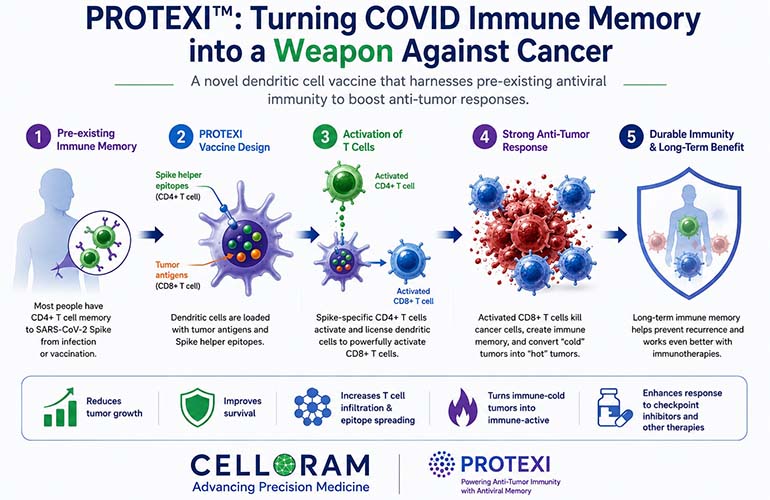
John Letterio, a co-author of the study, noted that the platform offers a "built-in fallback" for individuals who may lack sufficient pre-existing immunity. In experiments where subjects did not have high levels of COVID-specific T cells, the research team administered a "priming" dose of dendritic cells loaded with Spike-protein components. This intervention successfully restored a robust CD4 T cell response, ensuring that the platform’s utility is not limited only to those who have been previously vaccinated or infected.
Historical Context and Scientific Evolution
The development of Protexi is the culmination of two distinct, long-standing threads of immunological research. The first dates back to the 1990s, when foundational work established that CD4 T helper cells were not merely supportive but essential for the induction of a successful CD8 response against MHC-II-negative tumors. Despite this knowledge, the difficulty of computationally identifying effective CD4 epitopes for individual patients meant that this insight remained largely trapped in the laboratory setting.
The second thread emerged during the peak of the COVID-19 pandemic, when clinicians observed that patients undergoing cancer treatment—specifically those receiving checkpoint inhibitors—often experienced improved clinical outcomes if they had also received COVID-19 vaccinations. This observation suggested that the systemic activation of the immune system caused by the vaccine was providing a "bystander" benefit to the anti-tumor immune response. By synthesizing these two findings, the team at Celloram effectively converted a serendipitous clinical observation into a deliberate therapeutic strategy.
Future Clinical Implications
The implications for this technology are broad, particularly in the treatment of solid tumors that have historically been "cold" or resistant to traditional immunotherapies. By utilizing a standardized, universal antigen like the SARS-CoV-2 Spike protein, the manufacturing process for these vaccines could be streamlined, potentially lowering costs and increasing the speed at which personalized treatments can be deployed.
"Any CD4 T-cell epitope that a patient already has strong, durable memory against should, in principle, be able to serve the same helper function," Letterio explained, suggesting that while the initial focus is on COVID-19, the platform could be adapted to use other common, high-memory antigens if necessary.
The Road to Human Trials
With the preclinical data published, Celloram is shifting its focus toward regulatory milestones. The company is currently preparing an Investigational New Drug (IND) application for submission to the U.S. Food and Drug Administration (FDA). Pending approval, the team plans to initiate a first-in-human clinical trial at the Angie Fowler Adolescent & Young Adult Cancer Institute in Cleveland, Ohio. The trial will specifically recruit patients suffering from sarcoma, a type of cancer that often presents significant challenges for current immunotherapy standards.
The transition from murine models to clinical human trials represents the most critical phase for the Protexi platform. While the results in mice are highly encouraging, the complexity of the human immune system, combined with the heterogeneity of tumor microenvironments, will provide the definitive test of the vaccine’s potential. If successful, the platform could represent a transformative shift in oncology, turning the massive, worldwide exposure to a global pandemic into a life-saving tool for cancer patients.
As the biotech sector continues to evaluate the aftermath of the pandemic, the work at Celloram stands out as a unique example of "translational immunology"—the ability to take the lessons learned from a global health crisis and apply them to chronic diseases that have plagued humanity for centuries. The scientific community will be watching the upcoming clinical trials closely, as they may validate the concept that the best way to fight the most elusive diseases is to harness the memories of the immune system’s past victories.