The landscape of clinical drug development is undergoing a paradigm shift as the integration of agentic artificial intelligence (AI) moves from experimental pilot programs to quantifiable economic assets. A landmark analysis recently published by the Tufts Center for the Study of Drug Development (CSDD), in partnership with the clinical trial platform provider Medable, has provided the first rigorous financial framework for assessing the return on investment (ROI) associated with autonomous clinical monitoring agents. According to the study, deploying Medable’s Clinical Monitoring Agent in Phase 3 oncology trials could yield an 82x return on investment, translating to approximately $21 million in added financial value per trial. For Phase 2 studies, the model estimates a 64x return, representing roughly $7.5 million in value.
These findings arrive at a critical juncture for the pharmaceutical industry. As trial protocols grow exponentially in complexity—with the average Phase 3 trial now managing nearly 6 million data points compared to fewer than one million a decade ago—the traditional manual oversight model is becoming increasingly unsustainable. The collaborative study serves as a bridge between operational efficiency and board-level financial strategy, providing the "hard numbers" that stakeholders have long sought to justify the adoption of AI-enabled workflows.
The Evolution of Clinical Trial Complexity
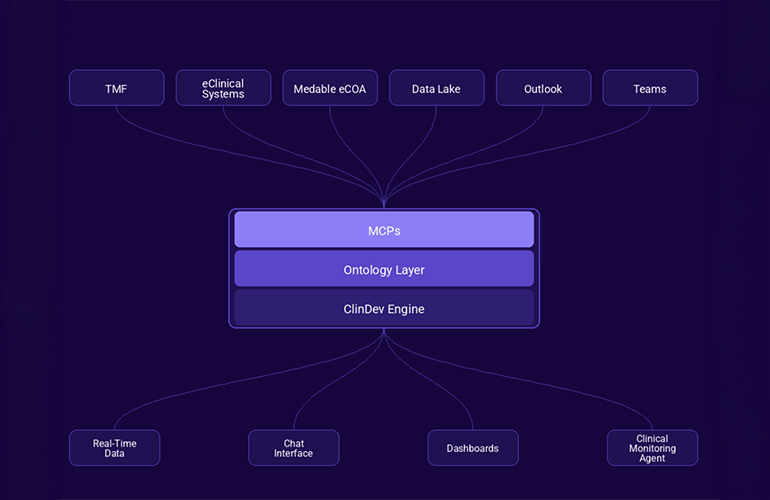
To understand the significance of these figures, one must look at the historical trajectory of trial data management. Since 2012, the volume of data collected per protocol has surged by over 500%, driven by the integration of digital health technologies, wearable sensors, and more granular biomarker requirements. Clinical Research Associates (CRAs) are currently tasked with the immense challenge of synthesizing data across disparate systems, including Electronic Data Capture (EDC), Clinical Trial Management Systems (CTMS), and Trial Master Files (TMF).
The Tufts CSDD analysis of 105 protocols across 15 major pharmaceutical companies highlights that this data deluge has created significant bottlenecks. When a single study involves millions of data points, the probability of human error in identifying adverse events, protocol deviations, or site-level inconsistencies increases. This is where the "agentic" approach enters the fray. Unlike traditional assistive software that merely highlights data, an AI agent is designed to execute tasks—such as flagging anomalies, drafting queries, and coordinating communications—thereby reducing the cognitive and manual load on human monitors.
Quantifying the Value Proposition
The Tufts study is unique in its focus on Expected Net Present Value (eNPV), a standard metric for measuring the profitability of drug development assets. Ken Getz, Executive Director of the Tufts CSDD, noted that the industry has spent years piloting AI tools without a clear methodology to calculate their bottom-line impact. By applying the Medable agent to a modeled portfolio of 20 active oncology indications, the study projects an incremental eNPV of $226 million. For larger portfolios comprising 50 indications, this potential value scales to $565 million.
These figures are derived from the observed 18% reduction in cycle time documented in previous 2025 Tufts research. By accelerating the identification of site-level issues—such as poor enrollment or inconsistent adverse event reporting—the agent enables proactive intervention. In oncology, where speed to market can mean the difference between a competitive advantage and obsolescence, these efficiency gains are directly proportional to significant financial upside.
Architectural Framework: Prebuilt Agents and Custom Configuration
Medable’s approach to deployment is rooted in a "prebuilt-first" architecture. The platform utilizes standardized connectors for roughly 40 enterprise systems, including industry standards like Medidata Rave, Oracle InForm, Veeva, and Snowflake. However, the study emphasizes that there is no "plug-and-play" solution in clinical research. Dr. Pamela Tenaerts, Chief Medical Officer at Medable, explains that approximately 20% of the agent’s configuration remains bespoke to accommodate the unique requirements of specific protocols and sponsor infrastructures.

During the demonstration of these capabilities, researchers observed the agent autonomously aggregating information across multiple silos. By identifying that a specific site was reporting concomitant medications without associated adverse event logs, the agent was able to proactively suggest the opening of EDC queries. This capability represents a move toward "management by exception," where the agent handles the routine "data wrangling," allowing the human clinical team to focus on high-level strategic decision-making, such as protocol amendments or shifts in enrollment strategy.
The Reality of "Agentic" Autonomy
Despite the hype surrounding autonomous agents in the broader technology sector, the deployment in clinical trials remains firmly "human-in-the-loop." Current industry standards, as echoed by leaders at competitors like eClinical Solutions, confirm that no firm is currently operating fully autonomous, "black-box" agents that make clinical decisions without oversight.
The Medable agent operates on a "recommend-and-review" protocol. While it can draft queries and manage documentation, these actions are presented to the CRA for validation. The concern remains that while internal trial efficiency is improved, simply increasing the speed of query generation could overwhelm research sites, creating a new "bottleneck" downstream. Dr. Tenaerts acknowledges this systemic risk, noting that true digital transformation requires the entire clinical ecosystem to evolve in tandem.
The Broader Implications for Drug Development
The persistent challenge of clinical trial failure remains the primary driver for these technological investments. With the failure rate for small-molecule cancer drugs remaining at roughly 95% over the last three decades, and even Phase 3 trials showing a success rate of only 43.4% according to 2026 data, the pressure to optimize is absolute.

The integration of AI agents is not merely about cost-cutting; it is about risk mitigation. By identifying design flaws, screening errors, or "fuzzy" endpoints earlier in the trial lifecycle, these agents provide a safeguard against the "sunk cost" of failed late-stage studies. As the industry moves forward, the ability to replicate these oncology-specific gains in other therapeutic areas—such as neurology or rare diseases—will be the next test for the Tufts-Medable model.
Future Outlook and Strategic Synthesis
The consensus among industry observers is that the "agentic era" of clinical research is in its infancy. While the current 82x ROI projections are based on specific oncology use cases, the ripple effect of such efficiency gains will likely force a change in how pharmaceutical firms structure their R&D budgets. If, as McKinsey reported, 93% of enterprise organizations are already exceeding their AI budgets, the pressure to prove the value of these investments will only grow.
The Tufts-Medable collaboration provides the necessary evidence to transition AI from a "nice-to-have" innovation project to a core component of the clinical development strategy. As the industry continues to grapple with the complexities of modern trial design, the adoption of intelligent agents will likely become a competitive necessity. The question for the next five years will not be whether AI agents can improve trial operations, but rather how quickly organizations can adapt their internal culture and workflows to accommodate this new, faster cadence of data-driven decision-making. Through rigorous quantification, the Tufts CSDD has provided a roadmap for that transition, setting a new standard for how the industry measures the success of its digital investments.