The landscape of preclinical research is undergoing a seismic shift as digital pathology transitions from a remote-work necessity to a powerful engine for data-driven discovery. As the industry grapples with the ethical and practical imperative to reduce, refine, and replace animal testing, researchers are increasingly turning to a previously untapped goldmine: the vast archives of tissue samples and digitized slides already sitting in laboratory storage. By applying advanced computational analysis to these existing assets, the scientific community is finding ways to extract high-value insights without the need for additional, redundant animal experiments.
The Evolution of the Digital Slide
For decades, the standard lifecycle of a tissue sample in a toxicology study was linear and finite. A pathologist would examine a glass slide, generate a diagnostic report, and the sample would be relegated to long-term storage—effectively a "one-way street" of data consumption. Dr. Aleksandra Zuraw, a veterinary pathologist at Charles River Laboratories, notes that this paradigm has been fundamentally disrupted by the digitization of histology.
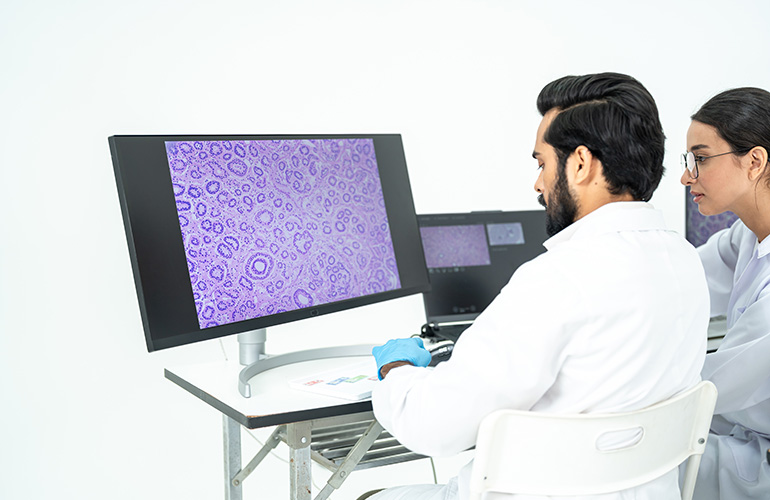
"Before, the pathology endpoint was just a report," Dr. Zuraw explains. "Now you have the digitized slide, which is essentially a high-resolution map of pixels." This shift from physical glass to digital data allows for the application of sophisticated artificial intelligence (AI) and machine learning (ML) algorithms that can identify subtle patterns invisible to the human eye, such as molecular signatures linked to specific drug-induced biological changes.
A Chronology of Regulatory and Technological Change
The push to minimize animal reliance has been building for years, driven by a convergence of technological maturity and shifting legislative priorities:
- 2020–2021: The COVID-19 pandemic forces a global pivot to digital pathology, as physical access to laboratories becomes restricted, necessitating the digitization of millions of slides for remote sign-out.
- December 2022: The United States enacts the FDA Modernization Act 2.0, a landmark piece of legislation that officially permits the use of non-animal testing methods for drug development, signaling a move away from the decades-old mandate that prioritized animal data.
- April 2024: Charles River Laboratories launches its Alternative Methods Advancement Project (AMAP), a strategic initiative designed to integrate advanced technology with biological models to reduce the burden on animal subjects.
- April 2025: The FDA releases a comprehensive roadmap for reducing animal testing in preclinical safety studies. The document outlines a phased approach, targeting monoclonal antibodies first before transitioning to other biologics and small-molecule chemical entities.
- September 2026: The FDA provides updated, specific regulatory guidance on the implementation of New Approach Methodologies (NAMs), cementing the expectation that these tools will eventually replace traditional models as the industry standard.
Leveraging Historical Data: The Virtual Control Group
One of the most immediate and impactful applications of this digital shift is the development of virtual control groups. In conventional toxicology protocols, a substantial portion of the animals used—often a significant percentage of the total study population—are designated as control subjects. These animals receive no experimental drug and serve only to provide a baseline for comparison.
By leveraging large, high-quality historical databases, researchers can now utilize "virtual" controls. If a laboratory can demonstrate that their current experimental conditions are sufficiently analogous to a vast, well-documented historical baseline, the number of animals required for a new study can be mathematically reduced. Dr. Zuraw emphasizes that this process requires rigorous data curation. "Control animals represent a large fraction of every study," she says. "By generating enough matched data to provide virtual controls wherever possible, we can significantly cut animal numbers through simple arithmetic."
Unlocking the Molecular Potential of FFPE Blocks
The methodology extends beyond digital images to the physical tissue archives themselves. Formalin-fixed, paraffin-embedded (FFPE) blocks have long been considered static archives. However, with modern molecular profiling techniques, these blocks serve as a repository of longitudinal data.
When researchers identify a new question late in a drug development cycle—perhaps regarding a specific cellular pathway that was not initially tracked—the traditional solution was to initiate a new animal study. Today, researchers can return to the original FFPE samples to conduct "omics" analysis, including gene expression studies and protein characterization. The Organisation for Economic Co-operation and Development (OECD) bolstered this practice with its 2025 guidance on sample collection for omics analysis, which outlines the rigorous standards required to ensure that stored tissue remains viable for advanced molecular investigation. This ensures that the context of the original study—including dosing, duration, and observed effects—remains linked to the new molecular data.
The Rise of Virtual Staining
Perhaps the most futuristic development in this field is "virtual staining." Traditionally, tissue sections must undergo chemical staining to highlight specific structures for microscopic analysis. This process is time-consuming and consumes reagents. Emerging computational techniques now allow scanners to capture images of unstained tissue, with software then applying a "virtual" stain to generate the necessary visual contrast.
As this technology matures, the prospect of skipping the chemical staining process and potentially eliminating glass slides altogether is moving from theoretical to practical. A 2026 review indicated an accelerating adoption of these methods across various tissue types, suggesting that the industry is nearing a point where computational histology will be a standard, rather than experimental, procedure.
Broader Implications for the Pharmaceutical Industry
The integration of these digital methods is not merely an ethical upgrade; it represents a significant optimization of the drug development lifecycle. By "mining" existing tissue and data, pharmaceutical companies can:
- Accelerate Timelines: Reducing the need for new animal studies eliminates the lead time required for breeding, acclimation, and observation.
- Enhance Data Granularity: Computational analysis can identify subtle toxicological trends that might be overlooked in a traditional microscopic review.
- Ensure Regulatory Compliance: By adopting the FDA’s recommended NAMs, companies can better align their preclinical applications with the expectations of modern regulators, potentially streamlining the path to human clinical trials.
However, the transition requires a cultural shift within the scientific community. Dr. Zuraw stresses the importance of "early adopters" who are willing to troubleshoot these workflows and establish the necessary precedents. "You still need enough early adopters to generate the data that proves these methods are robust," she notes. "Once they embrace the guidance and clear the initial hurdles, the rest of the industry can build on that foundation without having to reinvent the wheel."
Conclusion: A Snowball Effect
The future of pathology is increasingly defined by the synergy between biological samples and digital computation. As labs continue to invest in the infrastructure required to store, share, and analyze digital slides, the barrier to entry for these new methods will continue to drop.
What began as a localized response to a global health crisis has evolved into a strategic pillar of modern drug discovery. The "snowball effect" described by Dr. Zuraw—where access to existing, high-quality data breeds further innovation—promises a future where the necessity of animal testing is drastically curtailed. Through the intelligent application of technology, the industry is proving that it is possible to extract more knowledge from the same amount of biological material, ultimately leading to safer, more efficient, and more humane drug development processes. The digital transformation of pathology is no longer just about seeing images on a screen; it is about fundamentally changing the science of how we understand disease and the impact of the therapies we design to treat it.