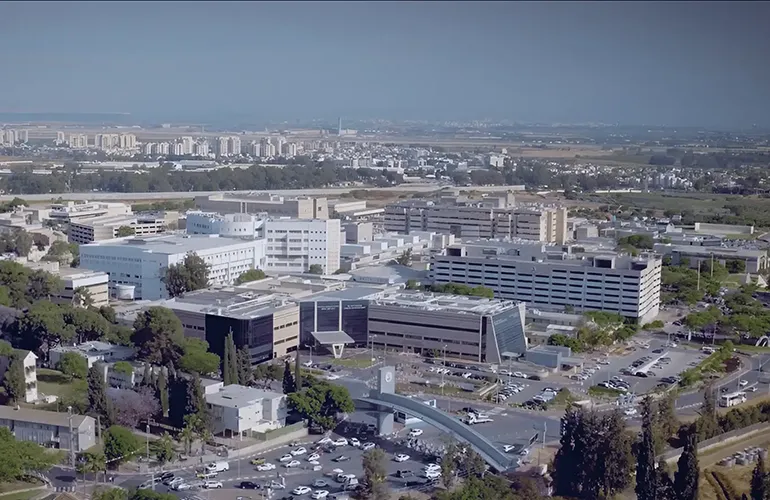
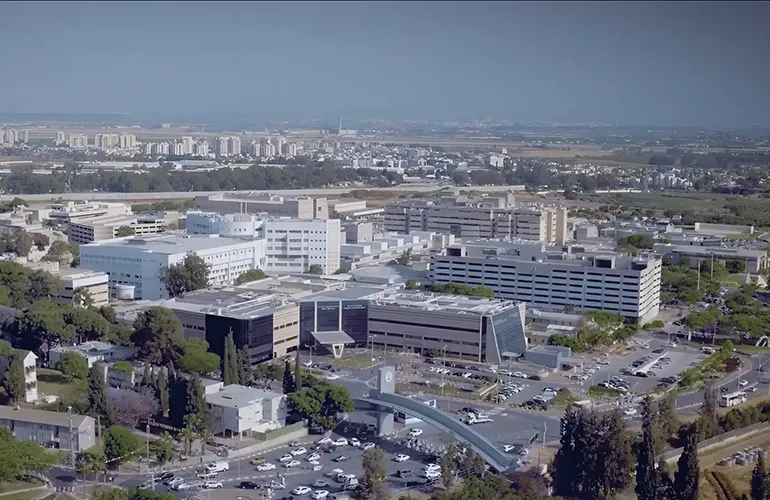
The landscape of global healthcare is undergoing a profound transformation as Sheba Medical Center, Israel’s largest and most technologically integrated hospital, has officially become the first international medical institution to enter into a strategic partnership with OpenAI. This collaboration represents a milestone in the deployment of generative AI within clinical environments, signaling a departure from traditional, siloed digital health architectures toward a future defined by agentic, AI-driven workflows. By integrating ChatGPT for Healthcare directly into its clinical, research, and operational frameworks, Sheba aims to realize its goal of becoming a fully AI-powered medical campus by 2030, a vision that addresses the dual pressures of an aging population and a shrinking global clinical workforce.
The Genesis of a Digital Transformation
The origins of this partnership are rooted in the internal drive of Sheba’s ARC (Accelerate, Redesign, Collaborate) innovation arm. Unlike many institutions that wait for vendor-led solutions, Sheba’s leadership proactively sought a collaboration that would allow for the deployment of advanced large language models (LLMs) in a non-English, non-Epic-integrated environment. According to Ayelet Akselrod-Ballin, head and CTO of Sheba’s AI Center, the initiative was spearheaded by the hospital’s engineering department, reflecting a culture of "bottom-up" innovation.
The strategic planning was directed by Alon Agmon, director of R&D at the AI Center. The objective was not merely to purchase software but to democratize access to generative AI for clinicians, administrators, and researchers across the Tel HaShomer campus. This effort reflects a broader trend: hospitals are increasingly moving away from reliance on massive, rigid electronic health record (EHR) vendors and toward flexible, "composable" AI architectures that can operate across disparate digital ecosystems.
A Chronology of Innovation at Sheba
Sheba’s path to the OpenAI partnership was paved by years of iterative AI development and pilot projects. The institution’s trajectory can be viewed through three distinct phases:
- Foundational Research (2018–2021): During this period, the hospital focused on specialized applications, particularly in radiology. Akselrod-Ballin’s prior work at IBM Research on combining mammograms with EHR data set a precedent for how Sheba would later approach diagnostic AI.
- Workflow Integration (2022–2024): The hospital deployed "SmartER," an ambient AI platform developed with ScribeMD to automate clinical documentation in the emergency department. This was followed by "Project K," a collaboration with Microsoft Israel and KPMG that utilizes an AI avatar to streamline patient intake and triage.
- The Agentic Era (2025–Present): The current partnership with OpenAI marks the shift toward agentic workflows—systems capable of performing complex, multi-step tasks across hospital operations. This phase includes the rollout of "Beyonder," a system that optimizes patient routing between traditional inpatient care and the virtual hospital, Sheba Beyond.
Supporting Data and the Workforce Crisis
The urgency of Sheba’s digital pivot is underscored by global health statistics. The OECD’s 2025 health profile for Israel notes a ratio of 3.5 practicing doctors per 1,000 residents, trailing the OECD average of 3.9. This structural deficit mirrors the crisis predicted by the World Health Organization, which forecasts a shortage of nearly one million healthcare workers in the European region by 2030. In the United States, the Association of American Medical Colleges (AAMC) warns of a potential shortfall of up to 86,000 physicians by 2036.
Akselrod-Ballin characterizes this as a fundamental "crisis in healthcare," where the current clinical-to-bed ratio is becoming increasingly unsustainable. AI is being positioned as a force multiplier—not by replacing clinicians, but by automating the "administrative tax" of medicine. Studies support this necessity; for instance, a 2024 study on generative AI-assisted radiograph reporting demonstrated a 15.5% improvement in documentation efficiency across 24,000 clinical interpretations, with no degradation in accuracy. Such metrics provide the evidentiary basis for the large-scale investment Sheba is making in its new partnership.
The Role of ARC in Scaling Solutions
The ARC Innovation Center serves as the engine for this expansion. Supporting more than 130 startups and maintaining formal relationships with 31 global health systems, ARC provides a template for scaling deep-tech solutions. By embedding the AI Center within the hospital, Sheba ensures that developers, security teams, and clinicians work in a unified, high-trust environment.
This proximity is essential for building the "guardrails" of AI in medicine. Because the regulatory framework for generative AI in hospitals is still in its infancy, Sheba is taking an active role in policy creation. By monitoring the deployment of OpenAI’s models, the hospital is establishing internal protocols for data privacy, bias mitigation, and clinical oversight. This "learning-by-doing" approach is a departure from traditional, slow-moving institutional policies, allowing Sheba to adapt to the technology’s rapid evolution.
Agentic Workflows: The Future of Hospital Operations
The most significant implication of the OpenAI partnership is the move toward "agentic" infrastructure. In traditional software, a user commands an interface; in an agentic system, the AI is assigned a goal (e.g., "manage the triage flow for the pediatric ER") and the system determines the steps required to achieve it.
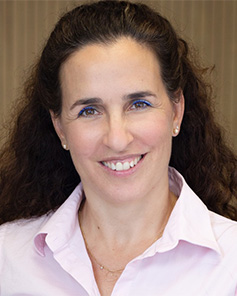
Akselrod-Ballin envisions an ecosystem where reusable components—or "agents"—can be deployed across different departments. A triage agent developed for the general emergency department, for example, can be adapted for the oncology or pediatric units with minimal reconfiguration. This modularity is key to scaling. By breaking down complex medical workflows—from clinical trial patient selection to surgical scheduling—into actionable, AI-managed tasks, Sheba is creating a blueprint for the "smart hospital" of the future.
Implications for the Broader Healthcare Sector
The implications of this partnership extend far beyond the borders of Israel. By partnering with a U.S.-based technology giant, Sheba is testing the viability of "sovereign" AI strategies, where international hospitals can leverage global LLMs while maintaining control over local clinical data and specific language requirements.
Industry analysts observe that this partnership may trigger a "follow-the-leader" effect. As other major academic medical centers witness the operational efficiencies and clinical documentation improvements at Sheba, the pressure to integrate advanced AI agents into existing hospital information systems will intensify. The ability to "buy or build"—a strategy Sheba continues to refine—will likely become the defining debate for hospital CTOs over the next decade.
Conclusion: A New Standard of Care
As Sheba moves to implement OpenAI’s latest healthcare models, the focus remains on the ultimate stakeholder: the patient. The transition toward an AI-powered institution is an attempt to recover the "human" element of medicine by offloading the cognitive and administrative burden that currently plagues the profession.
While the technology is still emerging, the partnership serves as a real-world laboratory. The success or failure of this deployment will provide critical data on whether large language models can be safely and effectively scaled within the high-stakes environment of an acute-care hospital. For Sheba, the goal is clear: to build an environment where technology acts as an invisible, tireless assistant, allowing clinicians to focus on what matters most—the art of healing. Through its commitment to innovation, the center is not just adopting new tools; it is fundamentally rewriting the operational code of the modern hospital.