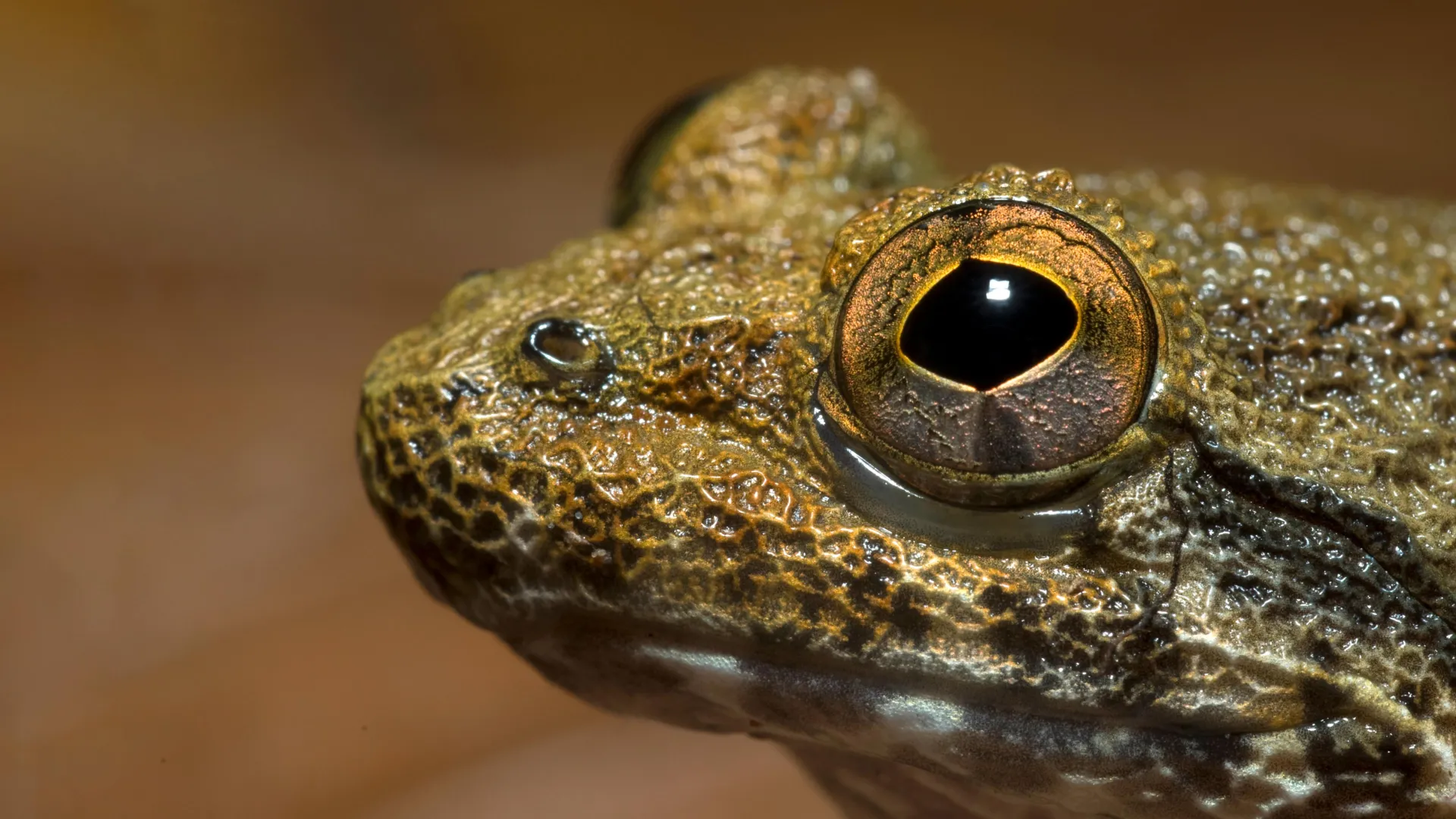
The romanticized image of intrepid explorers venturing into uncharted territories to discover new species, while enduringly popular, often belies the more intricate and scientifically nuanced reality of modern taxonomy. According to Chan Kin Onn, a herpetologist at Michigan State University (MSU), the process of identifying novel life forms is frequently less about dramatic encounters and more about rigorous re-examination of existing knowledge, aided by groundbreaking technological advancements. This sophisticated approach is particularly evident in the ongoing reevaluation of species once thought to be clearly defined, as exemplified by the case of Bornean fanged frogs.
The Evolving Landscape of Species Identification
For generations, the discovery of a new species conjured visions of Indiana Jones-esque expeditions. Chan Kin Onn, who also serves as Curator of Vertebrate Collections and a core faculty member in MSU’s Ecology, Evolution and Behavior program, notes, "Most people have this image of an intrepid explorer braving an isolated mountain or some other remote place, and stumbling across a creature that no one has ever seen before." While such serendipitous discoveries still occur and capture the public imagination, Chan emphasizes that the day-to-day work of taxonomists often involves a more methodical, less dramatic, yet equally vital scientific endeavor. "But most of the time it’s far less glamorous," he adds.
The contemporary method of species identification frequently hinges on revisiting animal populations already cataloged within the scientific community. With the advent of sophisticated genetic sequencing tools and the accumulation of extensive datasets, researchers are increasingly uncovering that populations previously grouped under a single species designation possess significant genetic divergences, warranting their recognition as distinct evolutionary lineages. This paradigm shift has led to a surge in the identification of what are known as "cryptic species"—organisms that appear morphologically similar to their close relatives but are genetically distinct.
The Bornean Fanged Frog Enigma: A Case Study in Cryptic Diversity
The enigmatic Bornean fanged frogs (genus Limnonectes) provide a compelling illustration of this evolving understanding. These small, brown amphibians, native to the dense rainforests of Southeast Asia, are characterized by distinctive tooth-like projections along their jaws, a feature that gives them their common name. One particular species within this group, Limnonectes kuhlii, has been known to science since its initial description in 1838. However, over the past two decades, mounting evidence from genetic research has challenged this long-held classification. Initial analyses suggested that what was previously understood as a single species might, in fact, encompass as many as 18 separate, genetically distinct entities.
Chan explains, "Animals that look similar but are genetically distinct are called cryptic species." The rapid advancements in genetic sequencing technology have been instrumental in illuminating these hidden lineages. "A ton of cryptic species are being discovered left and right," he remarks, highlighting the pervasive nature of this phenomenon across the tree of life.
Rigorous Genetic Analysis Refines Species Counts
To address the burgeoning question of the true diversity within the Bornean fanged frog complex, Chan and his team embarked on an extensive research project. Their investigation, meticulously detailed in the journal Systematic Biology, involved the collection of DNA samples from numerous frog specimens gathered across the diverse and mountainous rainforest ecosystems of Malaysian Borneo. The scope of their genetic analysis was substantial, examining over 13,000 genes across the entire genomes of these frogs.
The comprehensive genetic data revealed a more nuanced picture than the initial hypotheses suggested. The findings indicated that the Bornean fanged frogs do indeed separate into several distinct genetic groupings, confirming a level of diversity beyond that of a single species. However, the extensive genomic analysis did not corroborate the extreme estimate of 18 separate species. Instead, the evidence pointed towards a more conservative yet significant level of divergence, suggesting that approximately six to seven of these genetic clusters could be legitimately classified as distinct species.
"It’s not just one species. But it’s not 18 species, either," Chan stated, summarizing the outcome of their detailed investigation. This research underscores the critical role of advanced molecular techniques in refining our understanding of biodiversity, moving beyond purely morphological assessments.
Conservation Imperatives: Why Species Counts Truly Matter
The precise determination of species numbers is far from being a purely academic exercise; it carries profound implications for global conservation efforts. Amphibians, as a group, are currently facing an unprecedented crisis. A comprehensive analysis conducted in 2023, which examined approximately 8,000 amphibian species worldwide, revealed a sobering statistic: two out of every five amphibian species are facing a significant threat of extinction. This makes amphibians the most imperiled class of vertebrates on the planet.
Chan, who also contributed to this critical 2023 assessment, stressed the indispensable nature of accurate species identification for effective conservation strategies. "There are so many species in the world that we still haven’t discovered, and that could go extinct before we can give them a name," he lamented, highlighting the urgency of cataloging biodiversity.
However, the scientific community must also navigate the complexities of potentially overzealous species splitting. Chan cautioned about the potential pitfalls of this approach. "But there’s a flip side to that coin too," he observed. If scientists too readily divide a species into multiple smaller units, each newly defined species might appear to have a highly restricted geographic range. This can artificially inflate the perceived severity of its conservation status, potentially leading to misallocation of limited conservation resources.
"We cannot possibly conserve everything, so we have to triage and decide how to allocate limited resources towards what we think are the highest priorities," Chan explained. "We could be putting names on things that shouldn’t be prioritized." This delicate balance between recognizing genuine diversity and avoiding the creation of numerous poorly defined, potentially non-viable taxa is a central challenge in modern conservation biology.
The Fluidity of Species Boundaries and Gene Flow
Adding another layer of complexity to the Bornean fanged frog case, the researchers also identified substantial interbreeding among the various genetic clusters. "We found a ton of gene flow going on," Chan reported, referring to the exchange of genetic material between these groups. This ongoing genetic exchange can significantly blur the lines that scientists traditionally use to delineate species boundaries. As a consequence, Chan suggests that some of the proposed increases in cryptic species might arise from analytical interpretations of data rather than reflecting true, long-term biological separations.
The study of these fanged frogs serves as a powerful illustration that the process of speciation, the evolutionary formation of new species, is rarely an instantaneous event. Instead, it is often a gradual, continuous process. "It’s not like all of a sudden, boom. It’s more of a continuum," Chan elaborated. This understanding challenges simplistic, discrete models of species formation and emphasizes the importance of considering evolutionary processes over extended timescales.
A Global Pattern of Hidden Biodiversity
The Bornean fanged frogs are far from an isolated phenomenon. Over the past two decades, a wealth of genetic research conducted across diverse animal groups—including insects, fish, birds, and mammals—has consistently indicated that a vast number of species may be subtly hidden within existing classifications, existing "in plain sight."
Previous estimates for the total number of species on Earth hovered around 8.7 million. However, more recent scientific models that incorporate the growing understanding of cryptic species suggest that the actual figure could be substantially higher, with some projections ranging from 7 to an astonishing 250 times the initial estimate. This wide range reflects the inherent uncertainties and ongoing nature of biodiversity discovery.
The question of where the true total number of species lies remains a subject of active scientific inquiry. "This study shows that there’s a speciation ‘gray zone’ that can make it hard to draw the line," Chan concluded, underscoring the dynamic and often ambiguous nature of species definition in the face of complex evolutionary histories and advanced genetic insights.
The research that illuminated the complexities of Bornean fanged frog diversity was made possible through the generous support of grants from the U.S. National Science Foundation, specifically GRFP grants numbered 1540502, 1451148, 0907996, and 1654388. This financial backing has been crucial in enabling scientists to delve deeper into the intricate tapestry of life and refine our understanding of its astonishing diversity.