For pharmaceutical companies navigating the high-stakes transition from clinical development to commercial launch, the landscape of service providers remains remarkably opaque. While mainstream enterprise software buyers benefit from rigorous benchmarking platforms such as G2 and Gartner Peer Insights, or authoritative analyst evaluations like the Gartner Magic Quadrant, those in the life sciences sector have long operated in a different environment. Decision-making in pharma commercialization—covering critical areas like distribution, pricing strategies, and customer relationship management (CRM)—has traditionally relied on anecdotal evidence, professional networking, and fragmented word-of-mouth recommendations.
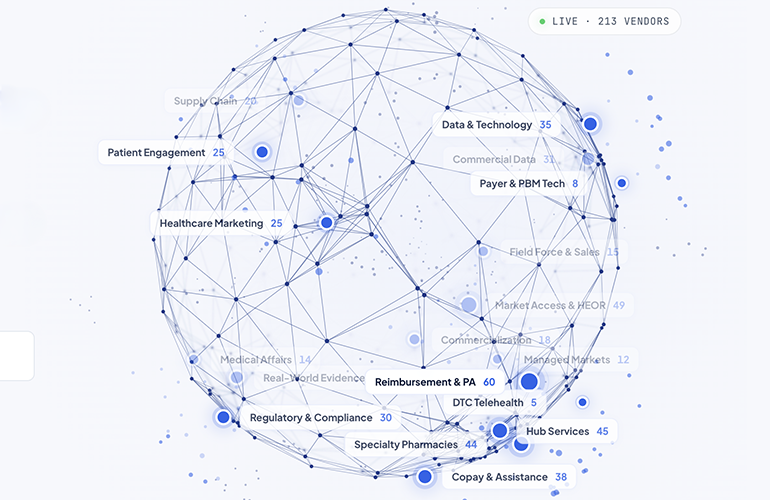
This structural gap in the industry led Hoyt Gong, an MBA candidate at Harvard Business School, to develop Rx Almanac. Designed as an editorial site and neutral directory, the platform seeks to standardize how pharma teams research, compare, and select commercial service providers. By providing data-driven insights into a market previously defined by opacity, Gong is attempting to create what he describes as the "Yellow Pages" for the pharmaceutical commercialization industry. Backed by institutional support from Harvard and Google, the platform represents a significant effort to inject transparency into a multi-billion dollar ecosystem.
The Origin of a Market Need
The impetus for Rx Almanac was born out of necessity rather than abstract academic research. During his tenure as a senior product manager at a prominent insulin pump manufacturer, Gong was tasked with navigating the complexities of scaling a commercial business. The experience required him to make high-impact decisions regarding CRM vendor selection, distribution strategies, and the management of Pharmacy Benefit Manager (PBM) relationships.
Gong found that the process of vetting these vendors was inefficient and prone to information asymmetry. "Picking our CRM vendor, thinking through our distribution strategy, choosing our pharmaceutical distribution vendors, our pricing vendors, our PBM strategy—these were foundational decisions, yet there was very little in the way of objective, comparative literature to guide us," Gong noted. Recognizing that the post-R&D and post-clinical-trial stage—the commercialization phase—was severely underserved by existing analytical publications, he began building the architecture for what would become Rx Almanac.
Chronology of Commercialization Challenges
The pharmaceutical commercialization landscape has undergone a radical transformation over the last decade, shifting from a model defined by large, monolithic sales forces to one increasingly reliant on specialized, data-driven service providers.

- 2010–2015: The Rise of Specialized Services: As drug complexity increased, pharma companies began outsourcing non-core competencies to niche vendors, leading to a fragmented market of consultants and tech providers.
- 2016–2020: Private Equity Intervention: A surge of investment from private equity firms—most notably Carlyle, KKR, and Summit Partners—triggered a wave of consolidation. Smaller, boutique firms were rapidly acquired and integrated into larger, multi-service conglomerates.
- 2021–2024: The Digital Transformation: The pandemic accelerated the need for digital-first commercial strategies, pushing companies toward cloud-based CRM and AI-driven predictive analytics.
- 2025–Present: The Transparency Gap: As vendor services have become more complex, the inability of procurement teams to effectively vet these massive, integrated platforms has become a bottleneck for drug launches.
Supporting Data and Market Dynamics
The pharmaceutical commercialization services market is a massive, often overlooked, sub-sector of the global healthcare economy. Estimates suggest that global spending on pharmaceutical sales and marketing reaches nearly $30 billion annually in the United States alone. Despite this scale, the procurement process remains antiquated.
When a company selects a CRM, the stakes are not merely administrative; they are existential. The choice of platform directly impacts the efficiency of thousands of sales representatives and the quality of engagement with healthcare providers. Rx Almanac recently published a comprehensive buyer matrix comparing Veeva Vault CRM and Salesforce Life Sciences Cloud. This analysis evaluates vendors across seven critical vectors: migration ease, regulatory validation, data integration, commercial workflows, the quality of implementation partners, operational risk, and total cost of ownership.
By quantifying these attributes, Gong’s platform provides a template for procurement teams to move beyond "brand reputation" and toward "capability-based assessment." This is particularly relevant as the industry debates the efficacy of AI agents in the commercial workflow. While "AI" has become a ubiquitous marketing buzzword, Rx Almanac focuses on auditing what these agents are actually doing, how they are trained, and whether they provide measurable value or merely increase technical debt.
Industry Implications: The Consolidation Conundrum
Perhaps the most significant finding from the initial data gathered by Rx Almanac is the trend of aggressive market consolidation. As private equity firms have "gobbled up" independent service providers, they have created massive, integrated service suites. While this offers the convenience of "one-stop-shop" procurement, it introduces new risks for pharma companies.
"A lot of these companies are buying each other out, and that gobbling up is how they’re growing," Gong observes. "That leads to concerns from pharma: Are these services really the most capable, or are they just piecemealed together through acquisitions?"
This creates a "compatibility tax." Launch teams often find that while a parent company promises an end-to-end solution, the underlying tech stacks may not communicate effectively. For a pharmaceutical company preparing to launch a drug, this can mean the difference between a seamless patient experience—where a drug is easily prescribed, covered, and affordable—and a chaotic, disjointed rollout that results in lost revenue and poor patient outcomes.

The Role of Neutrality in Procurement
The core value proposition of Rx Almanac is its commitment to neutrality. In an industry where "pay-to-play" reviews and sponsored white papers are the norm, Gong’s model attempts to emulate the success of independent tech evaluators. By focusing on the post-clinical stage—a period often referred to as the "Valley of Death" for new drugs due to the high failure rate of commercial launches—Rx Almanac provides a roadmap for teams that are often under extreme time pressure.
Analysts observing the sector suggest that the success of such platforms depends entirely on their ability to maintain objective distance from the vendors they review. If Rx Almanac can maintain its editorial independence, it could fundamentally shift the power dynamic back toward the pharma companies, allowing them to exert more control over their vendor relationships and demand higher standards of performance and integration.
The Future of Pharma Commercial Services
As the pharmaceutical industry continues to grapple with the complexities of patient access and the rapid adoption of artificial intelligence, the need for clarity in vendor selection will only grow. The rise of AI-driven commercial operations—where algorithms predict physician behavior and automate marketing responses—requires a level of technical vetting that traditional procurement departments are currently ill-equipped to handle.
By creating a systematic, standardized framework for evaluating these services, Hoyt Gong and his team at Rx Almanac are addressing a critical market failure. As pharma companies continue to navigate an increasingly consolidated and complex vendor environment, the ability to discern marketing rhetoric from operational capability will be a defining factor in which drugs successfully reach the patients who need them most. The evolution of the platform will likely be a bellwether for whether the pharmaceutical industry can modernize its own back-office operations to match the innovation occurring in its laboratories.