In a comprehensive review that bridges the gap between mechanical engineering and environmental science, a research team from the Federal University of Technology Owerri (FUTO) in Nigeria has identified Water-in-Diesel Emulsion (WiDE) technology as a transformative tool for the global transport and industrial sectors. The study, led by Dr. Chukwuemeka Fortunatus Nnadozie and Professor Emeka Emmanuel Oguzie, synthesizes decades of global experimentation to argue that the simple act of integrating water into diesel fuel—facilitated by advanced chemical stabilizers—can mitigate the most toxic byproducts of internal combustion without necessitating a wholesale overhaul of existing engine architecture.
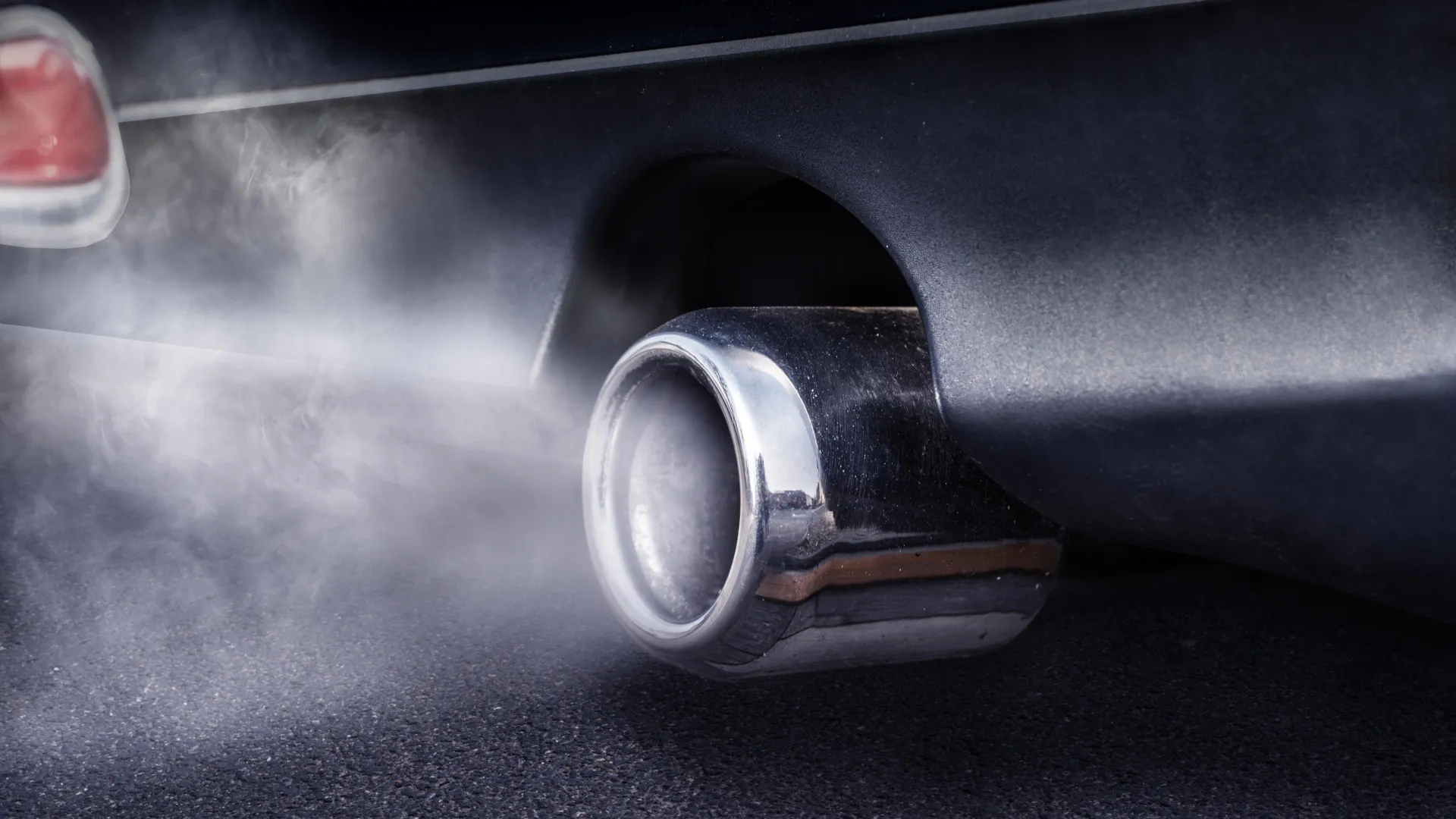
As the global community grapples with the dual pressures of climate change and urban air quality degradation, the findings from FUTO provide a pragmatic roadmap for both developed and developing economies. Diesel engines remain the backbone of global logistics, powering approximately 90% of the world’s freight trucks and a significant portion of its maritime and agricultural machinery. However, the environmental cost is steep. Diesel exhaust is a complex mixture of gases and fine particles, classified by the International Agency for Research on Cancer (IARC) as a Group 1 carcinogen. The FUTO research suggests that WiDE technology could reduce the primary culprits of this health crisis—nitrogen oxides (NOx) and particulate matter (PM)—by more than two-thirds.
The Environmental Imperative: Addressing the Diesel Footprint
The necessity for cleaner diesel technology is rooted in the severe public health impacts of traditional combustion. Diesel engines operate at high pressures and temperatures to achieve their characteristic efficiency. While these conditions are ideal for power output, they are also the primary drivers of NOx formation. When nitrogen and oxygen from the air are subjected to the intense heat of a diesel cylinder, they react to form various oxides of nitrogen. These gases are precursors to ground-level ozone and smog, which are linked to chronic obstructive pulmonary disease (COPD), asthma, and cardiovascular impairment.
Simultaneously, the heterogeneous nature of diesel combustion—where fuel and air do not always mix perfectly—leads to the formation of particulate matter, or soot. These microscopic carbon spheres, often coated with toxic metal compounds, are small enough to bypass the human body’s natural filtration systems, entering the bloodstream directly through the lungs. According to World Health Organization (WHO) data, ambient air pollution accounts for an estimated 4.2 million deaths annually, a significant portion of which is attributed to vehicular emissions.
Modern solutions, such as Selective Catalytic Reduction (SCR) systems and Diesel Particulate Filters (DPF), have made strides in reducing these pollutants. However, these "after-treatment" systems are expensive to manufacture, require regular maintenance (such as the refilling of urea-based additives like AdBlue), and can slightly reduce fuel economy. The WiDE technology reviewed by the Nigerian team offers an "in-cylinder" solution, treating the problem at the source of combustion rather than at the tailpipe.
The Science of Micro-Explosions and Thermodynamics
The core of WiDE technology lies in a phenomenon known as "secondary atomization" or "micro-explosions." Under normal circumstances, diesel fuel is injected into the combustion chamber as a spray of droplets. In a Water-in-Diesel Emulsion, each of these diesel droplets contains even smaller droplets of water, suspended in a stable state.
As the fuel mixture enters the high-temperature environment of the cylinder, the water droplets, which have a lower boiling point than diesel, reach their phase-change temperature first. The water rapidly transitions into steam, expanding in volume at a rate that causes the surrounding diesel droplet to shatter into thousands of much smaller fragments. This "micro-explosion" creates a significantly larger surface area for the fuel to interact with oxygen.
The thermodynamic benefits are twofold. First, the finer atomization leads to more complete combustion, ensuring that less carbon is left unburned as soot. Second, the vaporization of the water absorbs a significant amount of heat from the combustion process—a phenomenon known as evaporative cooling. By lowering the peak flame temperature inside the cylinder, the production of thermal NOx is drastically inhibited, as NOx formation is highly sensitive to temperature spikes.
The Critical Role of Surfactants and Mixture Stability
One of the primary historical hurdles for WiDE technology has been the inherent instability of oil-and-water mixtures. Left alone, the two substances naturally separate, which can lead to engine stalling, fuel line corrosion, and inconsistent power delivery. The FUTO researchers emphasized that the success of modern WiDE applications depends entirely on the selection and concentration of surfactants.
Surfactants, or surface-active agents, are molecules with a "water-loving" (hydrophilic) head and an "oil-loving" (lipophilic) tail. By positioning themselves at the interface between the water and diesel, they lower the interfacial tension and prevent the water droplets from coalescing. The FUTO review highlighted that non-ionic surfactants are often preferred due to their compatibility with engine components and their ability to maintain stability across a range of temperatures.
The research team found that properly formulated emulsions, using a blend of surfactants tailored to the specific grade of diesel, could remain stable for up to 60 days. This stability is crucial for commercial viability, as it allows the fuel to be stored in existing infrastructure, such as gas station tanks and vehicle reservoirs, without the risk of phase separation.
Quantitative Findings: Performance and Emission Reductions
The data synthesized by Dr. Nnadozie’s team paints a compelling picture of WiDE’s efficacy. Across various experimental setups and engine types, the following trends were consistently observed:
- Nitrogen Oxide (NOx) Reduction: Studies reported a decrease in NOx emissions of up to 67%. This is particularly significant for heavy-duty engines that often struggle to meet stringent Euro VI or EPA Tier 4 standards.
- Particulate Matter (PM) and Soot Reduction: Because of the micro-explosion effect and improved air-fuel mixing, PM emissions dropped by as much as 68%. The reduction in "black smoke" is the most visible indicator of WiDE’s impact.
- Brake Thermal Efficiency (BTE): Contrary to the assumption that adding water would "dilute" the fuel’s power, many studies showed an improvement in BTE. This is attributed to the more rapid and complete combustion triggered by secondary atomization, which allows the engine to extract more mechanical work from each unit of chemical energy.
- Specific Fuel Consumption: While the total volume of liquid consumed may increase (since part of the volume is water), the "Brake Specific Fuel Consumption" (the mass of actual diesel burned per unit of power produced) often remains stable or improves.
Chronology and Evolution of Emulsion Research
The concept of adding water to fuel is not entirely new, but its refinement has followed a distinct chronological path:
- Early 20th Century: Initial experiments focused on "water injection" into the intake manifold to prevent engine knocking in high-compression aircraft engines.
- 1970s Oil Crisis: Research shifted toward using water to extend fuel supplies and improve the efficiency of industrial boilers.
- 1990s – 2000s: The focus moved to environmental compliance. First-generation emulsions often suffered from stability issues and caused corrosion in fuel injectors.
- 2010 – Present: The advent of "nano-emulsions" and advanced synthetic surfactants has solved the stability problem. The FUTO study represents the current frontier, where researchers are now looking at the synergy between WiDE and renewable fuels like biodiesel.
Stakeholder Responses and Economic Analysis
While the technical merits of WiDE are well-documented, its adoption requires the alignment of several stakeholders.
Automotive Manufacturers: Industry analysts suggest that manufacturers may view WiDE as a way to extend the lifespan of internal combustion engine (ICE) platforms. As cities implement "Low Emission Zones," WiDE could allow older fleets to remain compliant without the prohibitive cost of engine replacement.
Environmental Agencies: Regulators in developing nations are particularly interested in the technology. In regions where the average age of the vehicle fleet is high and the cost of modern after-treatment systems is a barrier to entry, WiDE offers a low-cost, high-impact alternative for improving urban air quality.
Chemical Industry: The widespread adoption of WiDE would create a massive new market for surfactants. Chemical companies are already investigating bio-based surfactants derived from agricultural waste to ensure that the entire fuel lifecycle remains sustainable.
However, some industry skeptics point to the logistical challenge of "on-board" vs. "pre-mixed" solutions. While pre-mixed WiDE is easier for the end-user, it requires the fuel distribution chain to handle a product with a 10-15% water content, which could increase transport costs.
Broader Implications and the Transition to Green Energy
The FUTO research team is careful to position WiDE as a "bridge technology." They acknowledge that the long-term future of transportation likely involves electrification and hydrogen fuel cells. However, for heavy industry, trans-oceanic shipping, and remote power generation—sectors that are notoriously difficult to electrify—WiDE provides an immediate solution to the carbon and pollutant crisis.
"This technology can bridge the gap between conventional diesel use and a cleaner energy future," noted co-author Professor Emeka Emmanuel Oguzie. The research suggests that WiDE could be further enhanced by using "green" surfactants and by blending the diesel with carbon-neutral biofuels.
The FUTO study concludes that while additional long-term durability testing is required to monitor the effects of water vapor on cylinder liners and valves over hundreds of thousands of miles, the environmental and efficiency gains are too significant to ignore. As global emission standards continue to tighten, the "surprisingly simple" solution of mixing water with oil may prove to be one of the most sophisticated tools in the fight for cleaner air.